
Do grasshoppers and crickets bite? How to tell grasshoppers, crickets and katydids apart
Grasshoppers, crickets and katydids all have chewing mouthparts, and the bigger ones can give a sharp nip if you hold them. None of them are venomous, and a bite is a pinch, not a sting.
The ones worth knowing about are the lubber grasshoppers, which are toxic to eat, and the crickets that move into basements and houses in autumn. Here's how to tell them apart.
Grasshopper, cricket or katydid?
Look at the antennae first. Grasshoppers have short, thick antennae, shorter than their body, and are active in the daytime in sunny grass. They sing by rubbing a hind leg against a wing.
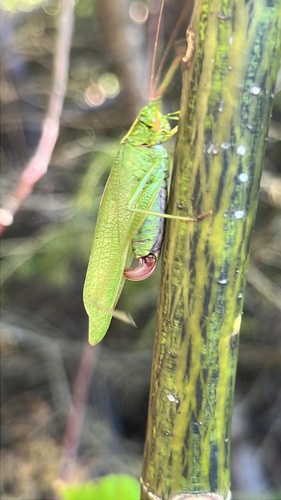
Crickets and katydids have long, thread-like antennae, often longer than the body, and are mostly active at night. They sing by rubbing their wings together. Crickets are usually brown or black and somewhat flattened. Katydids, called bush crickets in Europe, are usually green, with wings shaped like leaves.
Female crickets and katydids have an egg-laying tube at the tip of the abdomen. It can look like a stinger, but it can't sting.
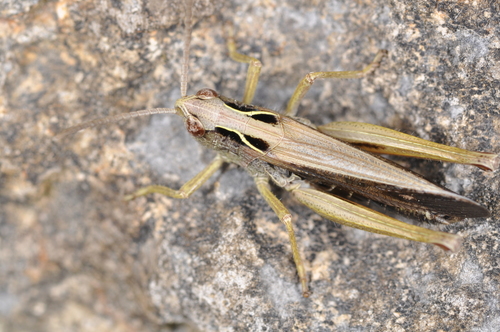
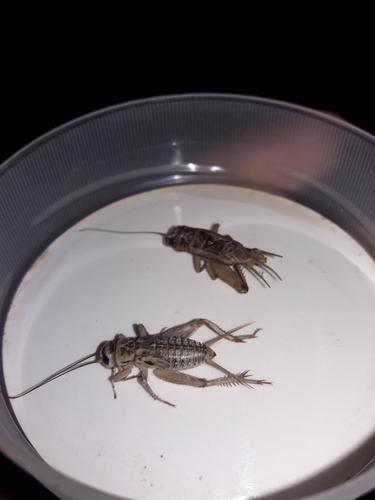
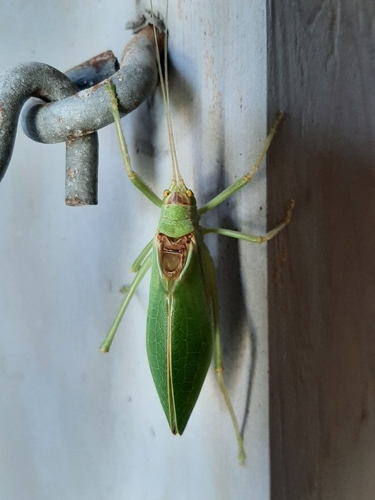
Do grasshoppers bite?
Grasshoppers can bite if you grab one, especially larger species, but they rarely break the skin. They also kick with their spiny hind legs, which can scratch, and may bring up a drop of brown liquid sometimes called tobacco juice. It's partly digested plant material and harmless; just wash it off.
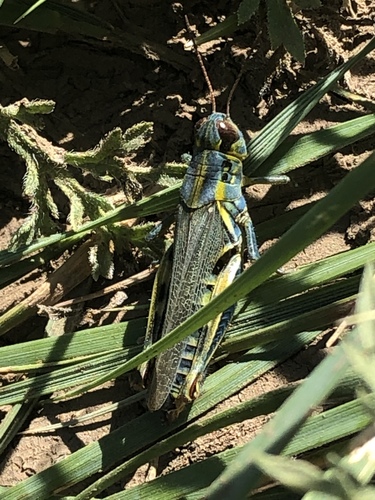
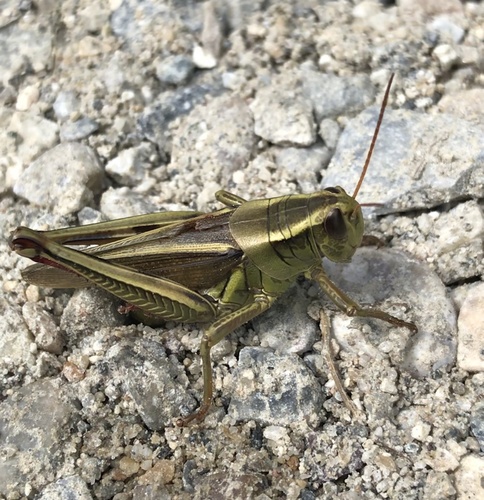
The differential grasshopper is a large yellow-green grasshopper of North America with black chevron marks, like a herringbone, on its big hind legs. The red-legged grasshopper has red lower hind legs, and the two-striped grasshopper has two pale stripes running from the eyes down its back. All three are common in gardens and fields and can nip when handled, but they're harmless.
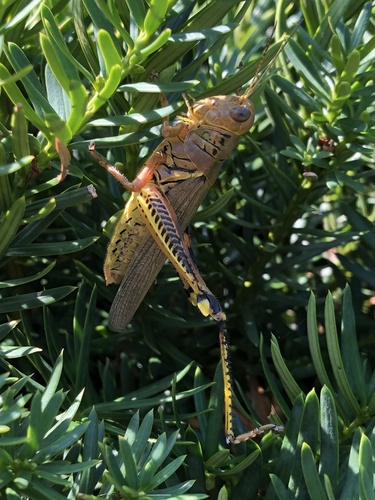
Lubber grasshoppers: don't let pets eat them
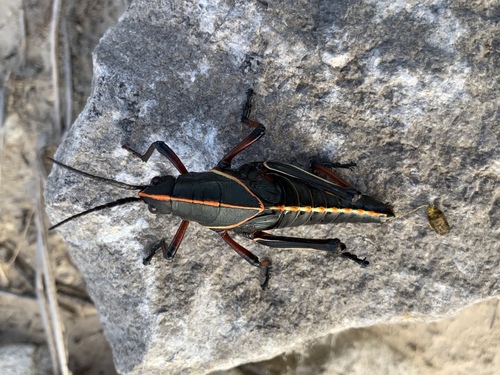
The eastern lubber grasshopper of the southeastern US is big, up to about 7 cm, heavy and slow, and can barely fly. Adults are yellow to orange with black markings; the young are black with a yellow or red stripe. When bothered, lubbers hiss and squirt a foul-smelling foam.
Lubbers are toxic to eat. Dogs, cats, chickens and birds that eat one can drool, vomit and become unwell, so keep pets away from them. They aren't dangerous to touch, though they can bite.
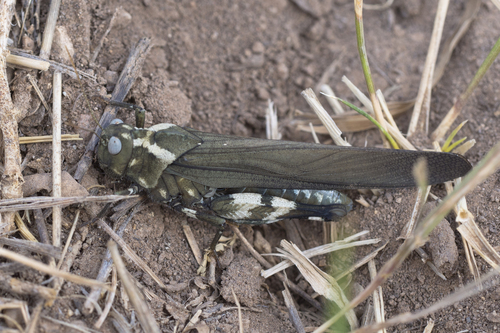
The plains lubber grasshopper of the Great Plains and southwest is a chunky, brown and cream grasshopper with short wings. It's also slow and can bite if handled.
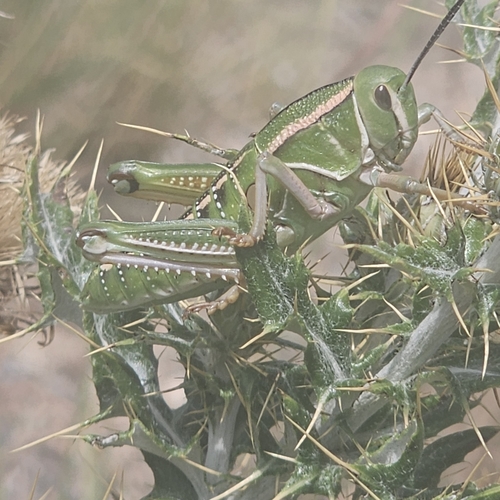
Do crickets bite? Crickets in the house
Crickets can bite, but it's rare and very mild, and they don't carry diseases. The ones that come indoors are a noise problem more than anything.
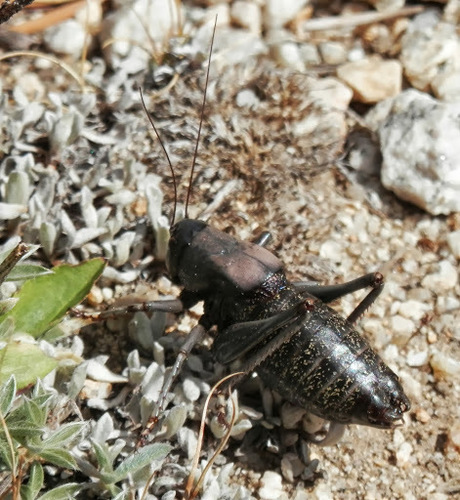
The fall field cricket is shiny black and about 2 cm long, common across North America. In autumn it moves into garages and houses, where males chirp at night. The house cricket and the tropical house cricket are paler, tan to light brown; they're bred as pet food and sometimes escape.
Camel crickets have humped backs, very long legs and antennae, and no wings. They live in damp basements, garages and crawl spaces and jump towards you when startled, which can feel like an attack, but they don't bite people. In large numbers they can chew fabrics and cardboard. Reducing damp and sealing gaps keeps them out.
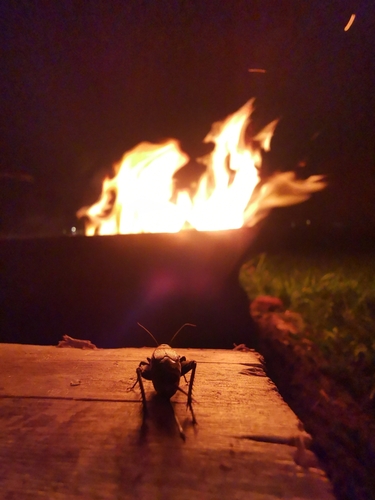
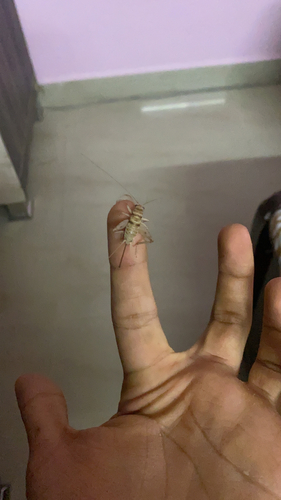
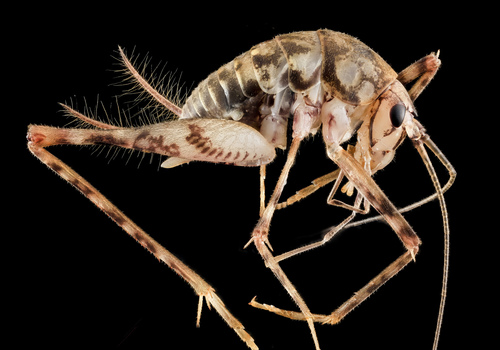
Do bush crickets and katydids bite?
Large katydids and bush crickets have strong jaws, and the biggest ones can give a painful nip that may draw a little blood. They're not venomous.
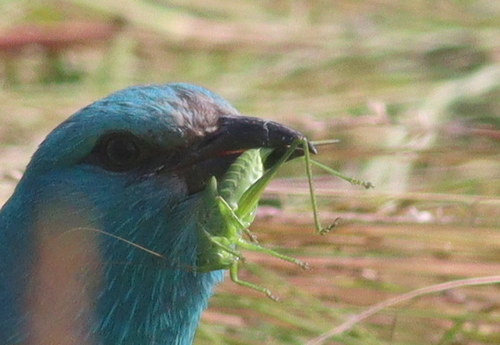
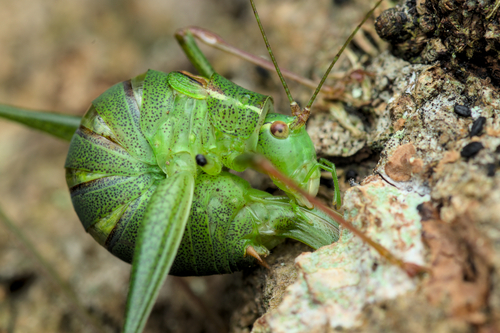
The great green bush cricket of Europe is bright green and up to about 5 cm long, plus a long egg-laying tube in females. It's the one most likely to bite if handled. The common true katydid of eastern North America is leaf-green and calls 'katy-did' from treetops on summer nights.
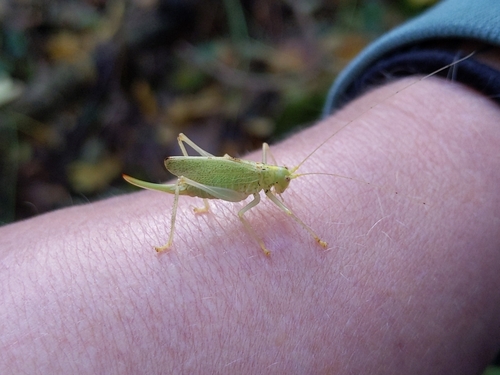
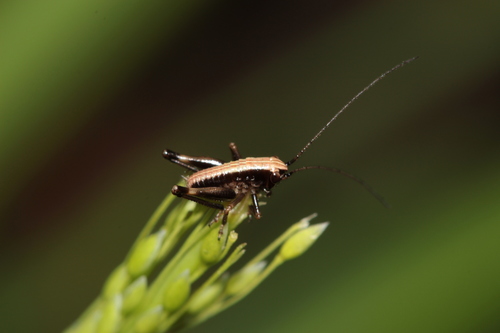
The oak bush cricket is small and pale green and often flies to lit windows in late summer and autumn. Speckled and dark bush crickets are smaller still. All of these are harmless and rarely bite.
Mole crickets and Mormon crickets
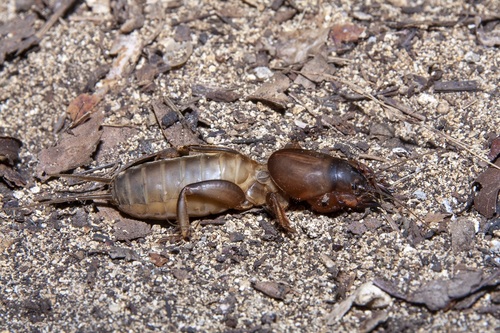
Mole crickets are brown, velvety and about 4-5 cm long, with broad, shovel-like front legs for digging. They tunnel under lawns and gardens, especially in damp soil, and can pinch with their front legs if picked up, but they don't sting.
The Mormon cricket of the western US is actually a large, flightless katydid, about 5-7 cm, dark brown, green or black. In some years huge bands march across roads and crops. It can bite if handled, but it's harmless.
Are grasshoppers and crickets safe for pets?
A dog or cat that eats the odd grasshopper or cricket is usually fine, though the hard legs and wings can cause a little vomiting. Crickets are safe enough to be sold as food for reptiles.
The exception is lubber grasshoppers, which are toxic. Call your vet if a pet has eaten one, or keeps vomiting or seems unwell after eating any insect.
If you're not sure what you've found, compare it with the photos on this page, or identify it from a photo.
?Frequently asked questions
Can grasshoppers bite you?
Yes, if you hold one. Large grasshoppers can give a pinch with their jaws, but it rarely breaks the skin and isn't venomous. They may also kick with their spiny hind legs or leave a drop of harmless brown liquid.
Do crickets bite people?
Rarely, and the bite is mild. House crickets and field crickets are harmless. Camel crickets jump towards you when startled but don't bite people. Large bush crickets and katydids can give a sharper nip if handled.
Are lubber grasshoppers poisonous?
Yes, to animals that eat them. Eastern lubber grasshoppers are toxic and can make dogs, cats and birds drool, vomit and become unwell. They're safe to touch, though they can bite and squirt a smelly foam.
What's the difference between a cricket and a grasshopper?
Grasshoppers have short antennae and are active in the day. Crickets have long, thread-like antennae, are usually brown or black and are active at night, when males chirp by rubbing their wings together.
Why are there crickets in my basement?
They're usually camel crickets, which like dark, damp places, or field crickets moving indoors in autumn. Reduce damp with a dehumidifier, clear clutter and seal gaps around doors, windows and foundations.
Written by the Insect Scanner team, last updated 2026-11-11. Identification from photos is never certain: don't handle insects you can't identify, and get medical advice for bites, stings or allergic reactions.