
Carolina grasshopper
Dissosteira carolina · Band-winged grasshoppers
A widespread North American band-winged grasshopper with distinctive dark wings, common in dry, open habitats and sometimes a minor crop pest.
!Is the Carolina grasshopper dangerous?
No. Carolina grasshoppers are not venomous or poisonous. They do not normally bite people; a defensive pinch is possible if handled roughly but is harmless. They can be a nuisance when very numerous but pose no direct health threat. Wash hands after handling insects and plant material.
Pets
Generally harmless to pets. A dog or cat might catch and eat one; this is not toxic but could cause mild gastrointestinal upset in some animals if consumed in quantity.
📖Overview
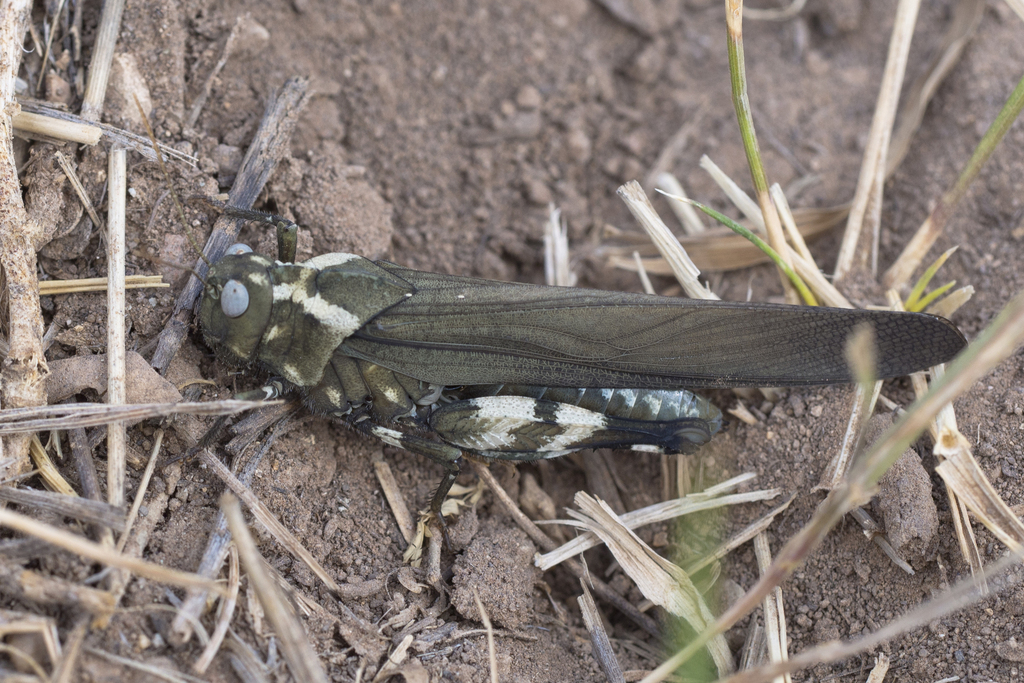
Dissosteira carolina is a medium to large band-winged grasshopper found across much of North America. Adults are most noticeable in summer and early fall; when flushed they reveal darker hind wings which contrast with the body. They prefer open, dry habitats such as fields, roadsides, dunes and sandy lots. They feed mainly on grasses and low vegetation and can be locally abundant, occasionally causing noticeable feeding damage in rangeland or grain crops but are not usually catastrophic in most ecosystems.
These grasshoppers are diurnal and often sun themselves on bare ground or vegetation. Males produce soft buzzing flight and sometimes stridulation; eggs are laid in soil in late summer and overwinter, with nymphs emerging in spring or early summer. They are an important food source for birds, small mammals and predatory insects.
🔍How to identify a Carolina grasshopper
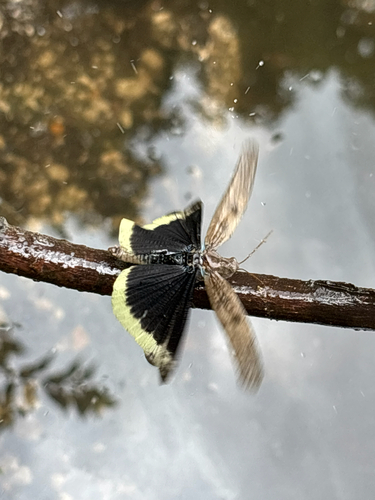
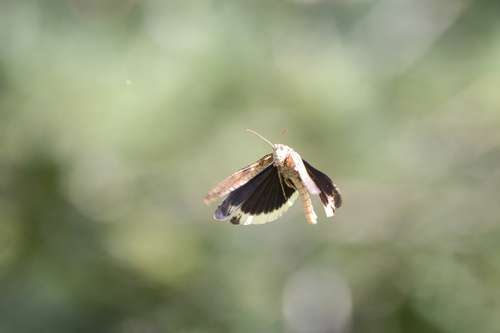
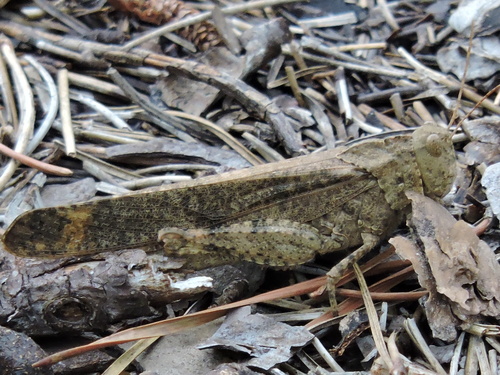
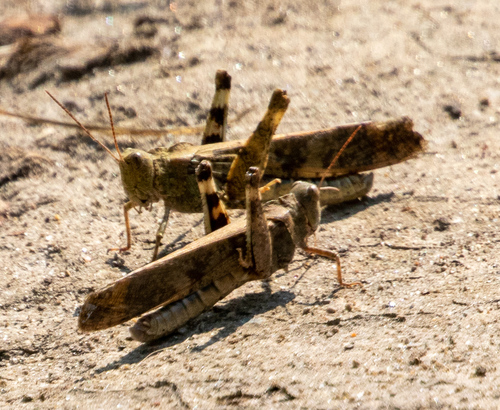
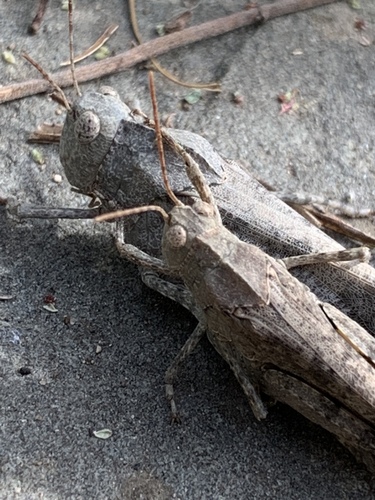
Adults are 25-50 mm long (body length). Body color ranges from gray-brown to tan and occasionally yellowish; many individuals are cryptically patterned with mottling that matches dry soil or vegetation. The hind wings are black with a broad pale yellowish outer margin and are conspicuous in flight. The pronotum (dorsal plate behind the head) is rounded with a central ridge and lacks bright lateral carinae. Wings typically extend beyond the abdomen in mature adults. Antennae are relatively short and threadlike compared with katydids.
- Look for medium-large grasshopper 25-50 mm long with mottled gray-tan body matching dry ground
- Flush the insect; black hind wings with a pale yellowish border are diagnostic in flight
- Short antennae and rounded pronotum without long spines distinguish it from katydids
Lookalikes
Differential grasshopper Melanoplus differentialis
Differential grasshopper is olive to yellow with bold black chevrons on the hind femur and clear hind wings; D. carolina is mottled grey-brown with black, pale-edged hind wings.
Mourning cloak Nymphalis antiopa
In flight the black, pale-edged hind wings of the Carolina grasshopper can resemble a mourning cloak butterfly, but the grasshopper lands on bare ground and folds its wings, becoming a mottled grey-brown grasshopper; the mourning cloak is a butterfly with maroon-brown wings edged in cream.
↻Life cycle
Egg
Females lay pods of eggs in soil in late summer; eggs overwinter in the ground and hatch the following spring or early summer.
Nymph
Wingless nymphs resemble adults but are smaller and undergo several molts (instars) while feeding on grasses and low plants.
Adult
Winged adults appear in midsummer; they mate and females lay eggs in late summer before dying in autumn.
🍃Diet and predators
Young eat
Grasses and low herbaceous plants; generalist herbivore
Adults eat
Grasses, forbs and low vegetation; will feed on a range of plants but prefers dry-site grasses
Predators of the young
Birds, small mammals, predatory insects (e.g., robber flies, mantids) and spiders
Predators of adults
Birds, small mammals, predatory insects, and occasionally reptiles
🌱Effect on plants and gardens
Feeds primarily on grasses and low herbaceous plants; in high numbers can cause defoliation of pasture, rangeland, lawns or some crops but usually does not reach economically damaging outbreak levels on its own.
How to get rid of Carolina grasshoppers
Monitor populations in pasture or crop fields. Encourage natural predators (birds, parasitoids, predatory insects). For heavy localized infestations, mechanical control (vacuuming in small areas), barriers or insecticidal baits labeled for grasshoppers can be used following label directions. Reducing bare, warm exposed soil (egg-laying sites) and maintaining healthy vegetation cover can reduce local abundance.
📍Where and when to find it
Adults on bare ground, dirt roads, fences, low plants and grasses. Nymphs and eggs found in grassy areas and shallow soil; eggs in soil pods.
Best time
Midsummer to early fall during daylight hours; warm sunny days are best for observing flight displays.
Observation tips
Approach slowly and watch for sudden flight revealing dark hind wings. Photographs in flight or perched on bare soil highlight identification features.
✨Fun facts
- When disturbed, the Carolina grasshopper's sudden display of darker hind wings can startle predators and observers.
- They are well adapted to hot, dry habitats and are often seen sunning on bare soil or warm pavement.
- Despite the common name 'locust' sometimes used regionally, Dissosteira carolina is not a swarming locust species.
?Frequently asked questions
Are Carolina grasshoppers dangerous?
No. They are not venomous or poisonous to people. They do not transmit diseases and only rarely will pinch if handled roughly.
Do Carolina grasshoppers bite or sting?
They do not sting. Biting is uncommon and not harmful; any pinch would be minor and brief.
Why are Carolina grasshoppers in my yard?
They prefer dry, open, sunny areas with grasses and sparse vegetation. Lawns, sandy patches, driveways and recently disturbed ground provide good habitat for feeding and egg laying.
How do I get rid of Carolina grasshoppers?
For small numbers, hand collection or sweeping into a container works. Reduce bare soil and keep vegetation healthy to discourage egg laying. For large infestations, use integrated methods: encourage predators, use traps or baits labeled for grasshopper control, and consult agricultural extension services before applying insecticides.
Will they damage my garden or crops?
They feed on grasses and low plants and can cause damage if populations are high, especially in pasture or seedling crops. Most years they cause only localized or minor damage.
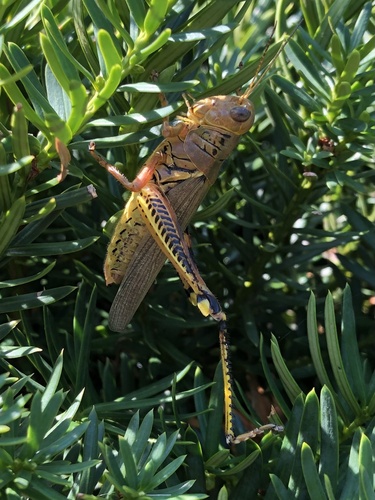
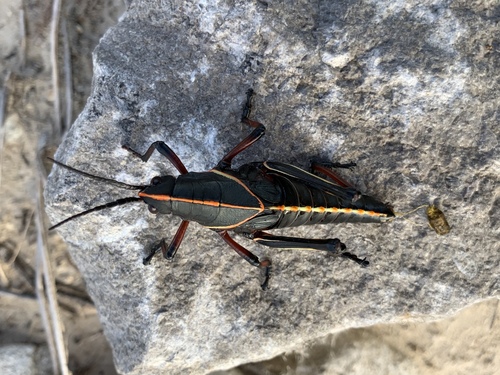
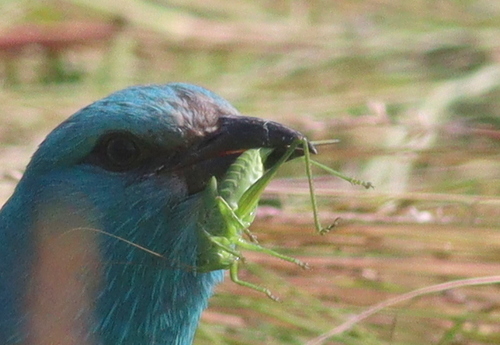
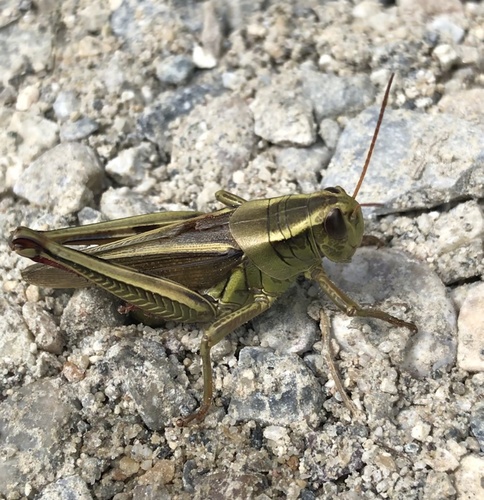
📷Photos of the Carolina grasshopper
More grasshoppers & crickets
Non-toxic
Non-toxic
Non-toxic
Irritating secretion
Non-toxic
Non-toxic
This guide was written with AI assistance and fact-checked, last updated 2026-10-10. Identification from photos is never certain: don't handle insects you can't identify, and get medical advice for bites, stings or allergic reactions. More about the Carolina grasshopper: iNaturalist, Wikipedia.