
Meadow grasshopper
Pseudochorthippus parallelus · Short-horned grasshoppers
A common small grassland grasshopper of Europe and parts of Asia, usually green or brown, harmless to people and active by day in summer.
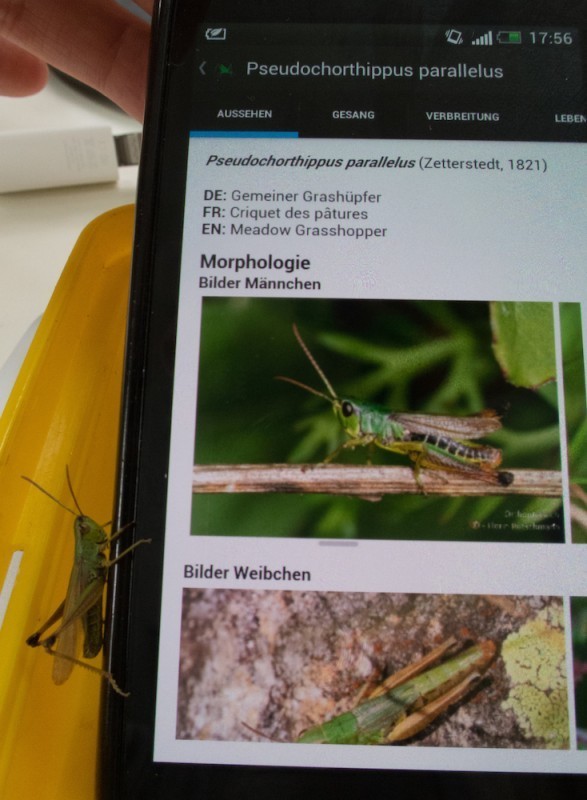
!Is the meadow grasshopper dangerous?
No. Harmless to people. They do not have venom and will not actively bite; a grasshopper may give a harmless pinch if handled roughly. No special first aid is needed other than cleaning any minor skin abrasion.
Pets
Generally not poisonous to pets. Dogs or cats may occasionally catch and eat grasshoppers; this can cause mild stomach upset in some animals but is not toxic.
📖Overview
Pseudochorthippus parallelus is a widespread short-horned grasshopper found across Europe and into parts of western Asia. It prefers damp meadows, roadside verges, pastures and other grassy habitats and is often abundant where there's a mix of grasses and low herbs. It is diurnal, active in warm weather and commonly heard as short bursts of rapid, scratchy chirps produced by males rubbing their hind legs on the forewings.
This species is herbivorous and typically does not cause significant agricultural damage at normal population levels. It overwinters as eggs laid in soil or plant stems; nymphs appear in spring and develop through several instars to adults by late spring or summer, depending on latitude and local climate.
🔍How to identify a meadow grasshopper
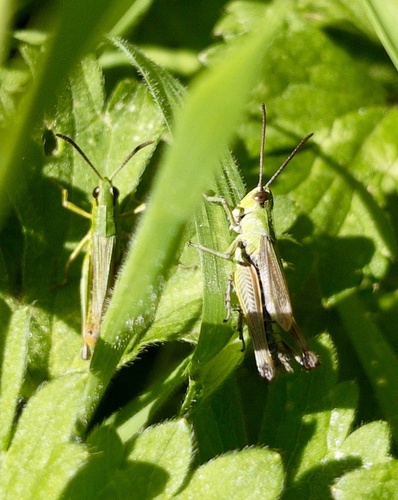
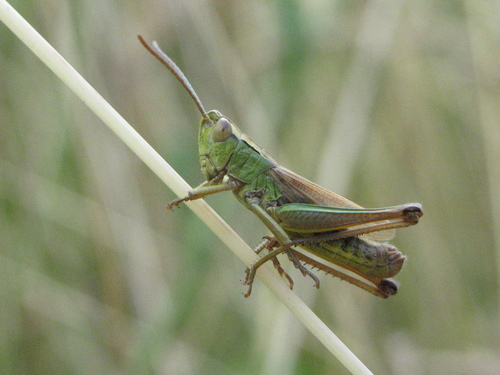
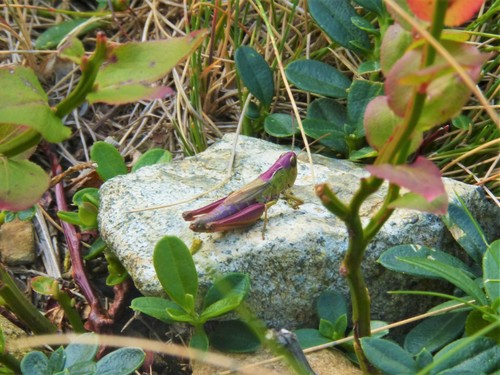
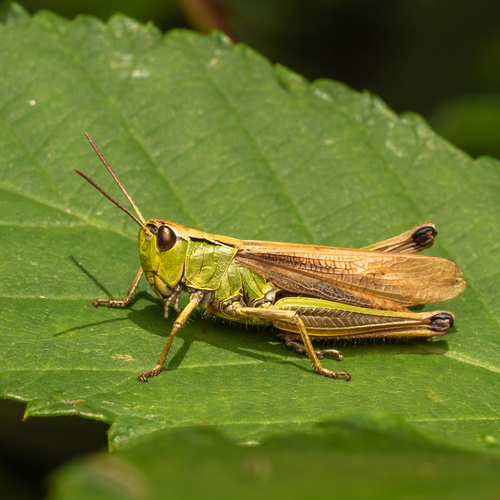
Adults are slender, 10-20 mm in body length (males smaller than females). Colouration varies from bright green to mottled brown and often includes darker longitudinal lines on the dorsum. Females have short forewings that cover only part of the abdomen and cannot fly; males' wings are longer but usually still fall short of the abdomen tip, and fully winged individuals are rare. Males have a more conspicuous song and a more slender abdomen; females have a broader abdomen with a short ovipositor. Eyes are rounded and paler than the body.
- Small, slender short-horned grasshopper 10-20 mm long with green or brown colour forms
- Male song is a short burst of rapid, scratchy chirps, repeated at intervals, produced by rubbing hind leg on forewing
- Longitudinal darker lines on the dorsum and short wings; females' wings are especially short and cannot be used for flight
- Found in damp meadows and grassy areas; active by day
Lookalikes
Field grasshopper Chorthippus brunneus
C. brunneus often has different striping patterns and a slightly different song; careful comparison of male song and subtle body markings separates them.
Common green grasshopper Omocestus viridulus
O. viridulus has fully developed wings in both sexes and a long, ticking song that builds up over 10-20 seconds; female meadow grasshoppers have very short wings.
↻Life cycle
Egg
Eggs are laid in soil or in plant stems/roots in late summer; they overwinter and hatch the following spring in temperate regions.
Nymph
Wingless nymphs resemble small adults and go through multiple moults (instars) while feeding on grasses and herbs.
Adult
Adults develop wings (length varies among populations), mate and the males produce the characteristic song; adults are present through late spring and summer.
🍃Diet and predators
Young eat
Grasses and various low herbaceous plants
Adults eat
Grasses and low herbs; primarily herbivorous
Predators of the young
Birds, small mammals, spiders, predatory insects such as ground beetles
Predators of adults
Birds, small mammals, predatory insects and parasitoids
🌱Effect on plants and gardens
Feeds on grasses and low herbaceous plants. At normal densities it does not usually cause serious damage to pasture or crops, though local outbreaks of grasshoppers in grassland habitats can increase grazing pressure.
📍Where and when to find it
Look on grasses and low vegetation in meadows, fields and roadside verges; nymphs on young shoots in spring, adults from late spring through summer.
Best time
Best seen on warm sunny days in late spring and summer; males sing during daylight hours when warm.
Observation tips
Listen for the short, scratchy bursts of male song to locate them. Approach slowly and photograph from low angles to show body stripes and wing length.
✨Fun facts
- Male meadow grasshoppers produce species-specific songs used to attract females; closely related species are often distinguished by their song.
- Colour variation (green to brown) helps individuals match local vegetation and avoid predators.
- They are an important food source for many birds and small mammals in grassland ecosystems.
?Frequently asked questions
Are meadow grasshoppers dangerous?
No. Meadow grasshoppers are not venomous and do not pose a health risk to people.
Do meadow grasshoppers bite or sting?
They do not sting and rarely bite; a defensive nip is possible if handled roughly but is harmless.
Why do I find them in my garden?
They are attracted to grassy areas and mixed herb vegetation. Gardens with lawns, wildflower patches or long grass provide food and shelter.
How can I get rid of meadow grasshoppers?
They are usually not worth removing. For heavy local infestations, reduce long grass and remove excess plant debris to make the area less attractive. Chemical control is rarely necessary and should be avoided to protect beneficial wildlife.
Where do meadow grasshoppers live?
In damp meadows, pastures, roadside verges and other grassy habitats across Europe and parts of western Asia.
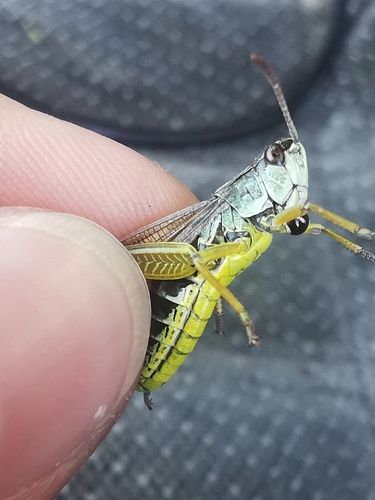
📷Photos of the meadow grasshopper
More grasshoppers & crickets
Non-toxic
Non-toxic
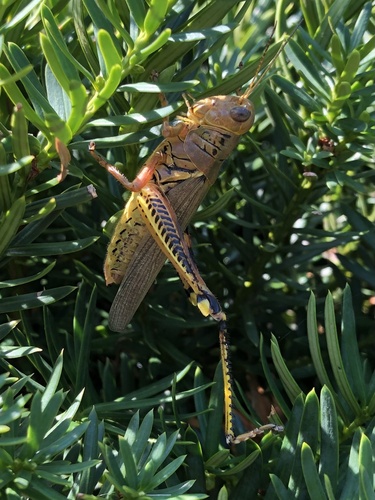
Non-toxic
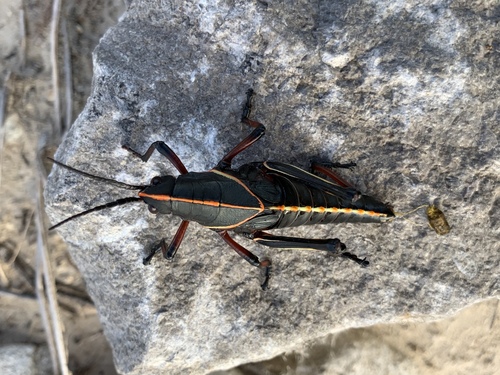
Irritating secretion
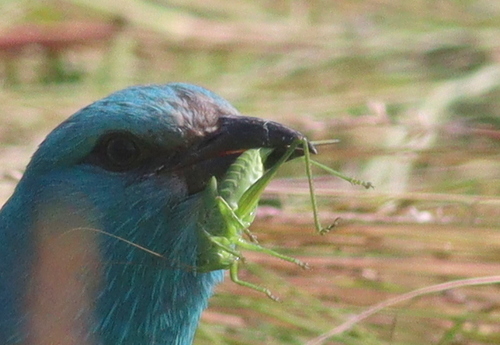
Non-toxic
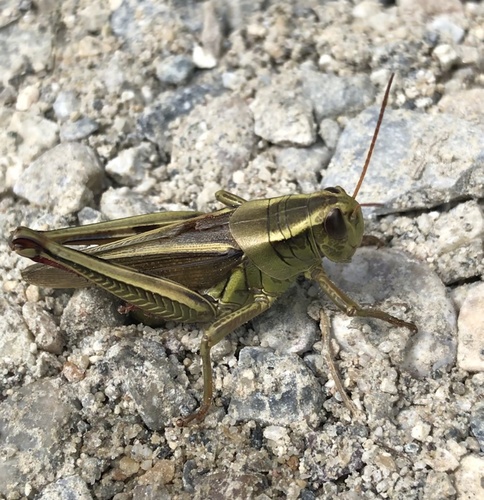
Non-toxic
This guide was written with AI assistance and fact-checked, last updated 2026-10-10. Identification from photos is never certain: don't handle insects you can't identify, and get medical advice for bites, stings or allergic reactions. More about the meadow grasshopper: iNaturalist, Wikipedia.