
Meadow grasshopper vs Common green grasshopper
These two are easy to mix up. Here's how to tell a meadow grasshopper from a common green grasshopper, and whether either one bites or stings.
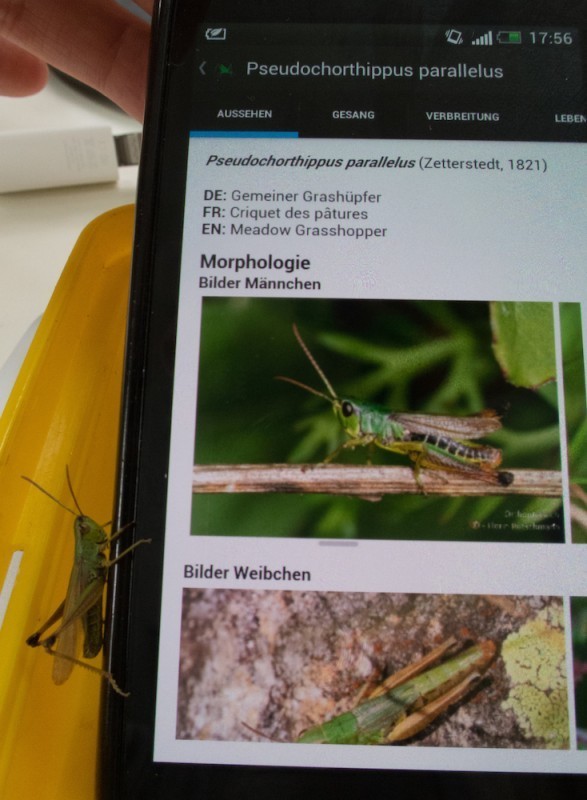
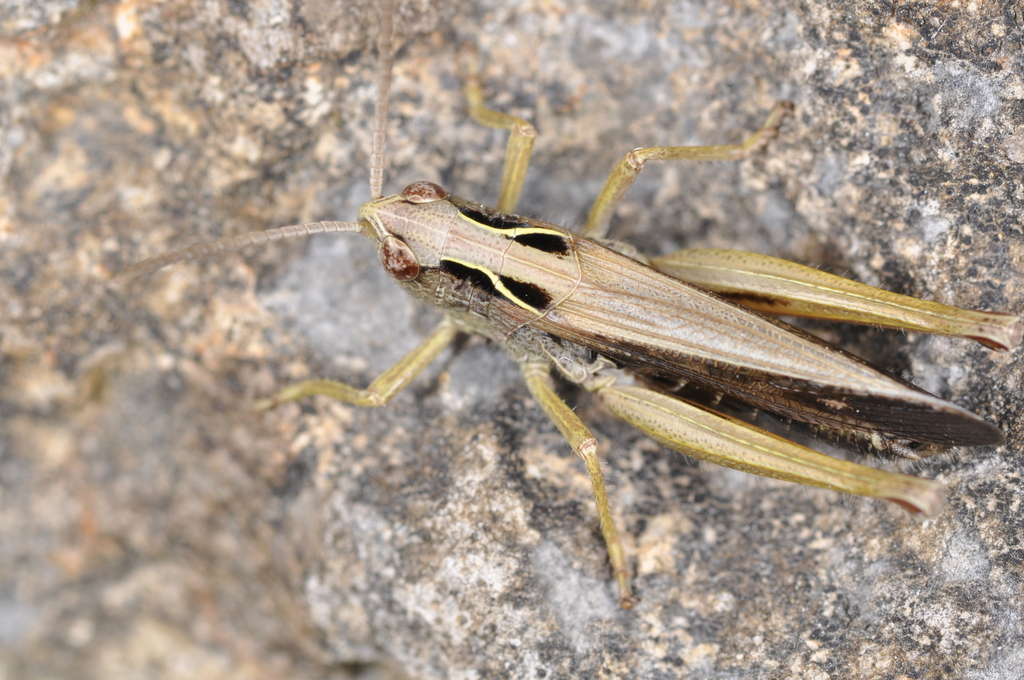
Meadow grasshopper
Pseudochorthippus parallelus
Common green grasshopper
Omocestus viridulus
≠The key differences
O. viridulus has fully developed wings in both sexes and a long, ticking song that builds up over 10-20 seconds; female meadow grasshoppers have very short wings.
Usually short-winged (females have very short wings) and the male song is a series of short chirps rather than the long, ticking song that builds to a buzz; close inspection of the pronotum also separates them.
⚖︎Side by side
| Meadow grasshopper | Common green grasshopper | |
|---|---|---|
| To humans | Non-toxic | Non-toxic |
| Size | 10-20 mm body length; wings variable | 12-22 mm body length (small to medium for acridid grasshoppers) |
| Colours | Green, Brown, Yellowish, Black (markings) | Bright green, Olive green, Brown (morph), Pale yellow markings |
| Family | Acrididae | Acrididae |
| Habitat | Damp meadows, pastures, roadside verges, grassy clearings and rough grassland | Grassy open habitats: meadows, pastures, heathland, roadside verges and rough grass. |
| Range | Widespread across Europe and into parts of western Asia; common in temperate grassland regions | Widespread across Europe and into parts of western and central Asia (Palearctic region). |
| Active | Mainly spring and summer, active by day when temperatures are warm and sunny | Active spring to early autumn; diurnal (day-active), most active in warm, sunny weather. |
| Pest? | No | No |
🔍How to spot a meadow grasshopper
- Small, slender short-horned grasshopper 10-20 mm long with green or brown colour forms
- Male song is a short burst of rapid, scratchy chirps, repeated at intervals, produced by rubbing hind leg on forewing
- Longitudinal darker lines on the dorsum and short wings; females' wings are especially short and cannot be used for flight
- Found in damp meadows and grassy areas; active by day
🔍How to spot a common green grasshopper
- Bright green body (though brown morphs exist) with elongate, slender form.
- Short antennae (typical of Acrididae/short-horned grasshoppers).
- Wings reaching at least to end of abdomen in adults and strong hind legs for jumping.
- Male song: a steady buzzing/stridulating sound produced by rubbing legs and wings — useful for field ID.
?Frequently asked questions
What is the difference between a meadow grasshopper and a common green grasshopper?
O. viridulus has fully developed wings in both sexes and a long, ticking song that builds up over 10-20 seconds; female meadow grasshoppers have very short wings. Usually short-winged (females have very short wings) and the male song is a series of short chirps rather than the long, ticking song that builds to a buzz; close inspection of the pronotum also separates them.
Is a meadow grasshopper or a common green grasshopper more dangerous?
Meadow grasshopper: Non-toxic. Common green grasshopper: Non-toxic. Harmless to people. Not dangerous.
Identification from photos is never certain: don't handle insects you can't identify, and get medical advice for bites, stings or allergic reactions.