
Common field grasshopper vs Meadow grasshopper
These two are easy to mix up. Here's how to tell a common field grasshopper from a meadow grasshopper, and whether either one bites or stings.
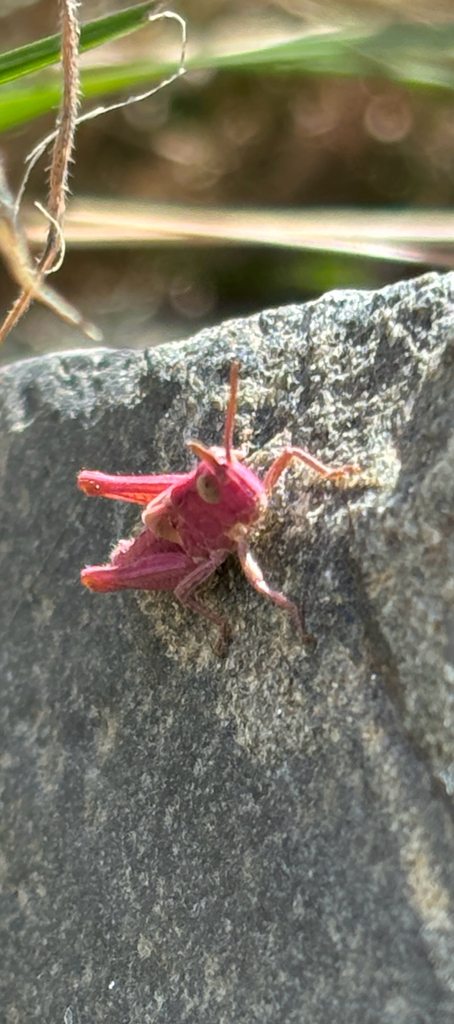
Common field grasshopper
Chorthippus brunneus
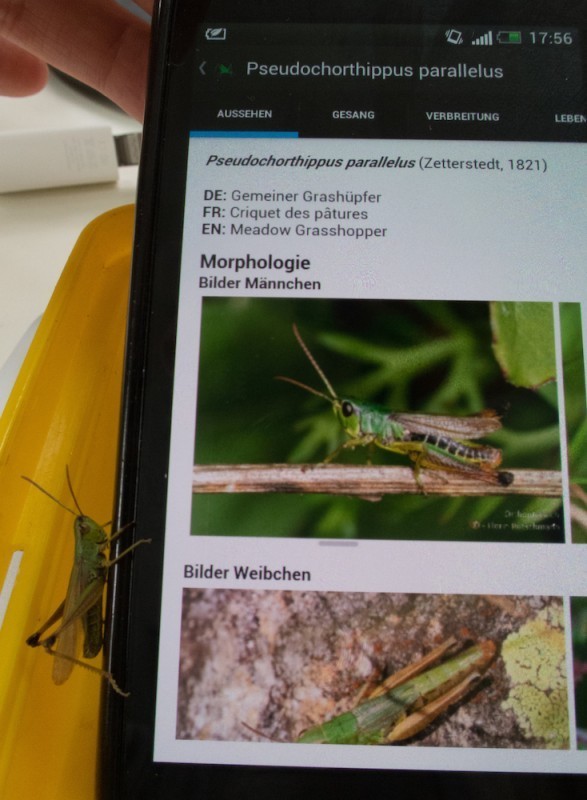
Meadow grasshopper
Pseudochorthippus parallelus
≠The key differences
Meadow grasshoppers are usually green and short-winged (females have very short wings) and are rarely able to fly; the male song also differs, which is the most practical field cue.
C. brunneus often has different striping patterns and a slightly different song; careful comparison of male song and subtle body markings separates them.
⚖︎Side by side
| Common field grasshopper | Meadow grasshopper | |
|---|---|---|
| To humans | Non-toxic | Non-toxic |
| Size | About 14-25 mm body length (females larger than males) | 10-20 mm body length; wings variable |
| Colours | Brown, Pale green, Grey | Green, Brown, Yellowish, Black (markings) |
| Family | Acrididae | Acrididae |
| Habitat | Dry grasslands, meadows, heath, roadside verges and rough turf with abundant grasses | Damp meadows, pastures, roadside verges, grassy clearings and rough grassland |
| Range | Widespread across most of Europe and into parts of western Asia | Widespread across Europe and into parts of western Asia; common in temperate grassland regions |
| Active | Late spring to early autumn; most active on warm, sunny days, during daylight hours | Mainly spring and summer, active by day when temperatures are warm and sunny |
| Pest? | No | No |
🔍How to spot a common field grasshopper
- Small compact grasshopper about 14-25 mm long with short antennae (short-horned).
- Colour variable: often uniform brown or pale green; look for camouflage patterning matching dry grass.
- Listen for the male's rasping song (stridulation) produced by rubbing hind leg against forewing — song differs from related species.
- Habitat: found on low grasses in dry, sunny meadows and roadside verges; often seen hopping when disturbed.
🔍How to spot a meadow grasshopper
- Small, slender short-horned grasshopper 10-20 mm long with green or brown colour forms
- Male song is a short burst of rapid, scratchy chirps, repeated at intervals, produced by rubbing hind leg on forewing
- Longitudinal darker lines on the dorsum and short wings; females' wings are especially short and cannot be used for flight
- Found in damp meadows and grassy areas; active by day
?Frequently asked questions
What is the difference between a common field grasshopper and a meadow grasshopper?
Meadow grasshoppers are usually green and short-winged (females have very short wings) and are rarely able to fly; the male song also differs, which is the most practical field cue. C. brunneus often has different striping patterns and a slightly different song; careful comparison of male song and subtle body markings separates them.
Is a common field grasshopper or a meadow grasshopper more dangerous?
Common field grasshopper: Non-toxic. Meadow grasshopper: Non-toxic. Not venomous and not dangerous. Harmless to people.
Identification from photos is never certain: don't handle insects you can't identify, and get medical advice for bites, stings or allergic reactions.