
Differential grasshopper vs Red-legged grasshopper
These two are easy to mix up. Here's how to tell a differential grasshopper from a red-legged grasshopper, and whether either one bites or stings.
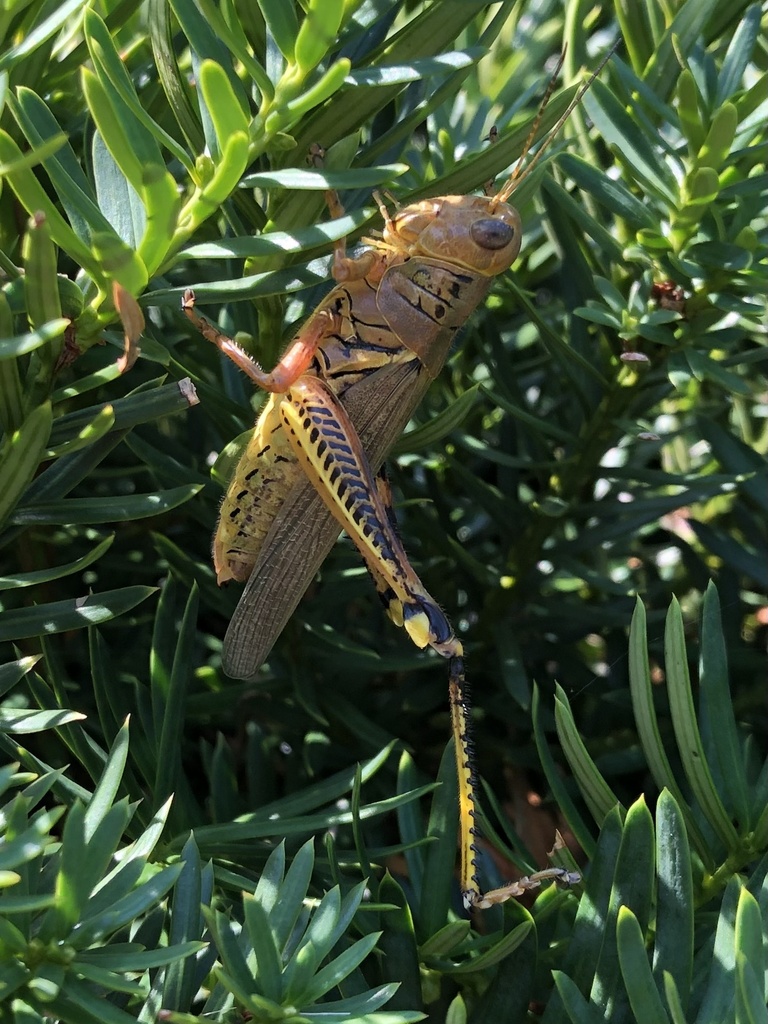
Differential grasshopper
Melanoplus differentialis
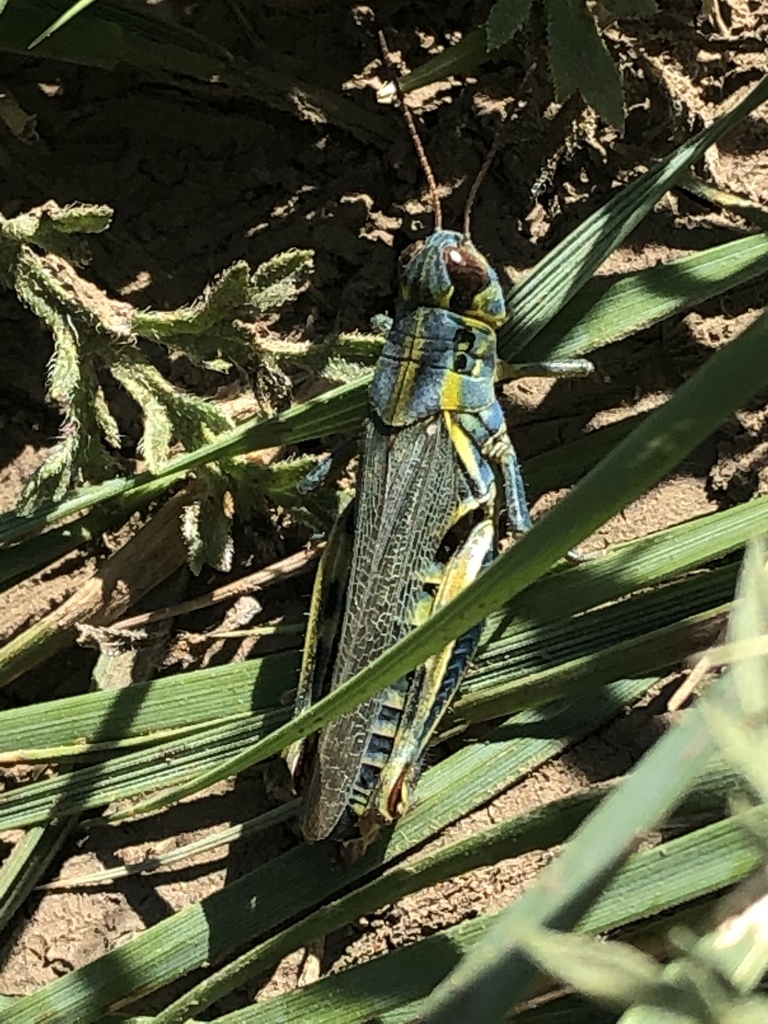
Red-legged grasshopper
Melanoplus femurrubrum
≠The key differences
Larger species with distinctive black wedge markings on the hind femur and different pronotum pattern; differential has more robust body and different stripe patterns on wings and legs.
⚖︎Side by side
| Differential grasshopper | Red-legged grasshopper | |
|---|---|---|
| To humans | Non-toxic | Non-toxic |
| Size | Body length 25-50 mm (females generally larger than males) | About 17-30 mm body length (males smaller, females larger) |
| Colours | Tan, Brown, Yellow-green, Black markings | Brown, Tan, Green, Red (hind femur) |
| Family | Acrididae | Acrididae |
| Habitat | Grasslands, pastures, roadside vegetation, lawns, croplands and other open, grassy or weedy areas | Grassy open areas: meadows, pastures, grasslands, field margins, roadsides |
| Range | Much of the United States (absent from the Pacific Northwest and the far north) south into northern Mexico | Widespread in North America: Canada and the United States, especially common in northeastern and central regions but also found in other areas |
| Active | Late spring to early autumn; most visible and abundant in mid to late summer during daytime | Active in spring as nymphs and as adults in mid to late summer into autumn; diurnal (active during the day) |
| Pest? | Yes | Yes |
🔍How to spot a differential grasshopper
- Large, robust short-horned grasshopper with body length about 25-50 mm; females larger than males.
- Olive-green to yellowish-brown, fairly smooth and shiny body; older adults may be darker.
- Distinctive black chevron (herringbone) markings on the yellow hind femurs; hind tibiae yellow with black spines.
- Wings long in adults, reaching or extending beyond the abdomen; strong jumping hind legs.
🔍How to spot a red-legged grasshopper
- Look for reddish or pinkish hind femora (thighs) visible when jumping or at close inspection.
- Short antennae (typical of Acrididae) and a low median ridge (carina) on the pronotum.
- Size about 17-30 mm body length with wings in adults; body color variable (brown, tan or green) with a yellowish underside, and red hind tibiae (lower legs) are characteristic.
?Frequently asked questions
What is the difference between a differential grasshopper and a red-legged grasshopper?
Larger species with distinctive black wedge markings on the hind femur and different pronotum pattern; differential has more robust body and different stripe patterns on wings and legs.
Is a differential grasshopper or a red-legged grasshopper more dangerous?
Differential grasshopper: Non-toxic. Red-legged grasshopper: Non-toxic. Not dangerous to people. Not dangerous.
Identification from photos is never certain: don't handle insects you can't identify, and get medical advice for bites, stings or allergic reactions.