
Fork-tailed bush katydid vs Common true katydid
These two are easy to mix up. Here's how to tell a fork-tailed bush katydid from a common true katydid, and whether either one bites or stings.
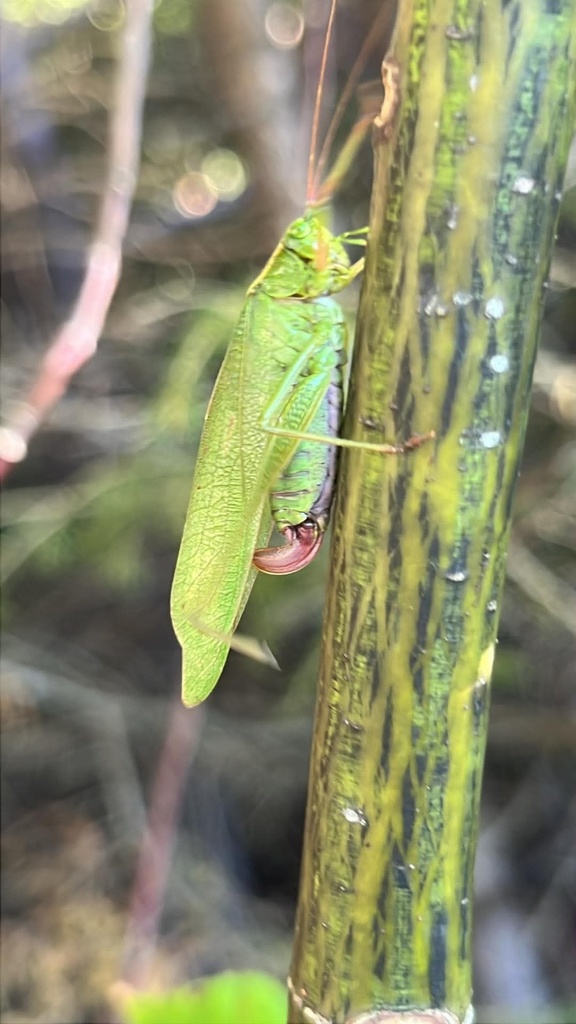
Fork-tailed bush katydid
Scudderia furcata
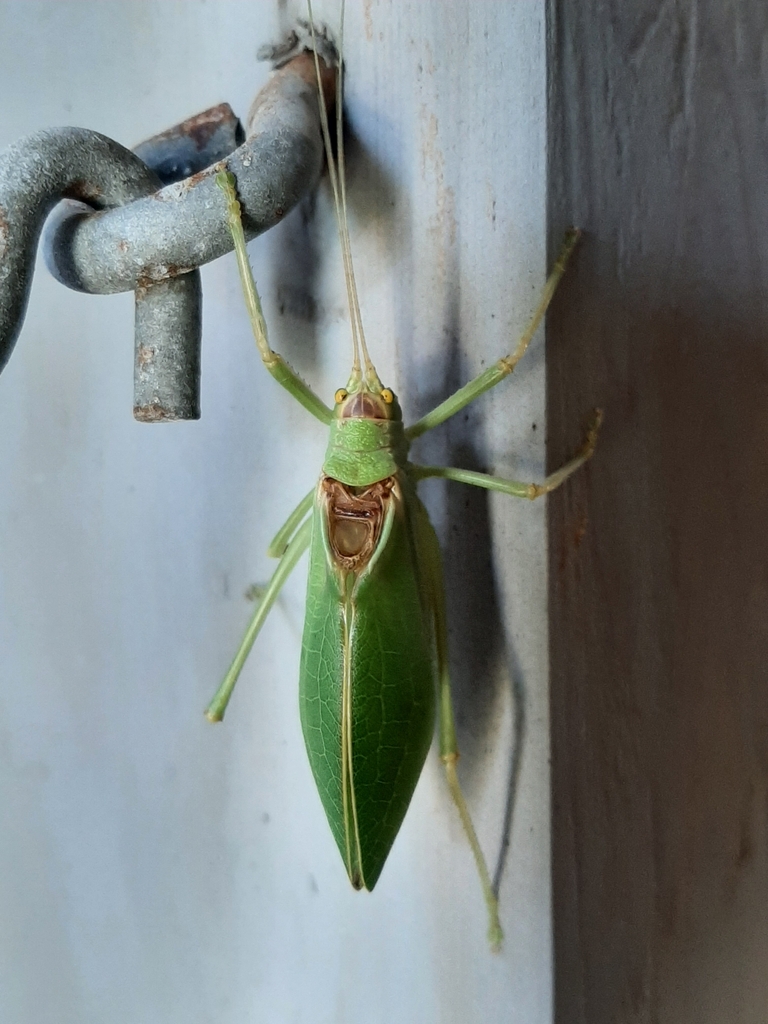
Common true katydid
Pterophylla camellifolia
≠The key differences
Scudderia are slimmer with narrow wings that extend well beyond the abdomen and fly readily; their songs are soft lisps or ticks rather than loud rasps.
⚖︎Side by side
| Fork-tailed bush katydid | Common true katydid | |
|---|---|---|
| To humans | Non-toxic | Non-toxic |
| Size | About 35-45 mm from head to wing tips (excluding long antennae) | Body length about 40-55 mm |
| Colours | Green, Brown, Yellow (highlights and veins), Black (markings and eyes) | Leaf green, Pale green, Brown (veins/older individuals) |
| Family | Tettigoniidae | Tettigoniidae |
| Habitat | Shrubs, hedgerows, woodland edges, gardens, roadside vegetation | Deciduous forests, woodland edges, orchards, gardens, hedgerows and shrubby areas |
| Range | Widespread across much of North America, from southern Canada through most of the United States into Mexico | Eastern North America, from southern Canada through much of the United States |
| Active | Late spring to autumn (most common mid summer to early fall); primarily nocturnal and crepuscular | Late spring to early autumn; adults most noticeable at dusk and at night |
| Pest? | No | No |
🔍How to spot a fork-tailed bush katydid
- Medium-sized green or brown katydid with long filamentous antennae and laterally flattened body
- Males have a forked plate at the tip of the abdomen (hence 'fork-tailed')
- Found on shrubs and low trees; males call at night with a short, buzzing or rasping song
- Females with a short, strongly upcurved ovipositor visible at the rear
🔍How to spot a common true katydid
- Large, bright green, leaf-like body with forewings that mimic a leaf
- Very long, threadlike antennae exceeding the body length
- Females have a short, curved ovipositor at the tip of the abdomen
- Males call at night with a loud, raspy 2-5 pulse "katy-did" song, usually from high in trees
?Frequently asked questions
What is the difference between a fork-tailed bush katydid and a common true katydid?
Scudderia are slimmer with narrow wings that extend well beyond the abdomen and fly readily; their songs are soft lisps or ticks rather than loud rasps.
Is a fork-tailed bush katydid or a common true katydid more dangerous?
Fork-tailed bush katydid: Non-toxic. Common true katydid: Non-toxic. Not venomous. Not venomous.
Identification from photos is never certain: don't handle insects you can't identify, and get medical advice for bites, stings or allergic reactions.