
Eastern lubber grasshopper vs Plains lubber grasshopper
These two are easy to mix up. Here's how to tell an eastern lubber grasshopper from a plains lubber grasshopper, and whether either one bites or stings.
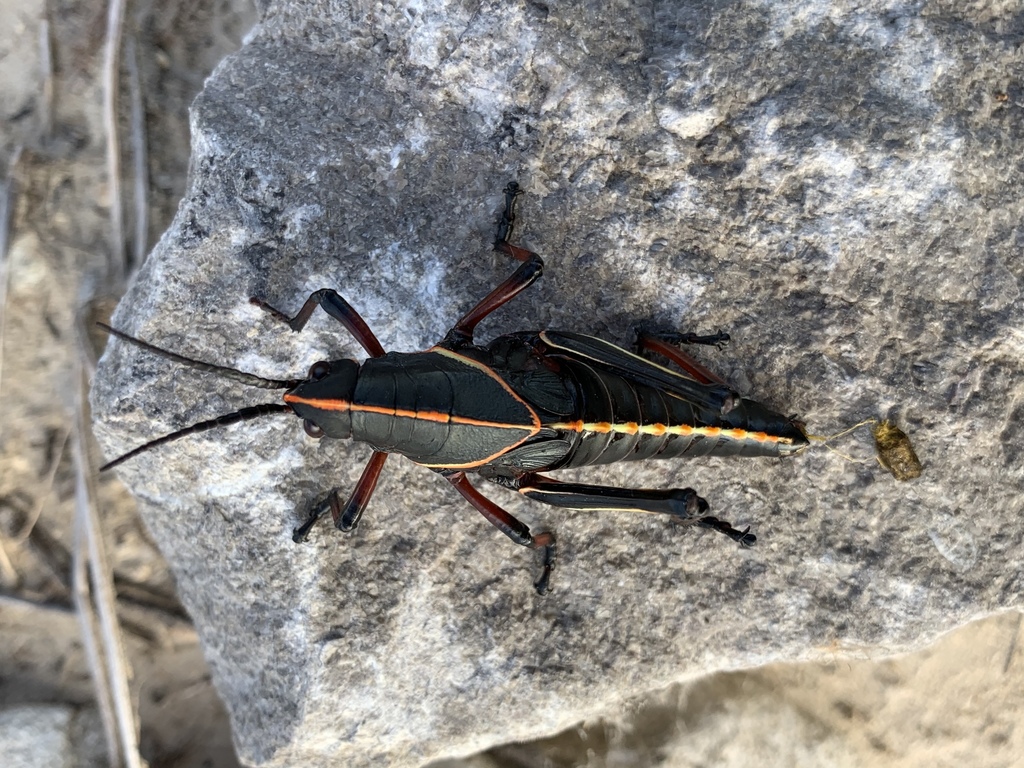
Eastern lubber grasshopper
Romalea microptera
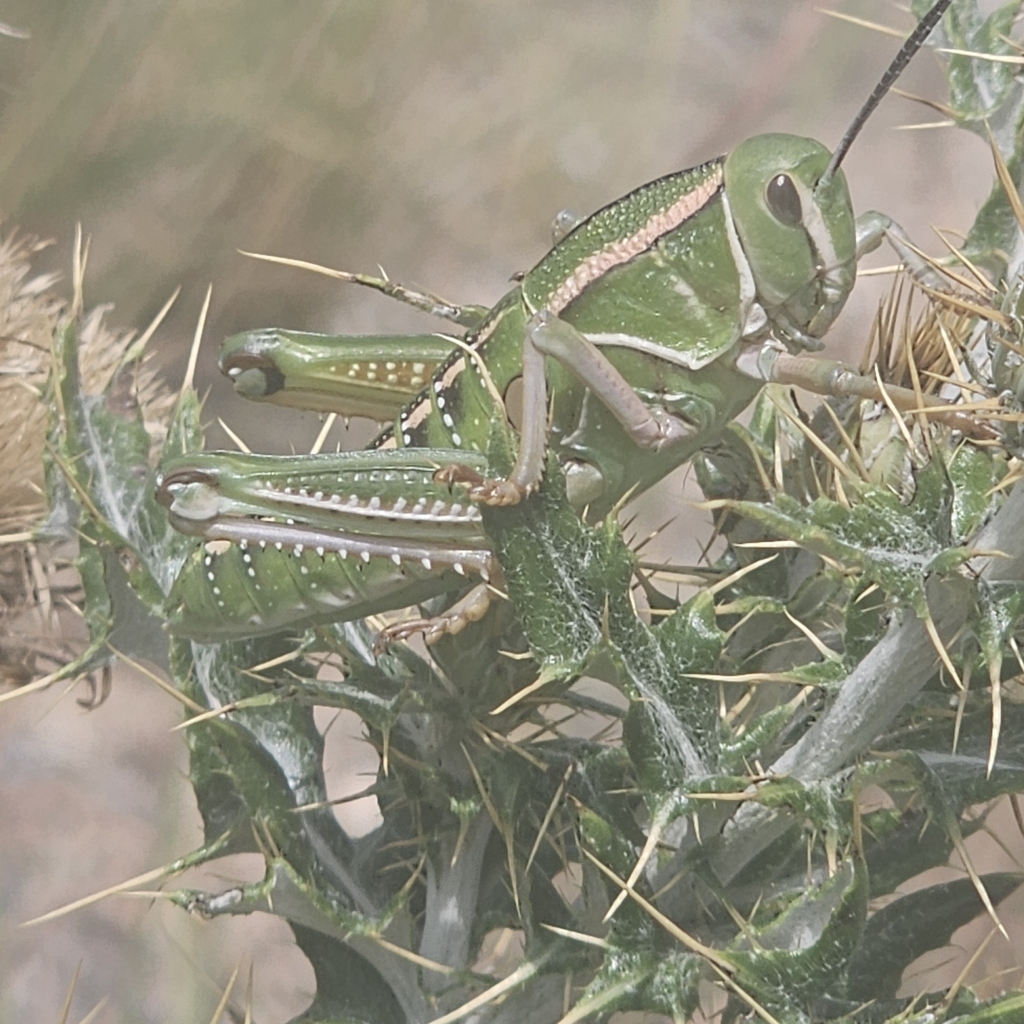
Plains lubber grasshopper
Brachystola magna
≠The key differences
Romalea microptera is usually more brightly colored (yellow, orange or red markings on dark background) and occurs in the southeastern United States; Brachystola magna is more uniformly brown/olive and centered on the Great Plains.
⚖︎Side by side
| Eastern lubber grasshopper | Plains lubber grasshopper | |
|---|---|---|
| To humans | Irritating secretion | Non-toxic |
| Size | 35-75 mm body length | 45-75 mm body length (very large for a grasshopper) |
| Colours | Black, Red-orange, Yellow | Brown, Olive, Black, Reddish |
| Family | Romaleidae | Romaleidae |
| Habitat | Open, sunny habitats with abundant vegetation: fields, roadside edges, gardens, scrub, and disturbed areas in the southeastern United States. | Dry to mesic grasslands, pastures, roadside vegetation and field margins of the Great Plains and adjacent regions |
| Range | Southeastern United States: from the Carolinas south through Florida and west along the Gulf Coast states to Texas; most common in Florida and the Gulf Coast. | Great Plains and adjacent central-southern North America (central United States and northern Mexico) |
| Active | Warm months (spring through fall); day-active (diurnal). | Nymphs in late spring and summer; adults most common mid-summer to early fall, active during the day |
| Pest? | Yes | Yes |
🔍How to spot an eastern lubber grasshopper
- Very large, heavy-bodied grasshopper 35-75 mm long with short wings that cannot be used for flight.
- Bold warning coloration: yellow, orange or tan with black markings, or mostly black with yellow or red markings; hindwings rose-red.
- Slow-moving compared with other grasshoppers; often found on vegetation during the day.
- Nymphs mostly black with a bright yellow, orange or red stripe.
🔍How to spot a plains lubber grasshopper
- Very large, bulky grasshopper: body length typically 45-75 mm
- Short wings or reduced flight ability — adults are slow-moving and often unable to fly
- Overall brown, olive, or dark mottled coloration, sometimes with reddish tones in juveniles
- Robust head and pronotum; large hind femora for jumping but not for sustained flight
?Frequently asked questions
What is the difference between an eastern lubber grasshopper and a plains lubber grasshopper?
Romalea microptera is usually more brightly colored (yellow, orange or red markings on dark background) and occurs in the southeastern United States; Brachystola magna is more uniformly brown/olive and centered on the Great Plains.
Is an eastern lubber grasshopper or a plains lubber grasshopper more dangerous?
Eastern lubber grasshopper: Irritating secretion. Plains lubber grasshopper: Non-toxic. Not venomous and generally not dangerous. Plains lubbers are not venomous and do not transmit disease.
Identification from photos is never certain: don't handle insects you can't identify, and get medical advice for bites, stings or allergic reactions.