
Plains lubber grasshopper
Brachystola magna · Lubber grasshoppers
A large, mostly flightless grasshopper of the North American plains that can eat grasses and crops but is not dangerous to people or pets.
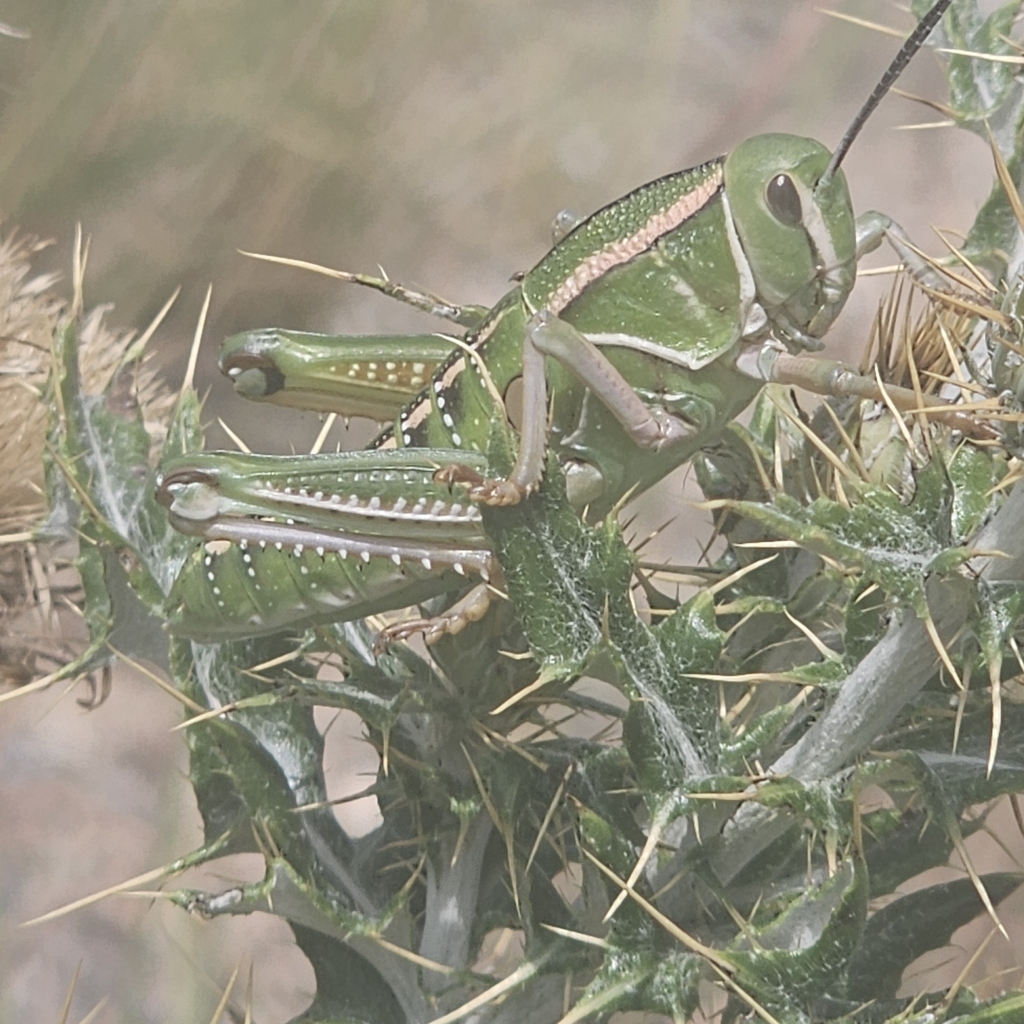
!Is the plains lubber grasshopper dangerous?
No. Plains lubbers are not venomous and do not transmit disease. They can pinch with their mandibles if handled roughly but bites are rare and not medically significant. Wash hands after handling to remove plant debris or potential allergens.
Pets
Not toxic to pets. Large individuals could nibble if an inquisitive pet mouths them, but they are not poisonous. Avoid letting pets ingest large numbers of grasshoppers as a general precaution.
📖Overview
Brachystola magna, the plains lubber grasshopper, is a bulky, slow-moving grasshopper native to the central North American grasslands. Adults are large and flightless; they rely on walking and short hops. Nymphs and adults feed on grasses and a wide range of herbaceous plants and can occur in high numbers where habitat is suitable. They overwinter as eggs in the soil and are most noticeable in mid to late summer when adults are present.
🔍How to identify a plains lubber grasshopper
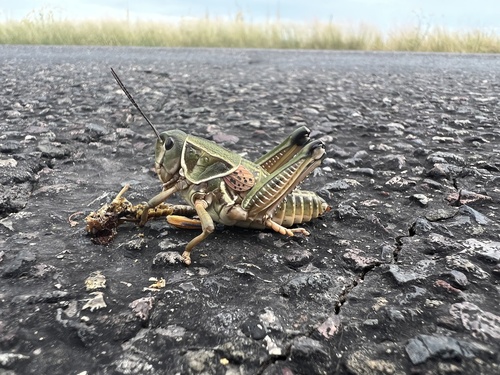
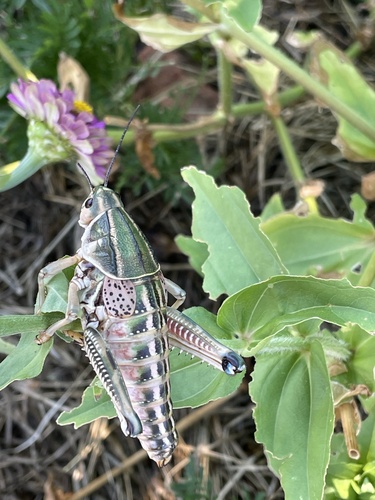
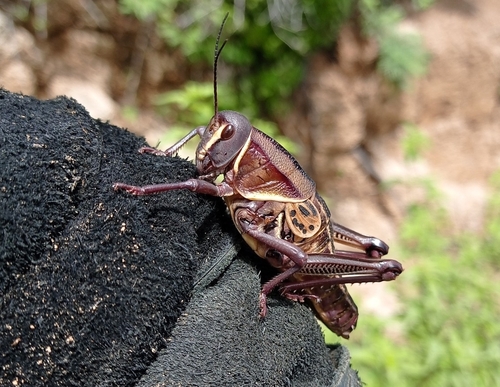
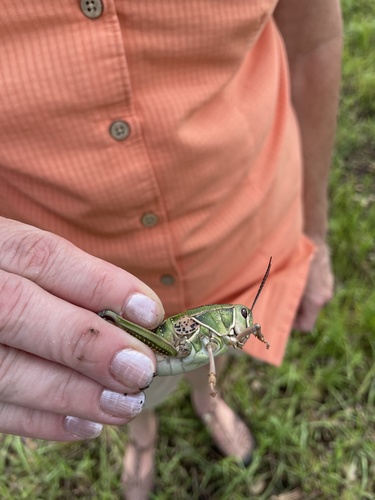
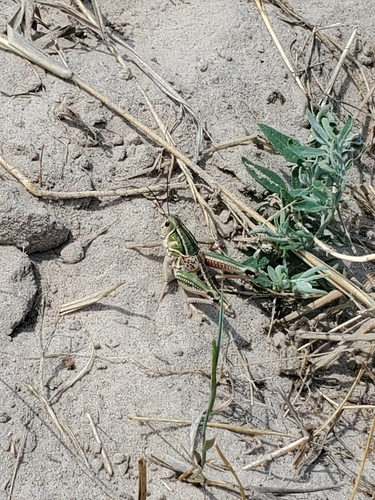
Adults are robust, heavily built grasshoppers with short wings or wings that do not support sustained flight. Color is variable by population and age but generally ranges from mottled brown or olive to darker tones; body may show subtle patterning. Nymphs are wingless and often more brightly colored, sometimes with reddish hind legs or contrasting markings that fade with maturity. Adults have a large head and pronotum, strong hind legs for jumping, and short tegmina (forewings) that leave most of the abdomen uncovered.
- Very large, bulky grasshopper: body length typically 45-75 mm
- Short wings or reduced flight ability — adults are slow-moving and often unable to fly
- Overall brown, olive, or dark mottled coloration, sometimes with reddish tones in juveniles
- Robust head and pronotum; large hind femora for jumping but not for sustained flight
Lookalikes
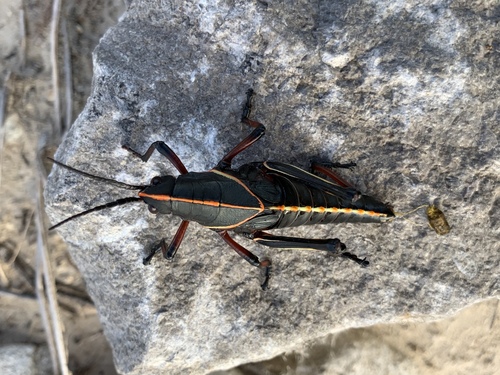
Eastern lubber grasshopper Romalea microptera
Romalea microptera is usually more brightly colored (yellow, orange or red markings on dark background) and occurs in the southeastern United States; Brachystola magna is more uniformly brown/olive and centered on the Great Plains.
Differential grasshopper Melanoplus differentialis
Melanoplus differentialis is smaller, has fully developed wings for flight and different pronotal and hind-leg markings compared with the bulky, short-winged plains lubber.
↻Life cycle
Egg
Females lay eggs in pods in soil or loose ground in late summer; eggs remain in the ground and overwinter.
Nymph (juvenile)
Nymphs hatch in spring and go through multiple instars; they are wingless and feed heavily as they grow.
Adult
Adults appear in mid to late summer, are large and bulky with reduced flight ability, mate, and females lay eggs before dying in fall.
🍃Diet and predators
Young eat
Grasses and broadleaf herbaceous plants
Adults eat
Grasses and a wide range of herbaceous plants, including crops and garden plants when available
Predators of the young
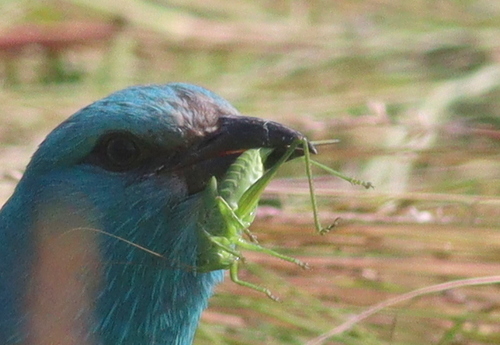
Birds, small mammals, reptiles, predatory insects and spiders
Predators of adults
Birds, mammals (e.g., rodents), reptiles and some predatory insects; large size deters some predators
🌱Effect on plants and gardens
Feeds on grasses and a variety of herbaceous plants; in high numbers can defoliate pasture grasses, alfalfa and cereal seedlings and damage crops locally.
How to get rid of plains lubber grasshoppers
Usually only a local problem. Handpick slow-moving adults and nymphs, protect small garden plants with row covers, and mow or reduce weedy grass margins next to gardens. Tilling soil in fall can expose egg pods. In outbreak years on rangeland or crops, use baits or insecticides labeled for grasshoppers, following label directions and local extension guidance.
📍Where and when to find it
Look in dry to mesic grasslands, pastures and field edges. Nymphs are found on vegetation; adults are often on the ground or on low plants.
Best time
Best observed mid-summer to early fall during daytime; nymphs visible from spring to summer.
Observation tips
Approach slowly and photograph from ground level to show size and wing length; handpicking is effective because adults are slow-moving.
✨Fun facts
- Plains lubbers are among the largest grasshoppers found in North America.
- Their heavy body and short wings make them poor fliers; they rely on camouflage and walking to escape threats.
- Because they overwinter as eggs in soil, populations can boom following mild winters and good spring rains.
?Frequently asked questions
Are plains lubber grasshoppers dangerous?
No — they are not venomous and do not pose a health risk to people or pets, though a rough bite could pinch.
Do plains lubber grasshoppers fly?
Adults have short wings and are generally poor fliers or effectively flightless; they move by walking and hopping.
Why are plains lubber grasshoppers in my garden?
They feed on grasses and many garden plants; gardens near grasslands, pastures or weedy field edges can attract them, especially in years with high populations.
How can I get rid of plains lubber grasshoppers?
Reduce nearby grassy or weedy habitat, handpick large individuals, use row covers for small crops, and for severe infestations consider targeted insecticides following local guidelines. Natural predators and habitat management often help keep numbers down.
Where do plains lubber grasshoppers live?
They are native to the Great Plains and adjacent central-southern regions of North America, occurring in grasslands, pastures, roadsides and field margins.
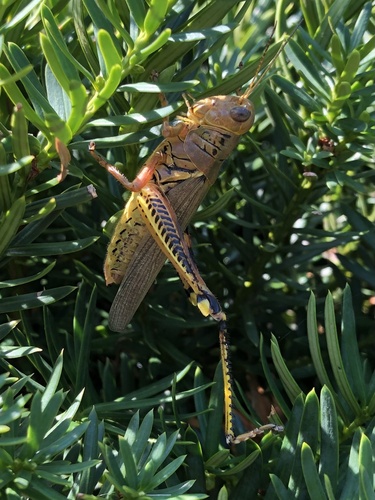
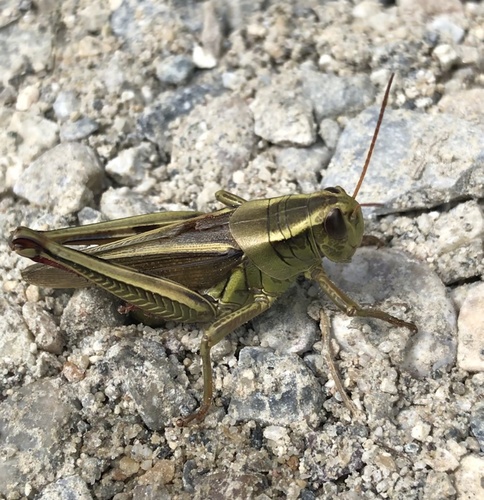
📷Photos of the plains lubber grasshopper
More grasshoppers & crickets
Non-toxic
Non-toxic
Non-toxic
Irritating secretion
Non-toxic
Non-toxic
This guide was written with AI assistance and fact-checked, last updated 2026-10-10. Identification from photos is never certain: don't handle insects you can't identify, and get medical advice for bites, stings or allergic reactions. More about the plains lubber grasshopper: iNaturalist, Wikipedia.