
Mormon cricket
Anabrus simplex · Shield-backed katydids
A large, often flightless shield-backed katydid of western North America that forms nomadic, sometimes destructive swarms and feeds on plants and animal matter.
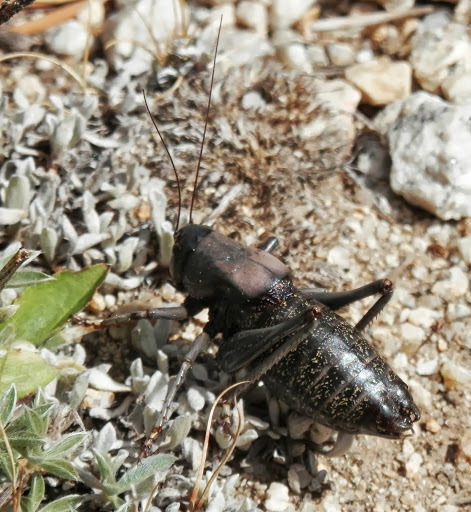
!Is the Mormon cricket dangerous?
No. Mormon crickets are not venomous and are not known to transmit human diseases. They can bite if handled roughly; bites are uncommon and only cause minor pain or irritation. Exercise caution when handling and wash hands if you touch one.
Pets
Not poisonous, but large numbers can damage forage and pasture quality. Pets that eat many Mormon crickets could experience digestive upset; domestic livestock may be affected if crickets strip pastures and reduce feed availability. Consult a veterinarian if a pet becomes ill after eating large quantities.
📖Overview
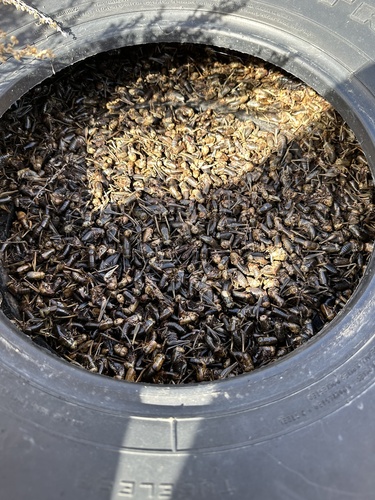
Anabrus simplex, the Mormon cricket, is a large shield-backed katydid native to western North America. It is well known for forming dense, marching bands or swarms during outbreak years; these groups can travel long distances while foraging and strip vegetation. Adults are mostly flightless or have reduced wings, and both nymphs and adults are omnivorous, eating grasses, crops, forbs, seeds, insects and even dead conspecifics. Outbreaks are periodic and driven by climatic conditions, habitat and population dynamics.
Although called a "cricket," it belongs to the shield-backed katydid group (family Tettigoniidae). It can be a serious rangeland and crop pest when populations are high, but it is not dangerous to humans: it does not have venom and rarely causes more than a painful nip if handled. Management during outbreaks uses a mix of cultural measures, exclusion and, in agricultural settings, targeted control advised by local extension services.
🔍How to identify a Mormon cricket
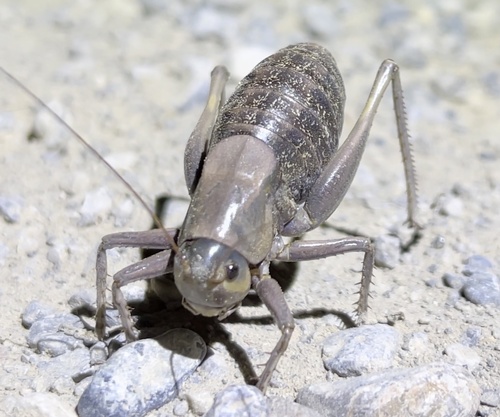
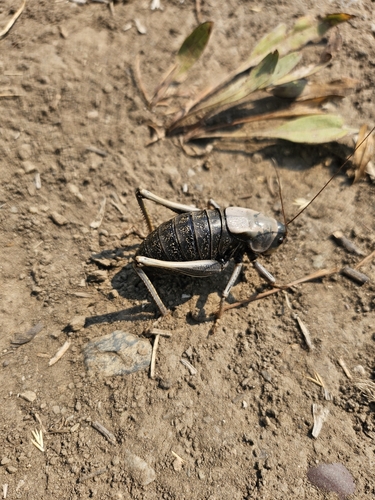
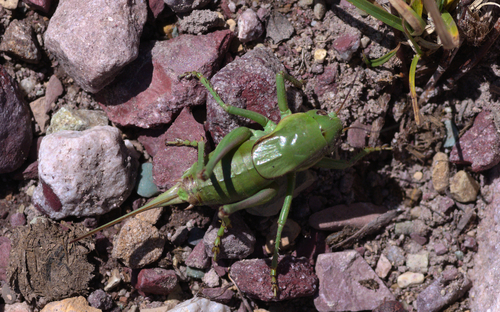
Adults are robust, elongate insects with a pronounced dorsal pronotal "shield" that extends over the abdomen. They vary in color from dark brown to black, sometimes with reddish, orange or yellow tinges, and may show lighter markings on the legs or thorax. Wings are generally reduced; most adults are flightless, with wing pads or short wings that do not support flight. Females have a long, sword-like ovipositor for laying eggs in soil. Males have short, stubby wings under the shield that they use to sing, not fly. Nymphs resemble adults but are smaller, wingless and often more uniformly colored.
- Large, robust katydid with a pronounced shield-like pronotum extending over the abdomen
- Typically dark brown to black or reddish-brown and usually flightless with reduced wings
- Females have a long, sword-like ovipositor extending beyond the abdomen tip
- Often encountered in dense groups or marching bands rather than singly during outbreaks
Lookalikes
Various short-horned grasshoppers Family Acrididae (multiple species)
Acridid grasshoppers usually have fully developed wings and can fly; Mormon crickets are shield-backed katydids with reduced wings and a pronounced dorsal pronotum.
Coulee cricket Peranabrus scabricollis
Another flightless shield-backed katydid of the interior Northwest that can also swarm; it is smaller and has a rough, granular pronotum.
↻Life cycle
Egg
Laid in soil in fall by females using the ovipositor; eggs overwinter in diapause and hatch in spring when conditions are favorable.
Nymph
Several nymphal instars occur through spring and summer. Nymphs are wingless, gregarious and often form marching bands that feed together.
Adult
Adults appear in mid to late summer, mate, and females lay eggs in soil in late summer or fall; most individuals die after reproduction.
🍃Diet and predators
Young eat
Omnivorous: grasses, forbs, seeds, arthropods and carrion, including cannibalism under crowded conditions
Adults eat
Omnivorous: similar to nymphs—plants (grasses, shrubs, crops), seeds, dead insects and dead or weakened conspecifics
Predators of the young
Birds, small mammals, predatory insects and spiders
Predators of adults
Birds, small mammals, carnivorous insects and opportunistic predators; parasitic flies and pathogens can also reduce populations
🌱Effect on plants and gardens
Feeding can defoliate grasses, forbs, crops and seedlings; heavy outbreaks can reduce forage for livestock and damage agricultural plantings.
How to get rid of Mormon crickets
During outbreaks, mix tactics: use exclusion (fences, barriers) to protect small areas, remove egg-laying habitat near critical fields, and consult local agricultural extension about approved control methods. In large infestations, land managers may use targeted insecticides or baits applied by professionals. Avoid ad hoc pesticide use without guidance; trapping and manually sweeping small numbers into a bucket can work for localized problems.
📍Where and when to find it
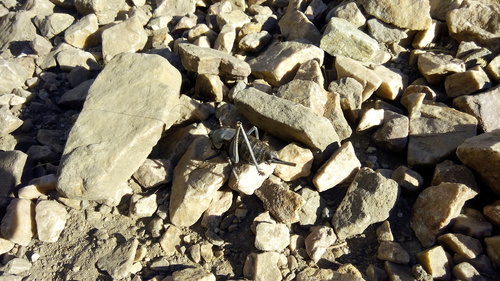
Look in sagebrush steppe, rangeland, fields, roadsides and gardens; nymphs and adults are often on the ground, on vegetation or moving in groups. Eggs are in soil and not easily seen.
Best time
Late spring through summer for nymphs; mid to late summer for adults. Daytime is best for observing groups and marching behavior.
Observation tips
Photograph the dorsal pronotum and overall body shape to confirm identification. If photographing groups, include habitat context (vegetation type) to show outbreak behavior.
✨Fun facts
- Called "Mormon cricket" after early Mormon settlers in Utah who experienced destructive outbreaks, not because it is a true cricket.
- They can form long marching bands that chew vegetation and may travel several kilometers in search of food.
- Cannibalism can occur in dense groups—individuals will eat dead or injured conspecifics, which can drive further movement of the group.
?Frequently asked questions
Do Mormon crickets bite?
They can nip if handled roughly, but bites are uncommon and not medically significant.
Are Mormon crickets locusts?
No. They are shield-backed katydids, not true locusts (which are grasshoppers in the family Acrididae). However, like locusts, Mormon crickets can form dense, mobile groups that damage vegetation.
Why are Mormon crickets in my yard?
They forage where food is available—gardens, lawns, forage fields and disturbed habitats. Outbreaks or local population increases bring them into yards while they search for plants, seeds or salt.
How do I get rid of Mormon crickets?
For small problems, manual removal (sweeping into buckets, hand-collecting) and exclusion with barriers can help. For large outbreaks, contact local agricultural extension for recommended control methods; professional, targeted measures are safer and more effective than amateur pesticide use.
Can they harm my livestock or garden?
Yes—heavy infestations can defoliate crops and reduce pasture availability for livestock. Protecting high-value areas and seeking coordinated management advice during outbreaks is important.
📷Photos of the Mormon cricket
More grasshoppers & crickets
Non-toxic
Non-toxic
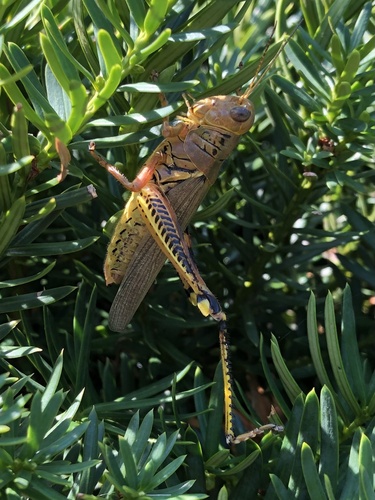
Non-toxic
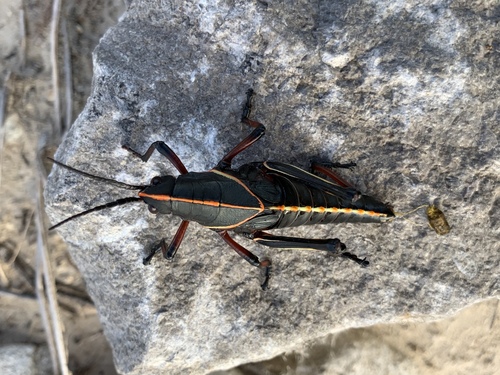
Irritating secretion
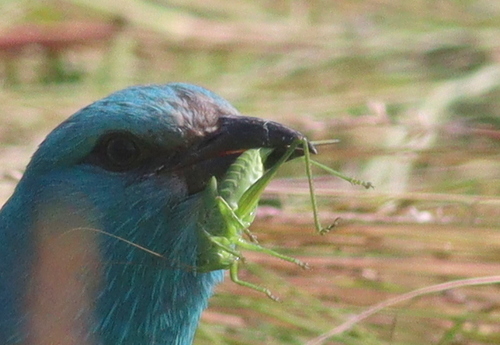
Non-toxic
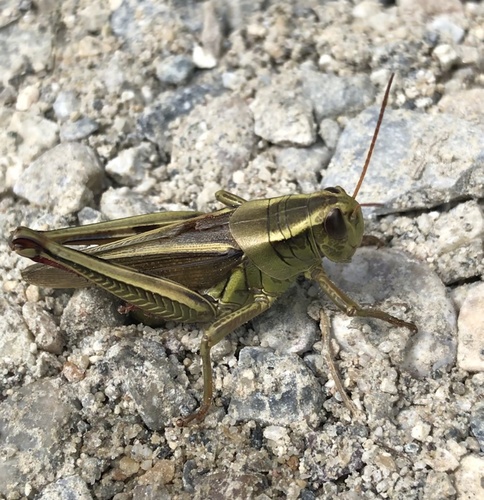
Non-toxic
This guide was written with AI assistance and fact-checked, last updated 2026-10-10. Identification from photos is never certain: don't handle insects you can't identify, and get medical advice for bites, stings or allergic reactions. More about the Mormon cricket: iNaturalist, Wikipedia.