
Greenhouse camel cricket
Diestrammena asynamora · Camel crickets
A humpbacked, long‑legged nocturnal cricket often found in damp basements, greenhouses and garages; harmless to people but a nuisance indoors.
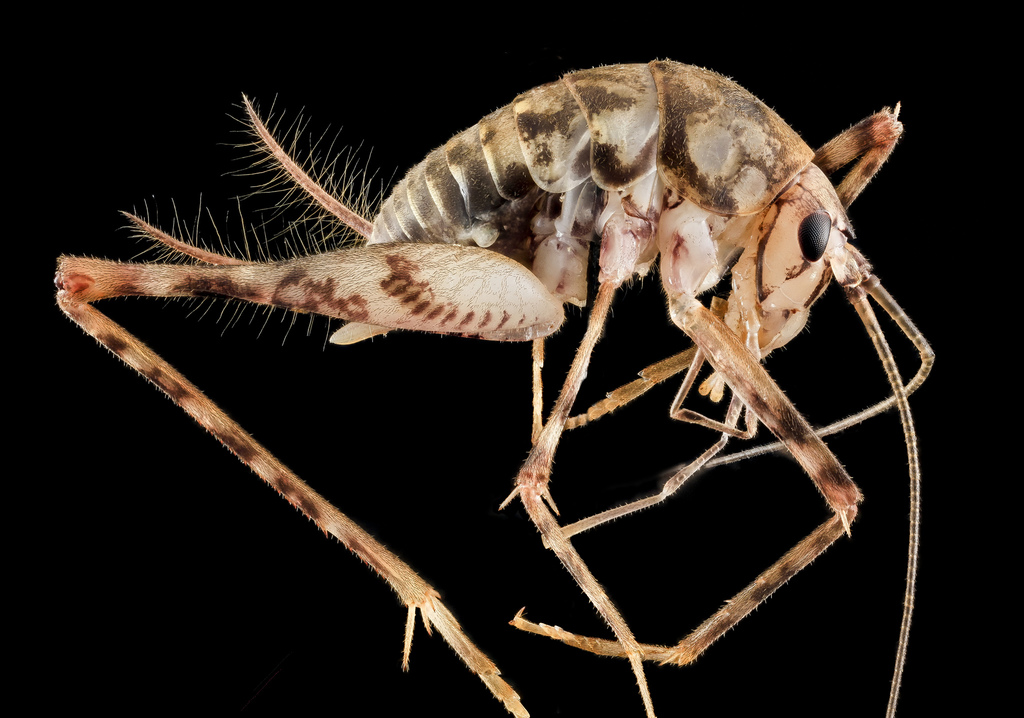
!Is the greenhouse camel cricket dangerous?
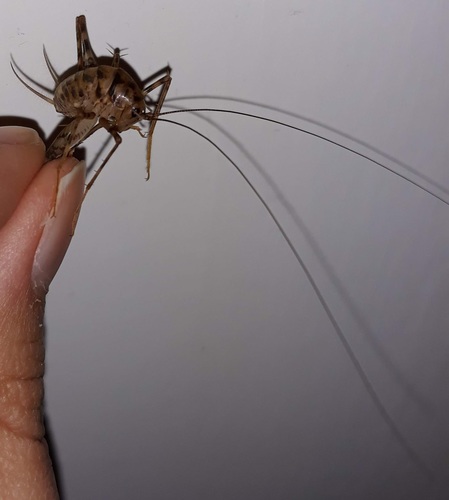
No. Greenhouse camel crickets are not venomous and do not seek to bite people. They can startle by leaping but pose no medical threat. If handled roughly they may pinch with their mandibles but injuries are superficial.
Pets
Generally harmless to pets. Small pets might catch and eat them; crickets are not known to be toxic, but repeated ingestion could upset a pet's stomach.
📖Overview
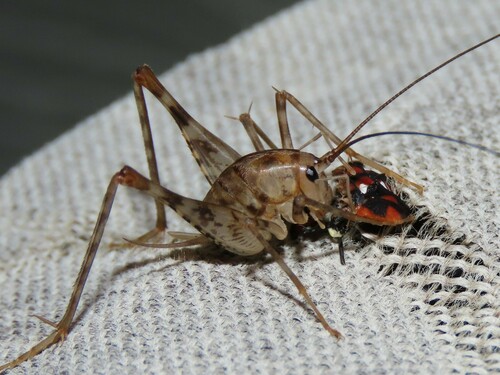
Diestrammena asynamora is a wingless camel cricket introduced from East Asia that has become common in greenhouses, basements, crawlspaces and other cool, damp human structures. It is nocturnal and an opportunistic scavenger, feeding on decaying plant material, fungi, small invertebrates and sometimes fresh seedlings or fabric. Populations persist where moisture and shelter are available; they do not bite humans and are not venomous.
🔍How to identify a greenhouse camel cricket
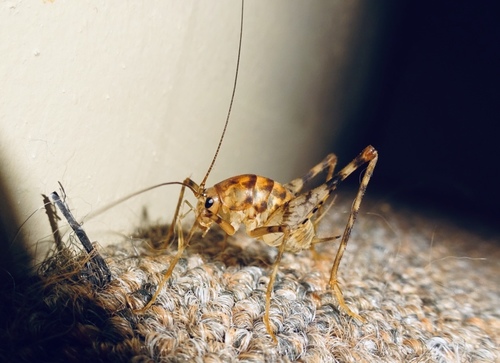
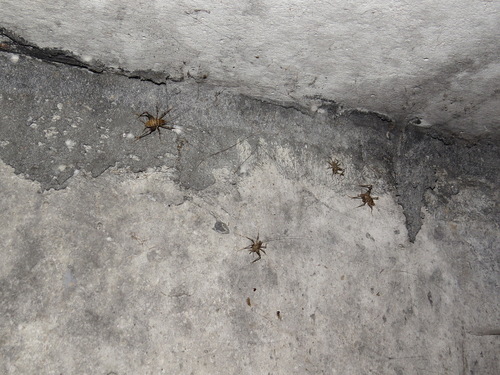
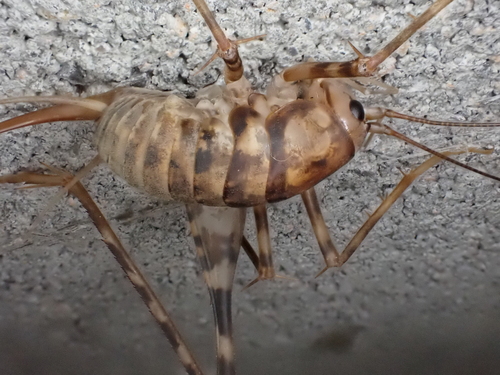
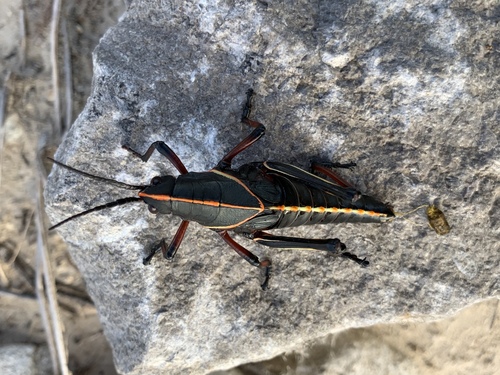
Adults are humpbacked with very long hind legs and long antennae, giving a distinctive camellike silhouette. They lack wings and are laterally compressed. Typical body patterns are mottled brown or tan which helps them blend into leaf litter and building crevices. Females have a visible, slightly upcurved ovipositor at the tip of the abdomen.
- Humpbacked, wingless body with very long hind legs and very long antennae.
- Mottled tan to dark brown coloration and laterally compressed body shape.
- Active at night; found in cool, damp, dark places such as basements, crawlspaces and greenhouses.
- No wings or song (unlike many other crickets) and they leap when disturbed.
Lookalikes
Common camel cricket Ceuthophilus spp.
Ceuthophilus species are native camel crickets in North America; they tend to have slightly different body proportions and local distribution, while Diestrammena asynamora is often associated with greenhouses and introduced populations.
House cricket Acheta domesticus
House crickets have wings and produce chirping sounds; greenhouse camel crickets are wingless and silent.
↻Life cycle
Egg
Females lay small batches of eggs in soil, leaf litter or crevices; eggs overwinter or develop over weeks depending on temperature and moisture.
Nymph (juvenile)
Nymphs resemble small, wingless adults and go through multiple molts; they are active scavengers and occupy the same damp shelters as adults.
Adult
Adults are wingless, humpbacked crickets with long hind legs and antennae; they reproduce and continue scavenging in the same habitats.
🍃Diet and predators
Young eat
Decaying plant material, fungi, small invertebrates and similar organic detritus.
Adults eat
Omnivorous scavenger: detritus, fungi, plant material, occasionally tender greenhouse plants and small invertebrates.
Predators of the young
Spiders, centipedes, ground beetles and small insectivorous vertebrates.
Predators of adults
Spiders, centipedes, shrews, mice, birds and predatory insects.
🌱Effect on plants and gardens
Mostly scavengers on decaying plant matter and fungi; can chew soft seedlings, vegetables or tender greenhouse plants if populations are high, but are not a major agricultural pest.
How to get rid of greenhouse camel crickets
Reduce moisture and dark clutter where they shelter: fix leaks, use dehumidifiers, improve ventilation, clear leaf litter and mulch near foundations, seal foundation cracks and door gaps. In greenhouses, move potted plants away from walls and use sticky traps along likely pathways. Vacuuming removes individuals and egg-bearing females. Insecticide baits or residual sprays can reduce large infestations but are rarely necessary for small indoor populations.
📍Where and when to find it
Look at night in basements, behind boxes, in crawlspaces, under potted plants, in greenhouses, woodpiles and leaf litter. Nymphs and adults occupy the same sheltered, damp spots.
Best time
Nighttime and early evening; year-round indoors and in greenhouses, locally seasonal outdoors in summer and fall.
Observation tips
Use a red light or low-intensity torch to observe without startling them; placing a damp cardboard shelter can attract them for easy viewing or removal.
✨Fun facts
- They cannot fly because they lack wings; their long hind legs make them excellent jumpers.
- Introduced from East Asia, greenhouse camel crickets have spread widely by hitching rides in potted plants and building materials.
- Because they prefer dark, damp spots, finding them often points to excess moisture or clutter in a building.
?Frequently asked questions
Are greenhouse camel crickets dangerous?
No. They are not venomous and do not pose a medical threat to people, though they can be a nuisance.
Do greenhouse camel crickets bite?
Biting is very rare; they have mandibles that could nip if handled roughly, but bites are uncommon and minor.
Why are there camel crickets in my basement?
They seek cool, damp, dark habitats with shelter and food (organic debris). Basements, crawlspaces and clutter provide ideal conditions.
Will they eat my clothes or plants?
They mainly scavenge decaying material but large numbers can nibble seedlings, tender greenhouse plants or occasionally fabric; damage is usually minor.
How do I get rid of greenhouse camel crickets?
Reduce moisture and clutter, seal entry points, use sticky traps or vacuum to remove individuals, and improve ventilation. For heavy infestations consider professional pest control.
Where did greenhouse camel crickets come from?
They are native to East Asia and were introduced to other regions, commonly transported with potted plants and greenhouse materials.
📷Photos of the greenhouse camel cricket
More grasshoppers & crickets
This guide was written with AI assistance and fact-checked, last updated 2026-10-09. Identification from photos is never certain: don't handle insects you can't identify, and get medical advice for bites, stings or allergic reactions.