
Eastern lubber grasshopper
Romalea microptera · Lubber grasshoppers
A large, slow-moving, brightly colored grasshopper of the southeastern United States that feeds on many garden plants and uses warning colors and chemical defenses.
!Is the eastern lubber grasshopper dangerous?
Only mildly. Not venomous and generally not dangerous. Can exude a foul-smelling, oily yellow fluid from thoracic glands when handled; this fluid can irritate skin or eyes and may stain clothing. Adults may bite defensively but bites are rare and not medically significant. Wash skin or eyes with water if exposed and seek medical advice for persistent irritation.
Pets
Generally not deadly, but the defensive secretion can irritate pets' mouths or eyes. Domestic animals rarely eat them because bright colors and taste/chemicals deter predators, but ingestion of large numbers could cause vomiting or discomfort; contact a veterinarian if ingestion or persistent symptoms occur.
📖Overview
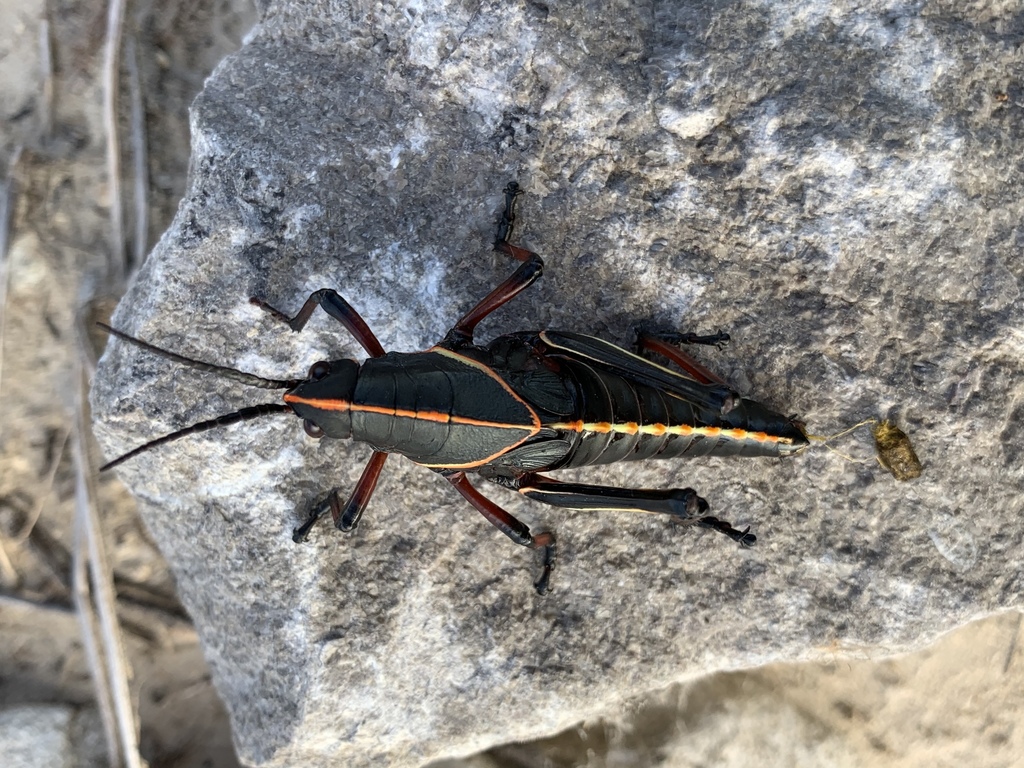
Romalea microptera is a bulky, flightless grasshopper common in the southeastern United States, especially Florida and the Gulf Coast. Adults are slow-moving and often conspicuous because of bold coloration (yellow, orange or black with contrasting markings) that warns predators of chemical defenses. They feed on a wide variety of plants and can become local garden or crop pests. Nymphs (mostly black with a bright yellow, orange or red stripe) hatch from egg pods in soil and develop through several wingless stages before reaching the large adult form.
🔍How to identify a eastern lubber grasshopper
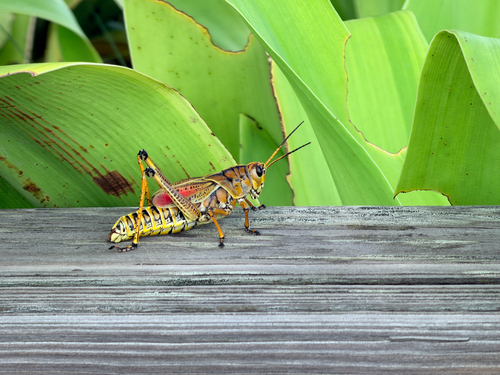
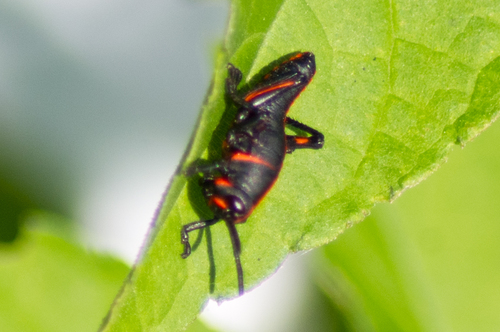
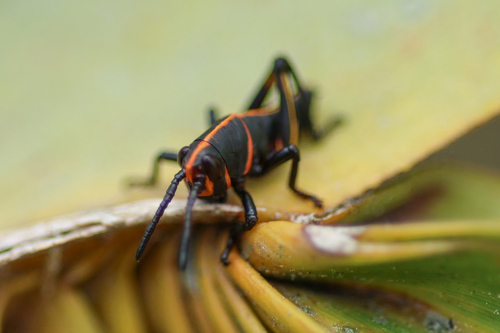
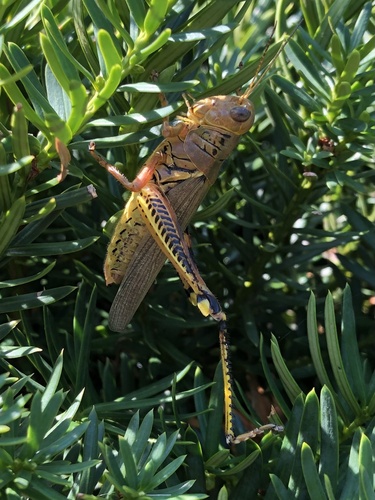
Adults are heavy-bodied, 35-75 mm long, with short wings that do not allow flight; the short forewings are pale with dark spots and the hindwings are rose-red. Adult colour varies: commonly yellow, orange or tan with black markings, while some populations (especially in the northern part of the range) are mostly black with yellow or red markings. The head is large with robust mandibles, and the hind legs are thick but not built for long jumps compared with many grasshoppers. Nymphs (immature stages) are mostly black with a bright yellow, orange or red stripe, and gain more adult colouring as they molt.
- Very large, heavy-bodied grasshopper 35-75 mm long with short wings that cannot be used for flight.
- Bold warning coloration: yellow, orange or tan with black markings, or mostly black with yellow or red markings; hindwings rose-red.
- Slow-moving compared with other grasshoppers; often found on vegetation during the day.
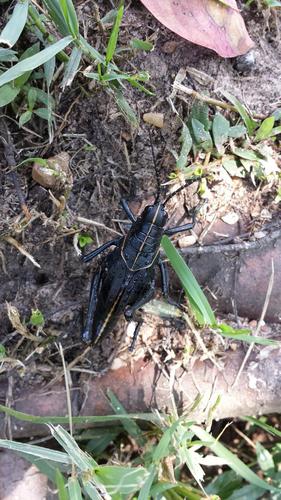
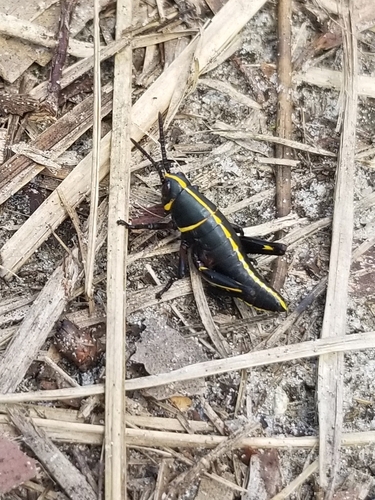
- Nymphs mostly black with a bright yellow, orange or red stripe.
Lookalikes
Horse lubber Taeniopoda eques
A similar large lubber of the southwestern United States and Mexico; glossy black with yellow lines and red-and-black hindwings, and does not overlap in range with the eastern lubber.
Giant grasshopper Tropidacris spp.
Tropidacris (tropical) are larger and typically have longer wings capable of flight; not native to the same U.S. range.
Band-winged grasshoppers Various Oedipodinae species
Band-winged grasshoppers are more slender, good jumpers, and have functional wings and different wing patterns; lubbers are bulky with reduced wings.
↻Life cycle
Egg
Females deposit 30-80 eggs in a foamy pod in soil in late summer or autumn; eggs overwinter and hatch in spring.
Nymph (immature)
Several wingless instars; nymphs are mostly black with a bright yellow, orange or red stripe and gain body mass and adult colouring through molts.
Adult
Adults are large, heavy-bodied and have short wings; they mate and lay eggs in late summer to autumn. Adults cannot fly and remain local.
🍃Diet and predators
Young eat
Same as adults: herbivorous, feeding on a wide range of leaves, flowers and stems of many plant species.
Adults eat
Polyphagous herbivore consuming foliage of wild plants, garden plants and agricultural crops; will often feed on preferred hosts but will eat many species when abundant.
Predators of the young
Some spiders, predatory insects and small vertebrates will take young nymphs, but many predators avoid lubbers due to their coloration and chemical defenses.
Predators of adults
Few generalist predators regularly consume adults; birds and mammals typically avoid them. Some specialized predators and parasitoids attack eggs or young nymphs in some areas.
🌱Effect on plants and gardens
Polyphagous herbivore: feeds on many garden and crop plants including ornamentals, vegetables, vines and young shrubs. Can skeletonize leaves and defoliate small plants in high numbers.
How to get rid of eastern lubber grasshoppers
Hand-pick large individuals (use gloves to avoid the defensive fluid) and drop into soapy water. Remove egg pods by raking soil in likely overwintering sites in late fall or early spring. Use floating row covers to protect high-value crops. For severe infestations consider targeted insecticide use following label directions; biological controls are limited because lubbers are chemically defended and unattractive to many predators.
📍Where and when to find it
Look on low vegetation, garden plants, vines and shrubs in sunny areas. Nymphs are on foliage in spring; adults are common on plants in summer and autumn.
Best time
Warm months (spring to fall), during the day when they are active in sunlight.
Observation tips
Approach slowly for photos because they are slow but may twitch; use gloves if you need to handle them to avoid defensive fluid. Check soil edges and loose ground for egg pods in late autumn or early spring.
✨Fun facts
- Eastern lubbers have chemical defenses and bright colors to warn predators; their secretion can stain clothing.
- Nymphs are mostly black with a bright yellow, orange or red stripe, which makes them conspicuous and warns predators.
- They cannot fly; adults have short wings and mostly walk or hop between plants. When threatened they may spread their red hindwings and hiss.
?Frequently asked questions
Do eastern lubber grasshoppers bite?
They can nip if handled roughly, but bites are uncommon and not medically significant. The primary defense is a foul-smelling secretion rather than biting.
Are lubber grasshoppers poisonous to humans?
Not poisonous in the sense of venom, but their defensive fluid can irritate skin or eyes and may stain clothing; wash exposed skin or eyes with water and seek medical help if irritation continues.
Why are lubber grasshoppers in my garden?
They are attracted to abundant vegetation and preferred host plants; a vegetable garden, ornamental beds or weedy areas provide food and places to lay eggs.
How do I get rid of lubber grasshoppers?
Remove by hand using gloves and drop into soapy water, reduce weeds and volunteer plants, remove egg pods from soil, use row covers on crops, and as a last resort use insecticides labeled for grasshoppers following instructions.
Do they damage crops?
Yes, in high numbers they can defoliate young plants and cause significant local damage to gardens and some crops.
📷Photos of the eastern lubber grasshopper
More grasshoppers & crickets
This guide was written with AI assistance and fact-checked, last updated 2026-10-09. Identification from photos is never certain: don't handle insects you can't identify, and get medical advice for bites, stings or allergic reactions.