
Common field grasshopper
Chorthippus brunneus · Short-horned grasshoppers
A small, typically brown or green short-horned grasshopper of European grasslands, common in summer and recognised by its hopping, short flight and distinctive song.
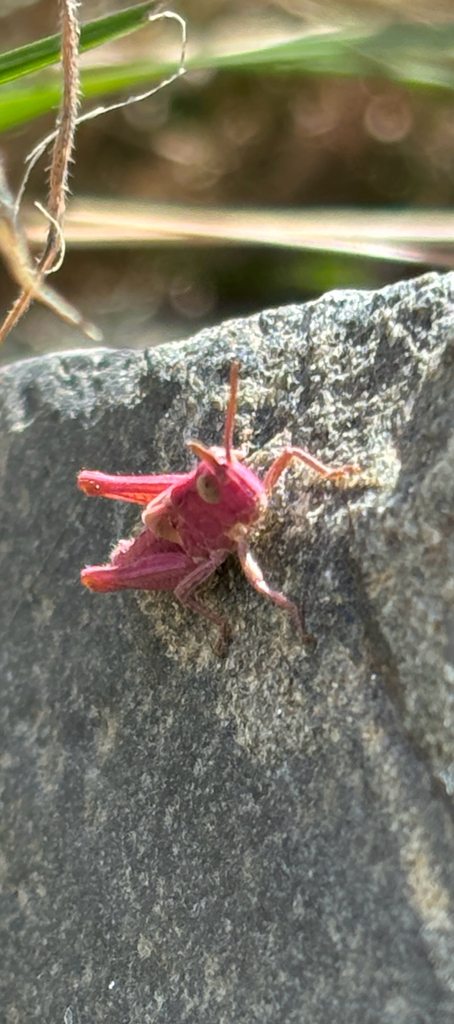
!Is the common field grasshopper dangerous?
No. Not venomous and not dangerous. They do not sting. Rarely will a grasshopper give a mild pinch if handled roughly; basic wound care (wash, apply antiseptic) is sufficient.
Pets
Generally harmless to pets. Curious animals might catch and eat them; grasshoppers are not toxic but could cause mild stomach upset if eaten in large numbers.
📖Overview
Chorthippus brunneus is a small acridid grasshopper widespread across much of Europe and parts of western Asia. It favours dry, sunny grasslands, roadside verges and rough meadows where grasses and low herbs are abundant. Males produce a species-specific rasping song by rubbing the hind leg against the forewing (stridulation) to attract females. Adults are most noticeable in late spring and summer.
🔍How to identify a common field grasshopper
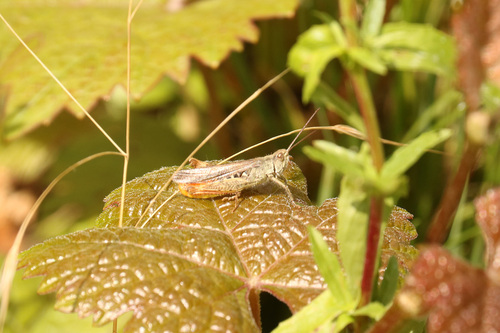
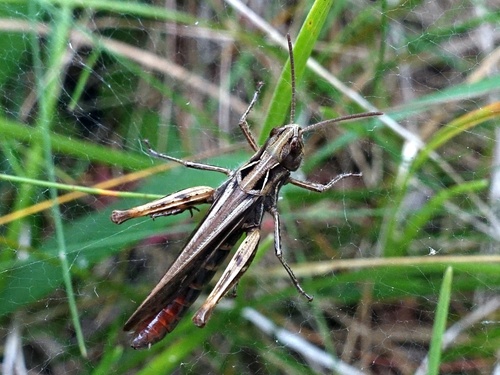
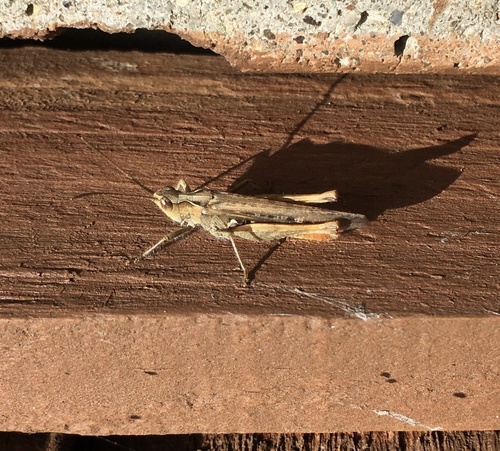
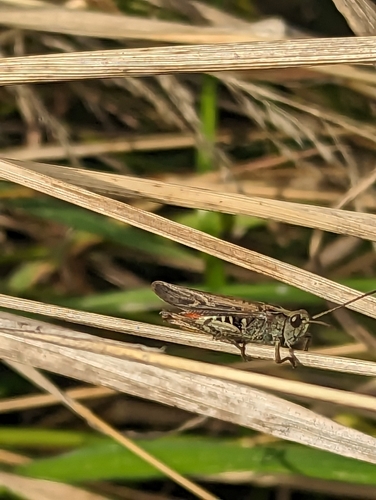
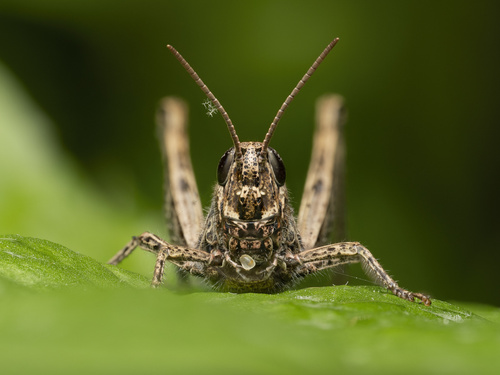
Adults are small to medium sized with a compact body and relatively short antennae (typical of the short-horned grasshoppers). Colour varies from pale green through various shades of brown and grey to mottled patterns that provide camouflage among grasses. Wings are present but typically short to moderately long, allowing short flights; hind legs are well developed for jumping. Males are often slimmer than females and may show clearer contrast in wing or body markings.
- Small compact grasshopper about 14-25 mm long with short antennae (short-horned).
- Colour variable: often uniform brown or pale green; look for camouflage patterning matching dry grass.
- Listen for the male's rasping song (stridulation) produced by rubbing hind leg against forewing — song differs from related species.
- Habitat: found on low grasses in dry, sunny meadows and roadside verges; often seen hopping when disturbed.
Lookalikes
Meadow grasshopper Chorthippus parallelus
Meadow grasshoppers are usually green and short-winged (females have very short wings) and are rarely able to fly; the male song also differs, which is the most practical field cue.
Steppe grasshopper Chorthippus dorsatus
Usually greener, prefers damper, taller grassland and has a different song and slightly different body proportions.
↻Life cycle
Egg
Females lay egg batches (pods) in soil or in grass roots in late summer; eggs overwinter in the ground.
Nymph (juvenile)
Nymphs hatch in spring or early summer and go through several wingless instars, gradually developing wing buds and adult coloration.
Adult
Adults appear in mid to late summer, mate, and females lay eggs; the adult stage lasts weeks to a couple of months depending on conditions.
🍃Diet and predators
Young eat
Leaves and stems of grasses and low herbs
Adults eat
Grasses and herbaceous plants; both nymphs and adults are primarily herbivorous
Predators of the young
Small insectivorous birds, predatory insects (e.g., robber flies, mantids), spiders and small mammals
Predators of adults
Birds, small mammals, reptiles and predatory insects; also parasitic wasps and flies may attack eggs or nymphs
🌱Effect on plants and gardens
Feeds on grasses and low herbaceous plants. In normal numbers they cause little lasting damage; only under very high densities can they reduce vegetation noticeably.
📍Where and when to find it
Adults: low grasses and turf in dry, sunny meadows and verges. Nymphs: among stems and leaf litter in the same habitats. Eggs: in soil or among grass roots.
Best time
Best observed from late spring through August and September on warm, sunny days during daylight hours.
Observation tips
Approach slowly and bend down to eye level to photograph; focus on the hind leg and wing for identification and record the song if possible (audio helps separate similar Chorthippus species).
✨Fun facts
- Male Chorthippus brunneus produce a distinctive song by rubbing their hind leg against the forewing; species identification by song is common.
- Colour varies widely between individuals and populations, helping them blend into dry or green grassland.
- Grasshoppers play an important role as both herbivores and prey, linking plants to insectivorous birds and mammals.
?Frequently asked questions
Do common field grasshoppers bite?
They are not aggressive and rarely bite; a brief pinch if handled roughly is possible but not harmful.
Do they sting or are they poisonous?
No. They do not sting and are not poisonous to humans.
Why is a grasshopper in my house?
They sometimes hop indoors from nearby vegetation, especially in late summer or during warm evenings. They do not infest houses and will usually die or leave if returned outside.
Can they damage my lawn or garden?
In normal numbers they cause little harm. Only very high local densities can noticeably reduce grass or crop growth; C. brunneus is not usually a major agricultural pest.
How can I get rid of grasshoppers humanely?
Gently catch and release outdoors, reduce nearby tall grassy vegetation if you want fewer grasshoppers around, or use netting to protect high-value plants. Chemical control is generally unnecessary in gardens.
When and where am I most likely to see them?
On warm, sunny days from late spring to early autumn in dry meadows, roadside verges and rough turf. Listen for the male's rasping song in mid-summer.
📷Photos of the common field grasshopper
More grasshoppers & crickets
Non-toxic
Non-toxic
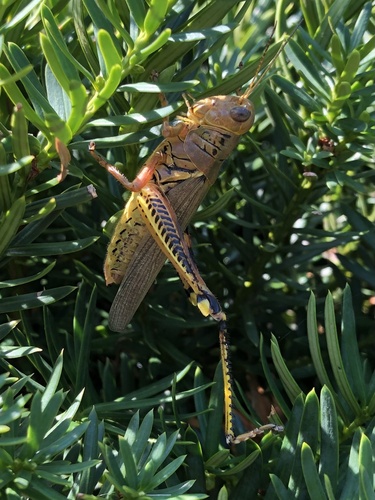
Non-toxic
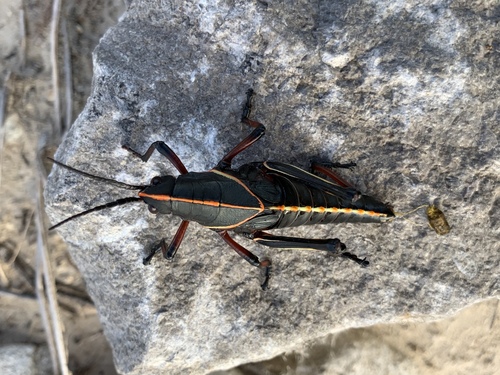
Irritating secretion
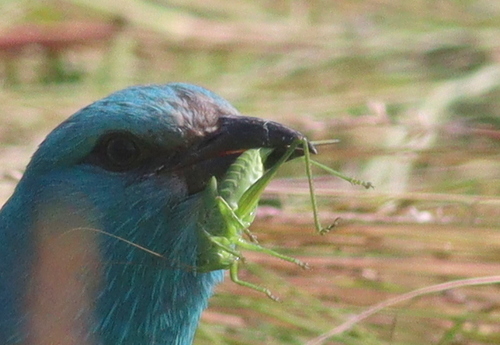
Non-toxic
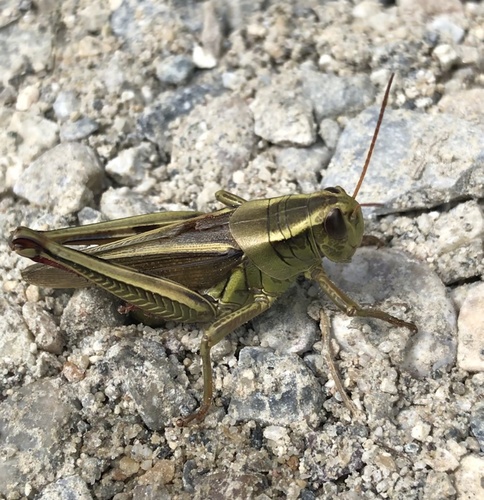
Non-toxic
This guide was written with AI assistance and fact-checked, last updated 2026-10-10. Identification from photos is never certain: don't handle insects you can't identify, and get medical advice for bites, stings or allergic reactions. More about the common field grasshopper: iNaturalist, Wikipedia.