
Speckled bush-cricket
Leptophyes punctatissima · Bush-crickets
A small, flightless green bush-cricket with dark speckles found on shrubs and garden vegetation across much of Europe.
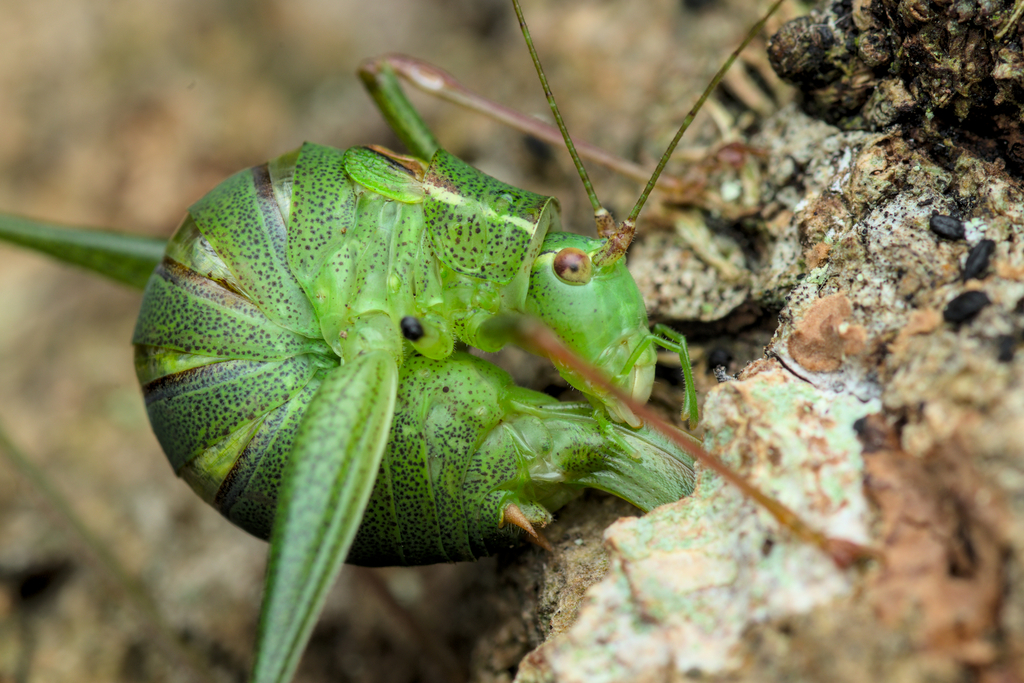
!Is the speckled bush-cricket dangerous?
No. Speckled bush-crickets are harmless to people. They do not have a venomous bite; bites are extremely rare and would be minor if they occur. No special first aid is normally required beyond cleaning a minor nip.
Pets
Not dangerous to cats or dogs. Large numbers could nibble tender plants but they are not toxic to pets.
📖Overview
Leptophyes punctatissima is a small, mostly wingless bush-cricket common in gardens, hedgerows and scrub across much of Europe. It is usually seen on shrubs, nettles and low tree branches where it feeds on leaves, flowers and pollen. Nymphs appear in spring and adults from late summer into autumn; eggs are laid in plant stems or bark and overwinter before hatching the following spring. The species is non-aggressive and harmless to people.
🔍How to identify a speckled bush-cricket
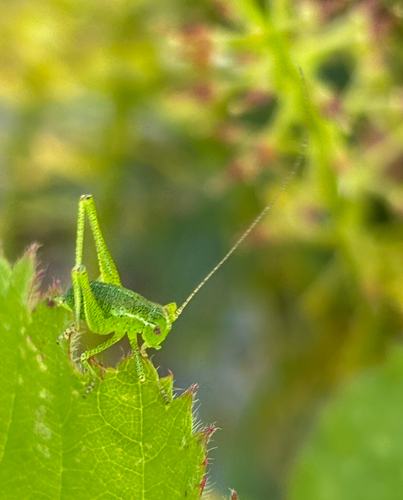
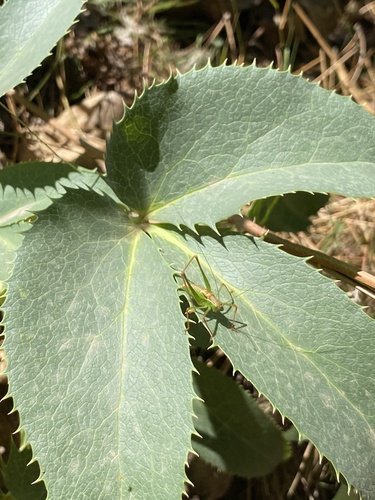
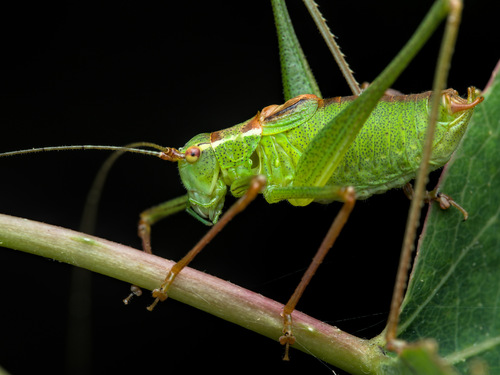
Adults are predominantly bright green with numerous dark speckles across the body and legs and a slightly hump-backed appearance. Wings are either very short or reduced so the insect cannot fly; females have a curved ovipositor at the rear for laying eggs. Antennae are long, much longer than the body. Males are smaller than females and produce a soft, high-pitched song.
- Bright green body covered with numerous dark speckles (hence 'speckled')
- Very short or reduced wings — species is essentially flightless
- Female has a distinct curved ovipositor at the rear
- Long antennae noticeably longer than the body
Lookalikes
Oak bush-cricket Meconema thalassinum
Meconema has longer, functional wings and a more slender body; it often flies and has a different, softer colouring without dense speckling.
Roesel's bush-cricket Metrioptera roeselii
Roesel's is brown or greenish-brown with a cream border along the side of the pronotum and pale spots behind it; it lives in rough grassland rather than on shrubs and has a loud, continuous buzzing song.
↻Life cycle
Egg
Eggs are inserted into plant stems, bark crevices or leaf litter in late summer and autumn and overwinter until spring.
Nymph
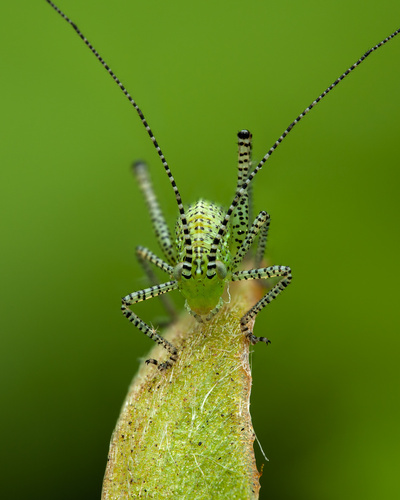
Nymphs resemble small adults but lack fully developed reproductive organs; they go through several moults while feeding on vegetation.
Adult
Adults appear from late July and persist into autumn; they mate and the female lays the overwintering eggs.
🍃Diet and predators
Young eat
Leaves, soft plant tissue and pollen of various herbaceous plants and shrubs
Adults eat
Leaves, flowers, pollen and occasional small invertebrates; largely herbivorous
Predators of the young
Birds, spiders, predatory insects and small mammals
Predators of adults
Birds, bats, spiders and predatory insects
🌱Effect on plants and gardens
Feeds on leaves, flowers and pollen of a range of shrubs, herbaceous plants and garden vegetation. Damage is usually minor and not economically important.
📍Where and when to find it
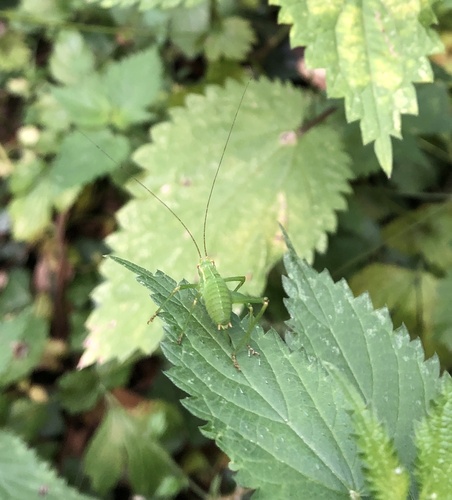
Look on shrubs, nettles, brambles and low tree branches. Eggs are in stems or bark; nymphs and adults on leaves and flowers.
Best time
Adults are best seen August to October; nymphs from May. Search at dusk or after dark with a torch, or by day on sunny foliage.
Observation tips
Move slowly and search foliage at eye level or lower. A macro lens and diffuse light help capture details; photographing the ovipositor helps confirm females.
✨Fun facts
- Despite having very short wings, males produce a soft high-pitched song used to attract females.
- They are common in gardens and often go unnoticed because their green colour blends with foliage.
- Females use a curved ovipositor to insert eggs into plant stems or bark where they overwinter.
?Frequently asked questions
Do speckled bush-crickets bite?
Bites are extremely rare. They are not aggressive and any bite would be minor; no medical treatment is normally needed.
Are speckled bush-crickets dangerous?
No. They are non-venomous and harmless to people and pets.
Why is a speckled bush-cricket in my house?
Occasional individuals may wander indoors from nearby vegetation, especially in late summer or autumn. They do not infest homes and usually leave or can be gently returned outside.
How do I get rid of speckled bush-crickets in my garden?
They are not usually worth controlling. For minor problems reduce dense vegetation, remove long grass or nettles, hand-pick if desired, or encourage natural predators like birds.
Where do speckled bush-crickets live?
They live on shrubs, hedgerows, nettles and low tree branches in gardens, parks, woodland edges and scrub across much of Europe.
📷Photos of the speckled bush-cricket
More grasshoppers & crickets
Non-toxic
Non-toxic
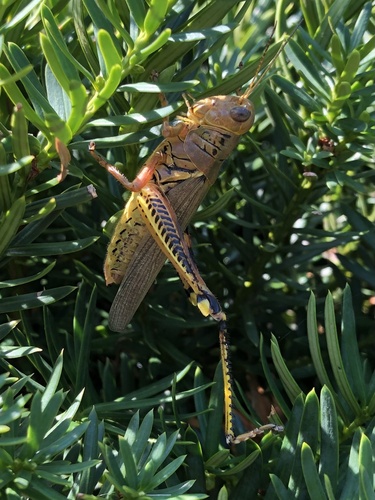
Non-toxic
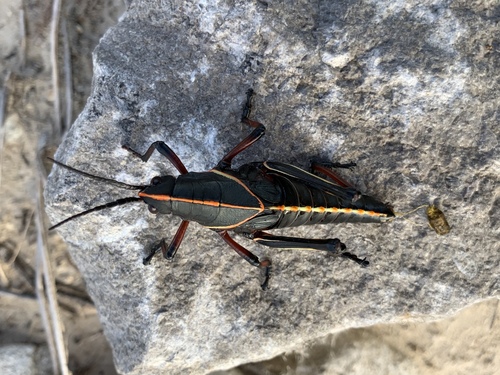
Irritating secretion
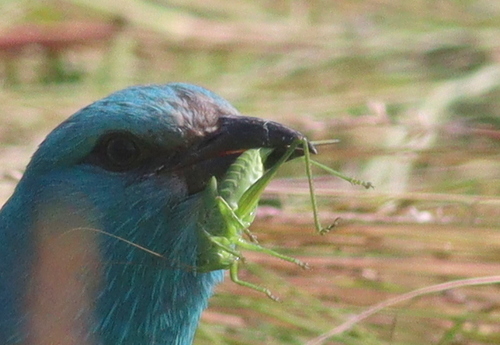
Non-toxic
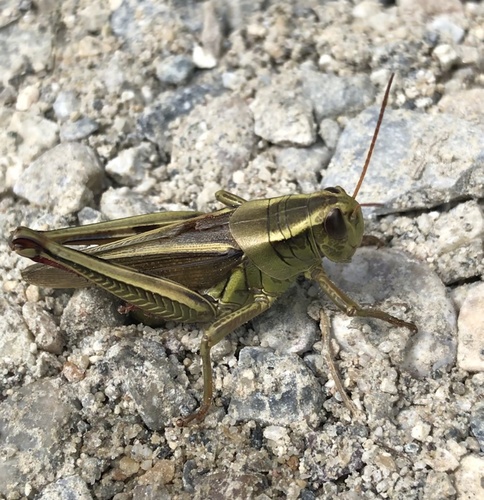
Non-toxic
This guide was written with AI assistance and fact-checked, last updated 2026-10-10. Identification from photos is never certain: don't handle insects you can't identify, and get medical advice for bites, stings or allergic reactions. More about the speckled bush-cricket: iNaturalist, Wikipedia.