
American bird grasshopper
Schistocerca americana · Short-horned grasshoppers
A large, common North American grasshopper that feeds on grasses and crops and can become a local agricultural pest.
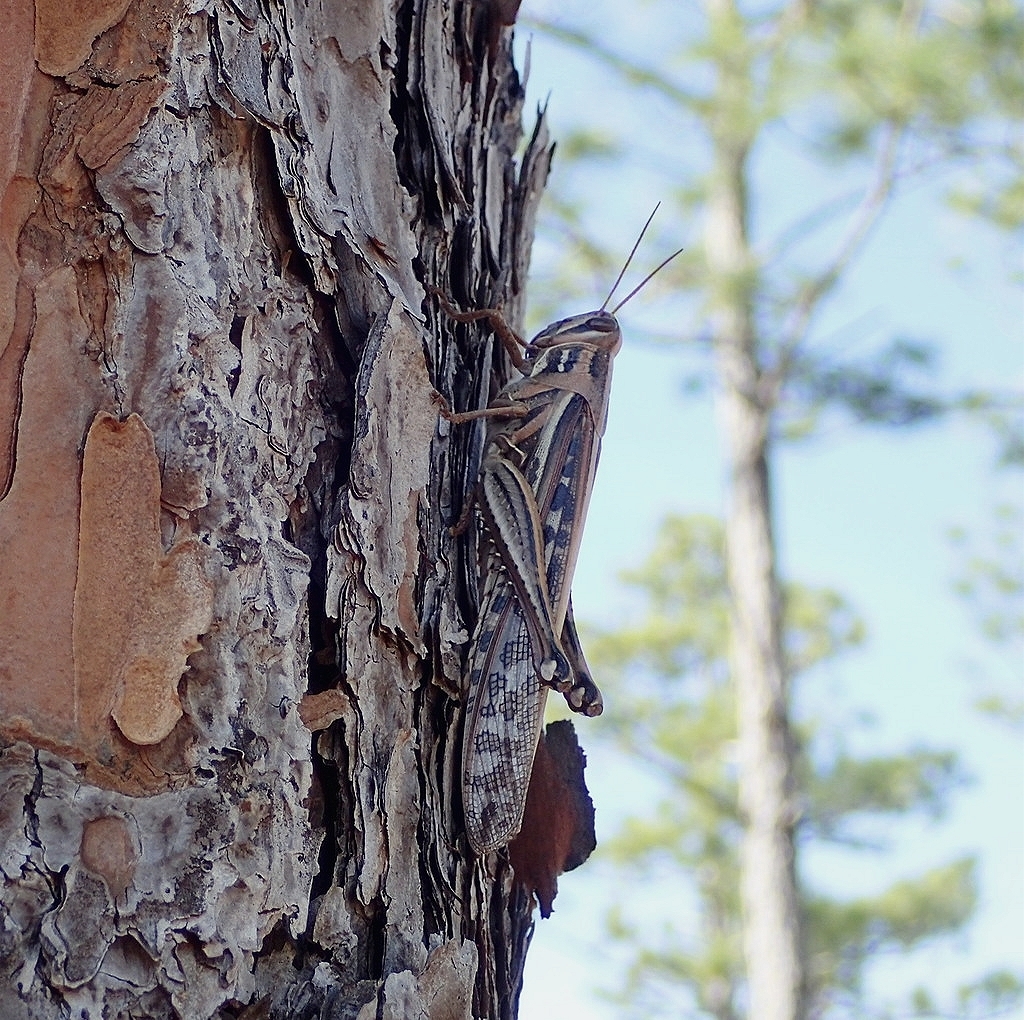
!Is the American bird grasshopper dangerous?
No. Schistocerca americana is not venomous and is not dangerous to people. It may give a pinch or bite if handled roughly, but bites are rare and cause only minor, short-lived skin irritation. Standard wound care (wash with soap and water) is sufficient.
Pets
Not toxic to pets. Dogs or cats that eat many grasshoppers may vomit or show mild digestive upset; grasshoppers can also carry agricultural pesticides, so avoid allowing pets to eat insects from treated fields.
📖Overview
Schistocerca americana is a widespread species of short-horned grasshopper found across the southeastern and central United States, Mexico, Central America and the Caribbean. Adults are strong jumpers and can fly; they are generalist herbivores that feed on grasses and a wide range of cultivated and wild plants. While usually solitary, populations can become locally abundant and cause defoliation of crops and forage plants.
This species is typical of the genus Schistocerca in shape and behaviour: robust, fairly large grasshoppers that develop through multiple wingless nymphal stages before becoming winged adults. They are most active in warm months and in open, grassy habitats such as fields, roadsides and pastures.
🔍How to identify an American bird grasshopper
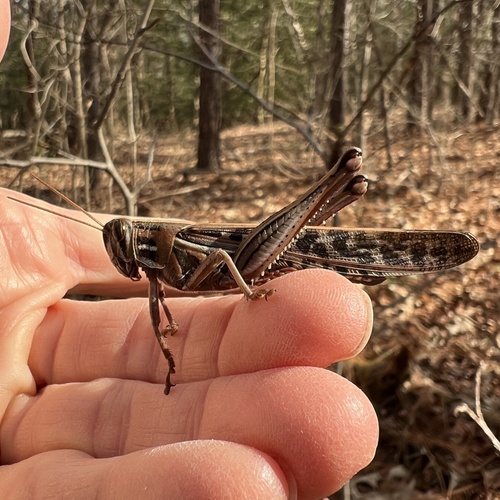
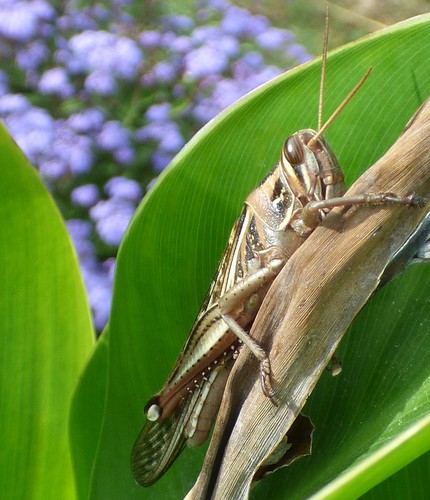
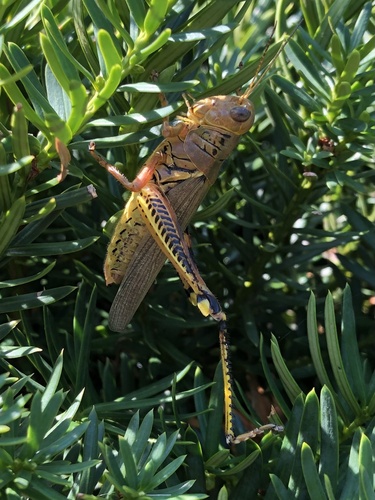
Adults are large and robust for an acridid grasshopper with well-developed wings. Body length typically ranges from about 30 mm to 55 mm depending on sex and local conditions. Colour varies with habitat and age, commonly shades of green, brown or gray with mottling that helps camouflage in vegetation. The hind femora (thighs) are strong for jumping; wings, when folded, usually extend over the abdomen. Some individuals show yellowish or orange tones on the hind wings or underparts. Sexual dimorphism is modest: females are generally larger and have a broader abdomen.
- Large, robust short-horned grasshopper with well-developed hind legs and wings extending beyond the abdomen in adults.
- Colour variable: olive green, brown or gray with mottling—matches surrounding vegetation.
- Strong jumpers; when disturbed often fly short distances then land in vegetation.
- Females larger with broader abdomen; look for soil egg pods in bare ground in late summer and autumn.
Lookalikes
Two-striped grasshopper Melanoplus bivittatus
Smaller on average and has distinctive pale dorsal stripes; Melanoplus adults have shorter wings relative to body in many females compared with Schistocerca.
Desert locust (solitary form) Schistocerca gregaria
Closely related and similar in shape, but S. gregaria is an Old World species with different range and distinctive phase-related color patterns during swarming; S. americana is New World and usually solitary.
↻Life cycle
Egg (pod)
Females deposit eggs in soil in a foamy pod; a single pod contains multiple eggs and remains in the ground until hatching.
Nymph (hopper)
Nymphs hatch wingless and go through several instars (typically 5) over weeks to months, progressively resembling adults.
Adult
Adults are winged and capable of flight; they mate and females lay egg pods in suitable soil. In the southern United States there are usually two generations per year, and autumn adults can survive the winter.
🍃Diet and predators
Young eat
Green plant material: grasses and young broadleaf plants.
Adults eat
Generalist herbivore: grasses, legumes and many crop and wild plants.
Predators of the young
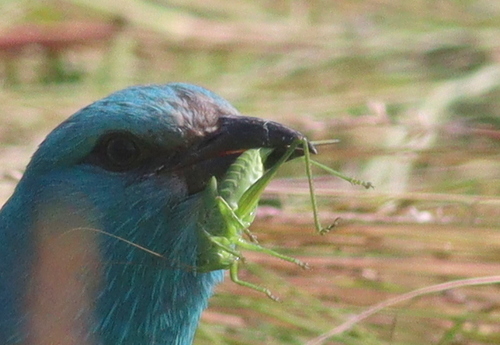
Birds, predatory insects (mantids, assassin bugs), spiders and small mammals.
Predators of adults
Birds, small mammals, predatory insects and parasitoids; also captured by insectivorous bats when flying at dusk.
🌱Effect on plants and gardens
Feeds on grasses, legumes and many cultivated plants; can cause damage to forage crops, garden vegetables and young cereal crops when populations are high.
How to get rid of American bird grasshoppers
For local outbreaks, use integrated methods: monitor numbers, remove weeds and alternate host vegetation near crops, use physical barriers or row covers for small plantings, encourage natural predators (birds, predatory insects, spiders), and apply approved insecticides only when population thresholds are exceeded and following label instructions. For pasture and large-field infestations consult local extension services for recommended control thresholds and products.
📍Where and when to find it
Look in grassy fields, pastures, roadsides and crop edges. Adults on stems and leaves; nymphs on low vegetation. Egg pods are in bare or firm soil in late summer or autumn.
Best time
Warm months (late spring to early autumn in temperate zones), daytime foraging hours; dawn and afternoon are often most active.
Observation tips
Approach slowly and use a long lens for photos. Sweep-netting in grasses is an effective survey method. Check soil near vegetation for egg pods in late season.
✨Fun facts
- Members of the genus Schistocerca include both solitary grasshoppers and famous swarming locusts; not all Schistocerca species swarm.
- Called a 'bird' grasshopper because of its strong flying ability compared with many other grasshoppers.
- Colour and pattern are highly variable, helping individuals blend into grasses, crops and bare ground.
?Frequently asked questions
Are American bird grasshoppers dangerous?
No — they are not venomous and do not pose a health threat to people. They may bite if handled roughly but bites are rare and cause only minor irritation.
Do American bird grasshoppers eat garden plants?
Yes — they are generalist herbivores and can feed on vegetables, ornamentals, forage and cereal crops, sometimes causing noticeable damage when abundant.
Why are there grasshoppers in my house?
They may enter houses accidentally while seeking shelter, light, or when populations are high nearby; adults are attracted to lights at night and can wander indoors.
How do I get rid of them in my yard?
Reduce weeds and tall grass, remove bare-soil egg-laying sites near crops, encourage natural predators, use row covers for small plantings, and apply insecticides only when necessary following local guidelines.
Will they swarm like locusts?
Schistocerca americana is generally solitary; it is not known for forming the massive migratory swarms seen in true locust outbreaks, though local population surges can cause significant feeding damage.
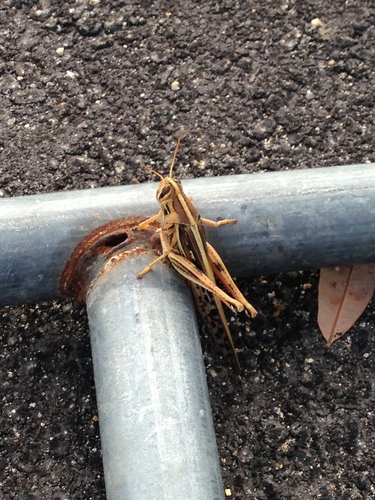
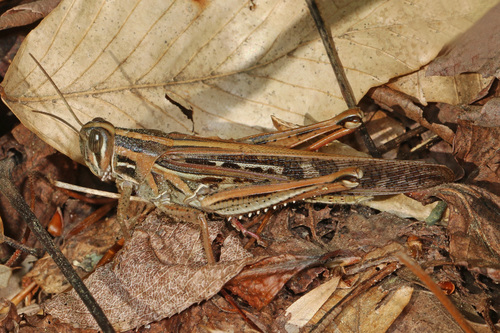
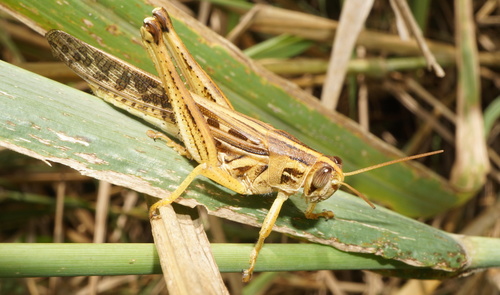
📷Photos of the American bird grasshopper
More grasshoppers & crickets
Non-toxic
Non-toxic
Non-toxic
Irritating secretion
Non-toxic
Non-toxic
This guide was written with AI assistance and fact-checked, last updated 2026-10-10. Identification from photos is never certain: don't handle insects you can't identify, and get medical advice for bites, stings or allergic reactions. More about the American bird grasshopper: iNaturalist, Wikipedia.