
Oak bush-cricket
Meconema thalassinum · Bush-crickets
A small, mostly green, nocturnal bush-cricket of Europe that often flies to lights and sometimes wanders into houses; mainly a harmless predator of small insects.
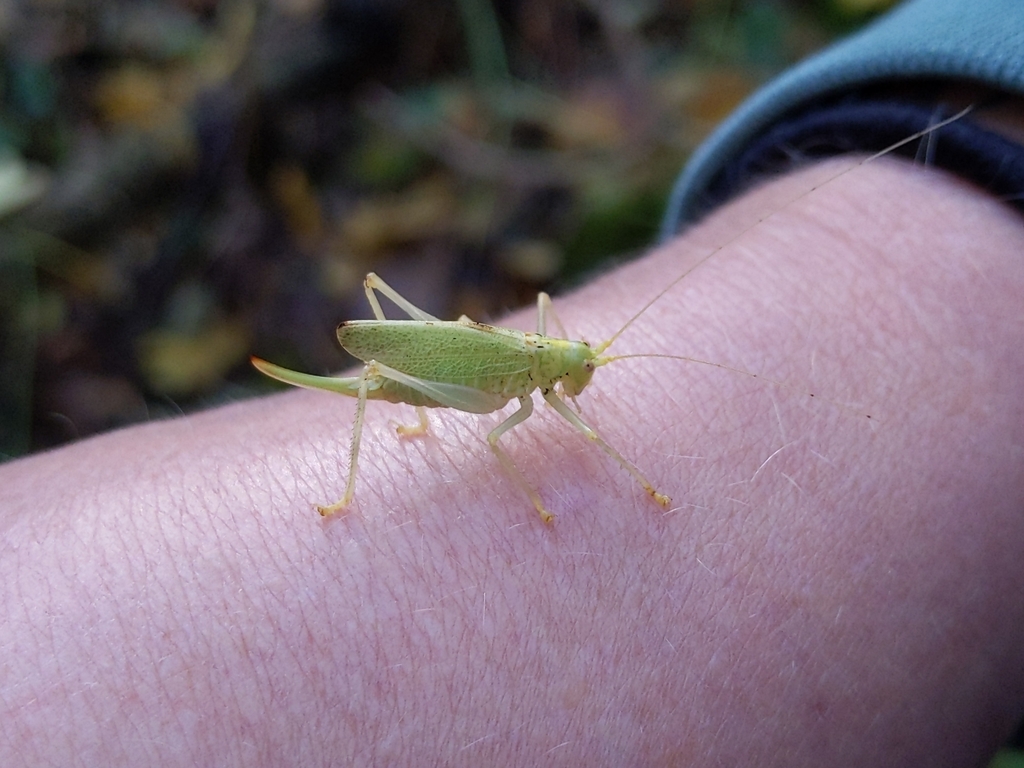
!Is the oak bush-cricket dangerous?
No. Oak bush-crickets are not dangerous. They may nip if handled roughly but cannot deliver medically important bites or stings. Wash minor skin breaks with soap and water; seek medical help for unusual allergic reactions though these are rare.
Pets
Not toxic to pets. Small bush-crickets may be eaten by cats or birds with no known specific risk, though individual pets might show mild stomach upset after ingesting many insects.
📖Overview
Meconema thalassinum is a small katydid (bush-cricket) native to much of Europe, including southern Britain, and introduced to parts of northeastern North America. It lives mainly in trees and shrubs, especially oaks, and is largely nocturnal. Adults are weak flyers and are frequently attracted to lights; this behaviour is why they are commonly found inside houses in late summer and autumn. They feed mostly on small invertebrates and occasionally on plant sap or soft fruit.
This species is not dangerous to people or pets. It does not have a medically significant bite or sting. Oak bush-crickets are not considered agricultural pests and can be beneficial by eating pest caterpillars and other small insects. Their life cycle includes eggs that overwinter, several nymphal instars in spring and summer, and adults from mid-summer into autumn.
🔍How to identify an oak bush-cricket
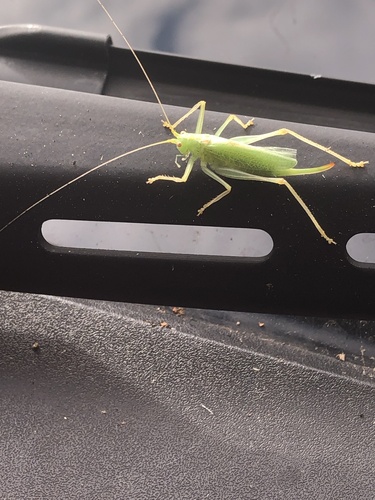
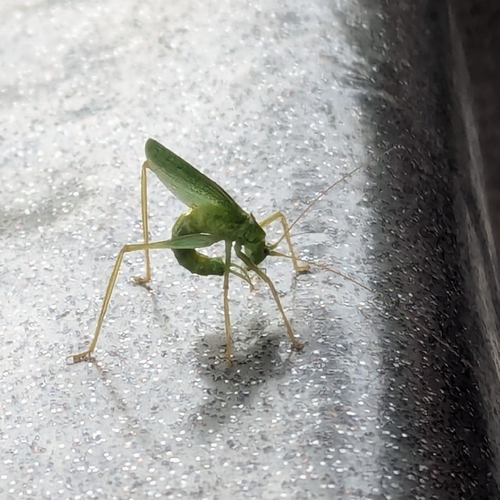
Adults are slim and mostly bright green with a pale yellowish underside and fine brown markings along the body. They have long antennae and fully developed wings that lay flat over the abdomen; wings are clear to slightly green-tinted and allow modest flight. Females have a long, upcurved, sabre-like ovipositor. Size is small for a bush-cricket, noticeably more delicate than larger tettigoniids.
- Small, slim bush-cricket 12-18 mm body length, bright green with pale yellow underside.
- Long antennae and fully developed, flat wings that allow weak flight.
- Found on tree trunks, branches or attracted to lights at night; females have a long upcurved ovipositor.
- More delicate and smaller than common meadow bush-crickets and lacks conspicuous loud song typical of some tettigoniids.
Lookalikes
Common bush-cricket Pholidoptera griseoaptera
Pholidoptera is usually wingless or short-winged and more brownish; Meconema thalassinum is fully winged and green.
Great green bush-cricket Tettigonia viridissima
Tettigonia is much larger (body length 28-42 mm) and bulkier; oak bush-cricket is slim and smaller.
Speckled bush-cricket Leptophyes punctatissima
Leptophyes is flightless with very short wings and a speckled pattern; Meconema has long wings and a plain green appearance.
↻Life cycle
Egg
Laid in bark crevices or plant tissue in late summer; eggs overwinter and hatch in spring.
Nymph
Several moults through successive instars during spring and early summer; nymphs resemble small wingless adults.
Adult
Winged adults appear in mid-summer, are active at night, mate and lay eggs through late summer and autumn.
🍃Diet and predators
Young eat
Small invertebrates (aphids, caterpillars, small larvae) and possibly soft plant material
Adults eat
Primarily small insects and other arthropods; sometimes plant sap or soft fruit
Predators of the young
Birds, spiders, predatory insects (e.g. mantids), small mammals
Predators of adults
Bats (at night), birds, spiders, and predatory insects
🌱Effect on plants and gardens
Not a significant plant pest. Occasionally probes soft fruit or sap but generally feeds on small invertebrates, so it can help control pest caterpillars.
📍Where and when to find it
Look on tree trunks, branches, foliage and around outdoor lights at night. Nymphs are found on foliage in spring and early summer.
Best time
Mid-summer to autumn, at night or around porch and street lights.
Observation tips
Use a flashlight at night and scan tree trunks and branches slowly; to photograph, coax gently onto a stick or leaf and shoot at close range with a macro lens.
✨Fun facts
- Unlike many katydids, oak bush-crickets are often found inside houses because they fly to artificial lights.
- They are mostly carnivorous and help reduce populations of small pest caterpillars in trees.
- Males have no stridulatory song; instead they drum a hind leg rapidly on a leaf to make a soft purring sound that attracts females.
?Frequently asked questions
Do oak bush-crickets bite?
They can give a tiny nip if handled, but bites are rare and not medically significant.
Are oak bush-crickets harmful to my garden?
No. They mainly eat other small insects and are not considered garden pests.
Why is an oak bush-cricket in my house?
They are nocturnal and attracted to artificial lights; weak flight means they sometimes fly through open windows or doors into houses.
How do I get rid of oak bush-crickets in my home?
Catch and release outdoors using a jar and piece of paper, or open windows/doors at night to let them exit. Prevent entry by closing gaps and using window screens.
Where does the oak bush-cricket live?
In deciduous trees and shrubs (especially oak) at woodland edges, parks and gardens across much of Europe; adults are most common in mid-summer to autumn.
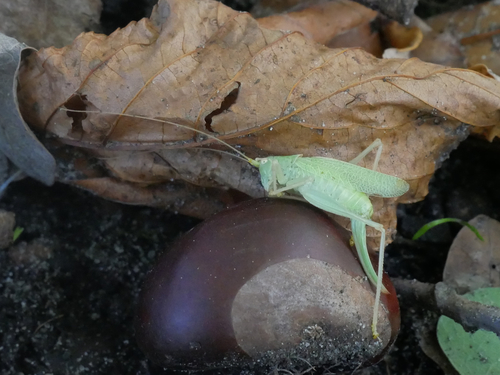
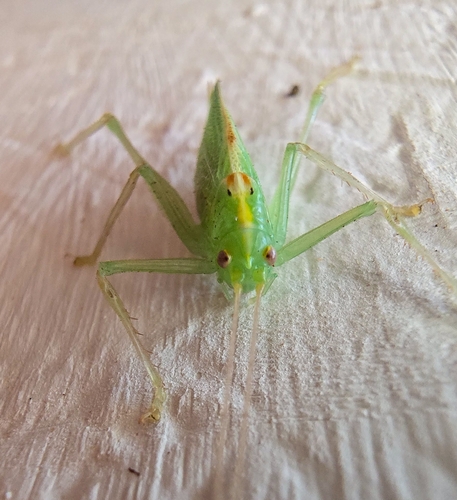
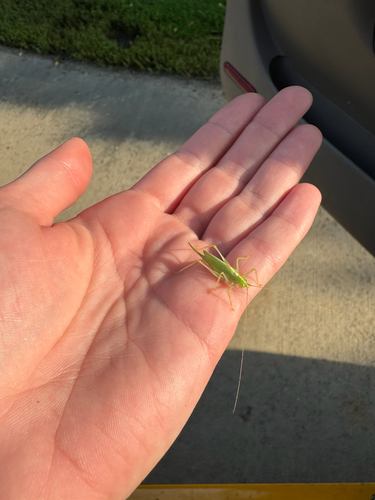
📷Photos of the oak bush-cricket
More grasshoppers & crickets
Non-toxic
Non-toxic
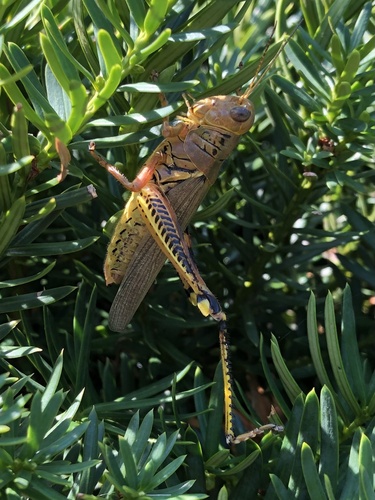
Non-toxic
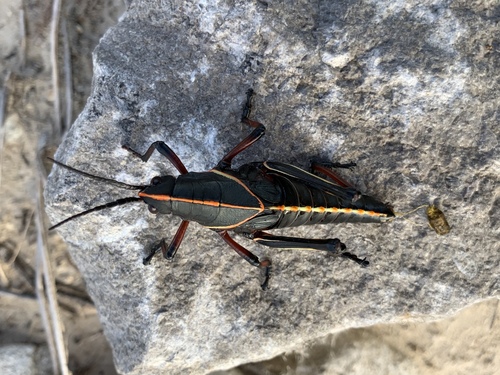
Irritating secretion
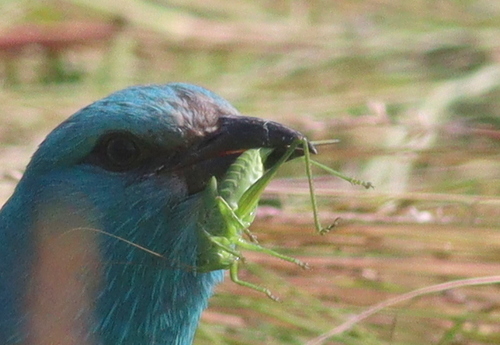
Non-toxic
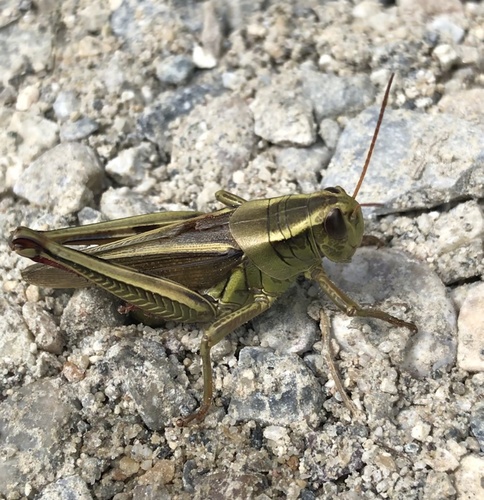
Non-toxic
This guide was written with AI assistance and fact-checked, last updated 2026-10-10. Identification from photos is never certain: don't handle insects you can't identify, and get medical advice for bites, stings or allergic reactions. More about the oak bush-cricket: iNaturalist, Wikipedia.