
Fall field cricket
Gryllus pennsylvanicus · Field crickets
A large, black, noisy cricket of eastern North America; males sing at night in late summer and fall and adults often move into buildings seeking shelter.
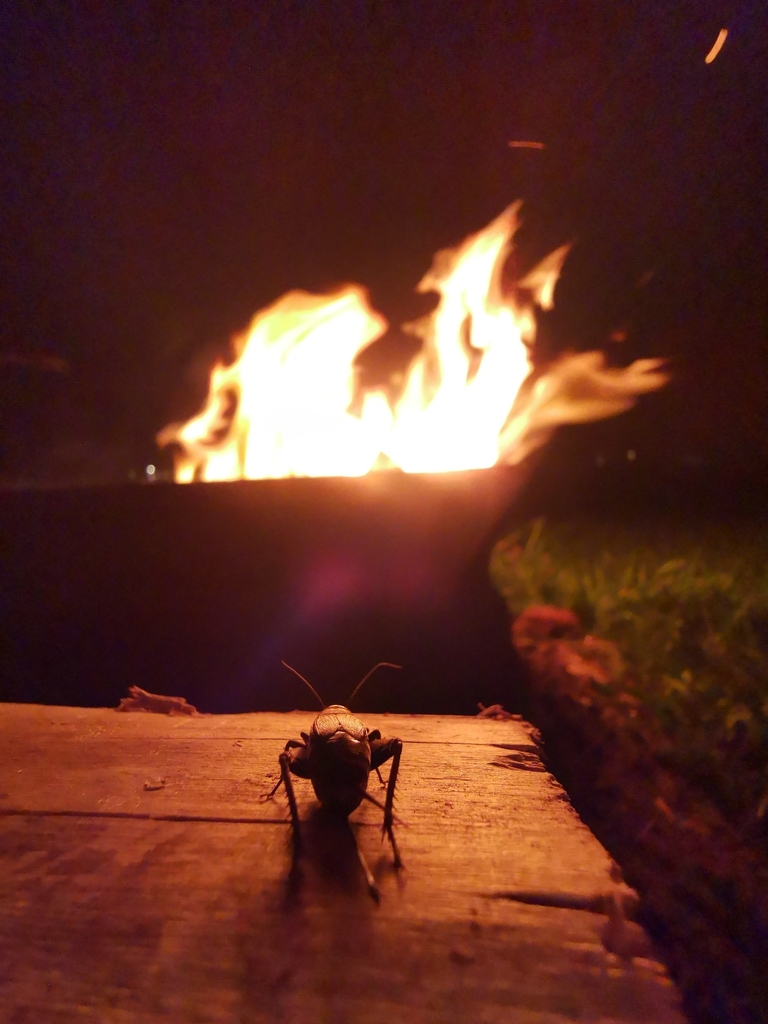
!Is the fall field cricket dangerous?
No. Fall field crickets are not venomous or disease vectors. They do not normally bite humans; a defensive pinch is possible but rare and not medically significant. Their loud nighttime song can be a nuisance.
Pets
Generally harmless to pets. Large numbers might annoy household pets, but crickets are not toxic; a dog or cat eating many insects could develop mild digestive upset.
📖Overview
Gryllus pennsylvanicus is a robust, largely black field cricket common across much of eastern North America. Males produce the familiar loud, chirping song from vegetation, rocks or bare ground to attract females. Adults appear in late summer and are most obvious in fall when some migrate into houses, garages and basements seeking shelter and warmth. They are omnivorous scavengers that feed on plants, dead insects and other organic material. They are not dangerous to people, though they can pinch if handled roughly.
🔍How to identify a fall field cricket
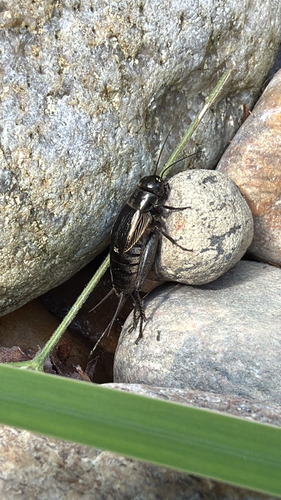
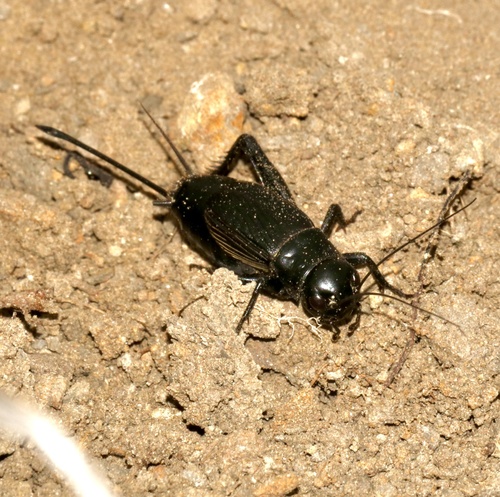
Adults are relatively large, shiny to matte black crickets with a chunky body and long antennae. Adult females have a straight, needle-like ovipositor projecting from the rear. Wings of adults are well developed; males sing by rubbing their forewings together. Nymphs resemble small, wingless versions of the adults and progressively gain wing pads as they molt.
- Large, mostly black cricket 16-25 mm body length with long antennae
- Males produce a loud, steady trilling song at night (listen from nearby vegetation or ground)
- Females have a straight ovipositor projecting from the rear
- Adults are active late summer into fall and are more likely to enter buildings at that time
Lookalikes
House cricket Acheta domesticus
House crickets are paler tan to brown (not black) and smaller; their song and general habitat (indoors) differ.
Southern field cricket Gryllus rubens
Very similar in appearance; differentiated reliably by song pattern and subtle morphological features (genitalia) examined by specialists.
↻Life cycle
Egg
Females insert eggs into the soil with their ovipositor in late summer and fall; eggs overwinter in the ground and hatch in spring.
Nymph (juvenile)
Wingless nymphs emerge in spring and go through multiple molts, gradually developing wing pads and adult features through summer.
Adult
Adults appear in late summer and reach peak numbers in late summer and fall; adults mate and females lay eggs to complete the annual cycle.
🍃Diet and predators
Young eat
Omnivorous: plant material, seedlings, decaying organic matter and small insects
Adults eat
Omnivorous scavengers: plants, fruit, seeds, fungi and dead insects
Predators of the young
Birds, small mammals, spiders, predatory insects and parasitoids
Predators of adults
Birds, small mammals (shrews, mice), bats, spiders and predatory insects
🌱Effect on plants and gardens
Adults and nymphs feed opportunistically on plant material, seedlings and sometimes fruit or garden vegetables, but they're rarely a major crop pest in small numbers.
How to get rid of fall field crickets
Exclude them by sealing gaps around doors, windows and foundations and installing door sweeps. Reduce outdoor clutter, tall vegetation and places to hide near buildings. Turn off or reduce nighttime outdoor lighting that attracts insects. Indoor crickets can be removed with a vacuum or live-capture traps. For large infestations, targeted insecticidal baits or perimeter treatments by a licensed pest professional can be used.
📍Where and when to find it
Listen for males at night on low vegetation, rocks, fence posts and bare ground in fields, lawns and edges; check under stones, logs and in tall grass. Indoors, find them near basements, garages, windows and light sources.
Best time
Late summer to fall, typically at night when males sing.
Observation tips
Turn off lights and listen for songs to locate singing males; photograph with a close macro lens or capture briefly in a clear container for identification. Handle gently or use a cup-and-paper method to move individuals.
✨Fun facts
- The loud chirps of males are produced by rubbing a scraper on one forewing against a file of ridges on the other (stridulation).
- Despite the common name 'fall field cricket', young stages are present much of the year; adults peak in late summer and fall.
- Eggs commonly overwinter in soil, allowing the species to survive cold winters in temperate regions.
?Frequently asked questions
Are fall field crickets dangerous?
No. They are not venomous or dangerous to people, though they can give a mild pinch if handled.
Do fall field crickets bite?
Bites are uncommon and only defensive; they do not inject venom and cause only minor, brief pain if they occur.
Why are crickets in my house in fall?
Adults move toward sheltered, warmer places in late summer and fall to find mates and overwintering sites; houses offer warmth and shelter.
Will they damage my garden or home?
In small numbers they cause little damage; large numbers can chew seedlings, soft fruit or fabrics, but significant damage is uncommon.
How can I get rid of them?
Seal entry points, reduce outdoor clutter and tall vegetation near the foundation, switch off attracting lights at night, use sticky or live traps indoors, vacuum visible crickets, and for heavy infestations consider targeted treatments by a pest control professional.
When can I hear the males singing?
Males sing day and night from late summer into fall, especially in the evening; the song is a series of short chirps of about three pulses each.
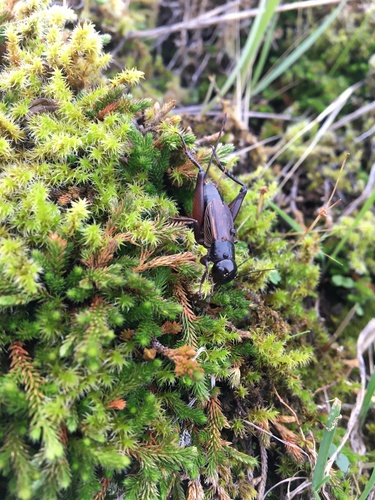
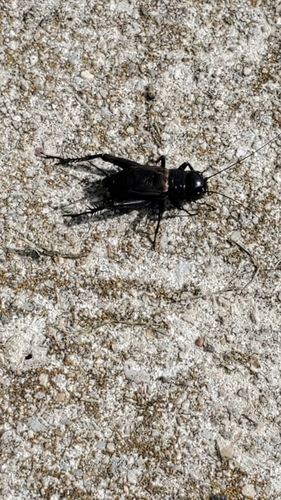
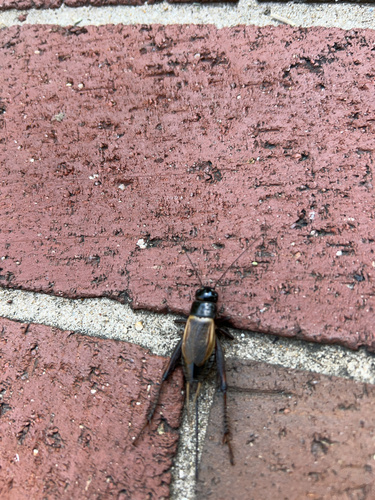
📷Photos of the fall field cricket
More grasshoppers & crickets
Non-toxic
Non-toxic
Non-toxic
Irritating secretion
Non-toxic
Non-toxic
This guide was written with AI assistance and fact-checked, last updated 2026-10-10. Identification from photos is never certain: don't handle insects you can't identify, and get medical advice for bites, stings or allergic reactions. More about the fall field cricket: iNaturalist, Wikipedia.