
European mole cricket
Gryllotalpa gryllotalpa · Mole crickets
A chunky, burrowing cricket with spade-like forelegs that lives in moist soil, can damage lawns and seedlings but is not dangerous to people.
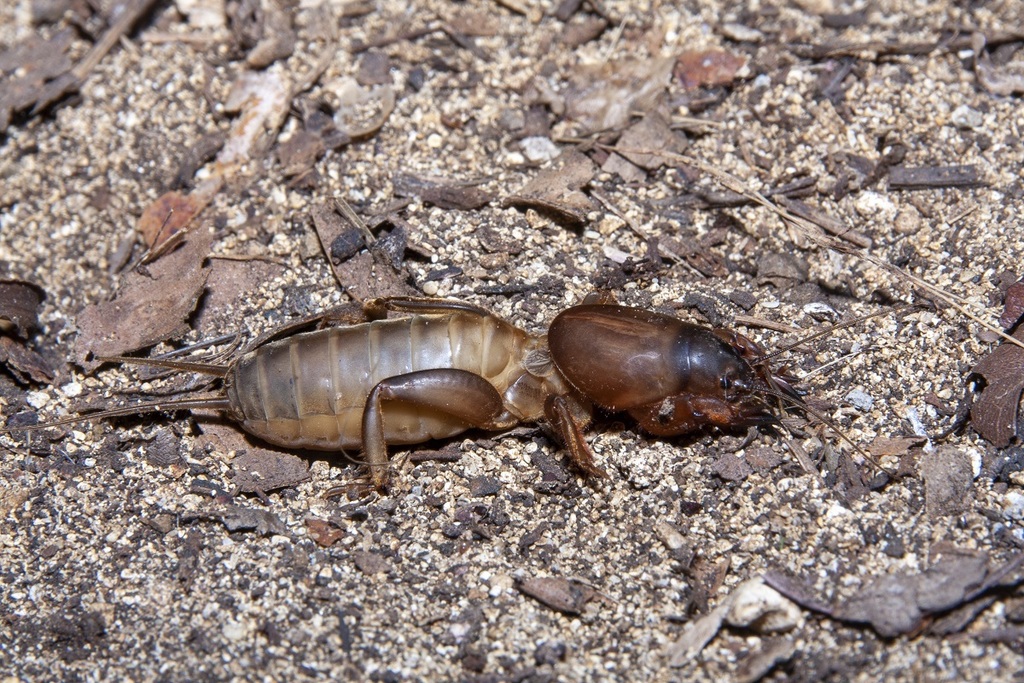
!Is the European mole cricket dangerous?
No. Not venomous. Adults can produce a pinch if handled with fingers but do not pose a medical threat. Basic first aid for a minor pinch or scrape: wash the area with soap and water and monitor for infection.
Pets
Not poisonous to pets. Curious dogs or cats might catch or eat one; this can upset the pet's stomach but is not toxic. Sharp digging forelegs could theoretically cause a minor bite/pinch if handled.
📖Overview
Gryllotalpa gryllotalpa is a large, fossorial (burrowing) cricket found across much of Europe, North Africa and parts of western Asia. Adults spend most of their lives underground in a network of galleries; they surface mainly at night or after heavy rain. Both adults and nymphs feed on plant roots, seedlings and small invertebrates, and in gardens or turf they can cause noticeable patches of damaged vegetation and tunnelling. They are solitary, mostly active in spring and early summer when males call from burrows to attract females.
🔍How to identify an European mole cricket
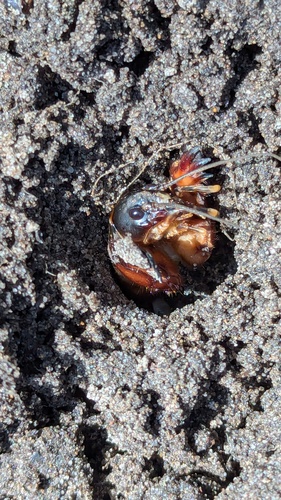
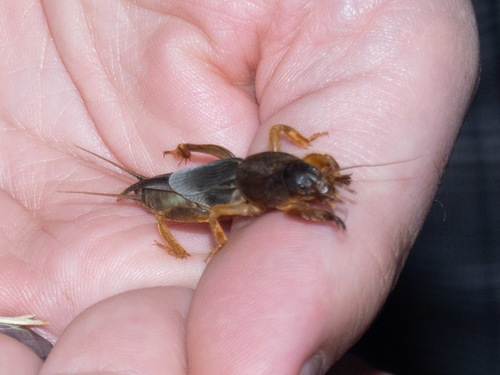
Adults are robust, cylindrical crickets with powerful, flattened forelegs adapted for digging (resembling tiny mole forepaws). The body is elongated with well-developed wings in adults; unlike most crickets, females have no visible ovipositor. Colour is generally various shades of brown and tan, often with a glossy or slightly greasy sheen. Typical body length (not counting ovipositor) is noticeably larger than many other crickets.
- Look for large, shovel-like forelegs (flattened and toothed) used for digging.
- Size larger than typical field crickets: body length around 30-50 mm.
- Adults have short forewings folded over the back with longer hindwings rolled beneath; there is no visible ovipositor.
- Tunnelling activity and fan-shaped spoil heaps on turf are good behavioural clues.
Lookalikes
Tawny mole cricket Scapteriscus vicinus
A New World mole cricket (introduced in the southeastern United States) with only two blade-like claws on each digging foreleg instead of four; it does not occur in the European mole cricket's natural range.
↻Life cycle
Egg
In late spring and early summer females lay a few hundred eggs in an underground nest chamber and guard the eggs and young nymphs; hatching takes a few weeks depending on temperature.
Nymph (juvenile)
Nymphs resemble small wingless adults and live underground, feeding on roots and small invertebrates while growing through several molts.
Adult
Adults develop wings and breeding behaviour; males call from burrow entrances and mating occurs in the spring to early summer.
🍃Diet and predators
Young eat
Roots, seedlings, small invertebrates and soil organic matter
Adults eat
Omnivorous: plant roots and shoots, seedlings, earthworms and other soil invertebrates
Predators of the young
Ground-feeding birds, small mammals (shrews, hedgehogs), ground beetles
Predators of adults
Birds, foxes, hedgehogs and other insectivorous mammals; parasitic insects and pathogens can also affect populations
🌱Effect on plants and gardens
Adults and nymphs feed on roots, seedlings and tubers and may sever young plants; tunnelling also uproots turf and can create unsightly patches in lawns and vegetable beds.
How to get rid of European mole crickets
Damage is usually local and tolerable. Reduce excess irrigation and thatch, and flush mole crickets out at night by pouring soapy water (about two tablespoons of washing-up liquid per 4 litres) over tunnel areas, then collect them by hand. Pitfall traps sunk level with the soil surface can catch roaming adults. Entomopathogenic nematodes (Steinernema species) applied to moist soil are a biological option. Use insecticides only if labeled for mole crickets in your region. In Britain, where the species is very rare, do not kill it and report sightings to recording schemes.
📍Where and when to find it
Look in moist lawns, vegetable gardens, riverbanks and meadows. Watch for spoil heaps and fan-shaped tunnel entrances; adults are most often found at burrow entrances at night.
Best time
Spring and early summer nights, especially after rain.
Observation tips
Listen for males singing at dusk, inspect damp turf for fresh soil fans, and check under loose stones or turf edges. Use a torch and a hand trowel for careful searching.
✨Fun facts
- Male mole crickets sing from specially shaped burrows that act as acoustic amplifiers to attract females; the sound can be surprisingly loud.
- Their powerful forelegs evolved convergently to look like a mole's digging paws, hence the common name 'mole cricket'.
- They are good swimmers for an insect: adults sometimes surface and can swim across wet ground or shallow water after heavy rain.
?Frequently asked questions
Do European mole crickets bite?
They can give a mild pinch if handled roughly, but they are not venomous and bites are rare and not medically significant.
Are mole crickets dangerous to people or pets?
No — they are not poisonous and do not transmit diseases. They are primarily an agricultural or garden pest because they feed on roots and disturb soil.
Why is a mole cricket in my house or garden?
They prefer moist, loose soil for digging and egg-laying. Heavy rain or irrigated lawns also bring them to the surface; gardens and turf provide food and good burrowing conditions.
How can I get rid of mole crickets in my lawn?
Non-chemical options: flood infested tunnels to force them out at night and remove by hand, set cardboard traps or soil pitfall traps, reduce excessive watering and thatch. Chemical controls are available in many regions (label directions vary); consult local extension advice for recommended baits or insecticides and timing (usually spring or autumn). Biological controls such as entomopathogenic nematodes are effective in some situations.
When am I most likely to see mole crickets?
At night in spring and early summer, and on the surface after heavy rain or when searching for mates; daytime sightings are uncommon unless disturbed.
📷Photos of the European mole cricket
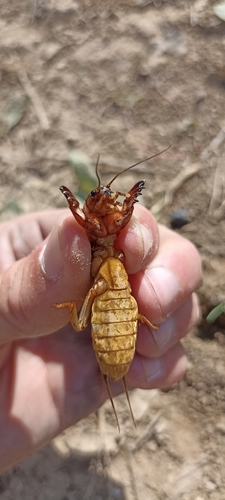
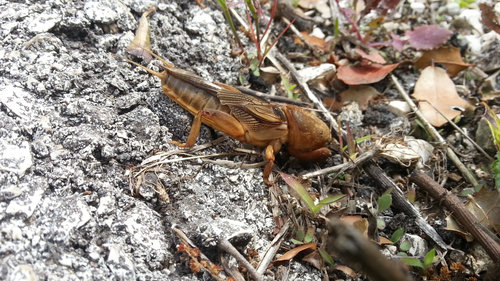
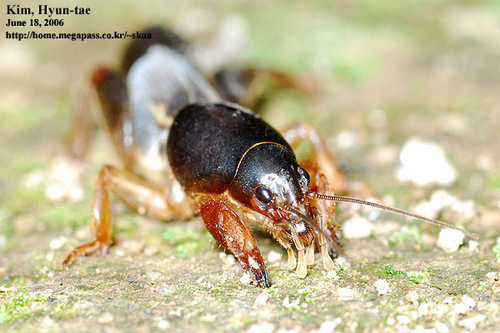
More grasshoppers & crickets
Non-toxic
Non-toxic
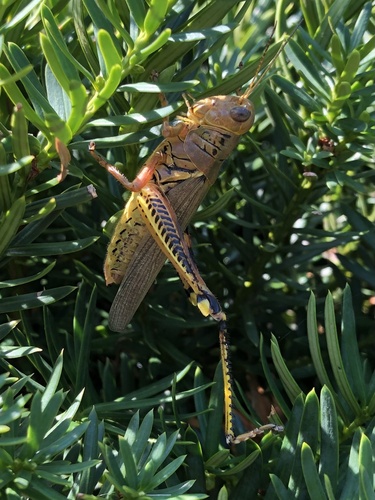
Non-toxic
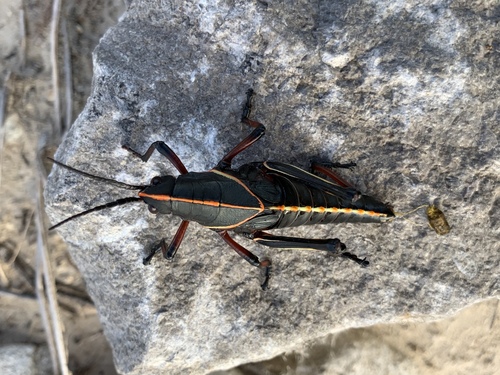
Irritating secretion
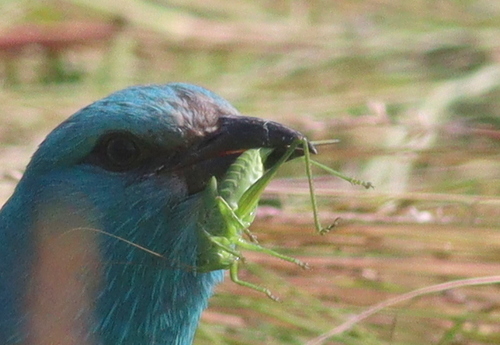
Non-toxic
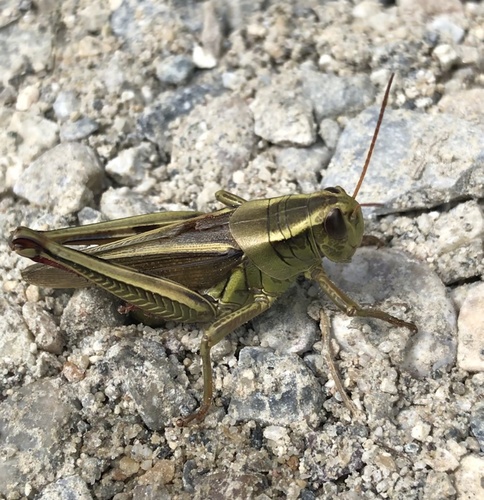
Non-toxic
This guide was written with AI assistance and fact-checked, last updated 2026-10-10. Identification from photos is never certain: don't handle insects you can't identify, and get medical advice for bites, stings or allergic reactions. More about the European mole cricket: iNaturalist, Wikipedia.