
Slender groundhopper
Tetrix subulata · Groundhoppers
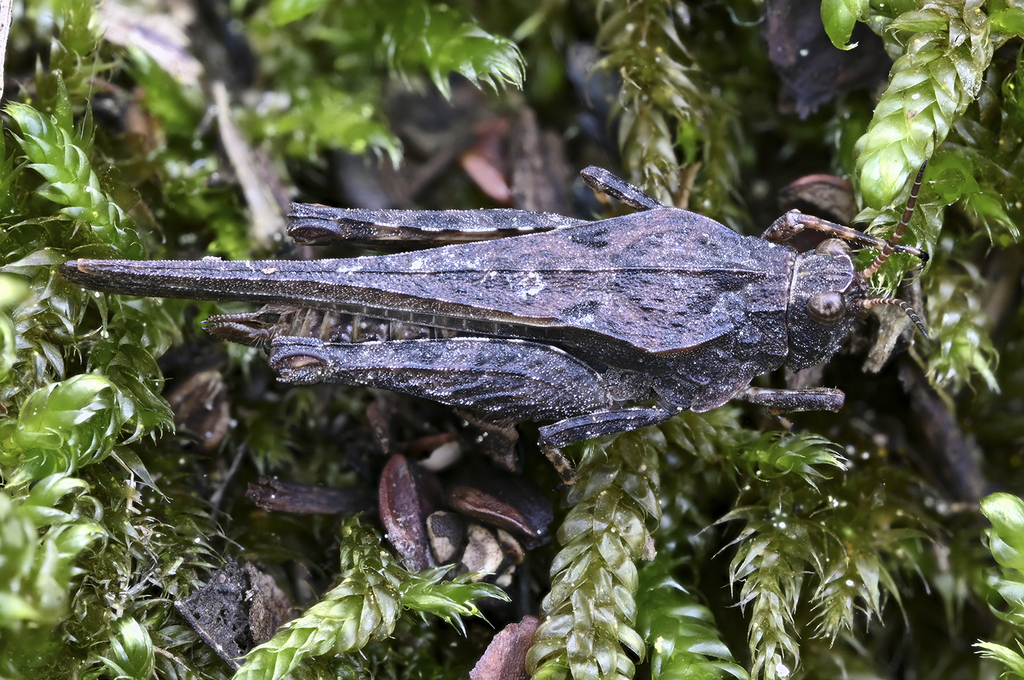
A very small, slender pygmy grasshopper common in damp, open habitats across Europe, temperate Asia and North America, with an elongated rear section of the pronotum.
!Is the slender groundhopper dangerous?
No. Tetrix subulata is harmless to people. It does not have a venomous bite or sting. It may jump or hop away if handled; handle gently to avoid damaging the insect.
Pets
Not known to be toxic or harmful to pets. Small size makes them irrelevant as a threat; pets may eat them but no illness is expected.
📖Overview
Tetrix subulata is a small member of the groundhopper (pygmy grasshopper) family Tetrigidae. It favours damp, open places such as stream and pond margins, wet meadows, heathland and muddy banks, where it runs and hops among low vegetation, moss and bare ground. Like other tetrigids it is cryptic and often hard to spot because of its small size and mottled colours.
Behaviour is mostly diurnal; individuals are solitary or found in low-density groups. They feed on a mix of algae, mosses, detritus and tiny pieces of vascular plants. Reproduction is by eggs laid in soil or moss; development is hemimetabolous (egg - nymph - adult) with several moults before maturity.
🔍How to identify a slender groundhopper
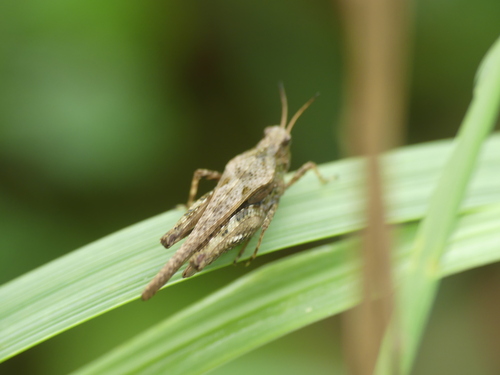
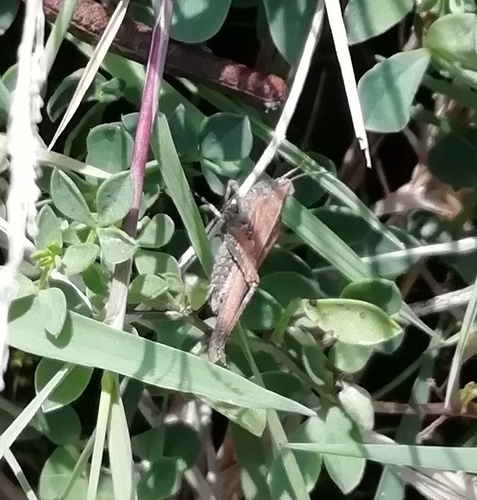
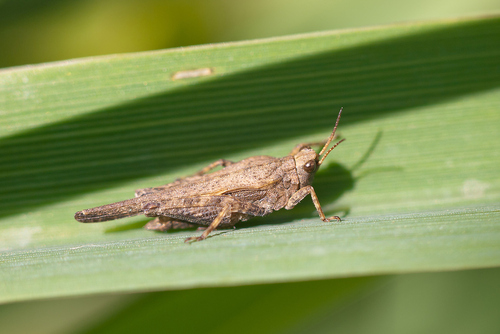
Adults are very small and slender compared with typical grasshoppers. The most distinctive feature is the elongate pronotum (dorsal shield) that extends backwards over the abdomen, often ending in a narrow, pointed rear—this gives a tapered, awl-like profile. Body length commonly falls in the small pygmy range; the hindwings are usually long, projecting beyond the pronotum tip, and adults can fly well. Colouration is cryptic and variable: mottled browns, greys, blacks or greens with dark patterning that helps them blend into mud, leaf litter or moss.
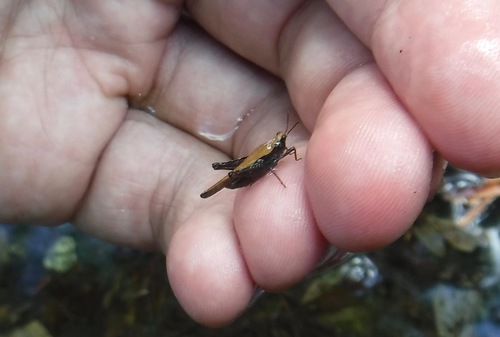
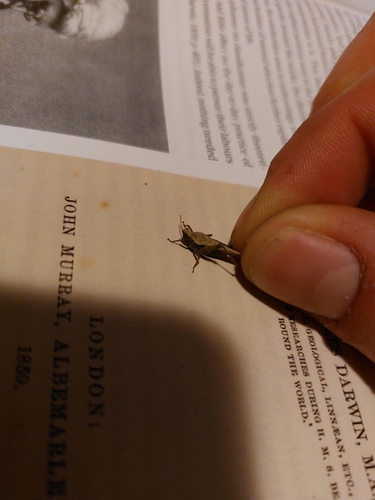
- Very small body (typically 8-12 mm) compared with typical grasshoppers.
- Pronotum (dorsal shield) prolonged rearwards over the abdomen to a narrow, often pointed tip, giving a tapered profile.
- Long hindwings usually projecting beyond the tip of the pronotum; adults can fly.
- Cryptic mottled colouring—brown, grey, black or green—matching muddy or mossy substrates.
Lookalikes
Common groundhopper Tetrix undulata
Tetrix undulata has a short pronotum that does not extend beyond the abdomen tip, a strongly raised central keel and short wings; T. subulata has a long, tapered pronotum and long wings.
Cepero's groundhopper Tetrix ceperoi
T. ceperoi prefers very wet, often coastal habitats and shows different proportions of pronotum length and body shape; careful comparison of pronotum shape and habitat helps separate them.
↻Life cycle
Egg
Eggs are laid in soil, moss or among plant litter in spring and summer, hatching after a few weeks.
Nymph
Nymphs resemble small, wingless adults and go through several moults, gradually developing the adult body form and the extended pronotum.
Adult
Adults are small and slender with the pronotum extended over the abdomen. Unlike most grasshoppers, groundhoppers overwinter as nymphs or adults and become active again in early spring.
🍃Diet and predators
Young eat
Algae, mosses, detritus and tiny fragments of low plants
Adults eat
Same as juveniles: mixed diet of algae, moss, detritus and small plant material
Predators of the young
Small spiders, predatory insects (e.g. robber flies), ground beetles and small birds
Predators of adults
Birds, small mammals (shrews), larger predatory insects and spiders
🌱Effect on plants and gardens
Feeds on algae, mosses, decaying plant material and small fragments of low plants; does not normally damage crops or garden plants in noticeable amounts.
📍Where and when to find it
Look on bare mud, wet sand, moss, among low vegetation and at pond or stream margins. Nymphs and adults are found on the ground rather than up in tall plants.
Best time
April to September, during daylight hours when it is warm and calm.
Observation tips
Crouch low to the ground and scan slowly; their small size and cryptic colour make them easier to spot at close range. A macro lens or a hand lens helps capture details of the pronotum and body shape.
✨Fun facts
- Groundhoppers are pygmy grasshoppers: much smaller than the typical grasshoppers people usually notice.
- The extended pronotum looks a bit like a shield or a tiny roof over the abdomen and helps camouflage the insect among debris and moss.
- Colour and pattern vary a lot between individuals, which improves camouflage on different substrates.
?Frequently asked questions
Do slender groundhoppers bite?
No. They are not aggressive and do not bite people.
Are slender groundhoppers harmful to my garden?
No. They feed on algae, moss and detritus and are not considered garden or crop pests.
Why do I find them near water?
They prefer moist, open habitats with bare ground, moss or low vegetation, such as pond or stream margins, which offer food and suitable egg-laying sites.
How can I get rid of groundhoppers in my yard?
Control is rarely necessary. Making habitat less favourable (draining very wet patches, removing exposed mud or dense moss) can reduce numbers, but these insects are harmless and best left alone.
When is the best time to see them?
Spring through early autumn (April-September) on warm, sunny days; watch low vegetation, mud and moss near water.
📷Photos of the slender groundhopper
More grasshoppers & crickets
Non-toxic
Non-toxic
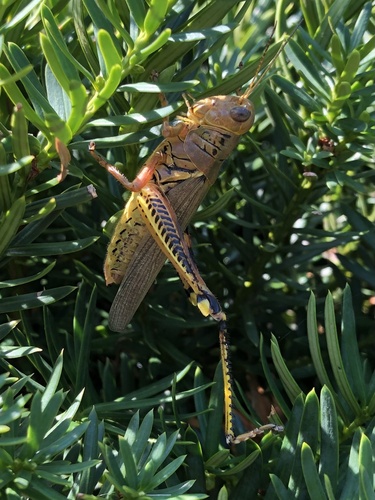
Non-toxic
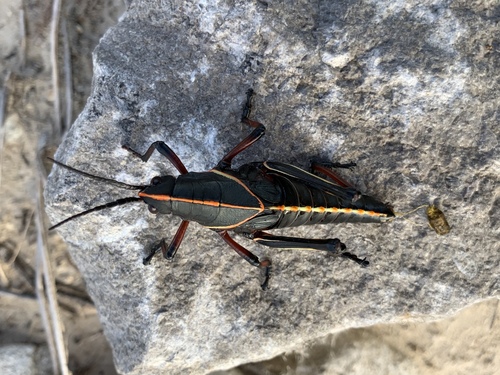
Irritating secretion
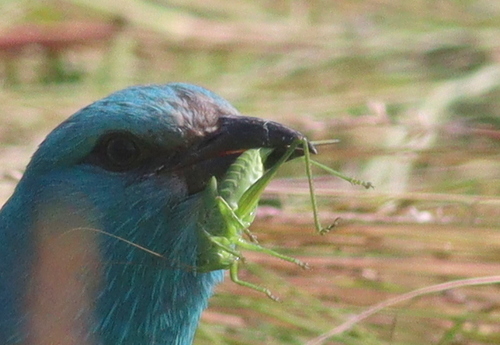
Non-toxic
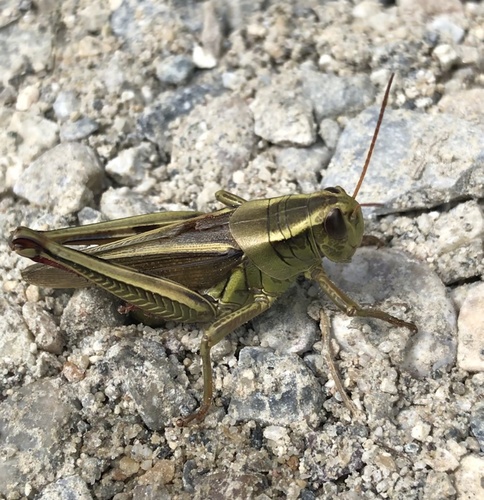
Non-toxic
This guide was written with AI assistance and fact-checked, last updated 2026-10-10. Identification from photos is never certain: don't handle insects you can't identify, and get medical advice for bites, stings or allergic reactions. More about the slender groundhopper: iNaturalist, Wikipedia.