
Wood cricket
Nemobius sylvestris · Ground crickets
A small, brown woodland ground-cricket of western Europe that lives in leaf litter and under logs and produces a soft, high-pitched chirp.

!Is the wood cricket dangerous?
No. Wood crickets are harmless to people. They do not possess medically significant venom and are not known to bite in a way that causes injury. Handling may cause a tiny pinch if a cricket tries to escape; wash hands afterwards as a general hygiene measure.
Pets
Not toxic to pets. Small crickets may be eaten by pet reptiles, amphibians and birds; they are not poisonous but may carry parasites in rare cases similar to other wild insects.
📖Overview
Nemobius sylvestris is a small, inconspicuous cricket found mainly in deciduous woodlands, hedgerows and shaded scrub. It lives at ground level in leaf litter, under loose bark and among fallen branches. Males sing a soft, continuous purring trill to attract females; the song is quieter than that of larger field crickets and often heard only at close range. It is a generally harmless species and not known to be of medical or economic concern.
Ecologically, wood crickets are part of the detritus food web: they feed on decaying plant material, fungal spores and small invertebrates and in turn are prey for birds, small mammals and predatory invertebrates. They are most often noticed by their sound or by turning over logs and leaf litter where they hide.
🔍How to identify a wood cricket
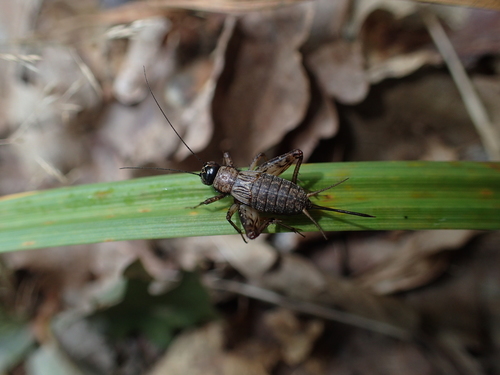
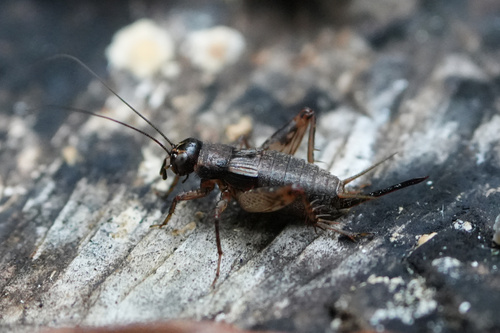
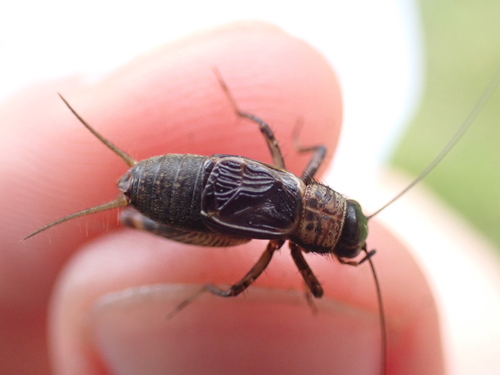
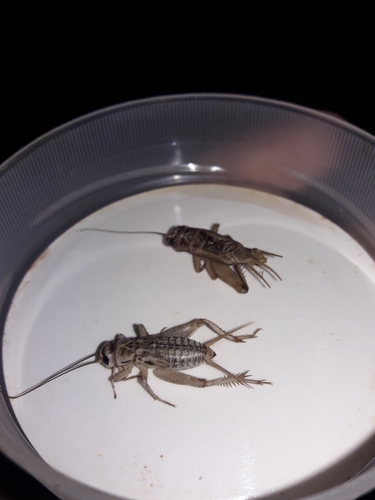
Adults are small and slender compared with common field crickets. Colouration is dark brown with paler mottling, especially a pale pattern on the head and pronotum, helping them blend into leaf litter. Hindwings are absent and the forewings are short: in males they cover about half the abdomen and carry the sound-producing veins, while in females they are tiny scale-like flaps, so adults often appear wingless. Antennae are long and thread-like. Females have a straight, needle-like ovipositor at the tip of the abdomen.
- Small body length around 6-10 mm, noticeably smaller than common field crickets.
- Dark brown with paler mottling, blending with leaf litter.
- Short wings (males) or almost wingless appearance (females); long thread-like antennae.
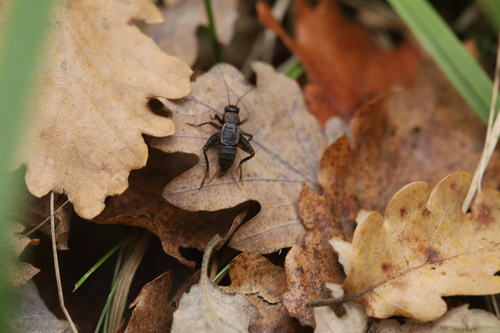
- Found at ground level in leaf litter, under bark and fallen timber rather than on plants.
Lookalikes
Field cricket Gryllus campestris
Larger (often >20 mm), robust and usually black or dark; louder song and typically found in open grassy habitats rather than shaded leaf litter.
House cricket Acheta domesticus
Pale straw-brown, larger (about 16-21 mm) with full-length wings, and associated with buildings and heated places rather than woodland leaf litter.
↻Life cycle
Egg
Females lay eggs in soil or leaf litter in late summer and autumn; eggs overwinter and hatch the following spring or summer.
Nymph
Nymphs resemble small wingless adults and go through successive molts in the leaf litter; they usually overwinter as nymphs and mature the following summer, giving a two-year life cycle.
Adult
Adults are reproductively active from summer into autumn and the males produce soft, purring calling songs.
🍃Diet and predators
Young eat
Detritus, fungal spores, microscopic organic matter and tiny invertebrates
Adults eat
Omnivorous: decaying plant material, fungi, seeds and small invertebrates
Predators of the young
Ground-foraging birds, shrews, spiders and predatory beetles
Predators of adults
Birds, small mammals, amphibians, spiders and predatory insects
🌱Effect on plants and gardens
Wood crickets feed mainly on detritus, fungal material and tiny bits of vegetation; they are not significant herbivores of live plants or crops.
📍Where and when to find it
Turn over logs, search in leaf litter and around the bases of hedgerow plants; listen for a soft, purring trill from the ground layer.
Best time
Summer to autumn; males can be heard calling by day and on warm evenings.
Observation tips
Use a gentle hand when searching through litter to avoid crushing specimens. A macro lens and low-angle shots at ground level capture their typical habitat.
✨Fun facts
- The male's calling song is much softer than that of larger crickets, so wood crickets are often heard only at close range.
- Because they live within leaf litter and under bark, they play a small but useful role recycling dead plant material.
- Wood crickets cannot fly, so dispersal is by walking and hopping, and colonies are often found in the same woods year after year.
?Frequently asked questions
Are wood crickets harmful to people?
No. They are harmless, do not carry venom dangerous to people and do not spread disease.
Do wood crickets bite?
They are not known to bite people in a way that causes harm; any bite would be tiny and accidental.
Why is a wood cricket in my house?
Occasionally one may wander indoors from nearby leaf litter or garden debris, especially in autumn; they prefer damp, sheltered outdoor habitats and are not household pests.
How can I get rid of wood crickets?
Remove leaf litter and piles of wood or bark near foundations, seal gaps where they might enter, and reduce damp shelter. Live capture and release outdoors is an effective, humane option.
Where does the wood cricket live?
In deciduous woodlands, hedgerows and shaded scrub across parts of western and central Europe; it hides in leaf litter, under bark and in fallen timber.
📷Photos of the wood cricket
More grasshoppers & crickets
Non-toxic
Non-toxic
Non-toxic
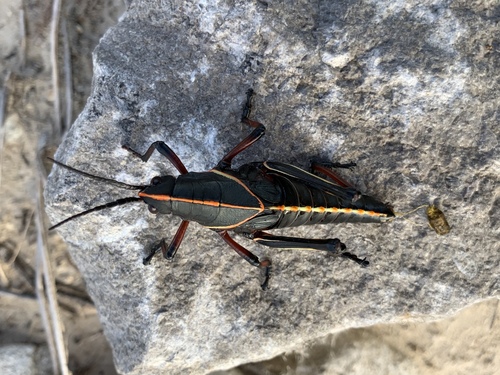
Irritating secretion
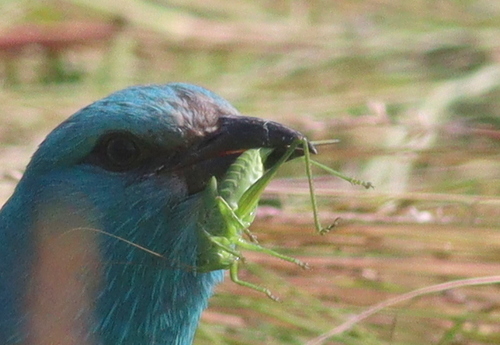
Non-toxic
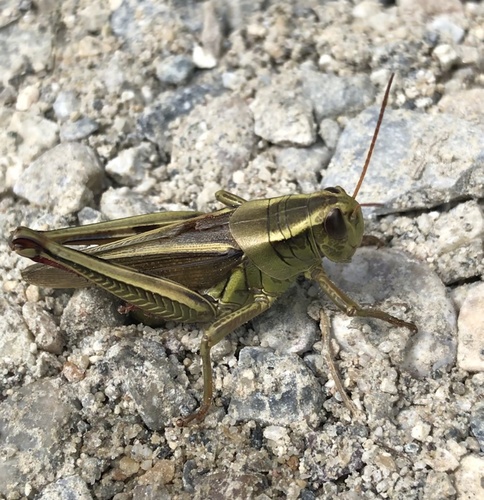
Non-toxic
This guide was written with AI assistance and fact-checked, last updated 2026-10-10. Identification from photos is never certain: don't handle insects you can't identify, and get medical advice for bites, stings or allergic reactions. More about the wood cricket: iNaturalist, Wikipedia.