
Common green grasshopper
Omocestus viridulus · Short-horned grasshoppers
A widespread green short-horned grasshopper of open grasslands; males sing by rubbing their hind legs and wings together.
!Is the common green grasshopper dangerous?
No. Not dangerous. Does not have venom or a sting. It can pinch with its mandibles if handled roughly, causing only brief, minor discomfort. No special first aid is required beyond cleaning any minor bite.
Pets
Generally harmless to pets. Pets may catch and eat them; grasshoppers are not known to be toxic, though swallowing many insects could cause mild stomach upset in some animals.
📖Overview
Omocestus viridulus is a common, mainly green grasshopper found across much of Europe and parts of the Palearctic. It prefers grassy, open habitats such as meadows, roadside verges and heathland. Males produce a characteristic song by stridulation to attract females. Adults are most often seen in warm months; eggs laid in late summer overwinter and hatch the following spring.
This species shows some colour variation (often bright green but sometimes brown or mixed), and both sexes are winged though flight is usually short and clumsy. It plays a natural role as an herbivore in grassland food webs and is prey for birds, small mammals, reptiles and predatory insects.
🔍How to identify a common green grasshopper
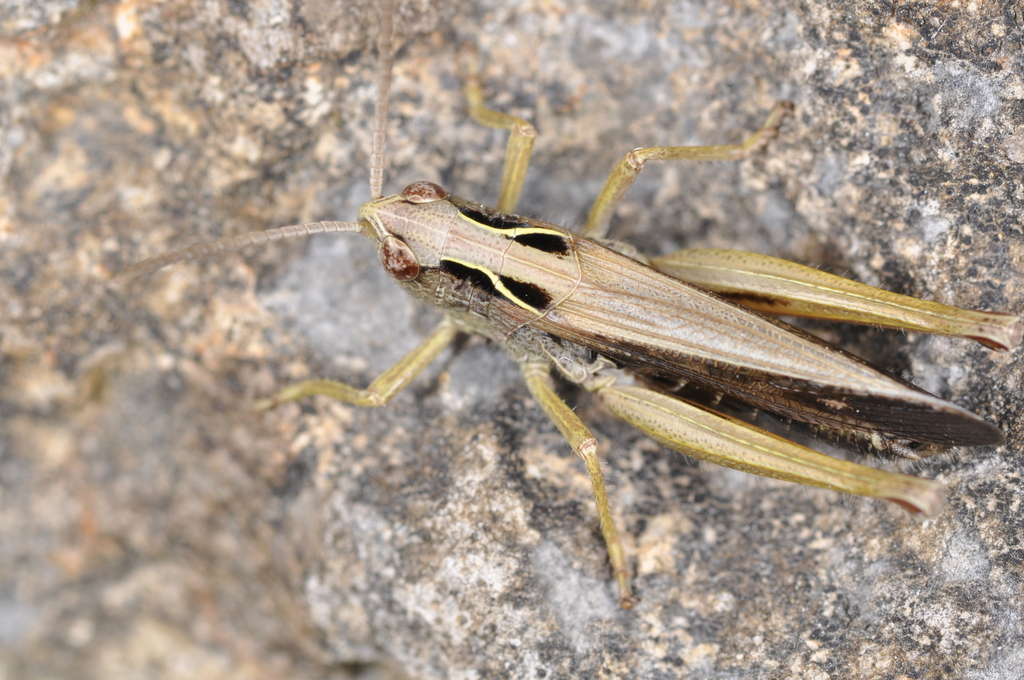
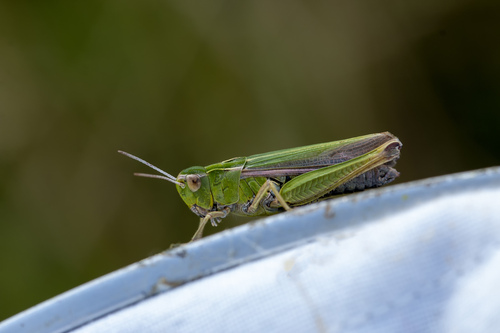
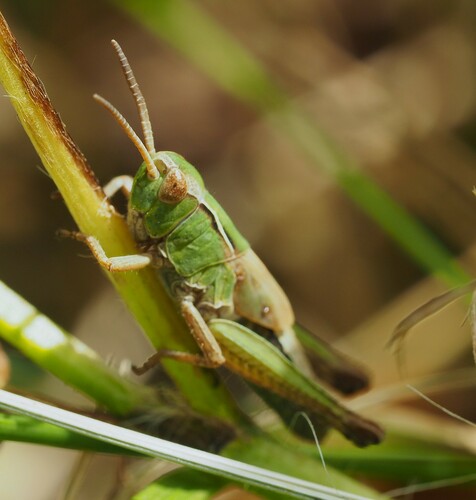
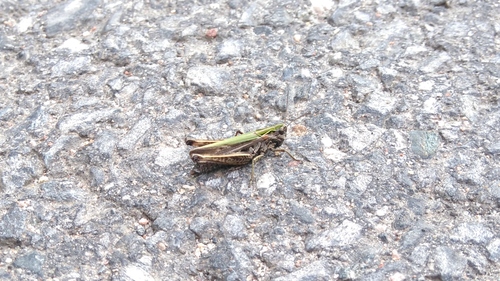
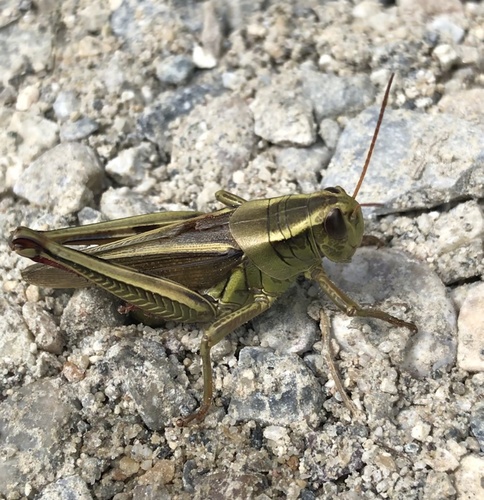
Adults are typically bright green, slender and elongate with short antennae (as in other short-horned grasshoppers). The pronotum (plate behind the head) is smooth and the hind legs are well-developed for jumping. Wings usually reach at least to the end of the abdomen in adults. Some individuals show brown or olive colour morphs; many have pale or darker longitudinal lines or subtle mottling. Males are smaller and have a different shape to the terminalia, and produce the characteristic song.
- Bright green body (though brown morphs exist) with elongate, slender form.
- Short antennae (typical of Acrididae/short-horned grasshoppers).
- Wings reaching at least to end of abdomen in adults and strong hind legs for jumping.
- Male song: a steady buzzing/stridulating sound produced by rubbing legs and wings — useful for field ID.
Lookalikes
Meadow grasshopper Pseudochorthippus parallelus (formerly Chorthippus parallelus)
Usually short-winged (females have very short wings) and the male song is a series of short chirps rather than the long, ticking song that builds to a buzz; close inspection of the pronotum also separates them.
Woodland grasshopper Omocestus rufipes
Usually darker, with a red-orange tip to the abdomen and white-tipped palps; prefers woodland clearings and edges, and its song differs.
↻Life cycle
Eggs
Laid in soil or plant debris in late summer; eggs remain dormant through winter and hatch in spring.
Nymph
Young nymphs resemble small wingless adults and go through several molts (instars) while feeding on grasses.
Adult
Winged, sexually mature grasshoppers visible in late spring to autumn; males sing to attract females and mating is followed by egg-laying.
🍃Diet and predators
Young eat
Grasses and herbaceous plants (similar to adults).
Adults eat
Primarily grasses and a variety of meadow plants; generally a mixed herbivore.
Predators of the young
Small predatory insects (e.g. robber flies), spiders, birds and small reptiles.
Predators of adults
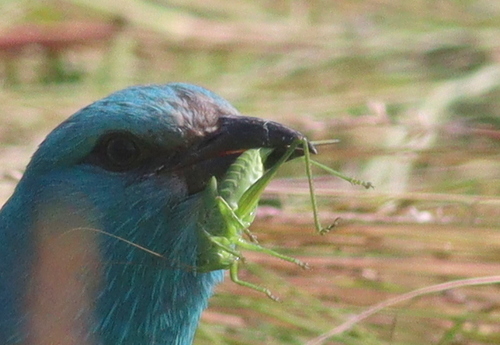
Insectivorous birds, small mammals, reptiles and predatory insects; also trapped by spiders and hunted by frogs or toads.
🌱Effect on plants and gardens
Feeds on a range of grasses and herbaceous plants. In normal numbers it does not cause significant agricultural damage; large outbreaks of grasshoppers generally involve other species.
📍Where and when to find it
Look in sunny grassy areas, on stems and blades of grass. Nymphs are found on low vegetation; adults sit higher on grass stems and may fly short distances when disturbed.
Best time
Late spring through summer into early autumn on warm, sunny days; males sing during daylight, especially in warm weather.
Observation tips
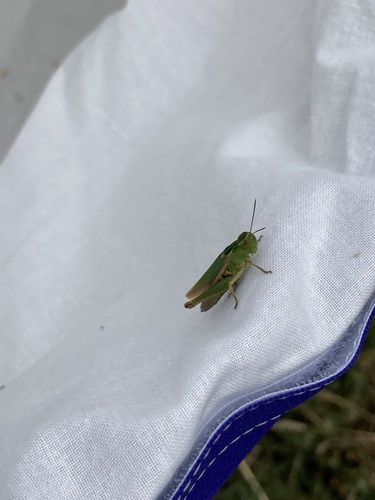
Listen for the male song to locate them. Approach slowly and photograph from low angles to capture the side profile and hind legs for identification.
✨Fun facts
- Males sing by rubbing a row of pegs on their hind femur against the forewing — each species has a distinctive song.
- This species shows colour polymorphism: while typically green, some individuals are brown to blend into dry grass.
- Eggs survive cold winters in the soil and hatch when spring grasses begin growing.
?Frequently asked questions
Is the common green grasshopper dangerous?
No. It is harmless to people and not venomous or aggressive.
Do common green grasshoppers bite?
They can nip with their mandibles if handled roughly, but bites are rare and cause only minor, short-lived discomfort.
Why do I find them in my house?
Occasional indoor sightings usually occur when grasshoppers are blown in on wind, follow lights at night, or enter homes from nearby vegetation. They do not live indoors long-term.
How do I get rid of grasshoppers in my garden?
Maintain healthy vegetation, reduce tall weedy margins where eggs and nymphs thrive, and encourage natural predators (birds, parasitic wasps). Chemical controls are rarely necessary for Omocestus viridulus specifically.
Where does the common green grasshopper live?
In grassy, sunny, open habitats across much of Europe and parts of the Palearctic — meadows, pastures, roadside verges and heath.
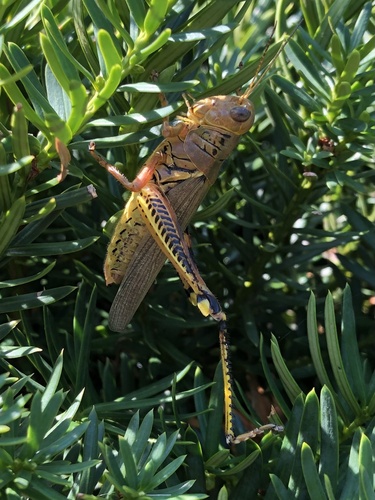
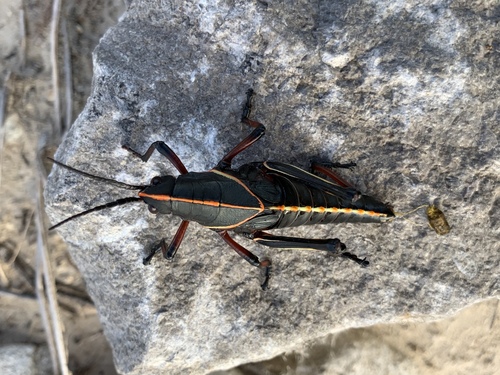
📷Photos of the common green grasshopper
More grasshoppers & crickets
Non-toxic
Non-toxic
Non-toxic
Irritating secretion
Non-toxic
Non-toxic
This guide was written with AI assistance and fact-checked, last updated 2026-10-10. Identification from photos is never certain: don't handle insects you can't identify, and get medical advice for bites, stings or allergic reactions. More about the common green grasshopper: iNaturalist, Wikipedia.