
Dark bush-cricket vs Oak bush-cricket
These two are easy to mix up. Here's how to tell a dark bush-cricket from an oak bush-cricket, and whether either one bites or stings.
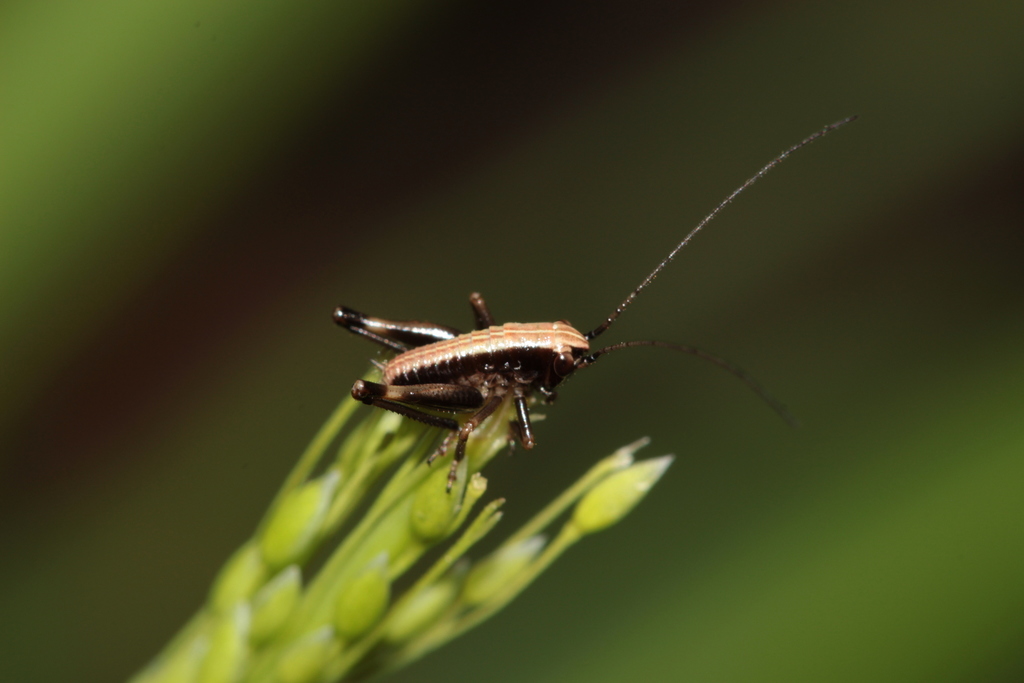
Dark bush-cricket
Pholidoptera griseoaptera
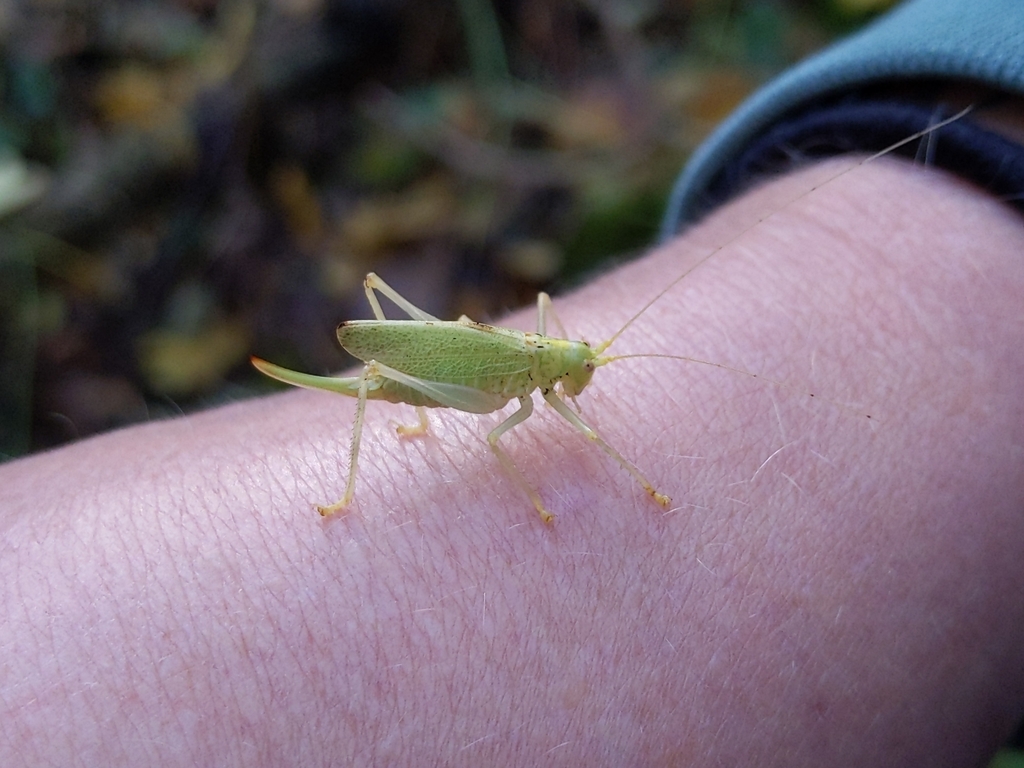
Oak bush-cricket
Meconema thalassinum
≠The key differences
Oak bush-cricket is more uniformly green and has longer wings allowing short flight; Pholidoptera griseoaptera is darker and short-winged.
Pholidoptera is usually wingless or short-winged and more brownish; Meconema thalassinum is fully winged and green.
⚖︎Side by side
| Dark bush-cricket | Oak bush-cricket | |
|---|---|---|
| To humans | Non-toxic | Non-toxic |
| Size | Males 10-16 mm body length; females 12-18 mm body length (excluding ovipositor). | 12-18 mm body length (excluding antennae) |
| Colours | Dark brown, Brown, Olive-brown, Beige (markings) | Bright green, Pale yellow, Light brown, Black (small markings) |
| Family | Tettigoniidae | Tettigoniidae |
| Habitat | Hedges, scrub, woodland edges, grassy banks, gardens with dense low vegetation across temperate Europe. | Deciduous trees and shrubs (especially oak), woodland edges, parks and gardens; sometimes indoors after being attracted to lights. |
| Range | Widespread in Europe from the British Isles and western Europe through central Europe into parts of eastern Europe; absent from the far north and highest mountains. | Broadly across Europe, including Britain and Ireland, into western Asia; introduced to northeastern North America. |
| Active | Adults active mid-summer to autumn (roughly June to October), mostly at dusk and night but sometimes during warm daylight. | Adults from mid-summer to autumn; mainly nocturnal but can be seen in daytime when disturbed. |
| Pest? | No | No |
🔍How to spot a dark bush-cricket
- Short, non-functional wings (brachypterous) so the insect appears compact compared with long-winged bush-crickets.
- Dark brown to grey-brown body with lighter mottling and long, threadlike antennae.
- Females have an upward-curved ovipositor visible beyond the abdomen.
- Quiet, rasping song from males at dusk (so hearing a soft rasp from hedges in summer is a clue).
🔍How to spot an oak bush-cricket
- Small, slim bush-cricket 12-18 mm body length, bright green with pale yellow underside.
- Long antennae and fully developed, flat wings that allow weak flight.
- Found on tree trunks, branches or attracted to lights at night; females have a long upcurved ovipositor.
- More delicate and smaller than common meadow bush-crickets and lacks conspicuous loud song typical of some tettigoniids.
?Frequently asked questions
What is the difference between a dark bush-cricket and an oak bush-cricket?
Oak bush-cricket is more uniformly green and has longer wings allowing short flight; Pholidoptera griseoaptera is darker and short-winged. Pholidoptera is usually wingless or short-winged and more brownish; Meconema thalassinum is fully winged and green.
Is a dark bush-cricket or an oak bush-cricket more dangerous?
Dark bush-cricket: Non-toxic. Oak bush-cricket: Non-toxic. Not dangerous. Oak bush-crickets are not dangerous.
Identification from photos is never certain: don't handle insects you can't identify, and get medical advice for bites, stings or allergic reactions.