
Two-striped grasshopper
Melanoplus bivittatus · Short-horned grasshoppers
A common North American grassland grasshopper with two pale stripes running down its back; a generalist herbivore that can damage crops in large numbers.
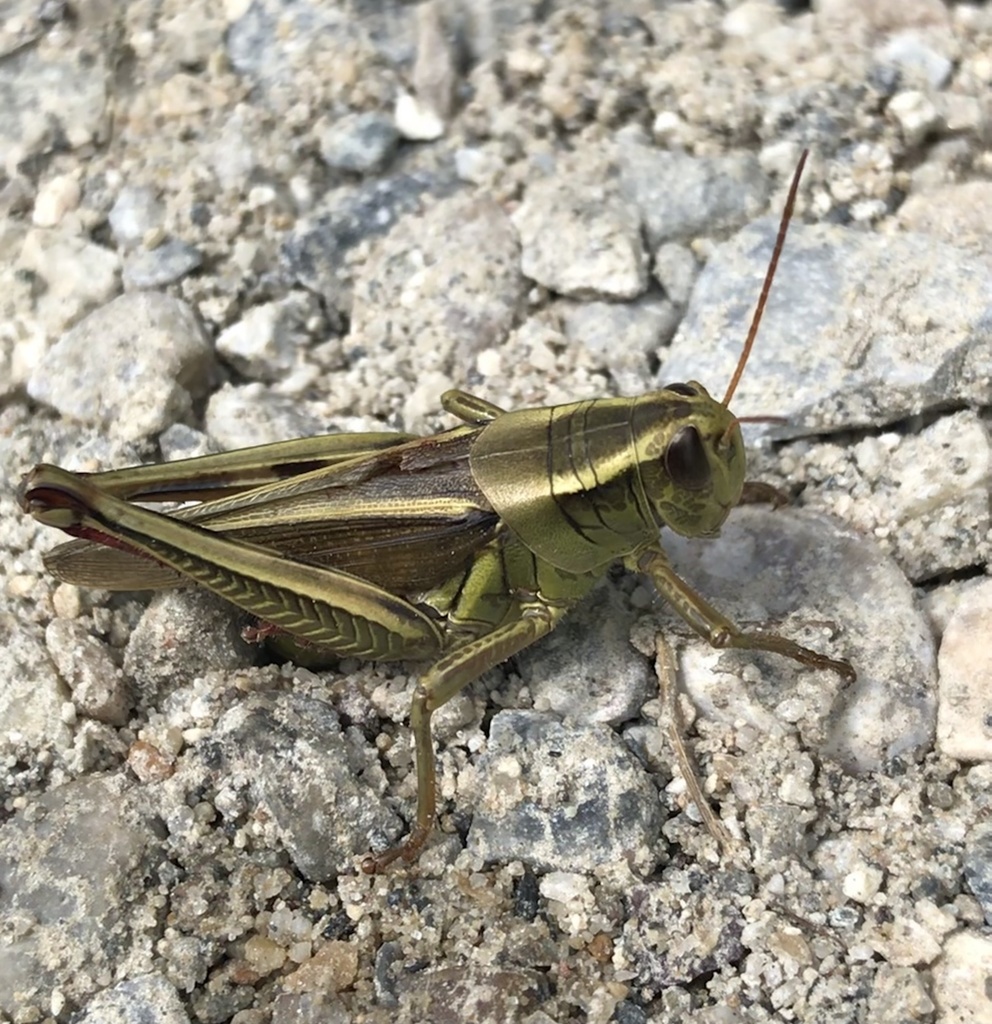
!Is the two-striped grasshopper dangerous?
No. Not venomous and not harmful to people. They do not bite in a way that causes injury; a defensive nip is rare and only causes minor pinching if it occurs.
Pets
Not toxic to pets. Grasshoppers may be eaten by pets but are not a health threat, although large numbers can bother poultry or livestock by reducing forage availability.
📖Overview
Melanoplus bivittatus is a medium-sized short-horned grasshopper widespread across much of North America. It lives in grasses and weedy fields and is common in disturbed areas and agricultural land. Nymphs resemble adults but lack fully developed wings; eggs are laid in soil and typically overwinter before hatching in spring. When abundant, two-striped grasshoppers can defoliate grasses and crops and are considered an occasional agricultural pest.
🔍How to identify a two-striped grasshopper
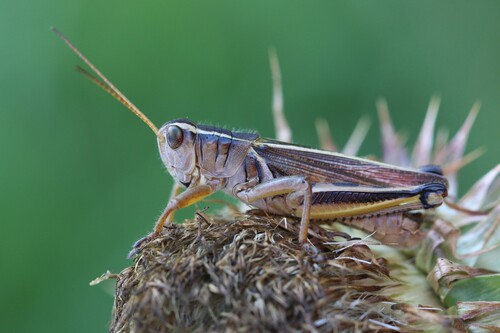
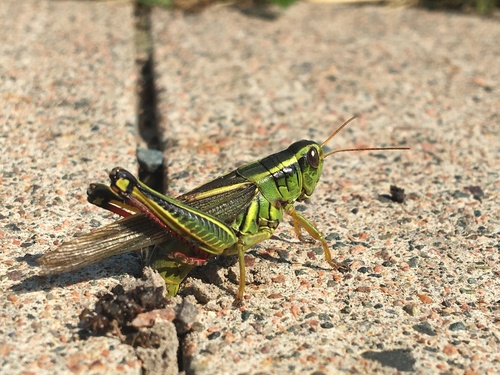
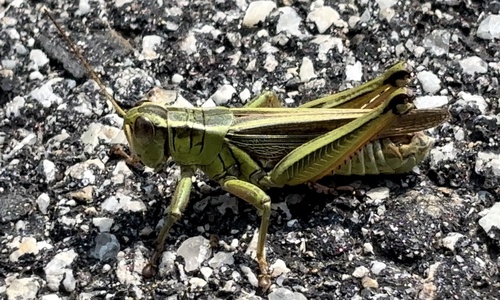
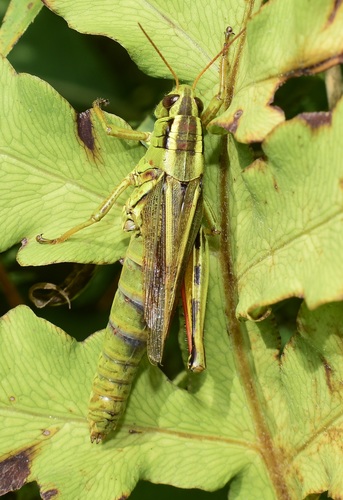
Adults are typically olive-green to brown with two pale yellowish stripes running from behind the eyes along the top of the thorax and converging onto the folded wings, which gives the species its common name. The body can show variable mottling; wings are usually well developed in adults. Hind legs are strong for jumping; antennae are short (typical of Acrididae). Females are larger than males and have a pointed ovipositor.
- Two pale yellowish stripes running from behind the eyes along the top of the thorax onto the wings are characteristic.
- Olive-green to brown base color with variable mottling; adults have well-developed wings.
- Females noticeably larger and bulkier than males; look for ovipositor at rear of female.
- Short antennae (typical of Acrididae) and strong hind legs for jumping.
Lookalikes
Differential grasshopper Melanoplus differentialis
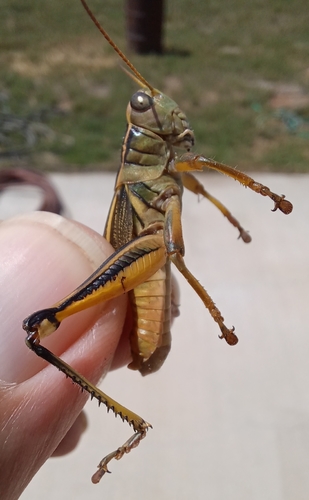
Generally larger and more uniformly olive-yellow without the paired pale dorsal stripes; the hind femur has black chevron markings and the hind tibia is often yellow.
Red-legged grasshopper Melanoplus femurrubrum
Smaller and usually has red hind tibiae; lacks the two pale dorsal stripes of M. bivittatus.
↻Life cycle
Egg
Eggs are laid in pods in soil or plant debris in late summer and usually overwinter in the soil before hatching the next spring.
Nymph
Wingless nymphs hatch in spring and go through several molts, resembling smaller adults; progressively develop wing pads.
Adult
Adults appear in summer to autumn, are capable of flight and mate; females deposit eggs in soil to complete the cycle.
🍃Diet and predators
Young eat
Primarily grasses and forbs; generalist herbivore
Adults eat
Grasses and a wide range of herbaceous plants, including some crops
Predators of the young
Birds, predatory insects (mantids, assassin bugs), spiders, small mammals
Predators of adults
Birds, small mammals, predatory insects, and parasitoids/diseases that affect grasshoppers
🌱Effect on plants and gardens
Feeds on a wide range of grasses and broadleaf plants; can damage cereal crops, alfalfa and pasture when populations are high.
How to get rid of two-striped grasshoppers
Reduce populations by encouraging natural predators (birds, predatory insects, spiders), maintain healthy pasture management and crop rotation, use targeted insecticides when economic thresholds are exceeded, and destroy egg beds by tillage where practical. For small garden infestations, hand-picking or barriers can help. Always follow local guidelines for pesticide use.
📍Where and when to find it
Look on grasses and low vegetation in fields, pastures and roadsides; nymphs are common on low plants and adults on taller grasses and crop foliage.
Best time
Late spring through early autumn during daylight, especially warm sunny days.
Observation tips
Walk slowly through grassy habitat to spot movement; photograph from ground level to show the dorsal stripes and body shape for identification.
✨Fun facts
- The 'two-striped' name refers to the two pale stripes along the top of the thorax and wings.
- Like many short-horned grasshoppers, M. bivittatus can go from common to outbreak levels and cause noticeable crop damage under favorable conditions.
- Nymphs hop and feed in groups at times, which can make them easier to spot in grassy areas.
?Frequently asked questions
Are two-striped grasshoppers dangerous?
No. They are not venomous and do not pose a threat to people or pets, though they can damage plants when present in large numbers.
Do two-striped grasshoppers bite?
Bites are very rare and not medically significant; any contact usually results in a hop or jump away rather than an attempt to bite.
Why are they in my yard?
They feed on grasses and herbaceous plants, so yards, pastures and fields provide food and egg-laying sites. Nearby weedy or grassy areas increase local numbers.
How do I get rid of them?
Encourage predators, reduce weedy habitat, manage pastures and crop rotations, remove egg beds by tillage, use physical removal for small infestations, and apply insecticides only when populations exceed economic thresholds following label instructions.
Where do they live?
They inhabit open grassy habitats across most of North America, including prairies, pastures, roadsides and crop fields.
📷Photos of the two-striped grasshopper
More grasshoppers & crickets
Non-toxic
Non-toxic
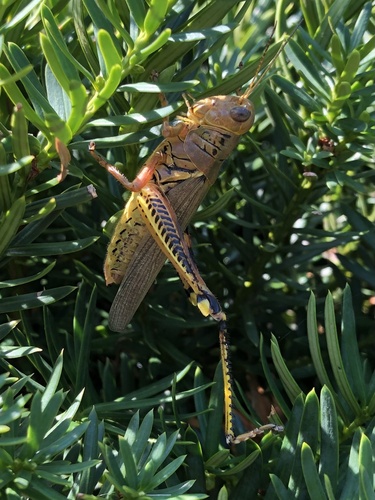
Non-toxic
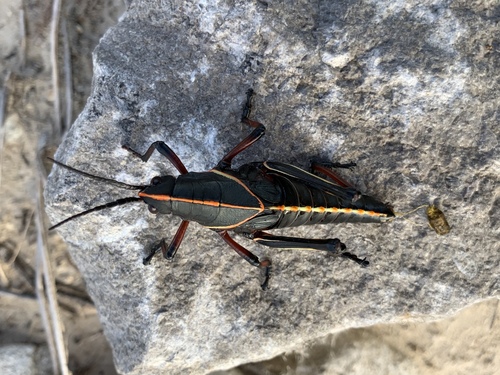
Irritating secretion
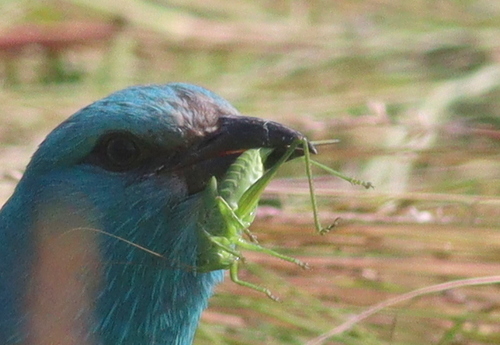
Non-toxic
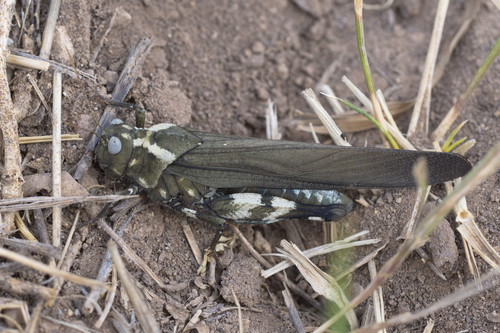
Non-toxic
This guide was written with AI assistance and fact-checked, last updated 2026-10-10. Identification from photos is never certain: don't handle insects you can't identify, and get medical advice for bites, stings or allergic reactions. More about the two-striped grasshopper: iNaturalist, Wikipedia.