
Red-legged grasshopper
Melanoplus femurrubrum · Short-horned grasshoppers
A common North American short-horned grasshopper with reddish hind femora, often abundant in meadows and fields and sometimes a minor crop pest.
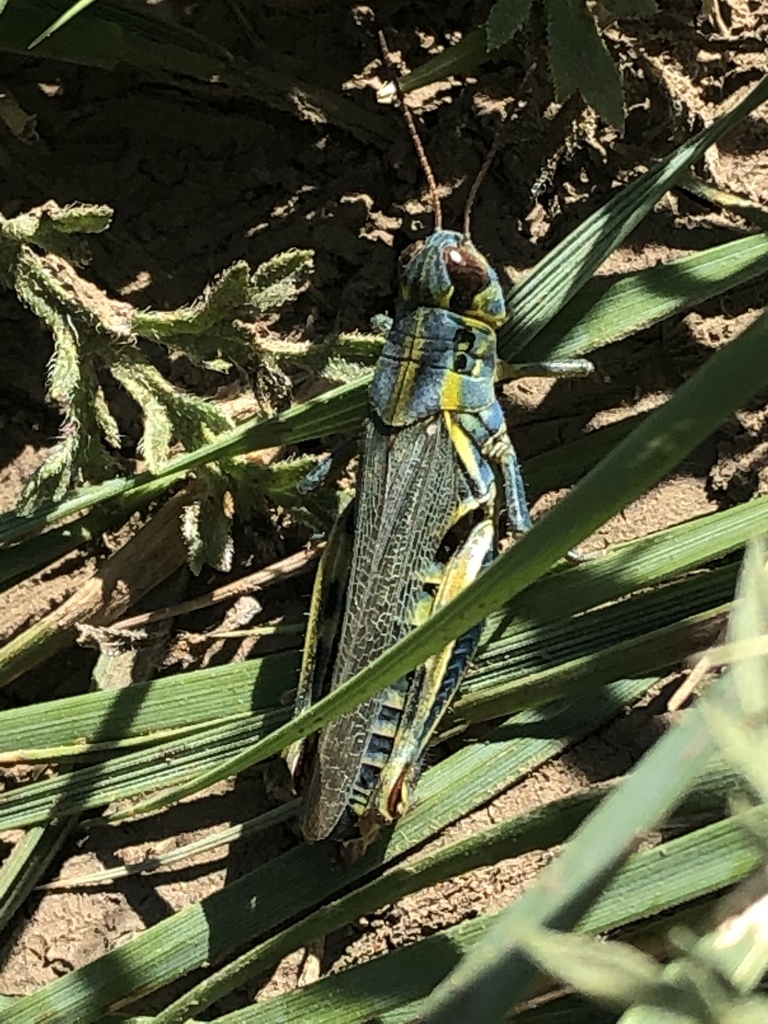
!Is the red-legged grasshopper dangerous?
No. Not dangerous. Does not possess venom. May pinch weakly if handled roughly, but bites are rare and not medically significant. Wash hands after handling to avoid dirt or allergens.
Pets
Generally harmless to pets. Large numbers feeding on ornamental plants or turf can remove foliage but grasshoppers do not pose a toxic threat to cats or dogs. Pets might occasionally eat grasshoppers with no ill effects.
📖Overview
Melanoplus femurrubrum is a medium-sized short-horned grasshopper found across much of North America. It prefers grassy, open habitats such as meadows, pastures, roadsides and field edges. Nymphs develop through multiple molts in summer and adults are active through late summer into autumn. Populations can be locally abundant and, in high numbers, can cause noticeable feeding damage to grasses and crops, but it is not generally regarded as one of the most destructive agricultural species.
🔍How to identify a red-legged grasshopper
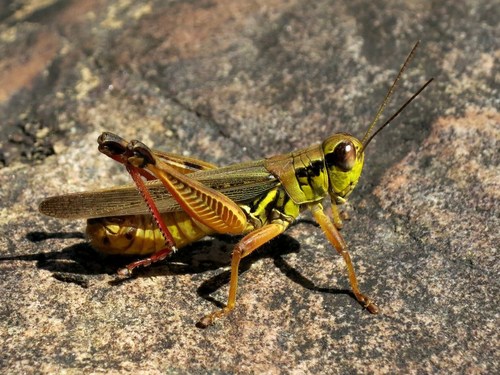
Adults are about 17-30 mm long (body length excluding antennae), with males smaller than females. Typical coloration is brown, tan or greenish on the body with a contrasting reddish or pinkish color on the hind femora (thighs) that gives the species its common name. Wings usually cover the abdomen in adults; females have broader abdomens. The pronotum (dorsal plate behind the head) has a low median carina (ridge) and lacks the bold striping seen in some related species. The antennae are short relative to the body (typical of short-horned grasshoppers).
- Look for reddish or pinkish hind femora (thighs) visible when jumping or at close inspection.
- Short antennae (typical of Acrididae) and a low median ridge (carina) on the pronotum.
- Size about 17-30 mm body length with wings in adults; body color variable (brown, tan or green) with a yellowish underside, and red hind tibiae (lower legs) are characteristic.
Lookalikes
Migratory grasshopper Melanoplus sanguinipes
M. sanguinipes often has less pronounced red on the hind femur and differs in subtle head and pronotum shape; ranges and habitat overlap so careful comparison of markings and male genitalia is used by specialists.
Differential grasshopper Melanoplus differentialis
Larger species with distinctive black wedge markings on the hind femur and different pronotum pattern; differential has more robust body and different stripe patterns on wings and legs.
↻Life cycle
Egg
Laid in pods in soil in late summer or autumn; eggs overwinter in the ground and hatch in spring.
Nymph (immature grasshopper)
Multiple nymphal instars through spring and summer. Nymphs resemble small wingless adults and gradually develop wing buds.
Adult
Winged, sexually mature insects appear in mid to late summer; adults mate and females deposit eggs for the next generation.
🍃Diet and predators
Young eat
Mostly grasses and herbaceous plants; similar diet to adults but may select tender foliage.
Adults eat
Grasses and a range of herbaceous plants; possibly crops and garden plants when abundant.
Predators of the young
Birds, predatory insects (e.g. robber flies, beetles), spiders, small mammals
Predators of adults
Birds, mammals (e.g. shrews), predatory insects, spiders and parasitic wasps or flies
🌱Effect on plants and gardens
Feeds on grasses and a variety of herbaceous plants; in high densities can cause defoliation of pasture, hayfields and some crops. Usually part of a complex of grasshopper species that cause damage when populations surge.
How to get rid of red-legged grasshoppers
For small areas: hand-pick or use physical barriers and encourage predators (birds, spiders). Reduce grassy egg-laying habitat near crops by mowing and tilling to expose and destroy eggs. For larger infestations consult local extension services; insecticidal baits and targeted insecticides can be used following label directions and integrated pest management guidance.
📍Where and when to find it
Search in sunny meadows, pasture edges, roadsides and grassy fields. Nymphs are found on low vegetation; adults perch on grasses and stems and jump when approached.
Best time
Best observed from late spring (nymphs) through late summer and early autumn (adults). Midday on warm sunny days yields most activity.
Observation tips
Approach slowly and photograph from ground level to capture hind leg color when it jumps. Mowing paths and walking edges of fields increases chance of flushing individuals into view.
✨Fun facts
- The red color of the hind femur is most visible when the grasshopper leaps, making it easier for observers to identify while it is active.
- It is one of the most widespread grasshoppers in North America, found from southern Canada to Mexico.
- Eggs are laid in pods in the soil and can survive cold winters, allowing populations to re-emerge each spring.
?Frequently asked questions
Do red-legged grasshoppers bite?
They rarely bite people; if handled roughly they might give a weak pinch but are not a biting threat and cause no lasting harm.
Are red-legged grasshoppers dangerous to humans or pets?
No. They are non-venomous and not poisonous. The main concern is their feeding on plants when numbers are high.
Why are there grasshoppers in my garden?
They are attracted to grassy and herbaceous vegetation for feeding and egg-laying; nearby unmown grass, weeds or field edges encourage their presence.
How can I get rid of grasshoppers in my yard?
Reduce nearby grassy habitat, mow regularly, remove weeds, use row covers for small plots, encourage natural predators, hand-pick where practical, or consult local extension for registered baits or insecticides for larger outbreaks.
When are red-legged grasshoppers most active?
Diurnal: most active during warm daylight hours in mid to late summer through early autumn.
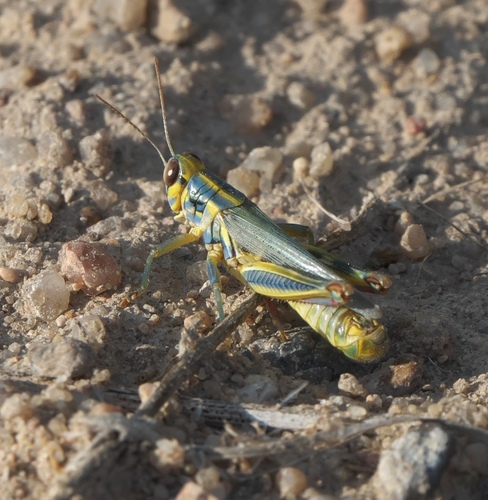
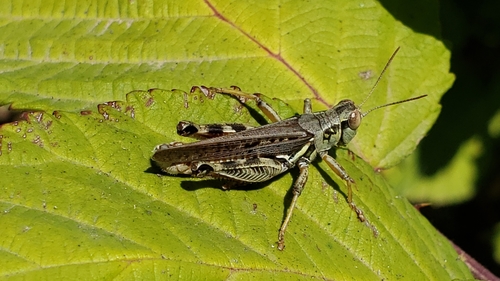
📷Photos of the red-legged grasshopper
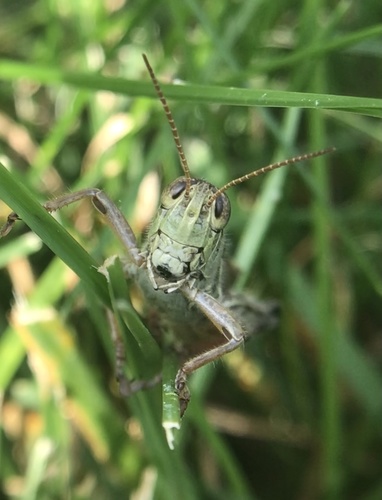
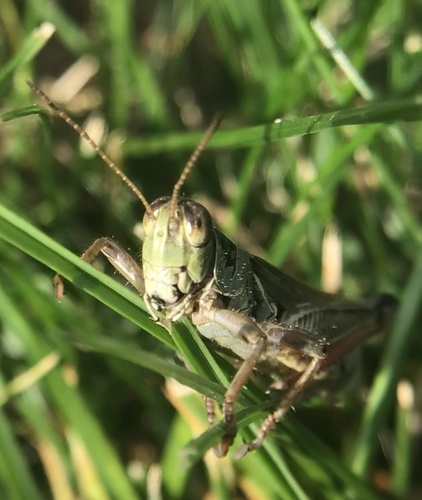
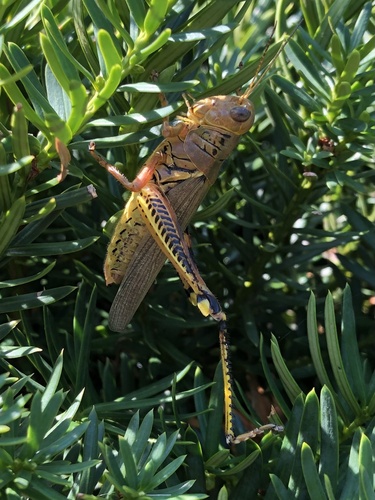
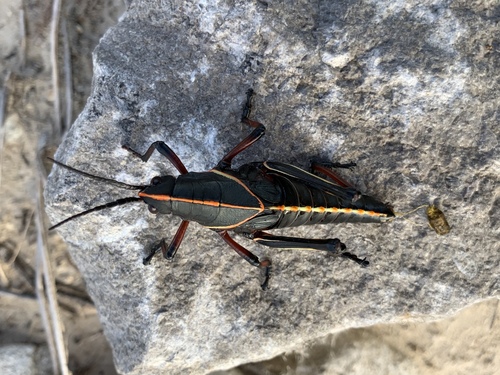
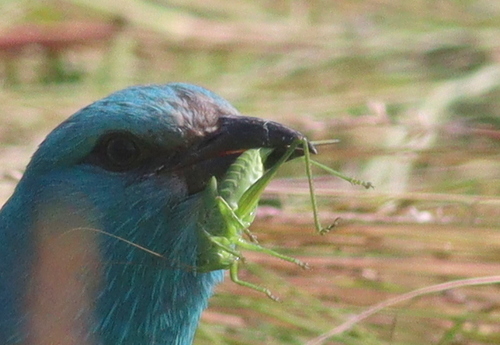
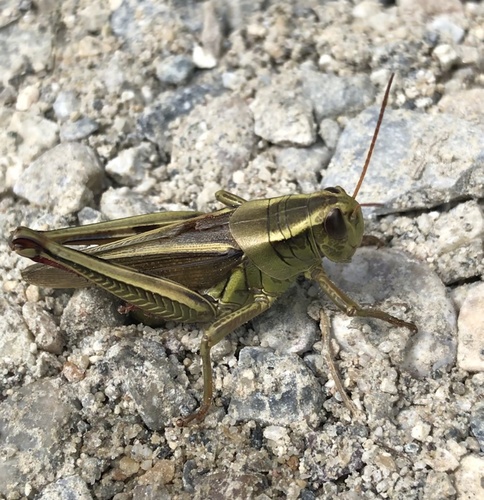
More grasshoppers & crickets
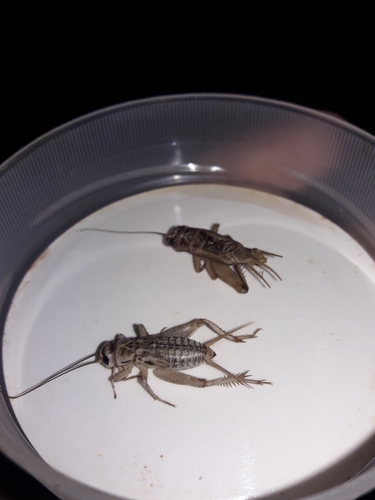
Non-toxic
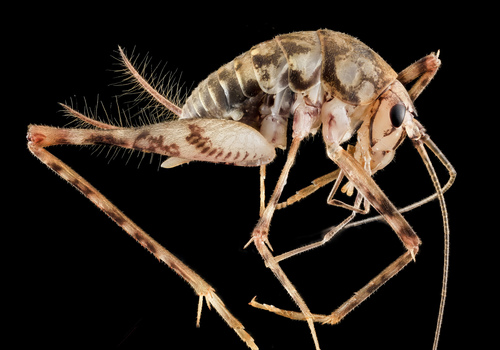
Non-toxic
Non-toxic
Irritating secretion
Non-toxic
Non-toxic
This guide was written with AI assistance and fact-checked, last updated 2026-10-10. Identification from photos is never certain: don't handle insects you can't identify, and get medical advice for bites, stings or allergic reactions. More about the red-legged grasshopper: iNaturalist, Wikipedia.