
Greater angle-wing katydid
Microcentrum rhombifolium · Katydids
A large, leaflike green katydid found in eastern and central North America that sings at night and feeds on leaves and flowers.
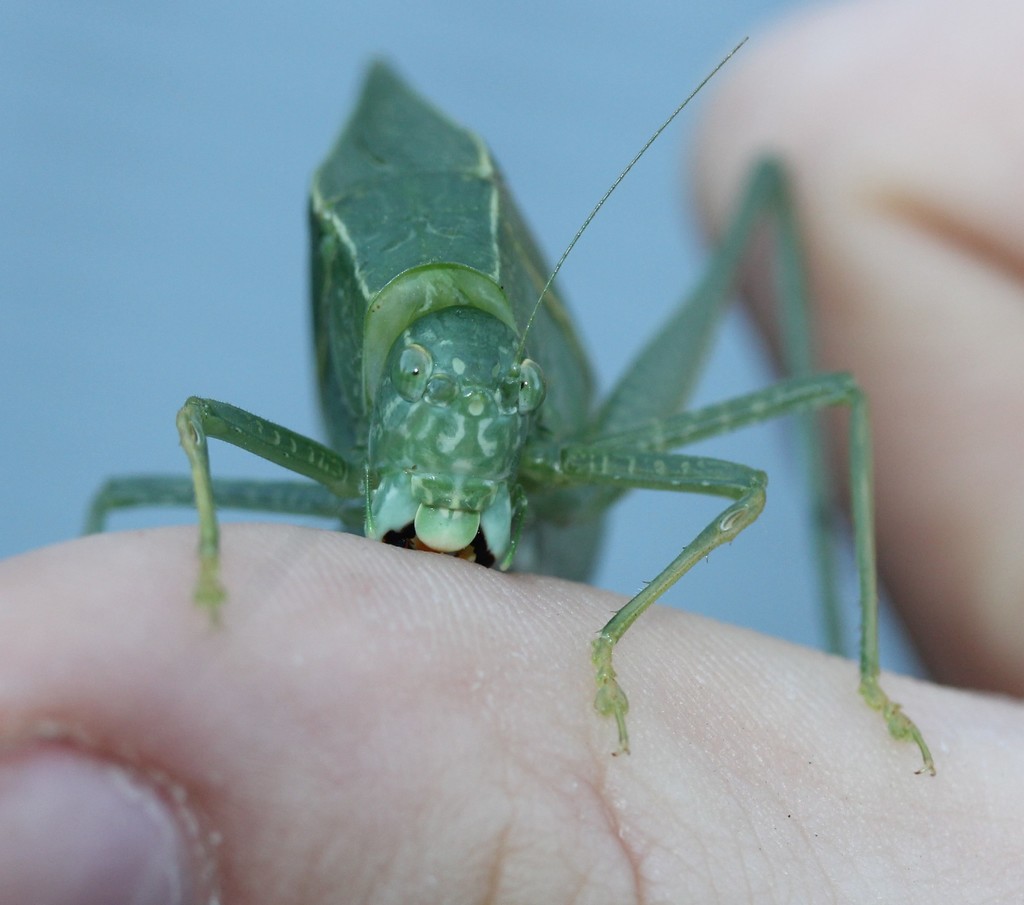
!Is the greater angle-wing katydid dangerous?
No. Not venomous. Adults may give a defensive bite if handled or squeezed; the bite is mechanical and rarely breaks skin or causes more than minor pain. No known significant allergic or disease risks. Wash wound with soap and water if bitten and monitor for infection.
Pets
Generally not dangerous to pets. A pet that eats one is not at risk of poisoning, though eating many insects may cause minor digestive upset.
📖Overview
Microcentrum rhombifolium is a medium-to-large katydid notable for its broad, leaf-shaped wings that give excellent camouflage among foliage. Adults are primarily nocturnal and are most often heard rather than seen; males sing to attract females with a distinct short clicking or rattling call. They occur in woodlands, gardens and shrubby areas and are most common in summer and early fall.
They are herbivores that feed on leaves, flowers and sometimes fruit; occasional localized feeding can damage ornamental plants but they are not major agricultural pests. They are harmless to people except for an infrequent defensive bite if handled roughly. Life stages include flat, oval eggs laid in overlapping rows on twigs and leaf edges, multiple wingless nymph stages, then adults with fully formed wings and sound-producing structures on the forewings.
🔍How to identify a greater angle-wing katydid
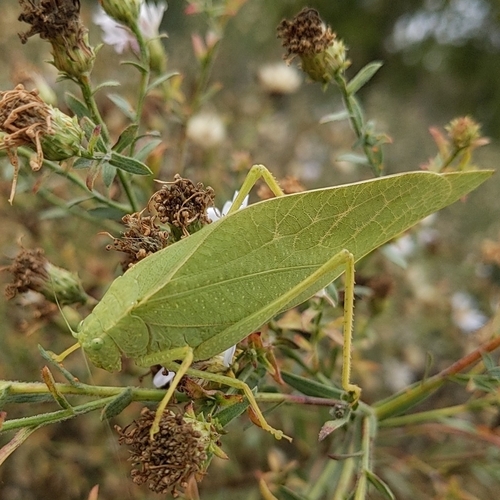
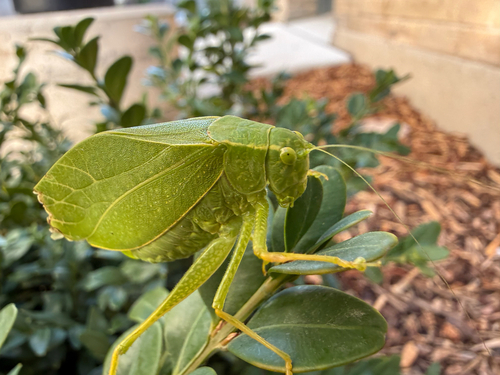
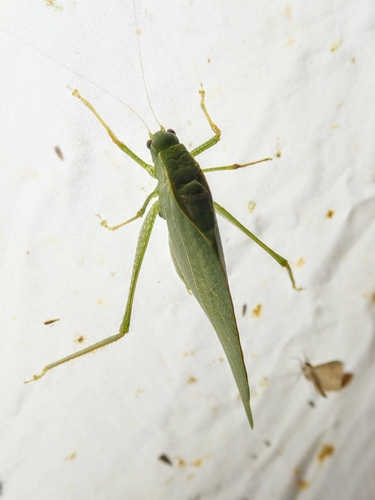
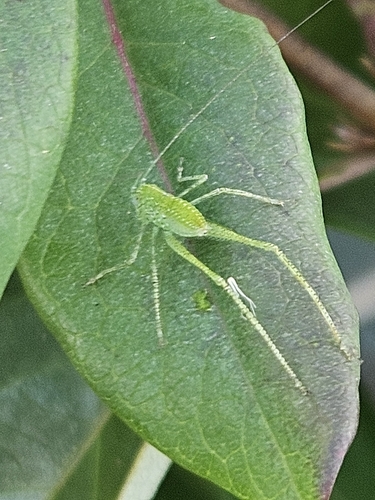
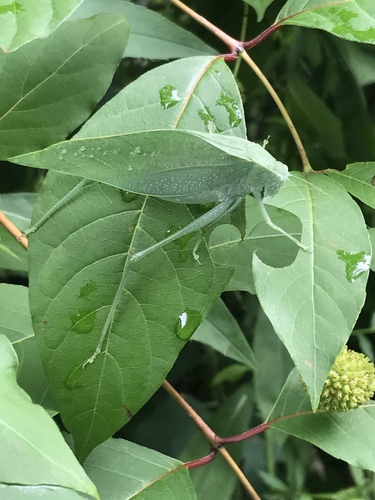
Adults are broad and flattened, mimicking a leaf. The forewings cover the abdomen and have a rhomboid or angled outline; veins and a midrib-like fold often resemble leaf venation. Males are generally smaller and may have a more pronounced stridulatory file (sound-producing structure) on the wings. Antennae are long, much longer than the body. Females have a slightly curved ovipositor at the tip of the abdomen used for laying eggs. Color varies from bright green to olive or brownish green depending on age, wear and local coloration.
- Broad, rhomboid forewings that mimic a leaf with visible vein-like ridges
- Large, laterally flattened body and very long threadlike antennae
- Green to olive coloration; may be brownish when older or worn
- Female with a curved ovipositor at the tip of the abdomen
Lookalikes
Oblong-winged katydid Amblycorypha oblongifolia
Amblycorypha tends to have a narrower, more lance-shaped wing and a different, more continuous trill-like song compared with the shorter rattling call of Microcentrum rhombifolium.
Angular-winged katydid Microcentrum retinerve
Very similar in appearance; M. rhombifolium is generally larger and its wing angle and venation patterns differ subtly. Song and geographic range can help separate them.
↻Life cycle
Egg
Females lay flat, oval, grey-brown eggs in overlapping double rows along twigs and the edges of leaves in late summer and fall; eggs overwinter and hatch the following spring.
Nymph (juvenile)
Wingless nymphs resemble adults but are smaller and lack full wings; they go through multiple molts as they grow.
Adult
Adults appear in mid to late summer, have fully formed wings and produce the male calling song; mating and egg-laying follow before adults die in fall.
🍃Diet and predators
Young eat
Mostly leaves and soft plant tissue; may feed on flowers
Adults eat
Leaves, flowers, occasionally fruit and unfolding buds; mainly herbivorous
Predators of the young
Predatory insects, spiders, small birds and amphibians
Predators of adults
Birds, bats, predatory arthropods and small mammals
🌱Effect on plants and gardens
Feeds on leaves, flowers and sometimes fruit of shrubs and trees; usually causes only cosmetic damage except occasionally in high local numbers.
📍Where and when to find it
Listen for males singing in shrubs and trees at night; look on leaves and stems at dusk or after dark with a flashlight. Look for rows of flat grey eggs along twigs and leaf edges; nymphs on foliage.
Best time
Late spring through early fall, especially summer months; evenings and nighttime are best.
Observation tips
Use a red-filtered light or dim white light to avoid startling them. Photograph from the side to show wing shape and venation; a macro lens helps with fine details like the ovipositor.
✨Fun facts
- The leaflike wings of this katydid provide excellent camouflage against predators during the day.
- You are more likely to hear a male than see it—their calls are short, raspy clicks or rattles repeated at night.
- Long antennae are sensory organs used to detect mates, predators and environmental cues in the dark.
?Frequently asked questions
Are greater angle-wing katydids dangerous?
No. They are not venomous or poisonous. They may bite if handled roughly but bites are rare and only mildly painful.
Do greater angle-wing katydids bite people?
Occasionally, if picked up or provoked. Bites are mechanical and usually cause little more than momentary pain; clean the area if skin is broken.
Why is there a katydid in my house?
They are attracted to lights at night and may wander indoors accidentally. They do not live long inside houses and will not infest stored food.
How can I get rid of them?
The easiest method is to gently capture and release them outdoors. Turn off unnecessary outdoor lights to reduce attraction. For garden damage, hand-pick at night or encourage predators.
Where do they live?
In shrubs, trees, hedgerows, woodland edges, parks and gardens across much of the United States, southern Canada and Mexico; they rest on leaves by day and are active at night.
📷Photos of the greater angle-wing katydid
More grasshoppers & crickets
Non-toxic
Non-toxic
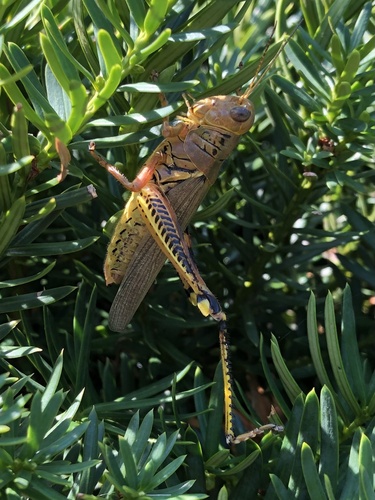
Non-toxic
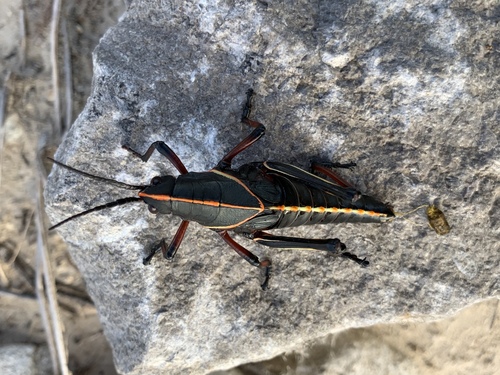
Irritating secretion
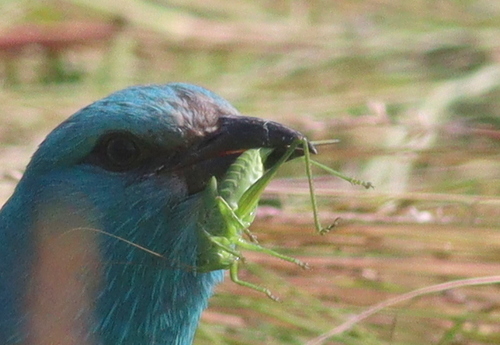
Non-toxic
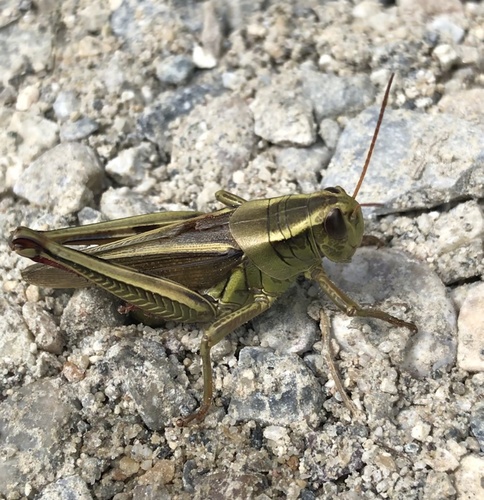
Non-toxic
This guide was written with AI assistance and fact-checked, last updated 2026-10-10. Identification from photos is never certain: don't handle insects you can't identify, and get medical advice for bites, stings or allergic reactions. More about the greater angle-wing katydid: iNaturalist, Wikipedia.