
Common true katydid
Pterophylla camellifolia · True katydids
A large, leaf-like green katydid of eastern North America, known for its loud, rhythmic evening song and excellent camouflage on foliage.
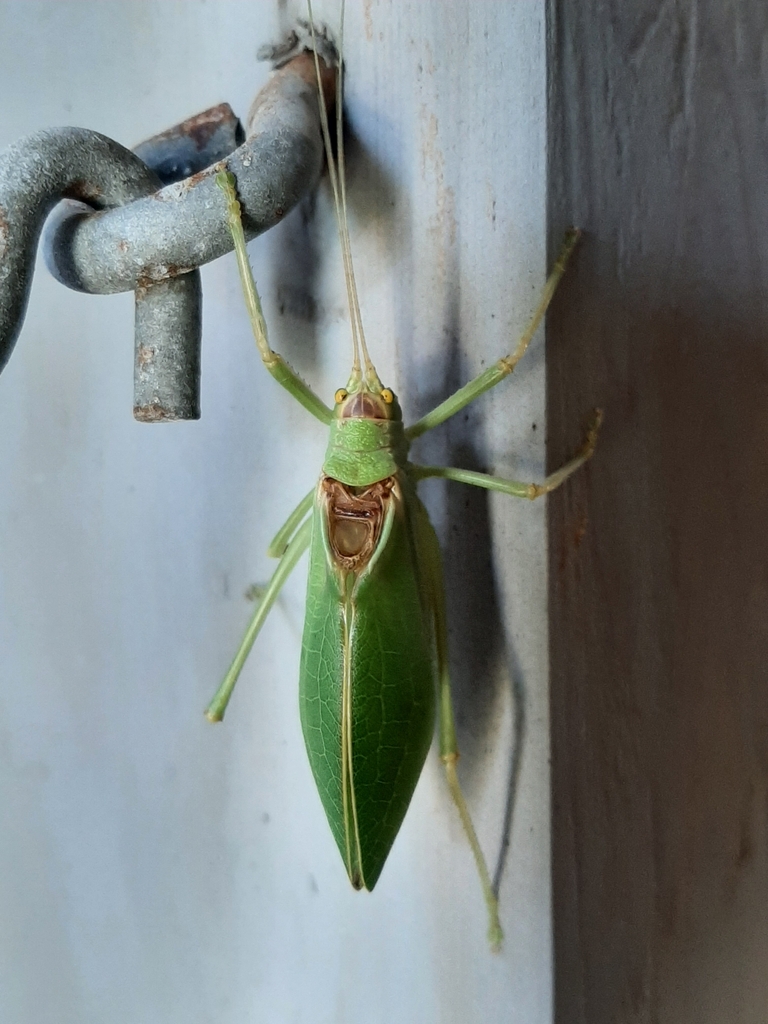
!Is the common true katydid dangerous?
No. Not venomous. Bites are rare, minor and cause only brief local pain if they occur; wash the area with soap and water if bitten. No known disease transmission to humans.
Pets
Generally harmless to pets. Large individual katydids might be eaten by curious cats or dogs with no expected toxic effect, but sharp mouthparts could cause minor oral irritation.
📖Overview
Pterophylla camellifolia is a widespread katydid in eastern North America. Adults are well camouflaged as green, leaf-shaped insects that feed mainly on leaves, flowers and sometimes other insects. Males produce the characteristic loud, raspy "katy-did, katy-didn't" call, repeated through the night to attract females. They are mostly active in summer and early autumn and live mainly high in the canopy of deciduous trees.
These katydids are solitary and are most noticeable by sound rather than sight. They are not dangerous to humans and rarely cause serious damage to garden plants, though they can chew holes in leaves or occasionally feed on fruit and flowers when abundant.
🔍How to identify a common true katydid
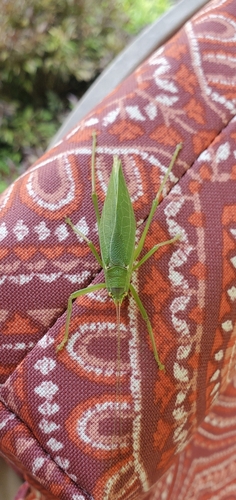
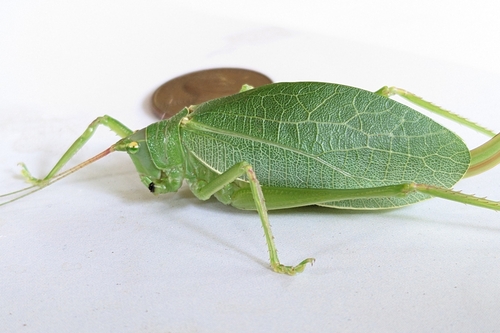
Adults are robust, laterally flattened and resemble a green leaf. Forewings (tegmina) are broad and cupped, enclosing the abdomen like a leaf; veins and a central fold can look like leaf midribs. They have long thread-like antennae that are much longer than the body. Hind legs are strong for jumping. Males are usually slightly smaller than females; females have a short, curved ovipositor at the end of the abdomen for laying eggs.
- Large, bright green, leaf-like body with forewings that mimic a leaf
- Very long, threadlike antennae exceeding the body length
- Females have a short, curved ovipositor at the tip of the abdomen
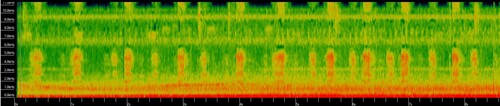
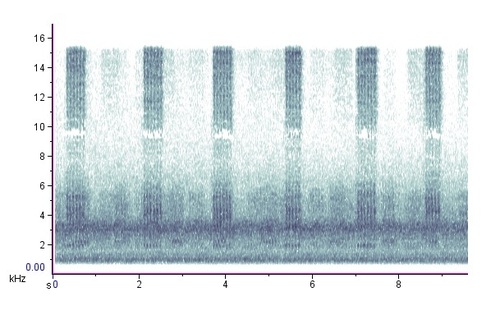
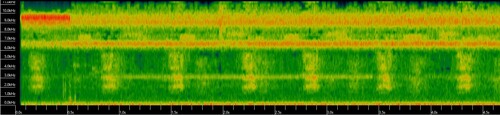
- Males call at night with a loud, raspy 2-5 pulse "katy-did" song, usually from high in trees
Lookalikes
Bush katydid Scudderia spp.
Scudderia are slimmer with narrow wings that extend well beyond the abdomen and fly readily; their songs are soft lisps or ticks rather than loud rasps.
Conehead katydid Neoconocephalus spp.
Coneheads have a cone-shaped projection on the head, a slender body and long narrow wings, and produce a continuous buzzing call rather than the pulsed "katy-did" rasps of Pterophylla camellifolia.
Oblong-winged katydid Amblycorypha oblongifolia
Oblong-winged katydids are slimmer, with longer, flatter wings that extend beyond the abdomen, and they fly readily; Pterophylla has cupped wings enclosing the abdomen and is a poor flier.
↻Life cycle
Egg
Females lay eggs in slits cut into stems, twigs or in leaf litter; eggs overwinter and hatch the following spring.
Nymph
Nymphs resemble small wingless adults and go through several molts, gradually developing wings and adult features.
Adult
Winged adults appear in midsummer and are active into autumn; adults mate and females lay the next generation of eggs.
🍃Diet and predators
Young eat
Leaves, tender plant material and small insects or animal matter opportunistically
Adults eat
Mostly leaves and flowers; sometimes fruit or small insects
Predators of the young
Birds, small mammals, spiders and predatory insects
Predators of adults
Bats, birds, small mammals and predatory insects; parasitic flies and wasps may attack eggs or nymphs
🌱Effect on plants and gardens
Feeds on leaves, flowers and occasionally fruit; usually does not cause major damage unless populations are unusually high or on small ornamental plants.
📍Where and when to find it
Look on leaves, twigs and flowers of trees and shrubs; nymphs are found lower in vegetation. Males usually call from high in tree canopies after dark.
Best time
Midsummer to early autumn; best observed at dusk and night when males sing.
Observation tips
Listen for the raspy "katy-did" call at night to locate them, then scan foliage slowly. A bright flashlight held at an angle helps reveal green insects without spooking them.
✨Fun facts
- The male's loud song can be heard from a considerable distance on summer nights and gives katydids their name; different katydid species have distinct songs.
- Their leaf-like appearance is excellent camouflage; birds often miss them even at close range.
- Females use the ovipositor to insert eggs into plant tissue or bark, which protects eggs over winter.
?Frequently asked questions
Do common true katydids bite?
Bites are uncommon. If handled roughly a katydid can give a pinch with its strong mouthparts; this is not venomous and causes only brief local pain.
Are they harmful to gardens?
Usually no. They feed on leaves and flowers but rarely reach numbers that cause serious plant damage. They can nibble small ornamental plants if abundant.
Why is one in my house at night?
They are attracted to lights and may accidentally enter houses through open doors or windows at night, especially during late summer.
How can I get rid of katydids in my yard?
Non-chemical controls work well: handpick larger individuals, reduce evening lighting that attracts them, prune dense vegetation where they hide. Chemical controls are rarely needed and are not recommended for general use.
When will I hear their song?
Males are most vocal at dusk and through the night from midsummer into early autumn.
📷Photos of the common true katydid
More grasshoppers & crickets
Non-toxic
Non-toxic
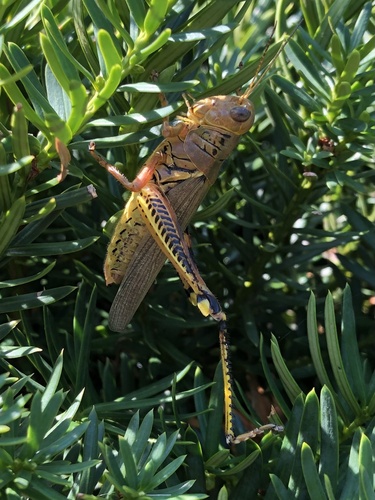
Non-toxic
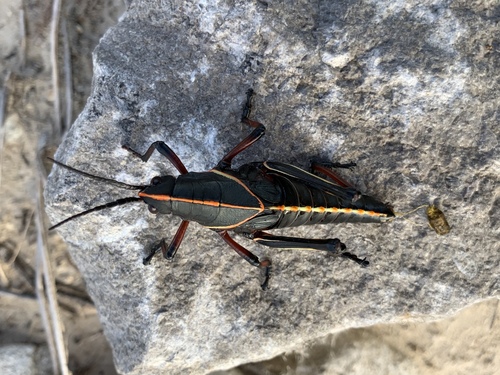
Irritating secretion
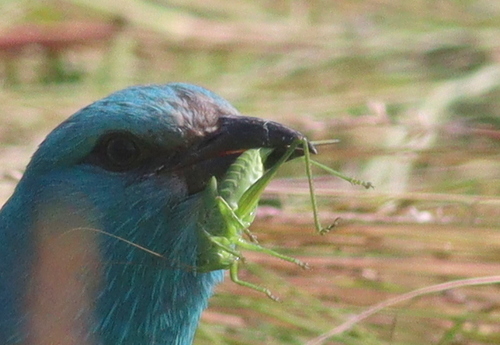
Non-toxic
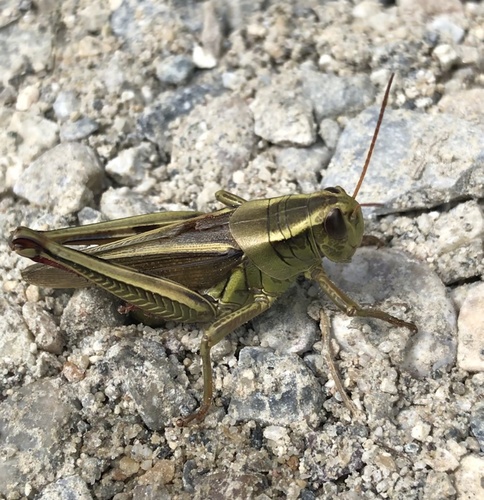
Non-toxic
This guide was written with AI assistance and fact-checked, last updated 2026-10-10. Identification from photos is never certain: don't handle insects you can't identify, and get medical advice for bites, stings or allergic reactions. More about the common true katydid: iNaturalist, Wikipedia.