
Fork-tailed bush katydid
Scudderia furcata · Bush katydids
A common North American bush katydid found on shrubs and low trees; mostly green, noisy at night, harmless to people.
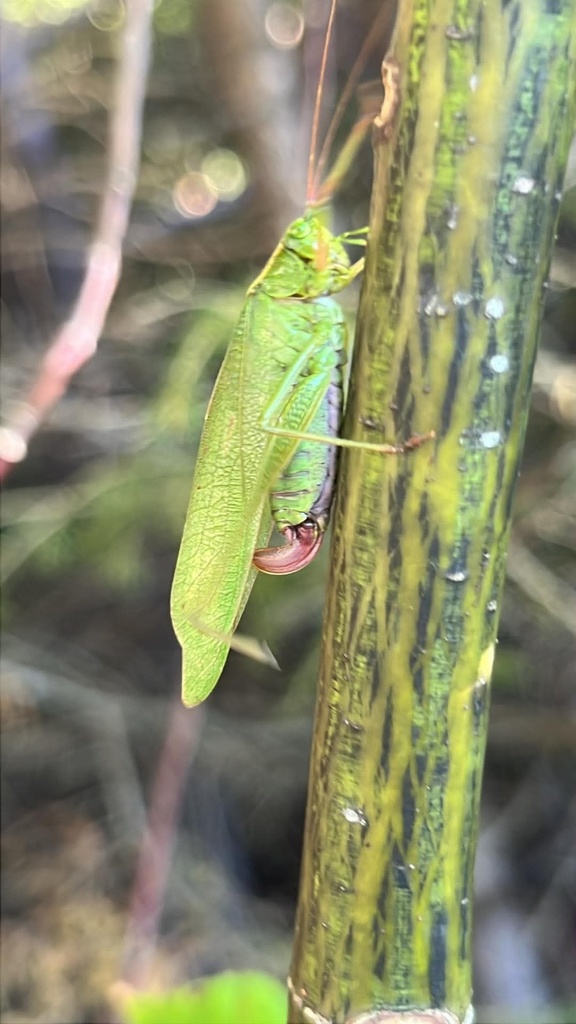
!Is the fork-tailed bush katydid dangerous?
No. Not venomous. Does not sting. Can give a weak pinch with its jaws if handled roughly; otherwise harmless. Wash any minor bite with soap and water and apply basic first aid if the skin is broken.
Pets
Not dangerous to pets. Dogs or cats that catch and eat a katydid are unlikely to have any problem beyond, at most, mild stomach upset if many are eaten.
📖Overview
Scudderia furcata is a medium-sized bush katydid in the family Tettigoniidae. Adults are typically found on shrubs, hedgerows and low trees where they feed on leaves, flowers and sometimes small insects. Males sing at night to attract females; the species is widespread across much of North America. It poses little risk to humans and is only an occasional minor garden pest.
🔍How to identify a fork-tailed bush katydid
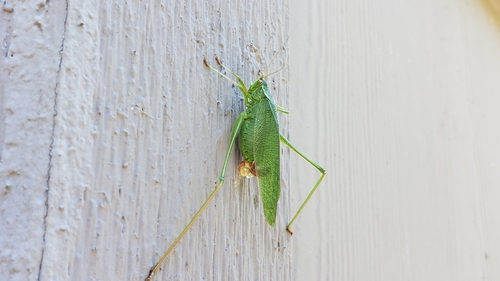
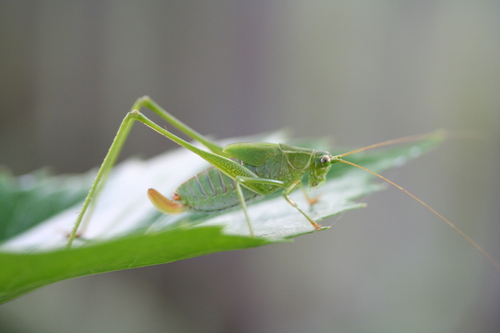
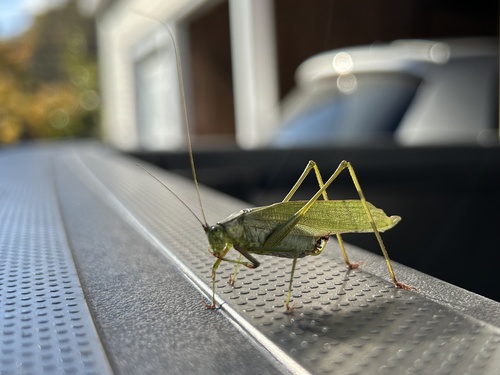
Adults are slender and leaflike with laterally compressed bodies. Typical coloration is bright to medium green, sometimes with brownish patches or entirely brown forms. Hind wings extend beyond the narrow forewings. The body has long threadlike antennae and long slender hind legs. Females have a short, broad, strongly upcurved ovipositor at the rear; males have a forked projection (supra-anal plate) at the tip of the abdomen, a feature referenced by the common name.
- Medium-sized green or brown katydid with long filamentous antennae and laterally flattened body
- Males have a forked plate at the tip of the abdomen (hence 'fork-tailed')
- Found on shrubs and low trees; males call at night with a short, buzzing or rasping song
- Females with a short, strongly upcurved ovipositor visible at the rear
Lookalikes
Texas bush katydid Scudderia texensis
S. texensis has narrower wings and is mainly a species of the eastern and central United States; males are best separated by the shape of the abdomen-tip plate and by song.
Curve-tailed bush katydid Scudderia curvicauda
S. curvicauda has a more strongly curved ovipositor in females and subtle differences in cerci shape and calling song.
↻Life cycle
Egg
Females insert flat eggs into the edges of leaves, where they overwinter; one or two generations per year depending on latitude.
Nymph
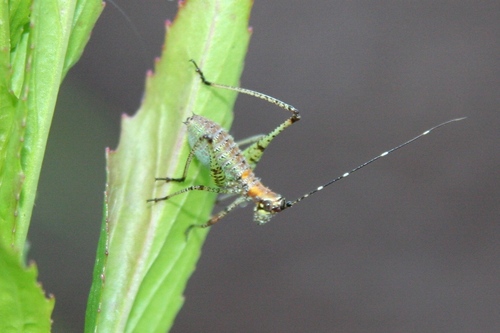
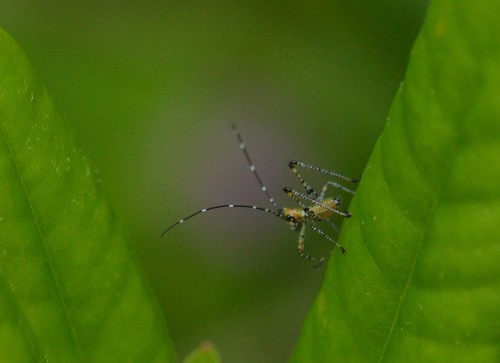
Nymphs resemble small wingless adults and go through multiple molts over weeks to months, gradually developing wing pads.
Adult
Adults appear in summer and autumn, mate, and females lay eggs to complete the annual cycle.
🍃Diet and predators
Young eat
Plant material: leaves and flowers of shrubs and herbaceous plants
Adults eat
Mostly plant material (leaves, flowers, seedheads); may occasionally eat small soft-bodied insects
Predators of the young
Birds, spiders, predatory insects such as wasps and mantids
Predators of adults
Birds, bats, small mammals, spiders, predatory insects
🌱Effect on plants and gardens
Feeds on leaves, flowers and developing seeds of shrubs, herbaceous plants and garden ornamentals. Usually causes only light, cosmetic damage; occasionally a localized outbreak can defoliate young plants.
📍Where and when to find it
Adults on leaves and twigs of shrubs and low trees; nymphs on the same plants lower down. Listen for males calling at night from vegetation.
Best time
Mid summer to early fall, at dusk and during the night when males are singing.
Observation tips
Use a flashlight held to the side (not directly at the insect) to avoid startling it; photograph the undersides of leaves and wing venation for identification.
✨Fun facts
- The name 'furcata' (forked) refers to the forked plate at the tip of the male's abdomen.
- Like other katydids, they produce sound by rubbing the edges of their forewings together; each species has a characteristic song.
- There are color variations including pure green, green with brown patches, and entirely brown individuals that blend into dead vegetation.
?Frequently asked questions
Are fork-tailed bush katydids dangerous?
No. They are non-venomous and do not sting. They can give a minor pinch if handled roughly but are otherwise harmless.
Do fork-tailed bush katydids bite?
Bites are rare and not medically significant. Any bite would be a small mechanical pinch from the jaws.
Why is this katydid in my house?
They sometimes enter homes attracted to lights or when seeking shelter. Most often they are found near windows or doors and can be released outside unharmed.
How can I get rid of them in my garden?
Handpick at night, reduce dense shrubbery near valued plants, encourage natural predators, or use targeted insecticidal soaps or pyrethrins only if necessary.
Where does the fork-tailed bush katydid live?
On shrubs, hedgerows, woodland edges, gardens and other areas with plentiful vegetation across much of North America.
📷Photos of the fork-tailed bush katydid
More grasshoppers & crickets
Non-toxic
Non-toxic
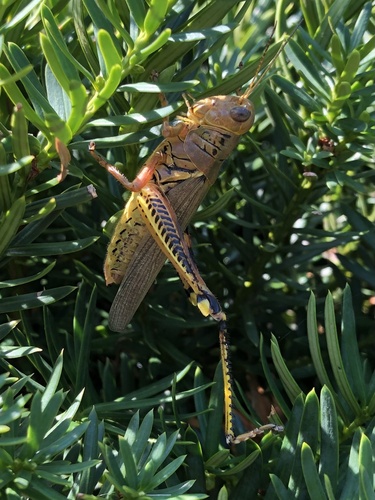
Non-toxic
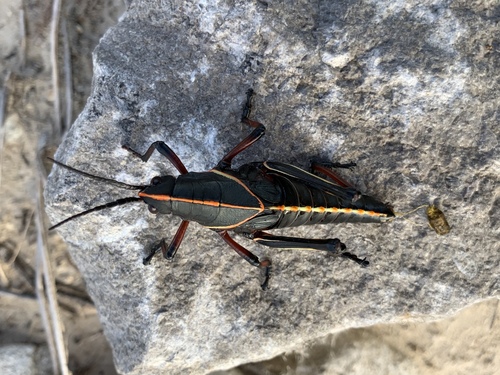
Irritating secretion
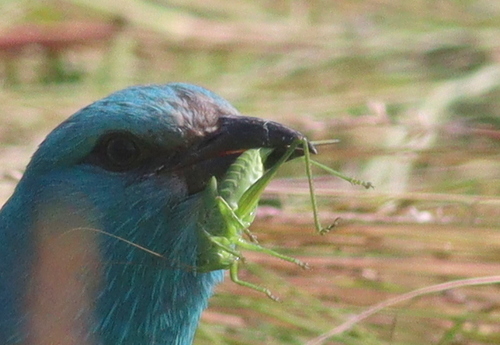
Non-toxic
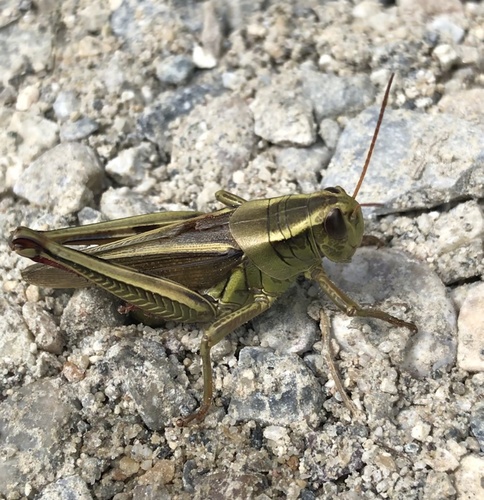
Non-toxic
This guide was written with AI assistance and fact-checked, last updated 2026-10-10. Identification from photos is never certain: don't handle insects you can't identify, and get medical advice for bites, stings or allergic reactions. More about the fork-tailed bush katydid: iNaturalist, Wikipedia.