
Differential grasshopper vs Carolina grasshopper
These two are easy to mix up. Here's how to tell a differential grasshopper from a Carolina grasshopper, and whether either one bites or stings.
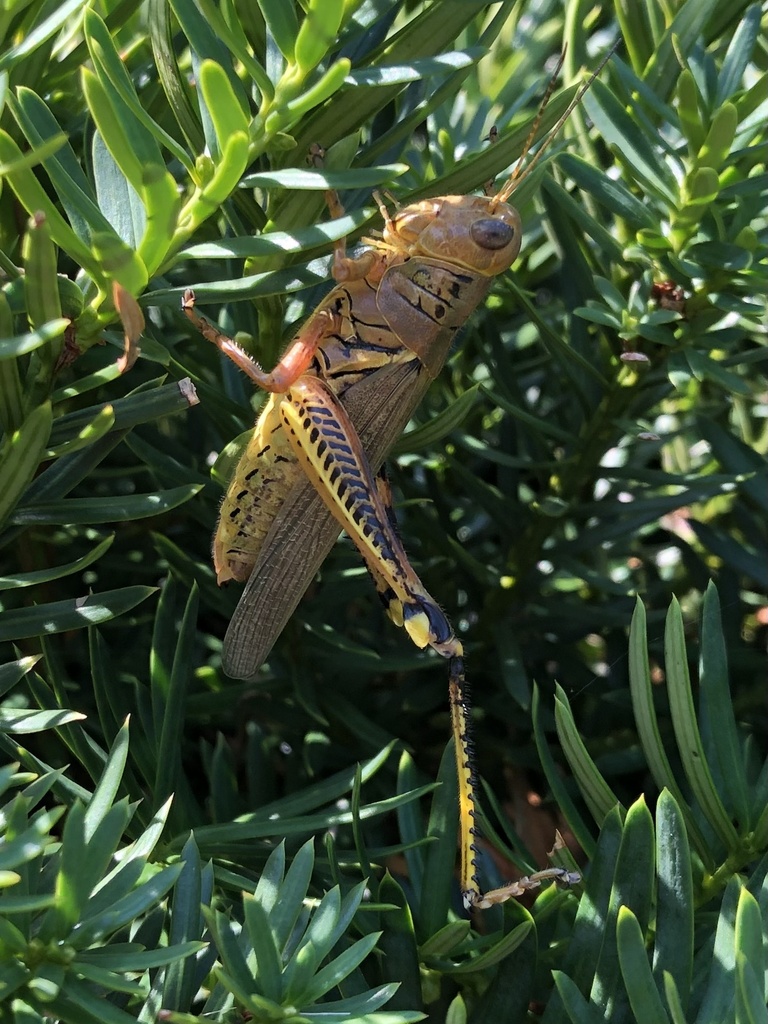
Differential grasshopper
Melanoplus differentialis
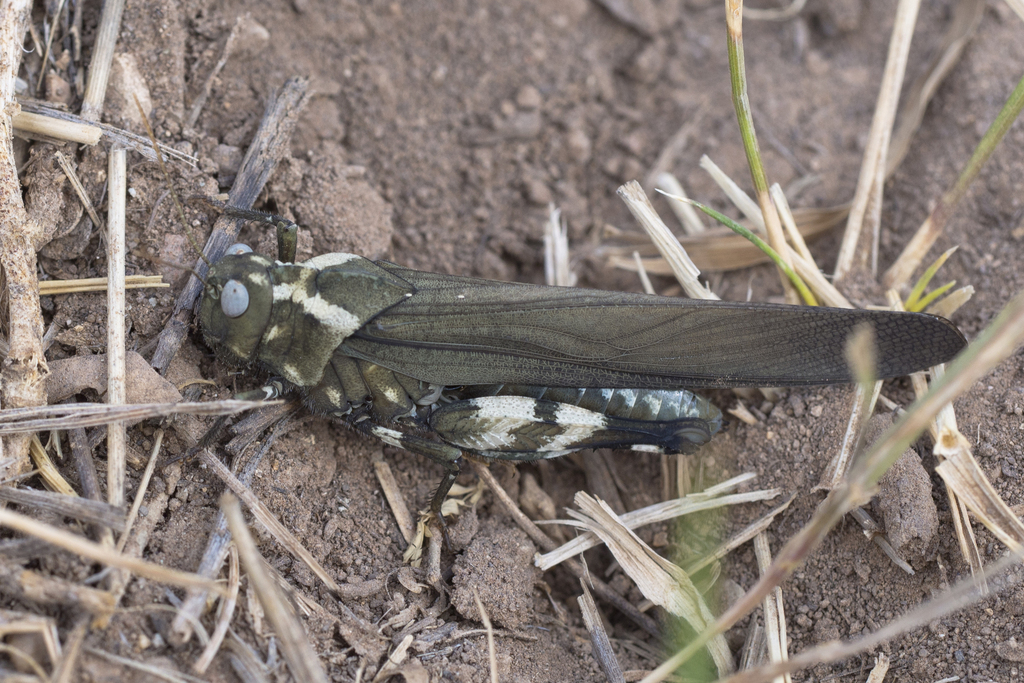
Carolina grasshopper
Dissosteira carolina
≠The key differences
Differential grasshopper is olive to yellow with bold black chevrons on the hind femur and clear hind wings; D. carolina is mottled grey-brown with black, pale-edged hind wings.
⚖︎Side by side
| Differential grasshopper | Carolina grasshopper | |
|---|---|---|
| To humans | Non-toxic | Non-toxic |
| Size | Body length 25-50 mm (females generally larger than males) | 25-50 mm body length |
| Colours | Tan, Brown, Yellow-green, Black markings | Gray-brown, Tan, Dark brown / black (hind wings), Yellowish (occasionally) |
| Family | Acrididae | Acrididae |
| Habitat | Grasslands, pastures, roadside vegetation, lawns, croplands and other open, grassy or weedy areas | Dry, open habitats — grasslands, fields, roadsides, sand dunes, disturbed and sparsely vegetated sites |
| Range | Much of the United States (absent from the Pacific Northwest and the far north) south into northern Mexico | Widespread across North America, from southern Canada through much of the United States and into northern Mexico |
| Active | Late spring to early autumn; most visible and abundant in mid to late summer during daytime | Late spring through early fall; most common midsummer to early autumn; active during daylight hours |
| Pest? | Yes | Yes |
🔍How to spot a differential grasshopper
- Large, robust short-horned grasshopper with body length about 25-50 mm; females larger than males.
- Olive-green to yellowish-brown, fairly smooth and shiny body; older adults may be darker.
- Distinctive black chevron (herringbone) markings on the yellow hind femurs; hind tibiae yellow with black spines.
- Wings long in adults, reaching or extending beyond the abdomen; strong jumping hind legs.
🔍How to spot a Carolina grasshopper
- Look for medium-large grasshopper 25-50 mm long with mottled gray-tan body matching dry ground
- Flush the insect; black hind wings with a pale yellowish border are diagnostic in flight
- Short antennae and rounded pronotum without long spines distinguish it from katydids
?Frequently asked questions
What is the difference between a differential grasshopper and a Carolina grasshopper?
Differential grasshopper is olive to yellow with bold black chevrons on the hind femur and clear hind wings; D. carolina is mottled grey-brown with black, pale-edged hind wings.
Is a differential grasshopper or a Carolina grasshopper more dangerous?
Differential grasshopper: Non-toxic. Carolina grasshopper: Non-toxic. Not dangerous to people. Carolina grasshoppers are not venomous or poisonous.
Identification from photos is never certain: don't handle insects you can't identify, and get medical advice for bites, stings or allergic reactions.