
Bee, wasp, yellow jacket or hornet? How to tell stinging insects apart
Bees, wasps, yellow jackets and hornets all look like yellow-and-black flying insects at a glance, but they behave very differently. Most bees only sting to defend themselves. Yellow jackets can be aggressive around food and nests, especially in late summer and autumn. Some "bees" and "wasps" are actually flies that can't sting at all.
Start with the body: hairy or smooth, chunky or thin-waisted. Then compare your insect with the groups below.
Bee or wasp: the quick check
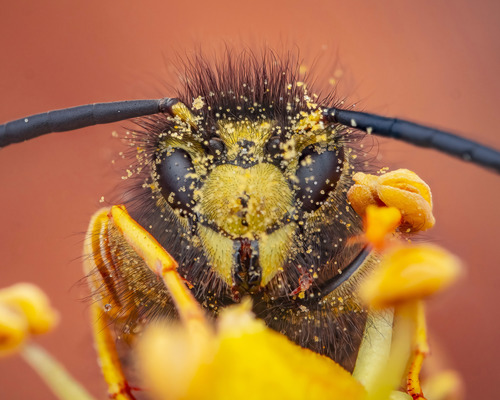
Bees are hairy and chunky, with a rounded body and no obvious waist. They're usually golden-brown, black or striped with fuzzy bands, and often carry yellow or orange pollen on their back legs. They visit flowers and rarely bother people away from their nest.
Wasps are smooth and shiny, with a narrow "wasp waist" between the thorax and abdomen, brighter yellow or white markings and fewer hairs. Many hunt insects or scavenge sugary drinks, meat and rubbish.
Yellow jackets and hornets are both kinds of wasp. Yellow jackets are small and boldly striped; hornets are larger.
Honey bees and bumble bees
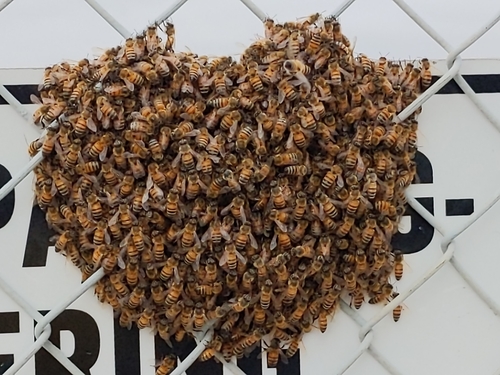
Honey bees are about 12-15 mm long, golden-brown with darker bands and a slightly hairy body. They live in large colonies in hives or hollow trees. A honey bee leaves its barbed stinger in the skin and dies after stinging, so it only stings when it's threatened or its hive is disturbed. Scrape the stinger out quickly with a fingernail or card.
Bumble bees are bigger, rounder and very fuzzy, with black and yellow bands and sometimes an orange or white tail. They nest in small colonies in the ground, compost or old rodent burrows. They're gentle and rarely sting unless handled or their nest is disturbed.
Carpenter bees: the big bees boring holes in wood
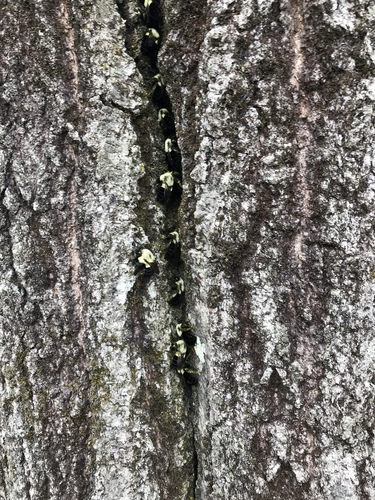
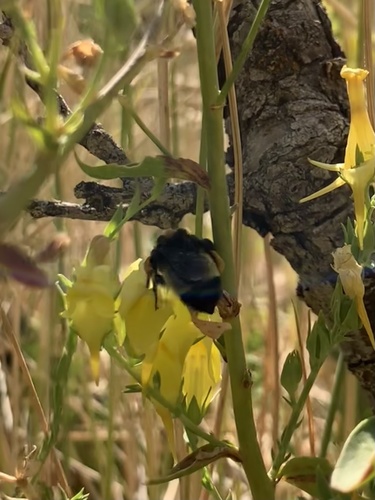
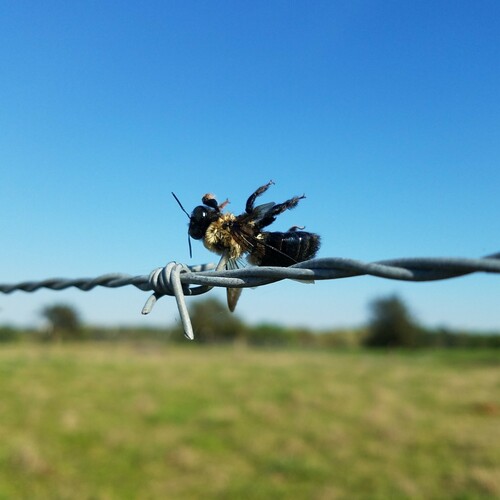
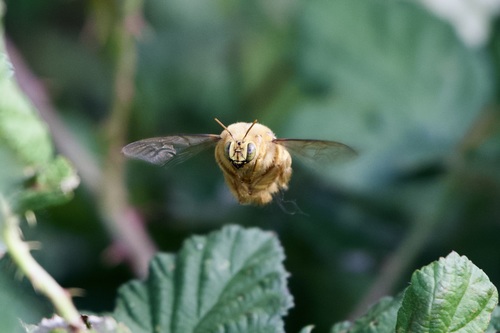
Carpenter bees look like large bumble bees, but the top of the abdomen is shiny and almost hairless. They drill perfectly round holes, about 1 cm across, into wooden decks, eaves, fences and garden furniture, often with a little pile of sawdust underneath.
Males hover in front of people and can look threatening, but they have no stinger. Females can sting but rarely do. Paint or varnish bare wood and fill old holes in autumn to keep them away.
Yellow jackets: small, bright and bold
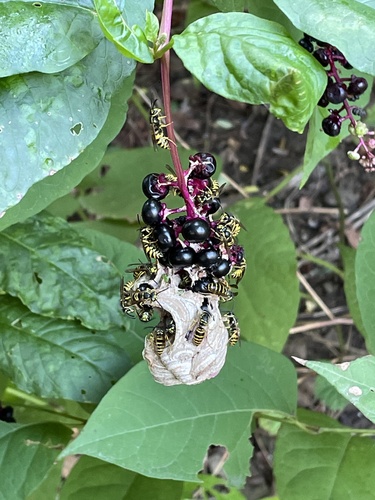
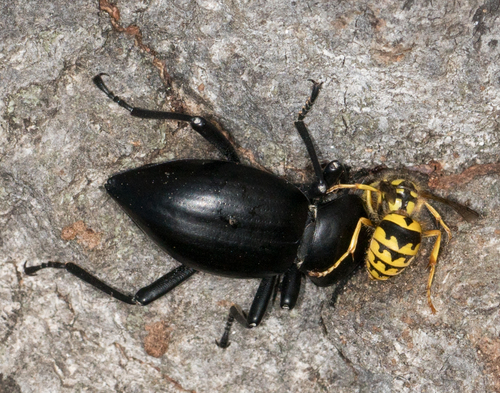
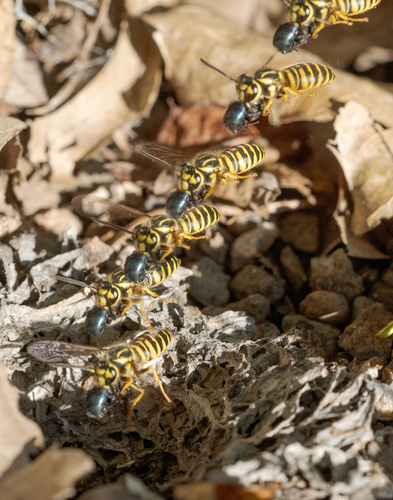
Yellow jackets are wasps about 12-16 mm long with bright yellow and black bands, a smooth body and a quick, side-to-side flight. They nest in the ground, in wall voids and sometimes in attics, and colonies can reach thousands by late summer.
They're the stinging insects most likely to bother you: they scavenge sweet drinks, fruit and meat at picnics and bins, and defend their nests fiercely. Unlike honey bees, they can sting more than once. If you see a stream of yellow jackets going in and out of a hole in the lawn or a gap in a wall, keep away and get a professional to treat the nest.
Paper wasps: long legs and umbrella nests
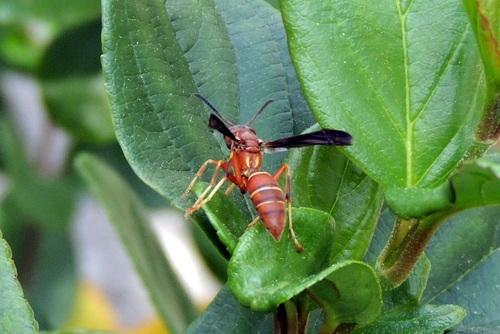
Paper wasps are slimmer than yellow jackets, with a thin waist and long legs that dangle below them in flight. Many are brown or reddish with yellow markings; the European paper wasp looks a lot like a yellow jacket but flies more slowly with legs hanging.
They build open, umbrella-shaped paper combs with the cells visible, hanging from eaves, porch ceilings, window frames and fences. They're less aggressive than yellow jackets but will sting if the nest is disturbed.
Hornets: the big ones
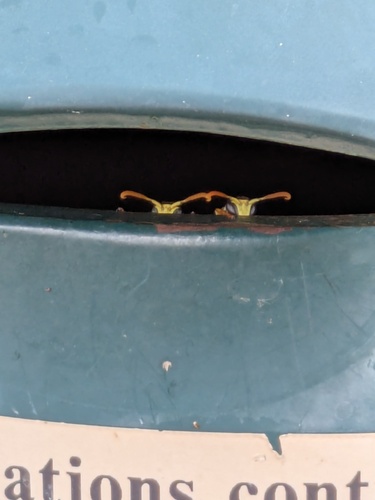
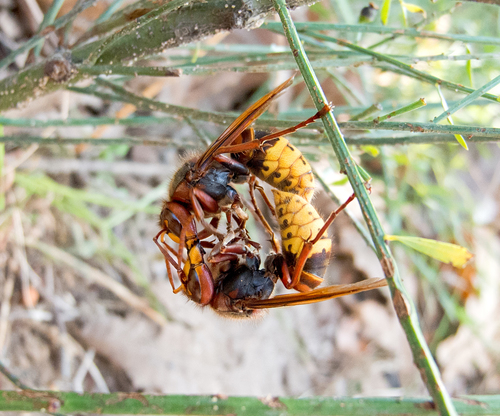
The European hornet is the true hornet in North America and Europe: about 25-35 mm long, brown and yellow with a reddish-brown head and thorax. It nests in hollow trees, barns and wall voids, and unusually for a wasp, it flies at night and is drawn to lit windows. It's less aggressive than its size suggests, but stings hurt.
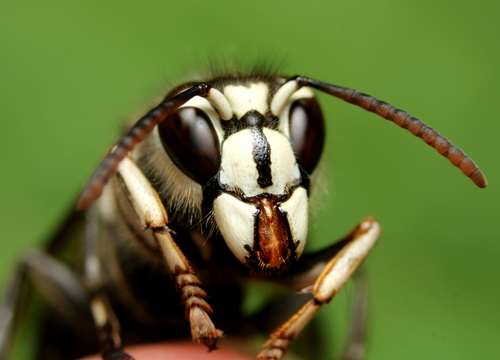
The bald-faced hornet isn't a true hornet but a large yellow jacket relative, black with white or ivory markings on the face and body. It builds big, grey, football-shaped paper nests in trees and shrubs and defends them aggressively.
The Asian hornet is dark brown to black with a single yellow-orange band near the tip of the abdomen and yellow tips to the legs. It's an invasive species that has spread across much of western Europe since arriving in France, and it hunts honey bees. In the UK, report any sighting to the authorities.

Solitary wasps that rarely sting: mud daubers and cicada killers
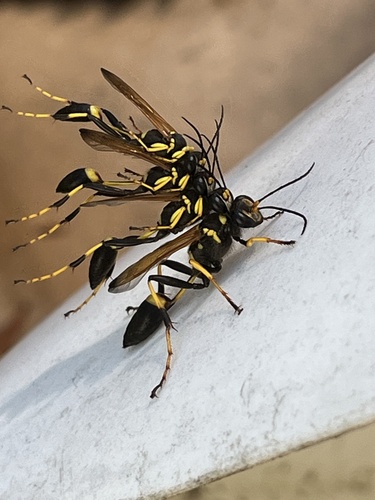
Mud daubers are long, slender wasps with a very thin, thread-like waist. They build tube-shaped or lumpy mud nests on walls, under eaves and in sheds, and fill them with paralysed spiders for their young. They live alone, don't defend their nests and almost never sting.
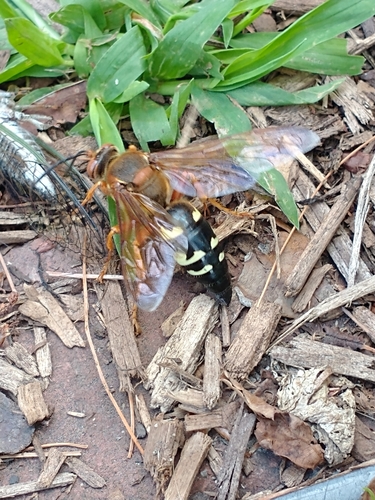
The eastern cicada killer is huge, up to about 5 cm long, black or reddish with pale yellow markings. It digs burrows in lawns and sandy soil in summer and hunts cicadas. Males patrol and buzz people but can't sting; females can, but rarely do unless handled.
Bee and wasp lookalikes that can't sting
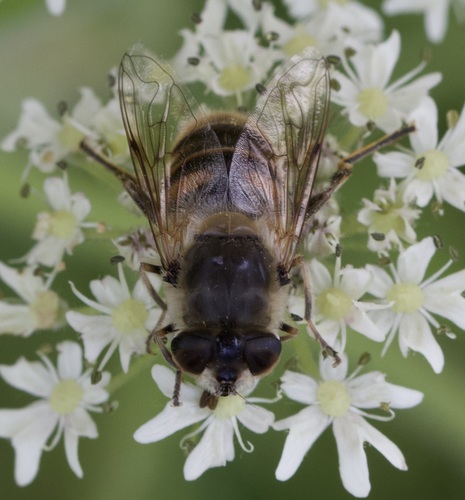
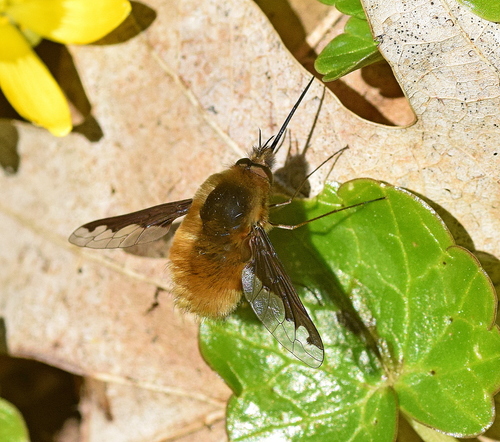
Many flies copy the colours of bees and wasps to scare off predators. Look at the wings and eyes: flies have one pair of wings, big eyes that cover most of the head and very short antennae, and they often hover in one spot. Bees and wasps have two pairs of wings and longer antennae.
The drone fly looks like a honey bee, the marmalade hoverfly like a small orange-and-black wasp, and the greater bee fly like a tiny fluffy bee with a long, straight proboscis. None of them can sting.
If you get stung
Move away from the area, since wasps release a scent that attracts others. If there's a stinger in the skin, scrape it out quickly. Wash the sting, apply a cold pack and keep it raised. Pain and swelling usually settle within a day or two; a large local reaction can last a few days.
Call emergency services straight away if someone has trouble breathing, swelling of the face, lips or throat, dizziness, or a widespread rash after a sting. People with a known allergy should carry their adrenaline auto-injector.
If you're not sure what stung you or what's nesting near your house, take a photo from a safe distance and compare it with the photos on this page, or identify it from the photo.
?Frequently asked questions
What's the difference between a wasp and a yellow jacket?
A yellow jacket is a kind of wasp. Yellow jackets are small (12-16 mm), bright yellow and black, with a short, stocky body and a fast side-to-side flight. Paper wasps, another common type, are slimmer with long legs that dangle in flight.
How can you tell a bee from a wasp?
Bees are hairy and chunky with no obvious waist, and often carry pollen on their legs. Wasps are smooth and shiny with a narrow waist and brighter markings. Bees visit flowers; wasps also hunt insects and scavenge food and drinks.
Is a bald-faced hornet a real hornet?
No. The bald-faced hornet is a large relative of the yellow jackets, black with white markings. It's called a hornet because of its size and its large paper nests, but the only true hornet established in North America is the European hornet.
Which bees and wasps don't sting?
Male bees and wasps can't sting, including the male carpenter bees that hover in front of people. Mud daubers and cicada killers have stingers but almost never use them. Drone flies, hoverflies and bee flies look like bees or wasps but are flies and can't sting.
What's the difference between a drone fly and a honey bee?
The drone fly is a hoverfly that mimics honey bees. It has one pair of wings, huge eyes that cover most of the head, very short antennae and no pollen baskets. Honey bees have two pairs of wings, smaller eyes and longer, elbowed antennae.
Written by the Insect Scanner team, last updated 2026-10-31. Identification from photos is never certain: don't handle insects you can't identify, and get medical advice for bites, stings or allergic reactions.