
Eastern carpenter bee
Xylocopa virginica · Carpenter bees
A large, solitary bee that bores smooth galleries in wood; common in eastern North America and an important spring pollinator.
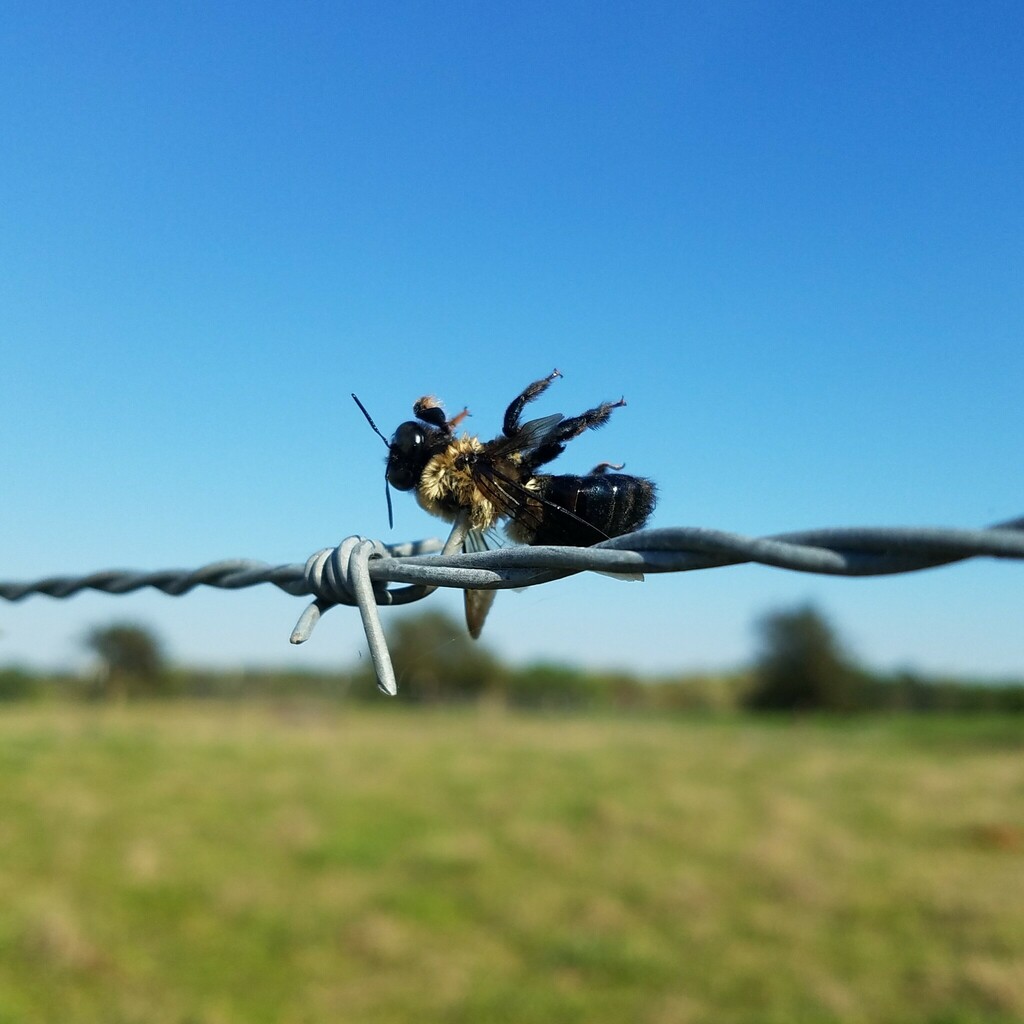
!Is the eastern carpenter bee dangerous?
Only mildly. Female eastern carpenter bees can sting, but they are not aggressive and stings are uncommon if not provoked. Males cannot sting but may hover or dive at people; this is bluffing behavior. For a sting, treat like other insect stings: clean the area, apply ice to reduce swelling, and seek medical attention if there are signs of an allergic reaction (difficulty breathing, widespread hives, dizziness).
Pets
Generally not harmful to pets. A pet receiving a sting may show local swelling or discomfort; if the pet has difficulty breathing or appears severely unwell, seek veterinary care.
📖Overview
Xylocopa virginica is a large, robust solitary bee native to eastern North America. Adults are most noticeable in spring and early summer when males aggressively patrol flowering plants and nest entrances. Unlike social bees, each female excavates and provisions her own tunnels in untreated or weathered wood. They are important pollinators of many fruit and wild plants but can cause localized damage to wooden structures if many nesting females are present.
Females are capable of stinging but are not typically aggressive; males cannot sting but may hover or chase near people. Carpenter bee nests are smooth, round tunnels excavated in soft or weathered wood, often under eaves, rafters, decks, or porch railings. Nests may be reused and expanded across seasons unless removed or the wood is made unsuitable.
🔍How to identify a eastern carpenter bee
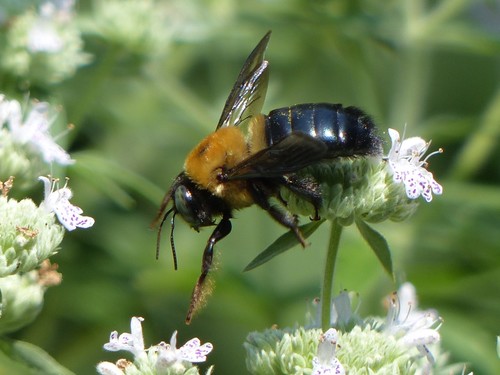
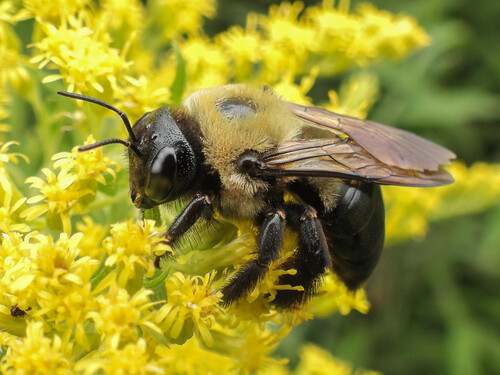
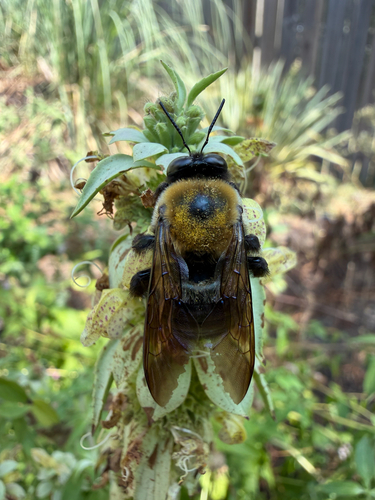
Adults are large and robust, 15-25 mm long, with a shiny, mostly hairless, black abdomen. The thorax commonly has dense yellow or golden hairs (especially in females) while males often show a white to yellow facial patch. Wings are dark with a bluish to purplish sheen in good light. Females have a smooth, hairless dorsal abdomen (shiny black) that distinguishes them from bumble bees which have a hairy abdomen.
- Large size (15-25 mm) with a shiny, largely hairless black abdomen (females).
- Thorax with dense golden-yellow hairs; males often have a pale yellow or white face patch.
- Smooth, round circular holes 10-12 mm across in untreated or weathered wood where tunnels begin.
- Unlike bumble bees, carpenter bees have a bare, shiny abdomen rather than a fuzzy one.
Lookalikes
Bumble bee Bombus spp.
Bumble bees are hairy and fuzzy across the abdomen; carpenter bees have a shiny, hairless abdominal surface.
Other large carpenter bees Xylocopa spp.
Other Xylocopa species may look similar; Xylocopa virginica is the common eastern species in North America and can be told by regional range and subtle differences in hair patterns and face coloration.
Megachile leafcutter bees Megachile spp.
Leafcutter bees are smaller, have scopal hairs under the abdomen for carrying pollen, and do not bore wood.
↻Life cycle
Egg
Laid singly on a loaf of pollen and nectar in a tunnel cell; each cell is sealed with a partition of chewed wood pulp.
Larva (grub)
Larvae feed on the pollen and nectar provisions left by the mother and grow inside their sealed cell.
Pupa
Larvae pupate within the cell and metamorphose into adults.
Adult
New adults emerge in late summer, feed on nectar and overwinter in the tunnels; the next spring they mate, and females excavate or expand tunnels, provision cells and lay eggs.
🍃Diet and predators
Young eat
Pollen and nectar provisions supplied by the female
Adults eat
Nectar for energy and pollen for protein; they visit a wide variety of flowering plants
Predators of the young
Woodpeckers, parasitic wasps, ants
Predators of adults
Birds, robber flies, dragonflies, and some predatory wasps
🌱Effect on plants and gardens
Adults gather nectar and pollen from many flowering plants and are effective pollinators of fruit trees, legumes, and wildflowers. Larvae develop on pollen and nectar provisions left by the female in nest cells.
How to get rid of eastern carpenter bees
Preventive methods are best: paint or varnish exposed wood, use pressure-treated or dense hardwoods, and fill or seal old galleries in winter. For active nests, blocking entrance holes after dusk or during winter prevents re-use. For immediate removal of active nests, consult a pest control professional; removal may require drilling out and replacing damaged wood. Avoid harming bees where possible because of their pollination value; targeted, time-limited treatments are preferable to broad insecticide spraying.
📍Where and when to find it
Look for adults on blossoms, fruit trees, and garden flowers; find nests by locating round entrance holes in exposed, untreated wood such as eaves, decks, railings, and fences.
Best time
Best observed spring through early summer on warm, sunny days when flowers are blooming and nesting begins.
Observation tips
Watch quietly near flowers to see males hover and chase; use a telephoto lens or binoculars to photograph without disturbing nests. Inspect undersides of eaves and railings for clean, circular holes to find nest sites.
✨Fun facts
- Eastern carpenter bees chew perfectly round tunnels in wood with their mandibles; they do not eat the wood but push the sawdust out of the entrance.
- Females sometimes seal off and reuse old nest tunnels; nests can remain in a piece of wood for many years unless removed.
- Male carpenter bees often perch near nesting holes and will aggressively chase other insects or perceived intruders, but they lack a stinger.
?Frequently asked questions
Do carpenter bees sting?
Only females have a stinger and they will rarely sting unless handled or squeezed. Males cannot sting.
Why are carpenter bees boring holes in my house?
Females excavate tunnels to make nests in untreated, weathered or soft wood (eaves, siding, decks). They prefer exposed wood that is dry and unpainted.
Are carpenter bees dangerous to my home?
Individual tunnels rarely cause structural failure, but heavy infestations over years can weaken wood and lead to cosmetic and structural damage.
How do I get rid of carpenter bees?
Prevent new nests by painting or varnishing exposed wood and sealing holes in winter. For active nests, consider professional removal or insecticidal dust applied into tunnels in late evening; blocking holes should occur after adults are gone to avoid trapping bees. Use targeted methods to preserve pollinators.
When are carpenter bees most active?
They are most active in spring and early summer when adults emerge, mate, and females start nesting; activity continues through summer as new adults appear.
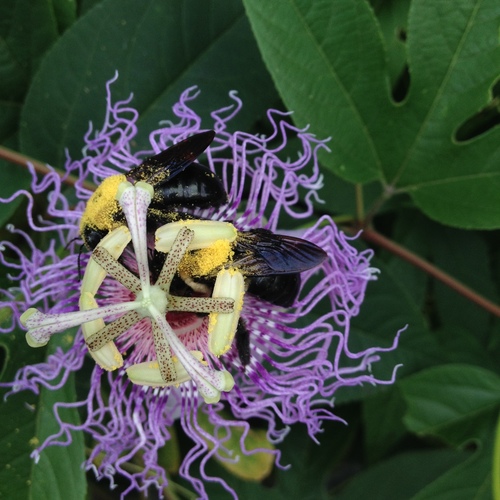
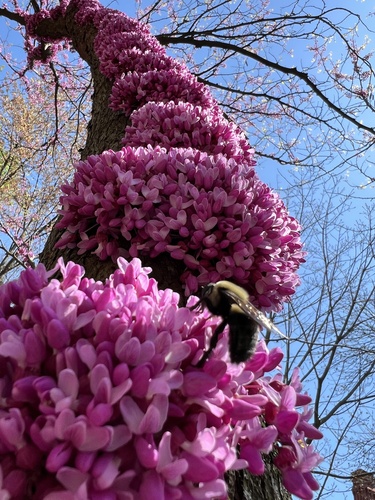
📷Photos of the eastern carpenter bee
More bees, wasps & ants
Bites and formic acid
Painful sting
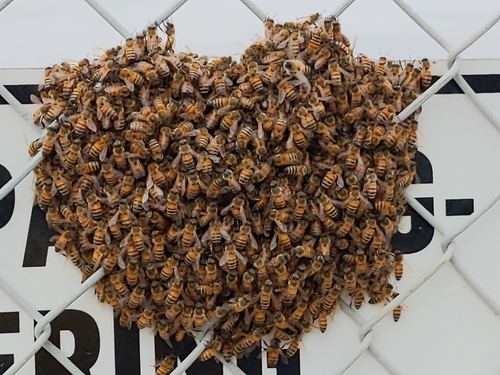
Stinging insect
Can sting
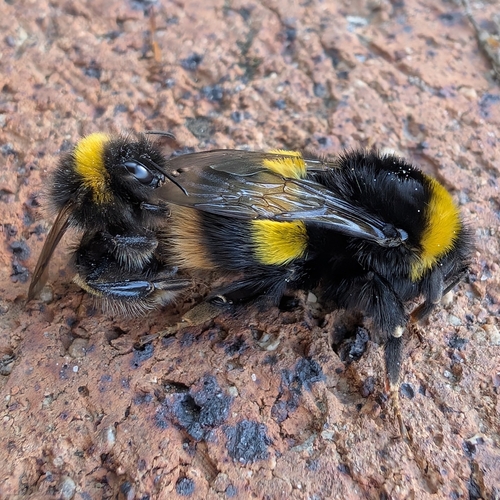
Can sting
Painful sting
This guide was written with AI assistance and fact-checked, last updated 2026-10-09. Identification from photos is never certain: don't handle insects you can't identify, and get medical advice for bites, stings or allergic reactions.