
Eastern carpenter bee vs Valley carpenter bee
These two are easy to mix up. Here's how to tell an eastern carpenter bee from a valley carpenter bee, and whether either one bites or stings.
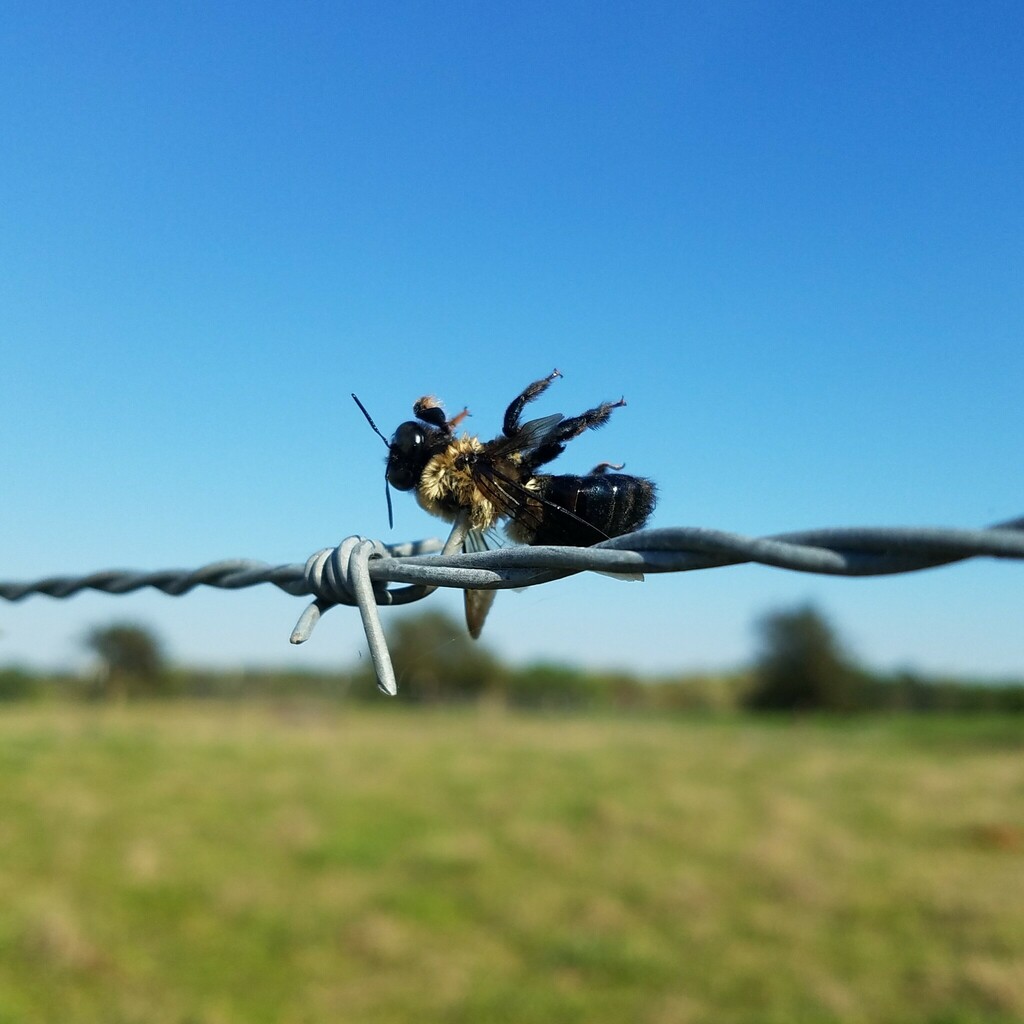
Eastern carpenter bee
Xylocopa virginica
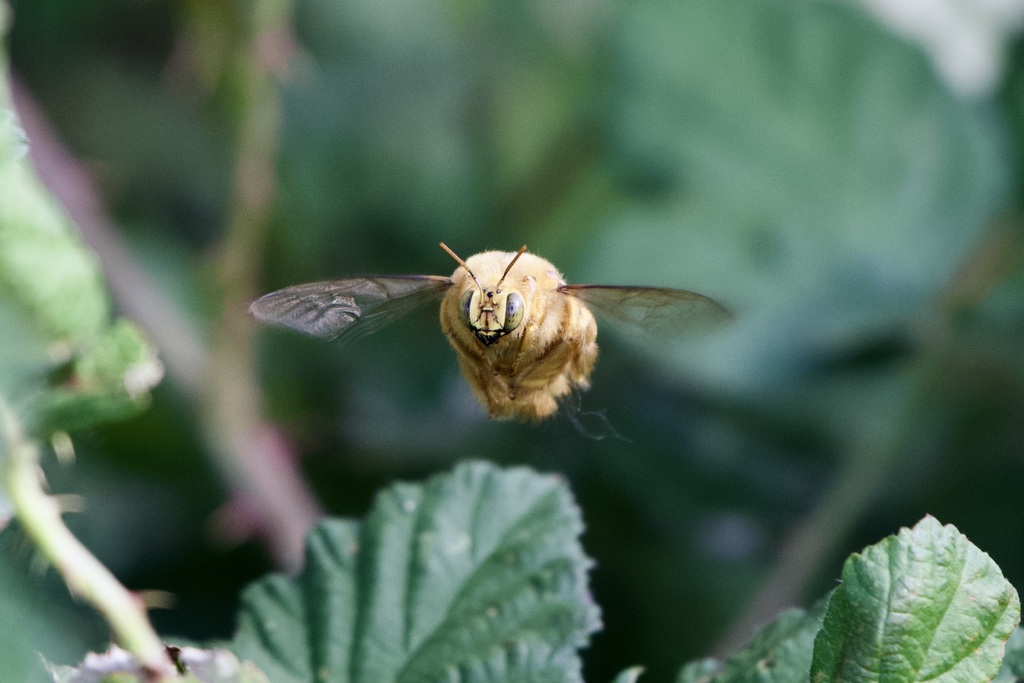
Valley carpenter bee
Xylocopa sonorina
≠The key differences
Xylocopa virginica lives in eastern North America, so ranges barely meet; both sexes have a fuzzy yellow thorax and the male has a pale face patch, but neither sex is entirely golden.
⚖︎Side by side
| Eastern carpenter bee | Valley carpenter bee | |
|---|---|---|
| To humans | Can sting | Painful sting |
| Size | 15-25 mm body length | About 20-30 mm body length |
| Colours | Shiny black, Golden yellow (thoracic hairs), Dark iridescent wing sheen | Black, Metallic blue, Golden-brown (hairs) |
| Family | Apidae | Apidae |
| Habitat | Wooded edges, gardens, orchards, suburban and rural areas where untreated or weathered wood is present | Woodland edges, gardens, orchards, urban areas with exposed dead wood, fences and wooden structures |
| Range | Eastern and central North America, from southern Canada through much of the eastern United States | Native to the western and southwestern United States (especially California and Arizona) and Mexico; introduced and established in Hawaii |
| Active | Spring through late summer; most active during warm days (spring nesting peak) | Spring through late summer (peak activity varies by region), mainly daytime |
| Pest? | Yes | Yes |
🔍How to spot an eastern carpenter bee
- Large size (15-25 mm) with a shiny, largely hairless black abdomen (females).
- Thorax with dense golden-yellow hairs; males often have a pale yellow or white face patch.
- Smooth, round circular holes 10-12 mm across in untreated or weathered wood where tunnels begin.
- Unlike bumble bees, carpenter bees have a bare, shiny abdomen rather than a fuzzy one.
🔍How to spot a valley carpenter bee
- Large, robust bee about 20-30 mm long
- Strong sexual difference: females glossy black with a bronze-purple sheen; males fuzzy golden-tan with greenish eyes
- Excavation holes about 10-15 mm diameter in dead wood, often with a pile of frass below
- Solitary nest tunnels rather than clusters of hexagonal combs like honey bees
?Frequently asked questions
What is the difference between an eastern carpenter bee and a valley carpenter bee?
Xylocopa virginica lives in eastern North America, so ranges barely meet; both sexes have a fuzzy yellow thorax and the male has a pale face patch, but neither sex is entirely golden.
Is an eastern carpenter bee or a valley carpenter bee more dangerous?
Eastern carpenter bee: Can sting. Valley carpenter bee: Painful sting. Female eastern carpenter bees can sting, but they are not aggressive and stings are uncommon if not provoked. Female carpenter bees can sting but are not aggressive; males cannot sting but may hover and dart near people.
Identification from photos is never certain: don't handle insects you can't identify, and get medical advice for bites, stings or allergic reactions.