
Valley carpenter bee
Xylocopa sonorina · Carpenter bees
A large carpenter bee of the western United States and Mexico in which females are glossy black and males are fuzzy golden-tan; it nests by tunnelling in dead wood and is an excellent pollinator.
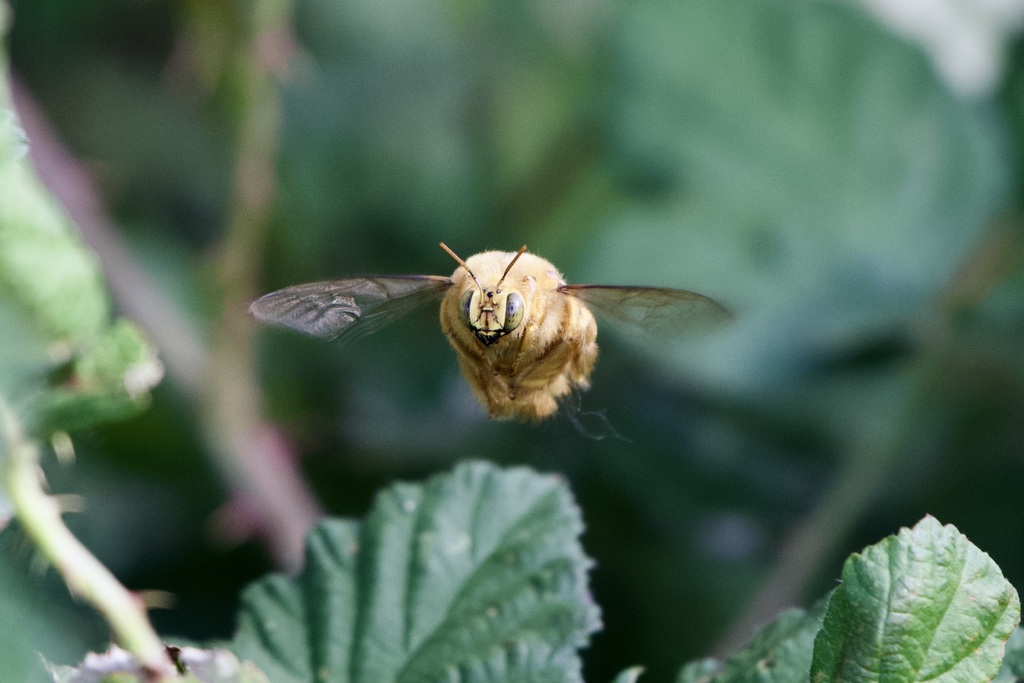
!Is the valley carpenter bee dangerous?
Only mildly. Female carpenter bees can sting but are not aggressive; males cannot sting but may hover and dart near people. A sting is painful with local swelling and redness, and carpenter bees do not leave a stinger behind. For a sting: wash the area and apply a cold compress. Anyone with a known bee allergy should carry prescribed epinephrine; signs of anaphylaxis (difficulty breathing, swelling of the face or throat, dizziness) need epinephrine and emergency services immediately.
Pets
Usually no serious threat to pets; stings can be painful if a pet disturbs a nest. Allergic reactions in pets are rare but monitor for swelling or difficulty breathing and consult a veterinarian if concerned.
📖Overview
Xylocopa sonorina is a robust carpenter bee native to the western and southwestern United States and Mexico, and introduced to Hawaii. The sexes look very different: females are glossy black, males are golden-tan and fuzzy. Females excavate tunnels in dead wood, fence posts and structural timber to build brood cells; males do not excavate. They are solitary or form small family groups rather than large colonies. Adults are important pollinators of many native plants and crops but nesting in wood near buildings can be a nuisance or cause damage over time.
🔍How to identify a valley carpenter bee
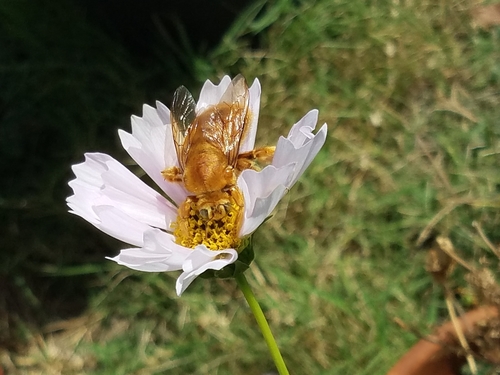
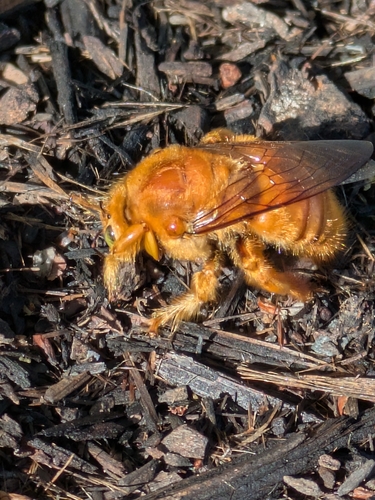
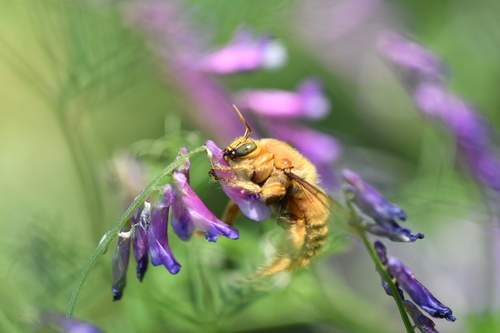
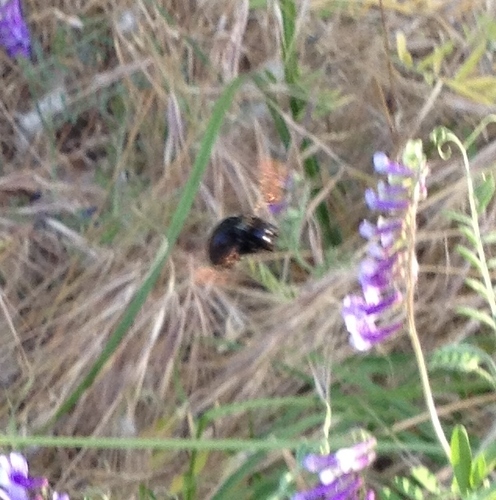
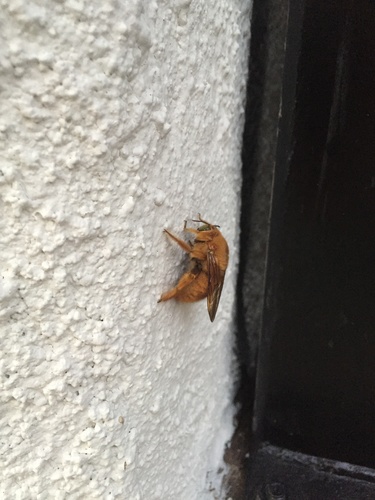
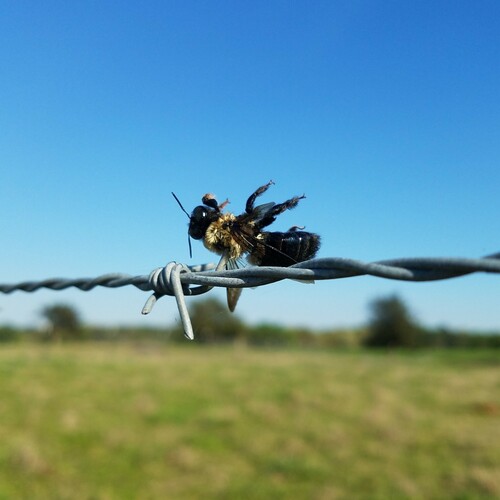
Adults are large and stout. Females are shiny black with a metallic bronze or purple sheen, especially on the dark, iridescent wings. Males look completely different: they are covered in golden-tan to buff hair, have large greenish eyes and paler wings, and often hover near nesting sites or flowers. Size and exact coloration vary slightly across the species range.
- Large, robust bee about 20-30 mm long
- Strong sexual difference: females glossy black with a bronze-purple sheen; males fuzzy golden-tan with greenish eyes
- Excavation holes about 10-15 mm diameter in dead wood, often with a pile of frass below
- Solitary nest tunnels rather than clusters of hexagonal combs like honey bees
Lookalikes
Eastern carpenter bee Xylocopa virginica
Xylocopa virginica lives in eastern North America, so ranges barely meet; both sexes have a fuzzy yellow thorax and the male has a pale face patch, but neither sex is entirely golden.
California carpenter bee Xylocopa californica
Both sexes of Xylocopa californica are dark with a bluish or greenish metallic sheen, so dark females can look alike; golden males are distinctive of the valley carpenter bee.
↻Life cycle
Egg
Female lays a single egg on a pollen-nectar provision inside a tunnel cell she excavated in wood.
Larva
Larvae feed on the stored pollen and nectar; they develop within the wood cell.
Pupa
Larvae pupate inside the sealed cell and transform into adults.
Adult
Adults emerge from tunnels, forage for nectar and pollen, mate, and females excavate new brood tunnels.
🍃Diet and predators
Young eat
Pollen and nectar provided by the female
Adults eat
Nectar for energy; pollen for protein and provisioning brood cells
Predators of the young
Parasitic wasps, bee flies, ants and other nest invaders
Predators of adults
Birds, spiders, robber flies and mantids
🌱Effect on plants and gardens
Adults visit a wide range of flowering plants for nectar and pollen and are effective pollinators for native flora and some crops. Larvae consume pollen provisions prepared by the female.
How to get rid of valley carpenter bees
Preventive: seal exposed untreated softwood, paint or varnish wood, store firewood away from buildings, replace damaged boards. If active nests exist in structural wood, consult a pest control professional; options include removing and replacing infested wood or targeted non-repellent insecticide dusts applied by a professional. You can also install trap-nests (hollow blocks) placed away from structures to encourage nesting elsewhere. Avoid killing bees when possible because they are valuable pollinators.
📍Where and when to find it
Look for adults on flowering plants and near wooden structures. Check fence posts, eaves, dead branches and exposed softwood for round 10-15 mm entrance holes and frass piles. Inside tunnels you may find brood cells.
Best time
Spring through late summer during warm, sunny days; mid-morning to late afternoon when flowers are visited most.
Observation tips
Photograph from a distance without blocking nest entrances; use a telephoto or zoom to capture nesting holes. Wear neutral clothing and move slowly—males may hover but cannot sting.
✨Fun facts
- Carpenter bees chew tunnels with their strong mandibles but do not eat the wood; they use it only for nesting.
- Male carpenter bees sometimes perch near nests and dart after intruders; because males lack a sting, their aggressive-looking behaviour is harmless.
- A single female may reuse and expand a tunnel across seasons, and multiple generations can use the same gallery system.
?Frequently asked questions
Do Valley carpenter bees sting?
Females can sting but are not aggressive and rarely sting unless handled or crushed. Males cannot sting but can hover and buzz near people.
Why is this bee nesting in my house wood?
Females prefer dry, untreated or weathered softwoods for excavating brood tunnels; exposed beams, eaves, fences and untreated furniture are typical targets.
Are Valley carpenter bees beneficial or pests?
They are valuable pollinators, but nesting can cause cosmetic or structural damage to wood over years, making them pests where they damage buildings or furniture.
How can I get rid of them?
Use prevention first: paint or varnish wood and fill or replace damaged wood. For active nests, consult a licensed pest professional for targeted removal or treatment; consider installing trap-nests away from structures as a less destructive alternative.
When will I see them?
You will most often see adults visiting flowers and inspecting wood in spring and summer during daylight hours.
📷Photos of the valley carpenter bee
More bees, wasps & ants
Bites and formic acid
Painful sting
Stinging insect
Can sting
Can sting
Can sting
This guide was written with AI assistance and fact-checked, last updated 2026-10-10. Identification from photos is never certain: don't handle insects you can't identify, and get medical advice for bites, stings or allergic reactions. More about the valley carpenter bee: iNaturalist, Wikipedia.