
Longhorn crazy ant
Paratrechina longicornis · Crazy ants
A small, fast-moving, widely invasive ant that nests in buildings and gardens and is a common household pest worldwide.
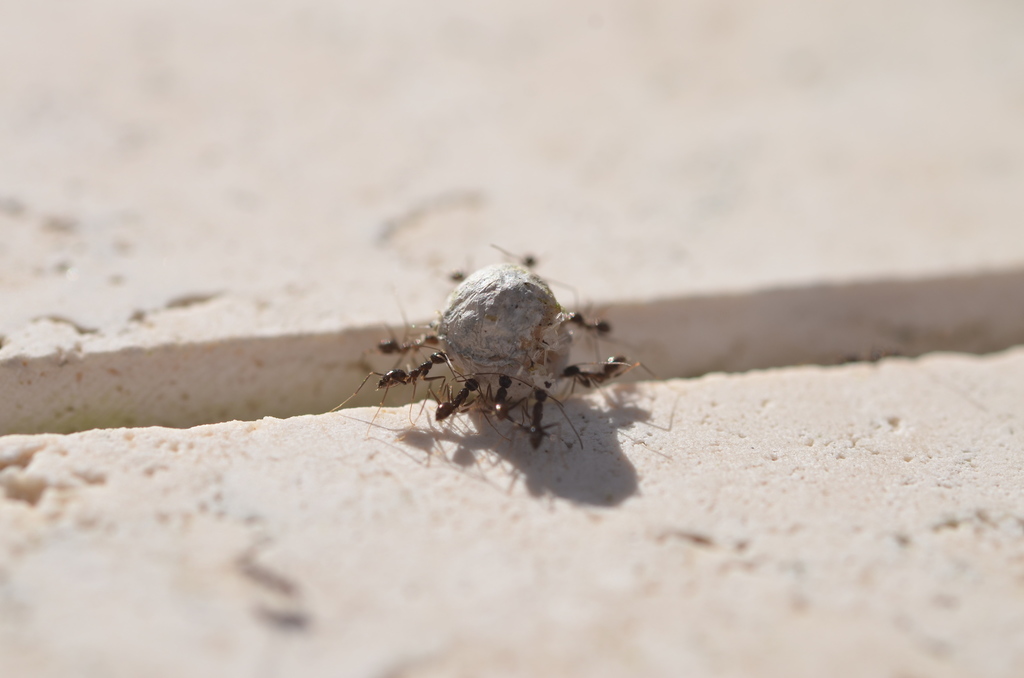
!Is the longhorn crazy ant dangerous?
Only mildly. Workers do not have a stinger but can bite and may spray formic acid, causing minor local irritation or a burning sensation in sensitive people. They are not known to carry human disease like mosquitoes but can contaminate food. For bites or skin irritation, wash the area with soap and water and apply a cool compress. Seek medical advice if a severe allergic reaction occurs.
Pets
Generally not dangerous to pets; they have no stinger and their bites are minor. Large numbers may bother pets at food bowls. Ant baits (boric acid or insecticide) can be harmful to pets if eaten—keep baits out of reach and follow label instructions.
📖Overview
Paratrechina longicornis, the longhorn crazy ant, is a small, highly adaptable ant species noted for its long legs and antennae and rapid, erratic movement. Native range is uncertain but the species is now pantropical and synanthropic, thriving in human-modified habitats. It forms numerous small nests in soil, mulch, potted plants, wall voids and other sheltered sites and forages widely for sweets, proteins and fats.
This ant is considered a successful invasive and household pest: populations reproduce quickly, often form multiple queens and spread by budding (movement of queens with workers) and accidental transport. Though not dangerous to humans in the sense of medically significant venom, large infestations can contaminate food and cause annoyance in homes and commercial buildings.
🔍How to identify a longhorn crazy ant
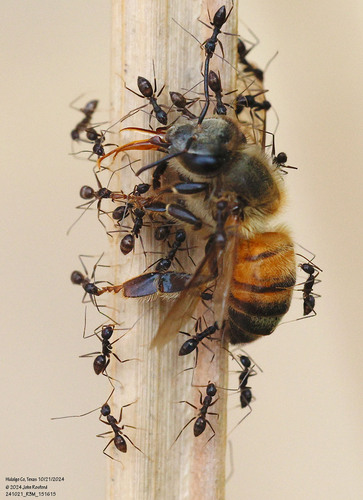
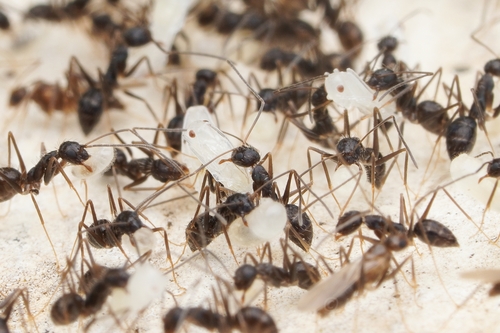
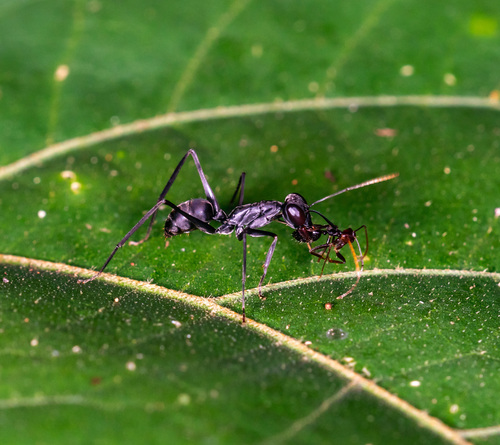
Workers are small (about 2.3-3 mm) with a slender appearance, very long legs and conspicuously long antennae. Body color is dark brown to blackish with a faint grayish sheen and long, coarse whitish or grayish hairs. The gaster (rear) is relatively rounded. Movement is rapid and erratic rather than in tidy straight trails typical of some other ant species.
- Very long legs and antennae relative to body size, giving a lanky look.
- Rapid, erratic 'crazy' running pattern rather than straight, organized trails.
- Small workers about 2-3 mm long, dark brown to blackish with long, coarse pale hairs.
- Relatively very long scapes (first antenna segment) extending well past the back of the head.
Lookalikes
Argentine ant Linepithema humile
Argentine ants have shorter legs and a straighter trail-following behaviour; workers are more uniform light to dark brown and lack the very long antennae and legs of Paratrechina longicornis.
Tawny crazy ant Nylanderia fulva
Nylanderia fulva (formerly Paratrechina fulva) is more uniformly tawny orange and tends to form very large supercolonies; longhorn crazy ants are darker and have a shinier mesosoma.
↻Life cycle
Egg
Tiny, white eggs laid by queens inside nests; development time depends on temperature and food availability.
Larva
Worm-like, wingless larvae cared for by workers; fed regurgitated food and solid particles until pupation.
Pupa
Pupae are initially white and resemble adults; metamorphosis occurs inside the pupal case.
Adult (worker/queen/ male)
Workers are small, wingless and do the foraging and nest work. Queens are larger and found in nests; males are winged during mating flights.
🍃Diet and predators
Young eat
Fed by workers on regurgitated carbohydrates and proteins; larvae receive more protein-rich food (insects, insect parts).
Adults eat
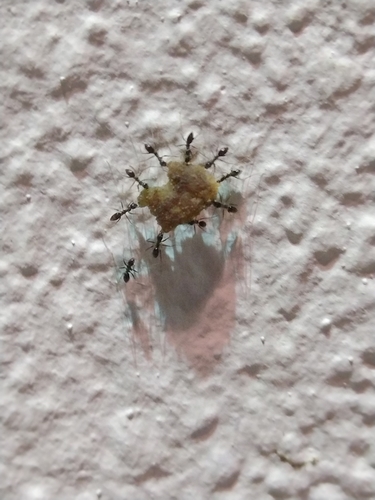
Omnivorous: prefer sweets (nectar, honeydew) and also eat proteins (dead insects) and fats; forage widely and attend honeydew-producing hemipterans.
Predators of the young
Predatory insects, spiders, birds, centipedes and other ants that raid nests.
Predators of adults
Spiders, ants, predatory insects, small reptiles and birds.
🌱Effect on plants and gardens
Longhorn crazy ants forage on plants for honeydew from sap-sucking insects (aphids, scale) and can protect those pests, indirectly harming plants. They rarely damage healthy plants directly.
How to get rid of longhorn crazy ants
Keep food sealed and clean up spills, fix moisture problems, seal cracks and entry points, and remove nesting sites such as debris and excess mulch near buildings. Use slow-acting ant baits (sweet gel baits often work best) placed along foraging routes, keeping them out of reach of children and pets; repeated baiting is often needed. Contact sprays rarely eliminate colonies. For large infestations, consult a pest control professional.
📍Where and when to find it
Look in kitchens, pantries, under appliances, potted plants, mulch, under stones and in wall voids. Foraging trails often lead from nests to food sources.
Best time
Year-round in warm areas and indoors; best observed during warm, humid parts of the day when foraging is active.
Observation tips
Follow a foraging worker to find nest entrances. Use a macro lens and fast shutter speed to capture their rapid movement; photographing near food sources often shows many individuals.
✨Fun facts
- Named 'crazy ant' for their fast, erratic running rather than for being dangerous.
- They are one of the most widespread ant species worldwide and are often spread by human transport in potted plants, shipping materials and cargo.
- Longhorn crazy ants can form many small nests connected by foraging workers instead of a single large nest.
?Frequently asked questions
Do longhorn crazy ants bite?
Yes, workers can bite but they lack a stinger; bites may be accompanied by spraying of formic acid that can cause mild skin irritation.
Are longhorn crazy ants dangerous?
Only mildly. They are not medically dangerous to most people, but they can be a nuisance, contaminate food and cause problems in buildings in large numbers.
Why do I have them in my house?
They are highly associated with humans and enter buildings seeking food (especially sweets) and nesting sites such as wall voids, potted plants and cracks.
How do I get rid of longhorn crazy ants?
Reduce food access and moisture, seal entry points, remove nesting sites (mulch/potted plant debris). Use bait stations with slow-acting toxic baits (boric acid or commercial ant gels) placed where workers forage; repeated baiting is often needed. For large infestations, consult a pest control professional.
Will household sprays get rid of them?
Contact sprays kill visible workers but usually do not eliminate the colony. Baits that workers carry back to nests are more effective for long-term control.
📷Photos of the longhorn crazy ant
More bees, wasps & ants
Bites and formic acid
Painful sting
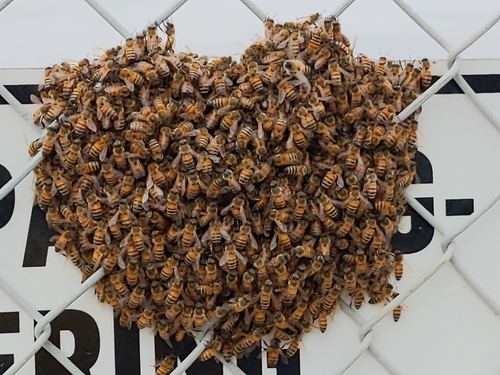
Stinging insect
Can sting
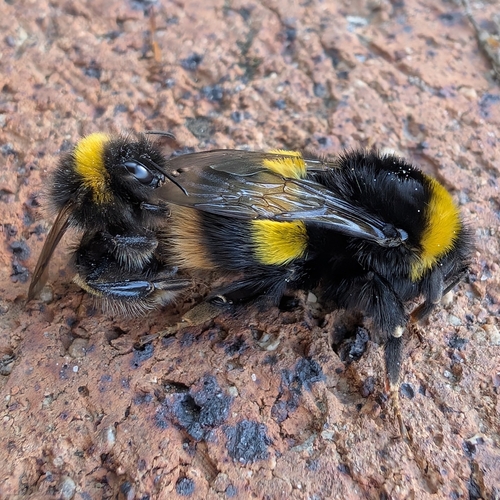
Can sting
Can sting
This guide was written with AI assistance and fact-checked, last updated 2026-10-10. Identification from photos is never certain: don't handle insects you can't identify, and get medical advice for bites, stings or allergic reactions. More about the longhorn crazy ant: iNaturalist, Wikipedia.