
Tawny mining bee
Andrena fulva · Mining bees
A widespread solitary, ground-nesting bee with a bright tawny-orange coat; important spring pollinator and generally non-aggressive.
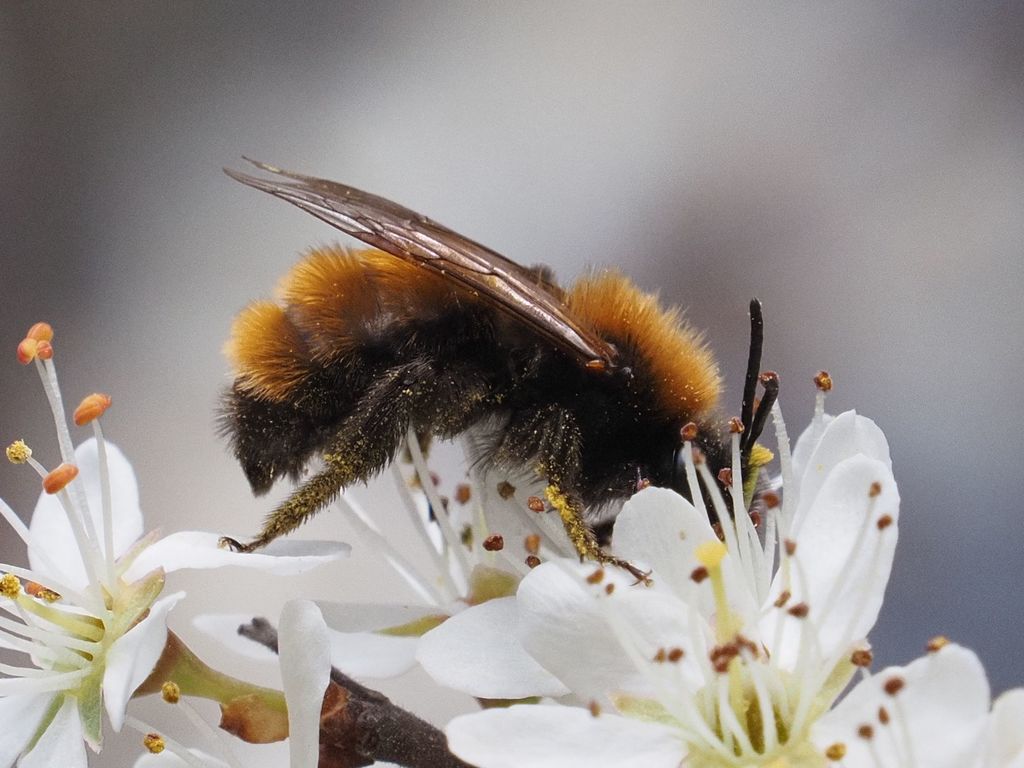
!Is the tawny mining bee dangerous?
No. Tawny mining bees are not aggressive. Males cannot sting. Females have a sting but rarely use it; stings are usually mild and comparable to other small solitary bees. If stung, basic first aid (clean area, apply cold compress, take antihistamine for itch) is normally sufficient. If there are signs of a severe allergic reaction such as difficulty breathing, widespread swelling or collapse, use an epinephrine auto-injector if one has been prescribed and call emergency services.
Pets
Generally harmless to pets. Small size means they are unlikely to cause serious injury; however, a pet that attempts to eat a bee could receive a mild sting in the mouth. Monitor for swelling or signs of allergy.
📖Overview
Andrena fulva is a solitary mining bee common across much of Europe and parts of western Asia. Females excavate burrows in bare or short-turf soil to raise a single season's brood; nests are often clustered where the soil is suitable. Adults are active in spring and are important pollinators of early-flowering plants in gardens, meadows and woodland edges. They are not social and do not produce honey.
These bees are unaggressive: males never sting and females can sting but do so only rarely when handled or crushed. Populations are stable in many areas where suitable nesting habitat and spring flowers are available; they are a welcome part of garden biodiversity.
🔍How to identify a tawny mining bee
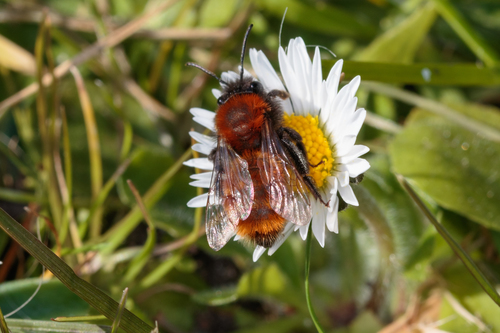
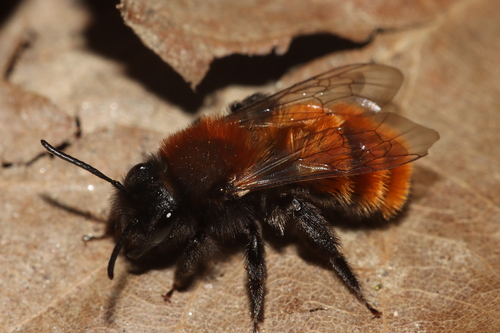
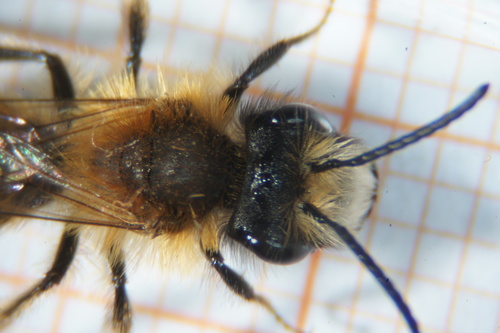
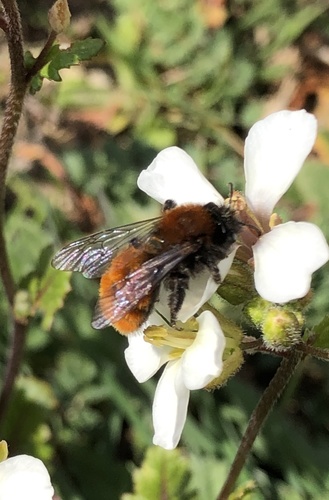
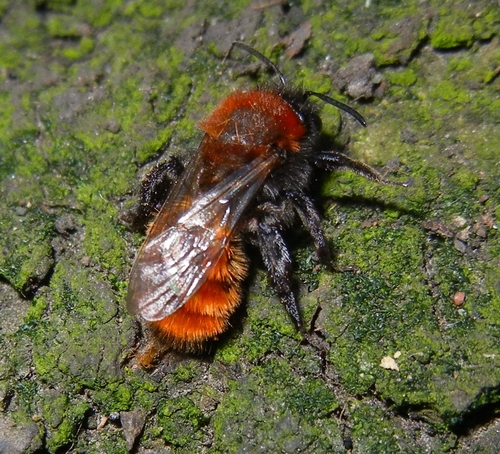
Adult females are robust, 10-14 mm long, with dense reddish-orange to tawny hairs covering the thorax and abdomen, and a black face, legs and underside. The hairs often give the bee an overall cinnamon or tawny appearance. Males are slimmer, slightly smaller on average, with duller, browner hair and conspicuous tufts of white hair on the face; males lack the scopae (pollen-collecting hairs) on the hind legs that females have. Both sexes have relatively short tongues compared with some solitary bees.
- Tawny-orange to reddish-brown dense hairs covering thorax and abdomen in females (gives a cinnamon look).
- Females 10-14 mm long with pollen-collecting hairs (scopa) on hind legs; males slimmer and paler.
- Active in spring on low flowers and often seen flying close to the ground near bare soil where nests occur.
Lookalikes
Orange-tailed mining bee Andrena haemorrhoa
A. haemorrhoa has a ginger-haired thorax but a mostly dark abdomen with an orange tip, rather than the all-over fox-red coat of a female tawny mining bee.
Red mason bee Osmia bicornis
Red mason bee females have a black-haired head and ginger body but nest in hollow stems, walls and bee hotels rather than digging burrows in the ground.
↻Life cycle
Egg
Female places a single egg on a pollen-nectar provision in an underground brood cell. Eggs hatch after a few days depending on temperature.
Larva
Larvae feed on the pollen and nectar ball provided by the mother, growing through several instars in the sealed cell.
Pupa
After the larval stage the bee pupates in the cell and transforms into an adult over several weeks; development timing depends on local climate.
Adult
Adults emerge in spring, mate and females excavate new burrows and provision brood cells. Offspring develop through the summer and overwinter as fully formed adults sealed in their cells, emerging the following spring.
🍃Diet and predators
Young eat
Pollen and nectar provided by the mother in each brood cell (generalist pollen diet from a range of spring flowers).
Adults eat
Nectar for energy; females collect pollen to provision larval cells.
Predators of the young
Ground-nesting parasites (cleptoparasitic bees and wasps), fungal pathogens and some ground predators like ants or beetles that invade nests.
Predators of adults
Birds, spiders and predatory insects; nests are also targeted by cuckoo bees (Nomada) and bee-flies.
🌱Effect on plants and gardens
Adults forage on a wide range of early-spring flowers (willow, fruit tree blossom, dandelion, buttercups, maples and many garden spring flowers). They contribute to pollination of wild plants and fruit crops.
📍Where and when to find it
Look on low spring flowers (dandelions, buttercups, fruit blossom) and on bare or short-turf ground where females dig nesting burrows. Males are often seen patrolling nearby.
Best time
March to May on warm, sunny days in the morning and early afternoon.
Observation tips
Use a camera with a macro lens at ground level; approach slowly and avoid trampling bare patches. Photograph flowers they visit to help confirm observations.
✨Fun facts
- Although solitary, tawny mining bees often nest close together, creating the appearance of a small colony.
- They are among the earliest active bees in spring and are important pollinators of fruit trees and early wildflowers.
- Males are often seen patrolling near nesting sites waiting for females and may hover in groups.
?Frequently asked questions
Do tawny mining bees sting?
Females can sting but are not aggressive and only sting if handled or trapped; males cannot sting. Stings are usually mild.
Why are there lots of bees in my lawn?
Tawny mining bees nest in bare patches or short turf. If your lawn has sunny, compacted or bare soil and spring flowers nearby, it can attract nesting females.
Are tawny mining bees endangered?
Not generally. Andrena fulva is widespread and common in many areas where suitable habitat exists, though local declines can occur where nesting sites and spring flowers are removed.
How can I get rid of nesting tawny mining bees?
They are beneficial pollinators so removal is not recommended. If nests are a problem, block access to a small area with fine mesh before spring or allow grass to grow thicker. Avoid insecticides because they harm pollinators.
Why are there male bees flying around but not doing anything?
Male tawny mining bees patrol and hover near nesting sites waiting for females to emerge so they can mate; they do not collect pollen.
📷Photos of the tawny mining bee
More bees, wasps & ants
Bites and formic acid
Painful sting
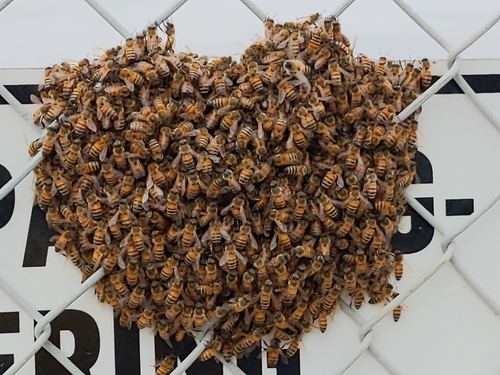
Stinging insect
Can sting
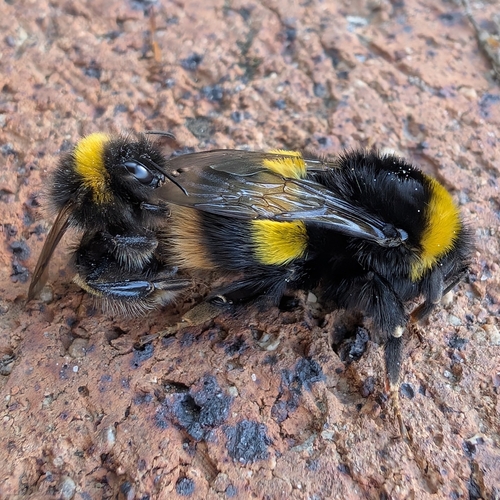
Can sting
Can sting
This guide was written with AI assistance and fact-checked, last updated 2026-10-10. Identification from photos is never certain: don't handle insects you can't identify, and get medical advice for bites, stings or allergic reactions. More about the tawny mining bee: iNaturalist, Wikipedia.