
Red mason bee
Osmia bicornis · Mason bees
A solitary, spring-active cavity-nesting bee and efficient pollinator with a compact, reddish-brown body and a gentle, non-aggressive nature.
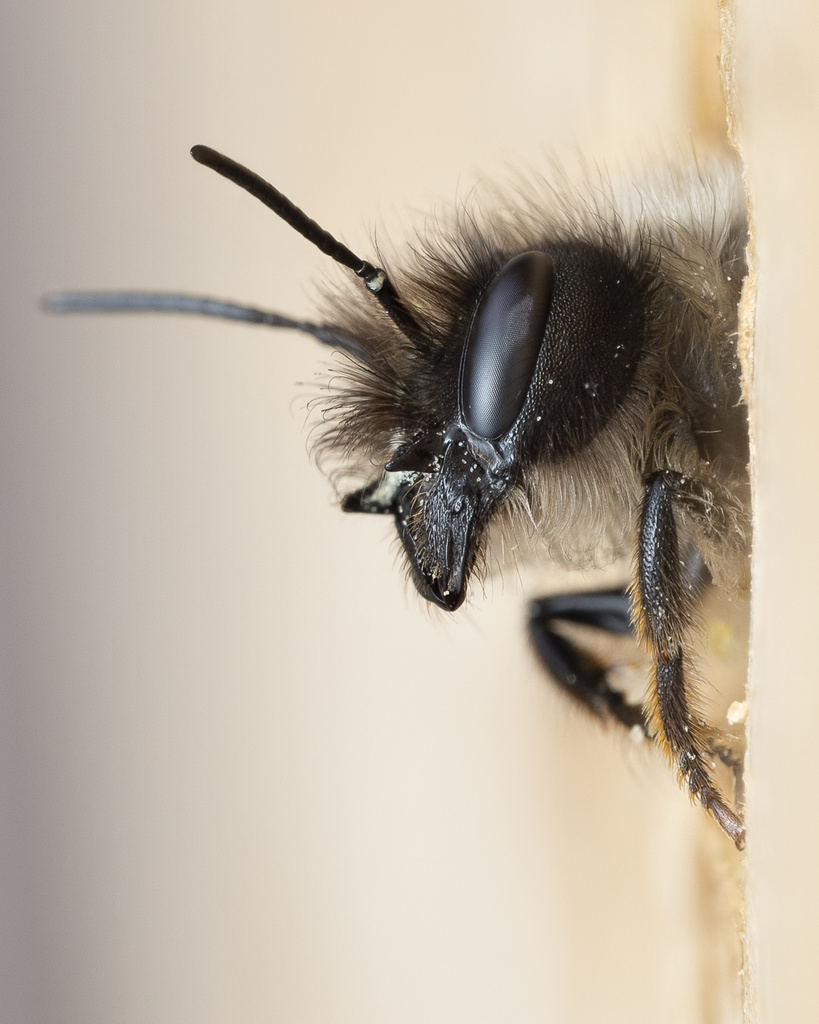
!Is the red mason bee dangerous?
No. Red mason bees are non-aggressive and rarely sting. Female stings are possible but uncommon and usually mild compared with social bees or wasps. If someone has signs of a severe allergic reaction (trouble breathing, swelling of the face or throat, dizziness), use their epinephrine auto-injector if they have one and call emergency services.
Pets
Not dangerous to pets. Pets might swat or kill individual bees but the species does not pose a toxicity risk to animals.
📖Overview
Osmia bicornis is a solitary, cavity-nesting bee native to much of Europe and parts of western Asia. Females build linear nests in pre-existing cavities (hollow stems, holes in wood, or artificial 'bee hotels'), sealing each egg cell with mud — hence the common name mason bee. They are important early-season pollinators of fruit trees, garden flowers and wild plants.
These bees are active mainly in spring. Adults are short-lived (weeks) but are frequent flower visitors during that period. They do not form colonies or produce honey. Males emerge slightly earlier than females and do not contribute to nesting other than mating.
🔍How to identify a red mason bee
Adults are compact and robust, with a length around 7-12 mm. Females typically have a stout, densely haired abdomen that is reddish-brown; the thorax and head are darker with pale to grayish hairs. Males are slightly smaller, often with paler hairs and a slimmer abdomen. Females carry pollen on scopal hairs under the abdomen rather than on their legs. Females have two small horn-like projections on the face (the name bicornis means 'two-horned'); reliable separation from related Osmia species can still require close examination.
- Compact, robust bee 7-12 mm long with a reddish-brown abdomen (especially in females).
- Females carry pollen on dense scopal hairs beneath the abdomen rather than on hind legs.
- Active in spring on fruit-tree blossoms and other early flowers; nests in straight cavities lined with mud partitions.
- Males are smaller, paler-haired and may be seen flying around nesting holes or flowers before females.
Lookalikes
Horned mason bee Osmia cornuta
Females also have facial horns. O. cornuta is larger, with a black-haired head and thorax and a bright orange-haired abdomen, and it usually emerges a few weeks earlier in spring; it is mainly a continental European species.
Other Osmia species Various Osmia spp.
Many Osmia share the reddish color and cavity-nesting habits; note nesting preferences, flight time and detailed facial or genital characters for accurate ID.
↻Life cycle
Egg
Female lays a single egg in each mud-lined cell within a linear cavity, provisioning it with a pollen-nectar ball.
Larva
Larvae develop by consuming the pollen provision, grow through several instars, then spin a cocoon.
Pupa
Pupation occurs inside the cocoon in late summer; the new adult stays inside the cocoon over winter and emerges the following spring.
Adult
Adults emerge the following spring to mate and start new nests; males usually emerge before females.
🍃Diet and predators
Young eat
Consume a mass of pollen mixed with nectar provided by the mother
Adults eat
Feed on nectar and collect pollen from a wide range of early-flowering plants
Predators of the young
Parasitic wasps and flies, mites, and predatory insects that can enter nest cavities
Predators of adults
Birds, spiders and insectivorous predators
🌱Effect on plants and gardens
Important pollinators of fruit trees (apples, pears), early-blooming ornamentals and wildflowers. They do not eat or directly damage plants as pest species do.
📍Where and when to find it
Look for adults on fruit-tree blossoms, willows and early spring flowers. Check hollow stems, drilled timber and bee hotels for linear mud-partitioned nests.
Best time
April to June in temperate Europe, during daylight when flowers are open.
Observation tips
Place a small bee hotel on a warm, sheltered, sun-facing wall. Photograph adults on flowers or the entrance holes of nests rather than disturbing occupied nests.
✨Fun facts
- Unlike honey bees, each red mason bee female builds and provisions her own nest without help from others.
- They are unusually efficient pollinators for their size: a few mason bees can pollinate many fruit trees effectively.
- Gardeners often install 'bee hotels' with 6-8 mm holes to attract these bees and boost spring pollination.
?Frequently asked questions
Are red mason bees dangerous?
No. They are non-aggressive solitary bees and rarely sting. Stings, if they occur, are usually mild. People with bee allergies should still take normal precautions.
Do red mason bees bite or sting?
Females can sting but do so very rarely. They do not bite people as a regular behavior.
Why are red mason bees in my house or garden?
They are looking for narrow cavities to nest in. Nooks, hollow stems, holes in wood and man-made bee hotels are all attractive nesting sites.
How can I encourage red mason bees?
Provide a sun-facing 'bee hotel' or drill 6-8 mm holes in untreated wood, leave some hollow plant stems, and avoid heavy pesticide use in spring.
How do I get rid of them if I don't want them nesting?
Red mason bees are harmless pollinators and rarely need removing. If nests are unwanted, move occupied nesting blocks to a quiet spot away from the house in late autumn or winter rather than destroying them, and seal or block cavities and gaps to prevent re-use. Avoid disturbing active nests in spring and early summer.
Where do red mason bees live?
They occur across much of Europe in gardens, orchards, hedgerows and other habitats where suitable cavities and spring flowers are available.
📷Photos of the red mason bee


More bees, wasps & ants
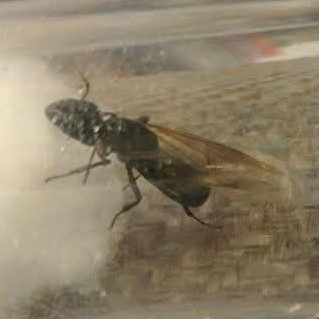
Bites and formic acid
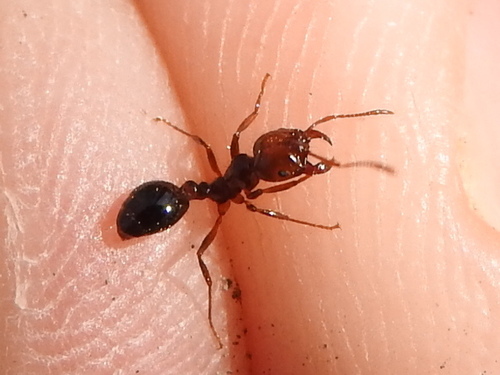
Painful sting
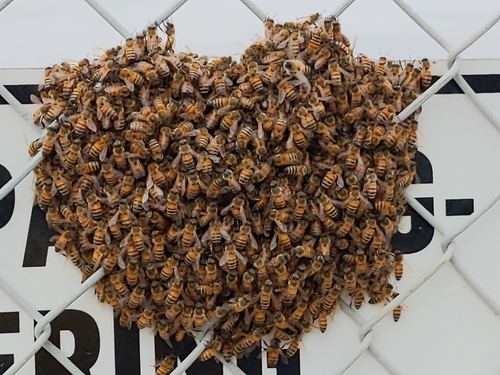
Stinging insect
Can sting
Can sting
Can sting
This guide was written with AI assistance and fact-checked, last updated 2026-10-10. Identification from photos is never certain: don't handle insects you can't identify, and get medical advice for bites, stings or allergic reactions. More about the red mason bee: iNaturalist, Wikipedia.