
Garden bumblebee
Bombus hortorum · Bumblebees
A long-tongued, common European bumblebee that favours deep, tubular flowers and is an important garden pollinator.
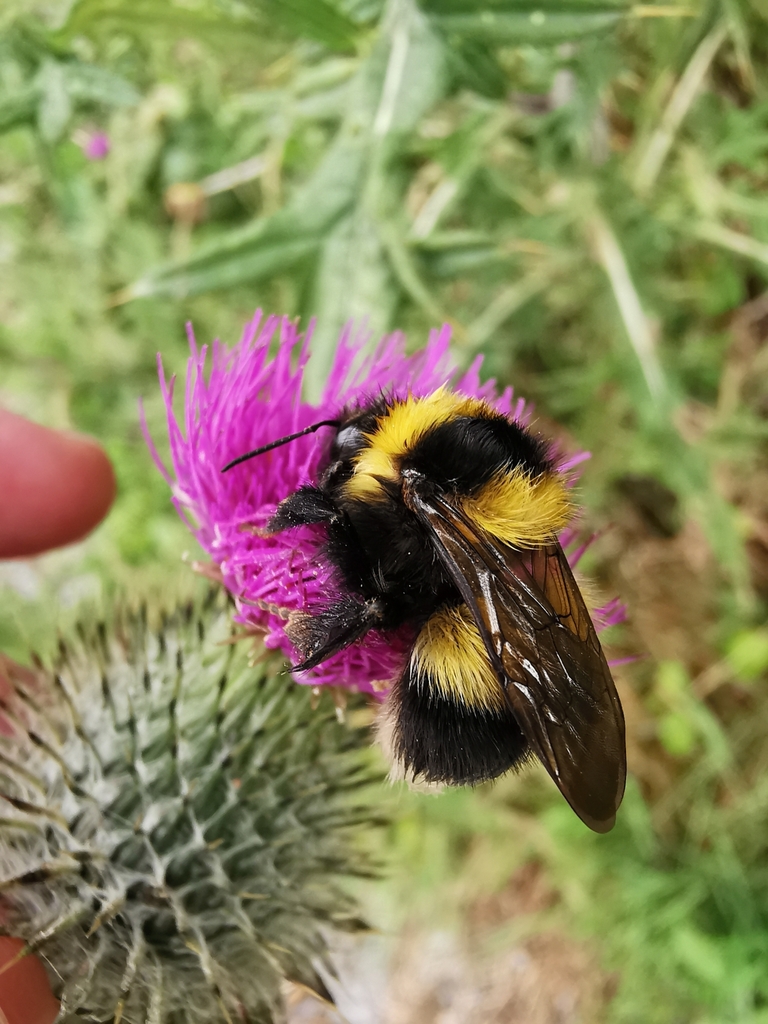
!Is the garden bumblebee dangerous?
Only mildly. Garden bumblebees can sting but are not aggressive and rarely do so unless handled, crushed or the nest is threatened. A sting causes local pain and swelling; unlike honeybees, bumblebees do not leave their stinger in the skin. First aid: wash with soap and water and apply a cold compress. Signs of a severe allergic reaction (difficulty breathing, swelling of the face or throat, widespread hives, dizziness or fainting) are an emergency: use an epinephrine auto-injector if one has been prescribed and call emergency services.
Pets
Stings can be painful for pets that snap at bees or disturb a nest; most healthy dogs and cats get only localized swelling, but stings in the mouth or throat, facial swelling, or allergic signs need prompt veterinary help.
📖Overview
Bombus hortorum is a social bumblebee found across much of Europe and temperate parts of Asia. Colonies are annual: a single overwintered queen starts a nest in spring and produces workers that maintain and expand the nest through summer. It is notable for its long proboscis (tongue), which allows it to feed from deep tubular flowers such as honeysuckle, foxglove and comfrey. Garden bumblebees are generally non-aggressive and important pollinators of wild plants and garden crops.
🔍How to identify a garden bumblebee
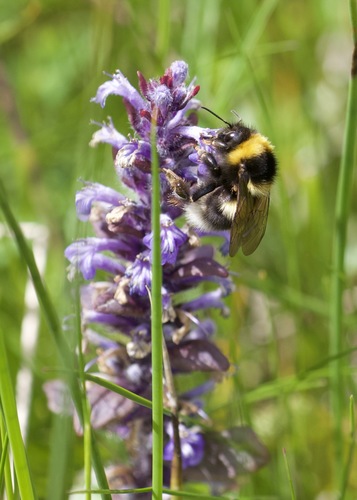
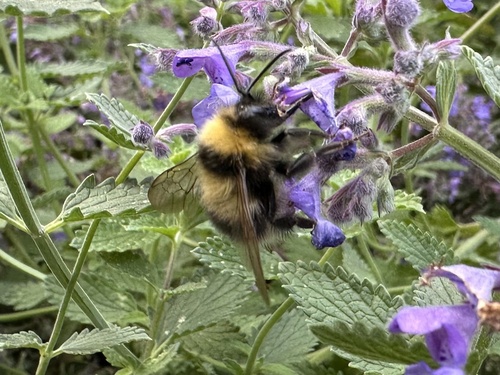
Adults are relatively large and slender for bumblebees and have a noticeably long head/proboscis. Colour pattern typically includes a black head and thorax with one pale yellow band at the collar, a second yellow band across the thorax and a third yellow band on the abdomen; the tail end may be white. Hair (pile) can look sleek compared with some other bumblebees. Queens are larger and more robust than workers and males.
- Long, narrow head and very long proboscis compared with many other bumblebees.
- Three pale yellow bands (collar, thorax band, abdominal band) with a mostly black thorax and often a white tail.
- Slender, elongated body compared with stockier bumblebee species like Bombus terrestris.
- Frequently seen visiting deep tubular flowers (e.g., foxglove, honeysuckle).
Lookalikes
Buff-tailed bumblebee Bombus terrestris
B. terrestris is stockier with a broader yellow banding and usually a buff or orange tail rather than the often white tail and longer face of B. hortorum.
Common carder bee Bombus pascuorum
B. pascuorum has a more ginger/brown pile and lacks the clear three-band yellow pattern typical of B. hortorum.
↻Life cycle
Egg
Laid by the queen or workers inside brood cells; eggs hatch in a few days.
Larva (grub)
White, legless grubs fed on pollen and nectar by workers; grow rapidly through several instars.
Pupa
Larvae pupate inside cells and transform to adults over one to three weeks depending on temperature and food.
Adult
Adults emerge to forage, maintain the nest and, later in the season, produce new queens and males to mate and start the next generation.
🍃Diet and predators
Young eat
Fed by workers on a mix of pollen and nectar (pollen provides protein for growth).
Adults eat
Nectar for energy and pollen for protein; long proboscis favours deep-tubed flowers.
Predators of the young
Predatory insects, parasitic flies and wasps, rodents that raid nests.
Predators of adults
Birds, spiders, dragonflies and predators such as robber flies; cuckoo bumblebees (parasitic Bombus species) may usurp and exploit nests.
🌱Effect on plants and gardens
Feeds on nectar and pollen; long tongue enables effective pollination of deep or tubular flowers such as honeysuckle, foxglove, comfrey, red clover and other legumes. Valuable for wild plant reproduction and garden crops.
📍Where and when to find it
Visit flower-rich gardens, meadows and hedgerows. Look for workers on deep tubular flowers; queens are most obvious in early spring while founding nests in compost heaps, tussocks or old rodent burrows.
Best time
April to September in temperate regions; warm, sunny days are best and activity is highest mid-morning to mid-afternoon.
Observation tips
Use a telephoto or zoom lens to photograph feeding bees; approach slowly and avoid sudden movements. Photograph side-on to show the long head and proboscis.
✨Fun facts
- Bombus hortorum has one of the longest tongues among bumblebees, letting it reach nectar in flowers other bees cannot.
- Because of its long tongue it is a specialist visitor of deep, tubular flowers and helps pollinate plants that depend on such visitors.
- Cuckoo bumblebees (parasites from subgenus Psithyrus) can invade and take over Bombus hortorum nests in some years.
?Frequently asked questions
Do garden bumblebees sting?
Yes, they can sting but are not aggressive and usually only sting if handled, trapped against skin, or if their nest is threatened. They do not leave a stinger behind.
Why is a bumblebee in my house?
A lone worker or queen may enter through open doors or windows while foraging, or a queen searching for a nest site may inspect lofts or compost heaps. Most are just passing through.
How can I get rid of bumblebees in my garden safely?
Avoid killing them — they are valuable pollinators. If a nest is a problem, contact a local wildlife rescue or beekeeper for safe removal or relocation. To discourage nesting in unwanted spots, seal holes and tidy compost or dense thatch where queens might nest.
Are garden bumblebees endangered?
Bombus hortorum is currently widespread and not generally regarded as endangered, though local populations can decline with habitat loss and pesticide use.
What flowers attract garden bumblebees?
Deep, tubular flowers such as foxgloves, honeysuckle, comfrey, lupins and certain peas and beans are particularly attractive because of the bee's long tongue.
📷Photos of the garden bumblebee
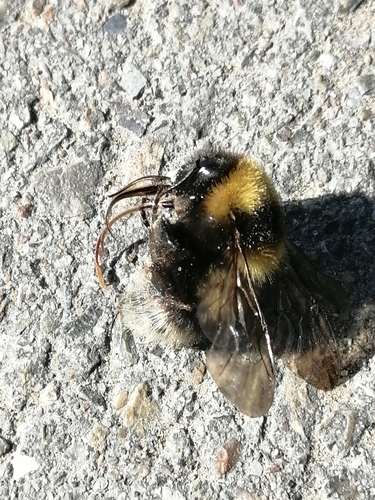
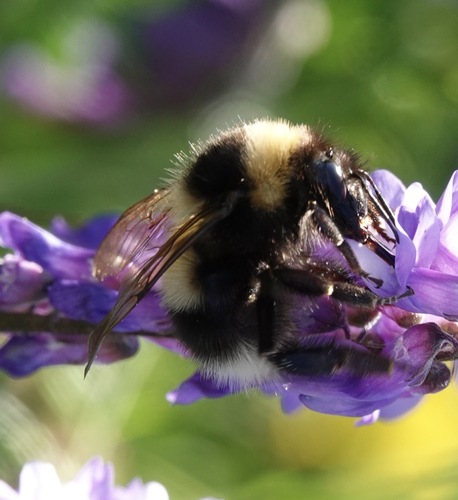
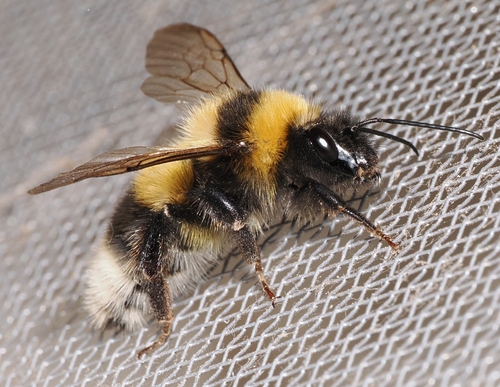
More bees, wasps & ants
Bites and formic acid
Painful sting
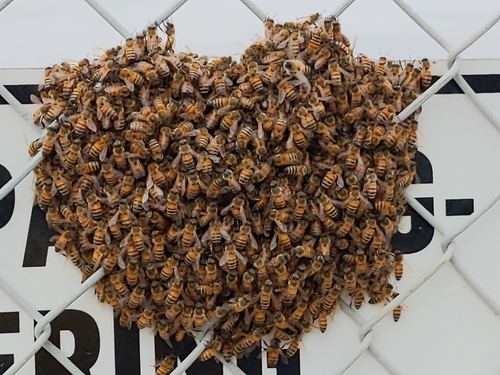
Stinging insect
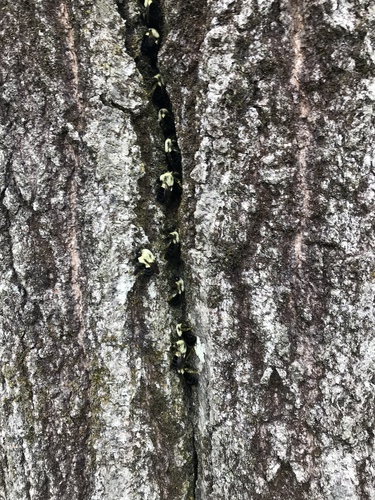
Can sting
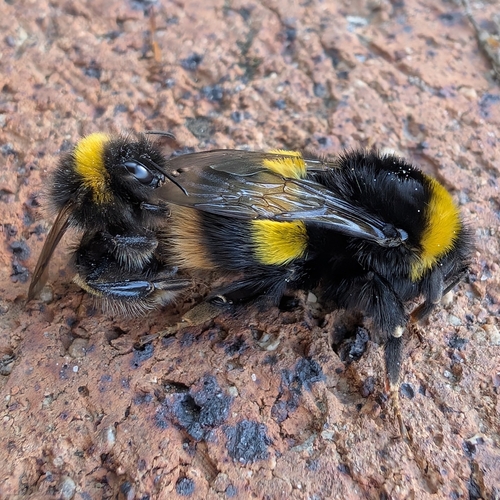
Can sting
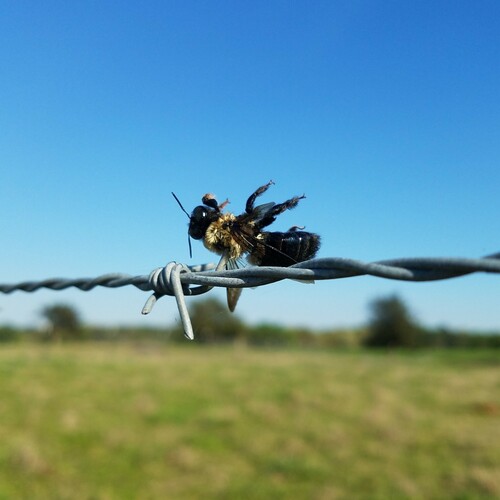
Can sting
This guide was written with AI assistance and fact-checked, last updated 2026-10-10. Identification from photos is never certain: don't handle insects you can't identify, and get medical advice for bites, stings or allergic reactions. More about the garden bumblebee: iNaturalist, Wikipedia.