
Common carder bee
Bombus pascuorum · Bumblebees
A widespread, furry ginger-brown bumblebee that visits gardens, meadows and hedgerows and is an important pollinator.
!Is the common carder bee dangerous?
Only mildly. Not aggressive and rarely sting unless handled or trapped against the skin. Stings are similar to other bumblebee stings: painful for a short time and may cause local swelling. Bumblebees do not leave their sting in the skin. Standard first aid: clean the area and apply a cold compress. If someone has trouble breathing, swelling of the face, lips or throat, dizziness or widespread hives after a sting, use their epinephrine auto-injector if they carry one and call emergency services immediately.
Pets
Stings can be painful if a pet bites or paws at a bee and may cause local swelling; severe allergic reactions in pets are rare but seek veterinary help if the pet shows distress, facial swelling or breathing difficulties.
📖Overview
Bombus pascuorum is a common bumblebee across much of Europe and parts of western Asia. It nests on or just under the ground in grassy tussocks, compost heaps, bird boxes and similar sheltered sites. Individuals are relatively docile and forage on a wide range of flowers, making them frequent visitors to gardens and farmland.
Colonies are annual: mated queens overwinter and start new nests in spring. Workers provide most of the foraging through summer while males and new queens are produced toward the end of the season. The species is adaptable to different habitats and is not generally threatened, though local declines can occur from habitat loss and intensive pesticide use.
🔍How to identify a common carder bee
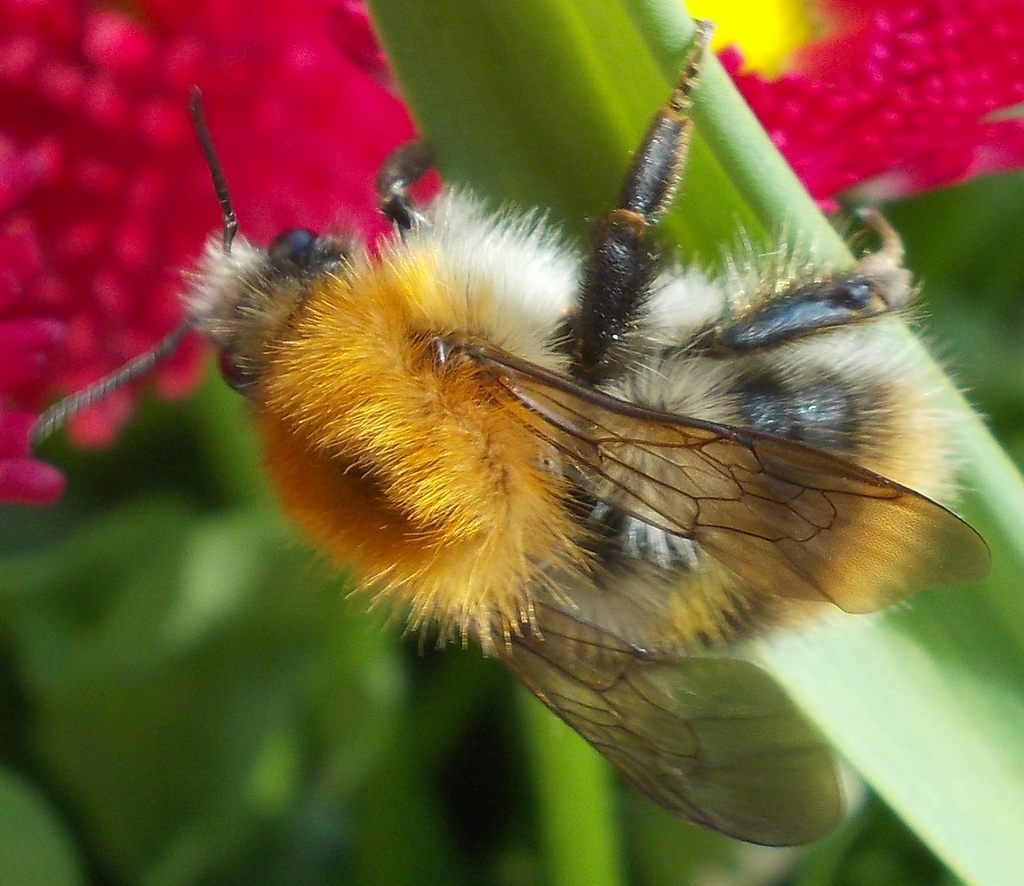
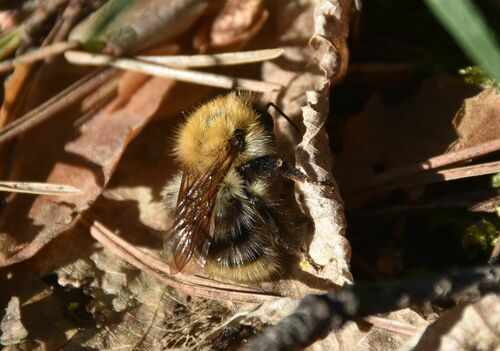
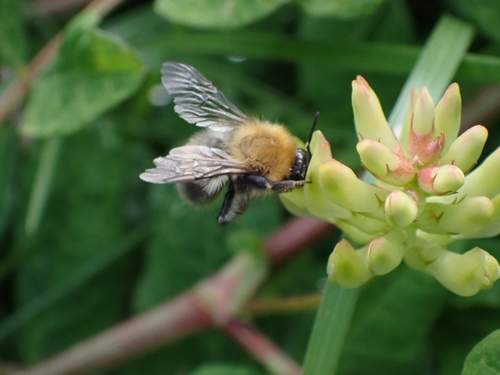
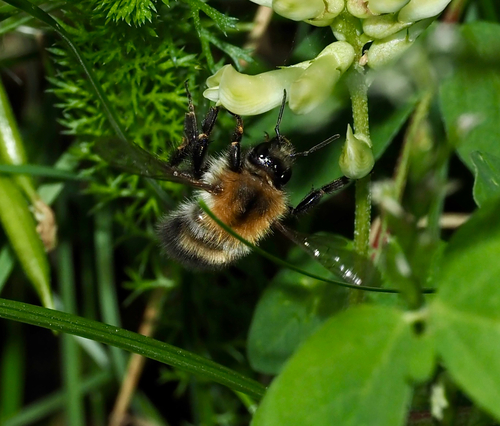
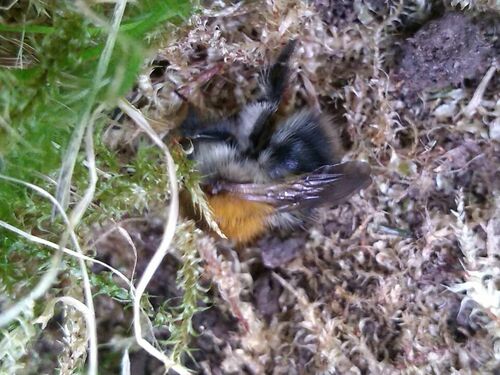
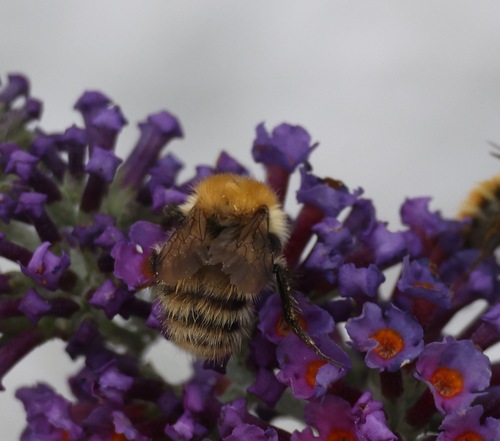
Adults are medium-sized, densely furry bumblebees with a variable warm ginger-brown (especially on thorax and much of the abdomen). They usually lack the strong black-and-yellow banding seen in some other bumblebees. Hair colour can range from reddish-brown to paler brown; many individuals have some darker hairs on parts of the abdomen and a diffuse pale tail rather than a bright white. Queens are noticeably larger and more robust than workers and males.
- Dense, long fur that is predominantly ginger-brown on thorax and much of abdomen.
- Lacks strong, contrasting black-yellow banding; tail often pale or buff rather than bright white.
- Medium size with queens noticeably larger and bulkier than workers and males.
- Found on a wide variety of flowers in gardens and meadows; slow, steady flight compared with smaller solitary bees.
Lookalikes
Tree bumblebee Bombus hypnorum
Tree bumblebee also has a ginger-brown thorax, but its abdomen is black with a clean white tail; common carder bees have a mostly ginger abdomen without a white tail.
Moss carder bee Bombus muscorum
Moss carder bee is a brighter, more uniform golden-ginger with no black hairs on the abdomen and a paler underside; it is much less common and favours open grassland and coastal sites.
↻Life cycle
Egg
Laid by the queen in cells made from collected pollen and wax; eggs hatch in a few days.
Larva (grub)
Legless, white larvae fed on pollen and nectar by workers; grow rapidly while cared for in the nest.
Pupa
Larvae spin small cocoons and pupate; metamorphosis into adults takes place inside the cocoons.
Adult (worker/queen/male)
Workers forage and care for brood; new queens and males are produced late season, queens mate and then overwinter.
🍃Diet and predators
Young eat
Fed on pollen mixed with nectar by workers (pollen is main protein source).
Adults eat
Nectar for energy and pollen for protein; adults visit a broad range of flowering plants.
Predators of the young
Nest parasites and predators such as hoverfly larvae in some cases, and small mammals that dig up nests.
Predators of adults
Birds, spiders, robber flies, hornets and wasps; parasitic mites and fungi can also affect populations.
🌱Effect on plants and gardens
Forages on a wide variety of flowers for nectar and pollen, including garden flowers, wildflowers, fruit blossom and legumes. Good pollinator for many crops and garden plants.
📍Where and when to find it
Look for adults on a wide variety of flowers in gardens, meadows, hedgerows and parks. Nests are often in grass tussocks, under compost heaps or shallow soil cavities.
Best time
Best observed from spring to autumn (April-October); warm, sunny days with many flowers are ideal.
Observation tips
Use a macro lens or long lens, keep a few meters distance to avoid disturbing foraging bees, and photograph side-on to show the ginger thorax and tail color for identification.
✨Fun facts
- The name 'carder' comes from their behaviour of collecting plant hairs (carding) to line their nests.
- They are one of the bumblebee species most often seen in gardens because of their wide flower preferences.
- Queens overwinter alone and found new nests in spring, unlike honeybee colonies which are perennial.
?Frequently asked questions
Do common carder bees sting?
Yes, they can sting but are not aggressive and normally only sting if handled, squeezed or trapped against the skin.
Are common carder bees dangerous?
Generally no for most people. Stings cause local pain and swelling; people with severe allergies should avoid them and seek medical help if stung.
Why is a common carder bee in my house?
They sometimes enter houses through open windows while foraging or may be searching for sheltered nesting sites; usually they can be guided out without harm.
How can I get rid of bumblebees nesting in my garden?
Because they are important pollinators, relocation is preferable to killing. If a nest is in a risky spot, contact a local wildlife rescue or beekeeper for safe removal. Avoid disturbing nests; professional help is safest.
Where do common carder bees live?
They nest at ground level in grassy tussocks, compost heaps, under sheds, bird boxes and similar sheltered places in gardens, meadows and hedgerows.
📷Photos of the common carder bee
More bees, wasps & ants
Bites and formic acid
Painful sting
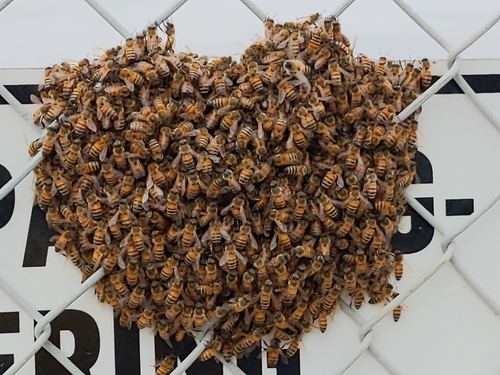
Stinging insect
Can sting
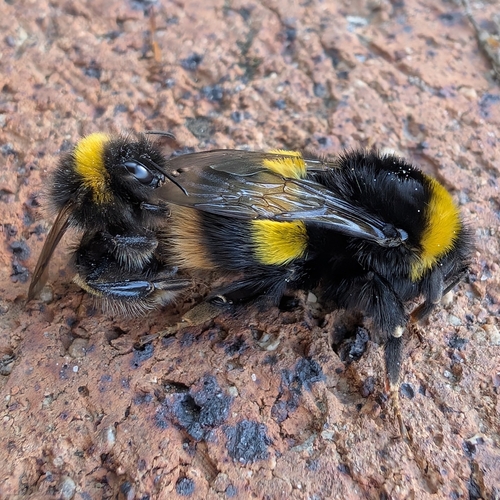
Can sting
Can sting
This guide was written with AI assistance and fact-checked, last updated 2026-10-10. Identification from photos is never certain: don't handle insects you can't identify, and get medical advice for bites, stings or allergic reactions. More about the common carder bee: iNaturalist, Wikipedia.