
Black and yellow mud dauber
Sceliphron caementarium · Thread-waisted wasps
A solitary, mud-nesting wasp that provisions its tubular mud cells with paralyzed spiders for its larvae.
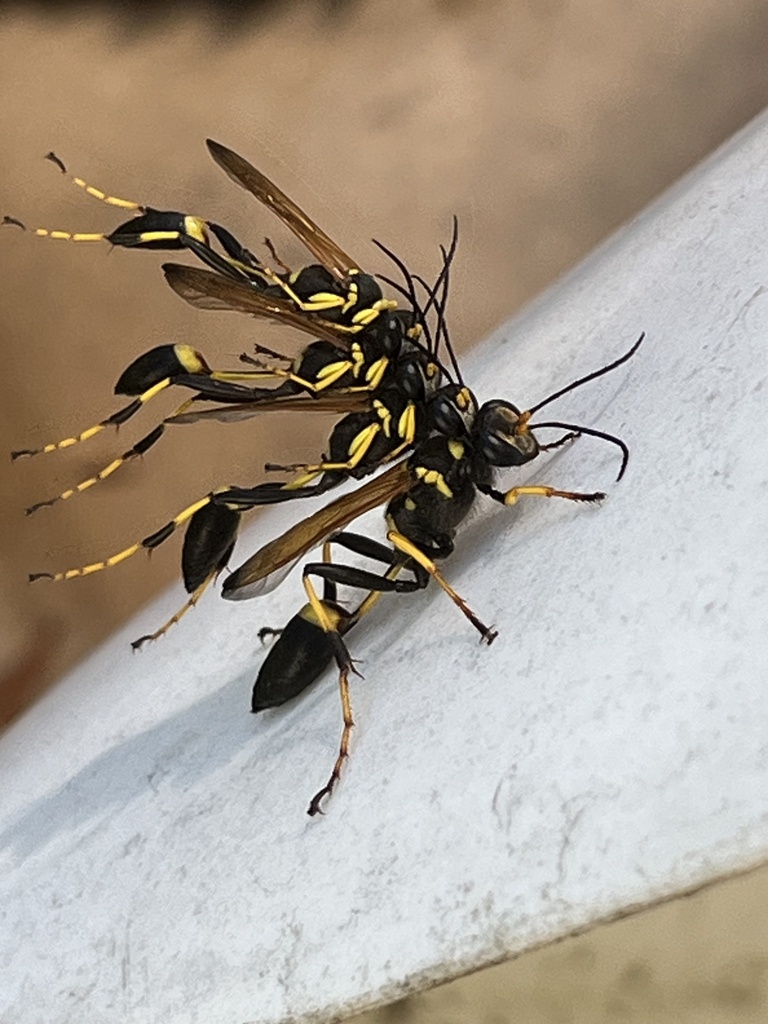
!Is the black and yellow mud dauber dangerous?
Only mildly. Females can sting but are not aggressive; stings are typically mild and brief. If stung: clean the area, apply a cold compress and take an antihistamine if needed. If signs of a severe allergic reaction (anaphylaxis) appear, such as trouble breathing, swelling of the face or throat, widespread hives, dizziness or fainting, use a prescribed epinephrine auto-injector if available and call emergency services immediately.
Pets
Stings can be painful to pets if they corner or attack a wasp; small animals could receive multiple stings. Observe pets for swelling, breathing difficulty or signs of anaphylaxis and seek veterinary care if worried.
📖Overview
Sceliphron caementarium is a solitary wasp that builds cylindrical mud nests on sheltered vertical surfaces such as walls, eaves, bridges and inside sheds. Females collect mud to make a chain of cells, provision each cell with several paralyzed spiders, lay a single egg and seal the cell. Adults feed on nectar and are most active in warm months. They are not social like yellowjackets and are rarely aggressive toward people unless handled or trapped.
🔍How to identify a black and yellow mud dauber
Adults have a slender "thread-waisted" profile typical of their group, with a long, thin yellow petiole between thorax and abdomen. The body is mainly black with yellow markings on the thorax and abdomen, and the legs are largely yellow. Wings are smoky or translucent. Females are generally similar to males but often slightly larger.
- Slender, thread-waisted body with a narrow petiole between thorax and abdomen
- Black body with yellow markings, a long yellow thread-like waist and largely yellow legs
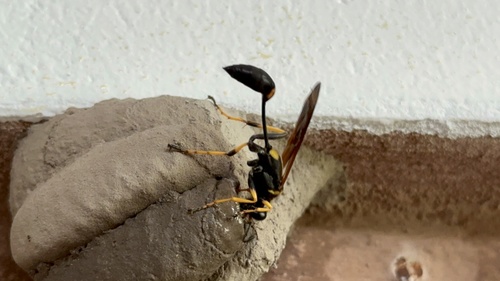
- Mud tubular nests made of smooth, cylindrical cells attached to sheltered vertical surfaces
- Solitary behaviour—no paper-comb nests or large colonies like social wasps
Lookalikes
Black mud dauber Chalybion californicum
Chalybion californicum is metallic blue-black rather than black-and-yellow and often uses reused mud cells; Sceliphron is more distinctly banded yellow and black.
Yellow jacket (social wasp) Vespula spp.
Yellowjackets are social, build paper nests, and are more aggressive; their body shape is more robust compared with the slender thread-waisted Sceliphron.
↻Life cycle
Egg
Female lays one egg inside each mud cell after provisioning it with paralyzed spiders.
Larva
Larva feeds on the supplied spiders, grows inside the sealed mud cell and completes development over days to weeks depending on temperature.
Pupa
Larva pupates within the cell and transforms into the adult wasp.
Adult
Adults emerge from mud cells, feed on nectar, mate and the female builds new mud cells to continue the cycle.
🍃Diet and predators
Young eat
Paralyzed spiders provided by the female (spider prey)
Adults eat
Flower nectar and sometimes plant sap or honeydew
Predators of the young
Parasitic insects (some ichneumonid and chalcidoid wasps) and opportunistic predators that break open mud cells
Predators of adults
Birds, robber flies, spiders and predatory insects
🌱Effect on plants and gardens
Adults visit flowers for nectar and act as incidental pollinators; larvae eat spiders so the wasp does not directly harm plants. Overall beneficial by reducing spider numbers.
📍Where and when to find it
Look for adults visiting flowers and mud near puddles; nests are visible on eaves, inside garages, sheds, under bridges and on rock overhangs. Larvae and pupae are inside sealed mud cells.
Best time
Warm months (spring through early fall) and during daylight hours, especially mid-morning to late afternoon when adults forage.
Observation tips
Photograph nests from a distance to avoid disturbing wasps. Early morning or late evening are best times to approach nests because adults are less active then.
✨Fun facts
- Each mud cell typically contains several paralyzed spiders to feed a single Sceliphron larva.
- Mud daubers are solitary—there is no worker caste or colony like in hornets or yellowjackets.
- Females carry pellets of wet mud to build rows of cells, which are often plastered over into a single lumpy mud mass.
?Frequently asked questions
Are black and yellow mud daubers dangerous?
Only mildly. They are not aggressive and rarely sting unless handled or trapped; stings are usually mild, but anyone allergic to wasp venom should be cautious.
Do mud daubers sting people?
Yes, females can sting, but they seldom do. Most people are not stung unless they try to pick up or crush a wasp.
Why is there a mud nest on my house?
Females build mud nests on sheltered vertical surfaces to protect their offspring; eaves, window frames, garages and porches are common sites because they provide shelter and easy access to mud and nearby spider prey.
How do I get rid of mud daubers?
Remove nests in cool hours when wasps are inactive, wear protective gloves and eye protection, scrape away nests, then seal entry points and gaps to prevent re-nesting. Consider professional help if anyone in the household is allergic.
Are mud daubers beneficial?
Yes—by capturing spiders they help control local spider populations and adults pollinate flowers while feeding on nectar.
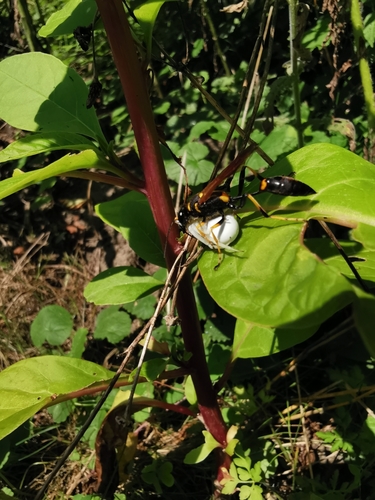
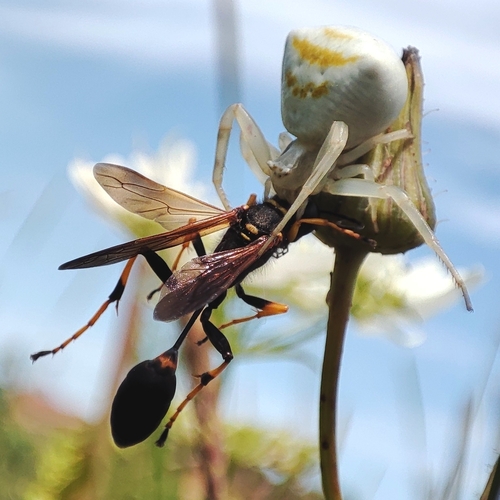
📷Photos of the black and yellow mud dauber
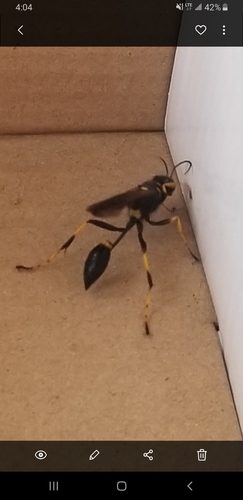
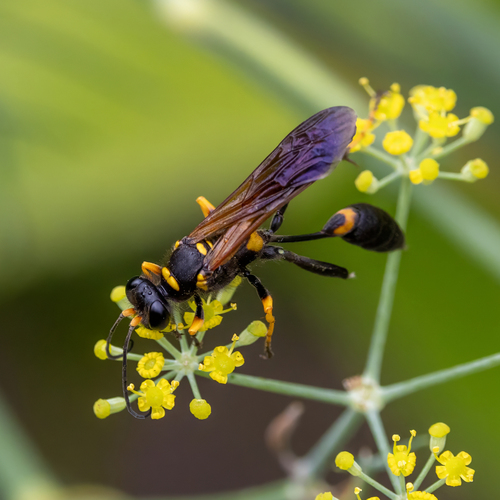
More bees, wasps & ants
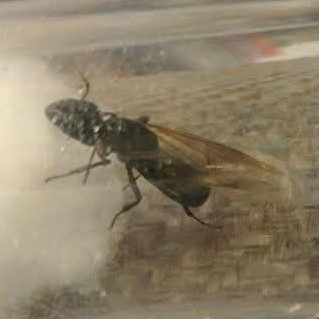
Bites and formic acid
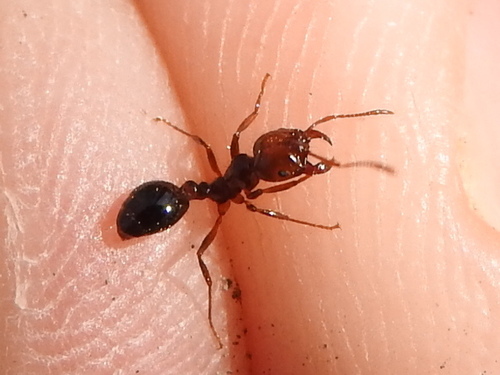
Painful sting
Stinging insect
Can sting
Can sting
Can sting
This guide was written with AI assistance and fact-checked, last updated 2026-10-10. Identification from photos is never certain: don't handle insects you can't identify, and get medical advice for bites, stings or allergic reactions. More about the black and yellow mud dauber: iNaturalist, Wikipedia.