
Tree bumblebee
Bombus hypnorum · Bumblebees
A compact, fast-flying bumblebee with a ginger thorax, black abdomen and white tail; nests above ground in cavities and is common in towns and gardens.
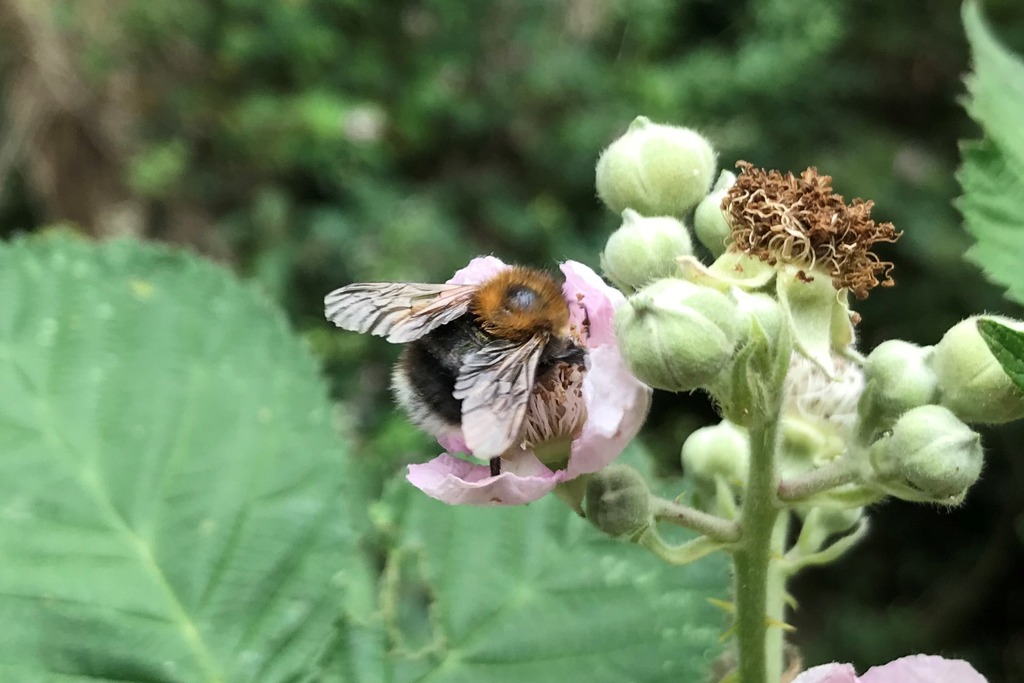
!Is the tree bumblebee dangerous?
Only mildly. Tree bumblebees are not aggressive but females (queens and workers) can sting if handled, trapped against skin or if a nest is disturbed. Stings are painful locally and may cause swelling; bumblebees do not leave a stinger behind. Wash the area and apply a cold pack. Do not attempt to handle or squash nest inhabitants; move away calmly. Anyone with a known bee allergy should carry prescribed epinephrine; breathing difficulty, dizziness or swelling of the face or throat after a sting needs epinephrine and emergency services immediately.
Pets
Stings can be painful for pets; most pets will only receive a single sting and recover. Watch for allergic signs (swelling, difficulty breathing) and consult a veterinarian if symptoms are severe.
📖Overview
Bombus hypnorum is a bumblebee species native to much of northern and central Europe and parts of Asia, and has recently expanded its range northward and into new regions (notably establishing in the UK in the early 2000s). It is a social bee that forms annual colonies led by a single queen. Colonies tend to be smaller than those of some other bumblebees but can produce many workers and reproductive males and queens by late summer.
This species is well adapted to human-dominated landscapes and is often found in gardens, parks and hedgerows. Unlike many bumblebees that nest underground, B. hypnorum commonly uses above-ground cavities such as bird boxes, bat boxes, roof voids, tree holes and wall cavities. It forages broadly on nectar and pollen and is an effective pollinator of many garden and wild plants.
🔍How to identify a tree bumblebee
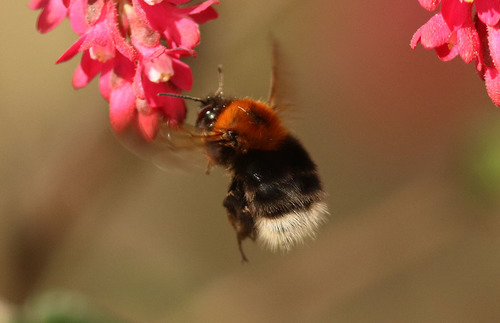
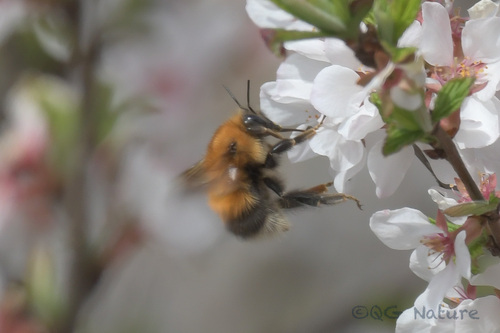
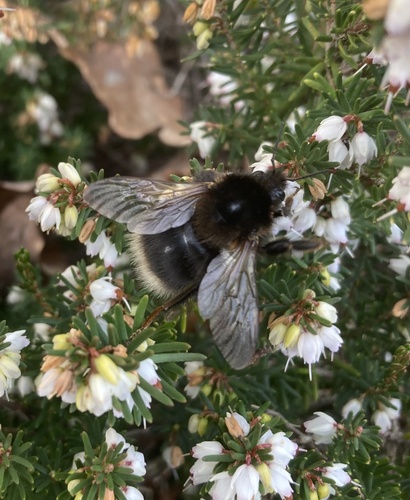
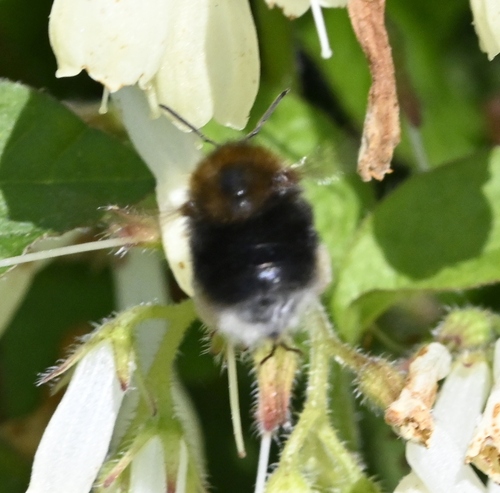
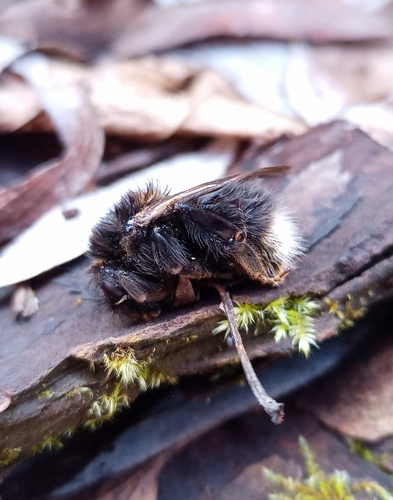
Adult tree bumblebees are compact and noticeably furry. The thorax (dorsal part behind the head) is usually bright ginger-orange, the abdomen is mostly black, and the tail segment is white. Faces and head are typically darker and may appear black or dark brown. Queens are larger and more robust than workers; males commonly show paler hairs on the face or legs. Size and exact colouring can vary slightly with season and geography.
- Ginger-orange thorax contrasted with a mostly black abdomen and a conspicuous white tail.
- Compact, stocky bumblebee shape with dense fuzz; face and head darker than thorax.
- Nests above ground in cavities (bird boxes, roof voids, tree holes) more often than underground species.
Lookalikes
Buff-tailed bumblebee Bombus terrestris
B. terrestris has a paler, buff or yellowish tail and more yellow on the abdomen; B. hypnorum has a distinct white tail and bright ginger thorax.
Common carder bee Bombus pascuorum
B. pascuorum is slimmer and generally entirely brown/orange-haired without the sharp black abdomen and white tail contrast of B. hypnorum.
↻Life cycle
Egg
Laid by the queen inside the nest; eggs hatch after a few days to a couple of weeks depending on temperature.
Larva
Grub-like, wingless larvae are fed by workers on pollen and nectar and grow rapidly over several instars.
Pupa
Larvae spin cocoons and transform into pupae; development to adult takes days to weeks.
Adult
Adults include workers, males and new queens; workers maintain the nest and forage, males mate with new queens, and fertilized queens overwinter to found new colonies.
🍃Diet and predators
Young eat
Fed on pollen and nectar brought to the nest by workers.
Adults eat
Feed on nectar (energy) and collect pollen (protein) to provision brood; visits many flowering plants.
Predators of the young
Nest predators such as rodents and some birds if they can access nests; parasitic flies or insects can also attack brood.
Predators of adults
Birds, spiders, praying mantises, dragonflies and predatory insects; humans can destroy nests inadvertently.
🌱Effect on plants and gardens
Forages widely on garden and wild flowers for nectar and pollen and is an effective pollinator for many crops, fruit bushes, ornamentals and wild plants.
📍Where and when to find it
Look for foraging adults on garden flowers, fruit blossom and hedgerow blooms. Check bird boxes, tree cavities, roof voids and wall cavities for nests (queens and workers present in spring and summer).
Best time
April to October in temperate regions; mid-morning to late afternoon on sunny days when flowers are open.
Observation tips
Photograph from a distance; use a long lens or zoom. If inspecting a suspected nest, do so quietly and from a safe distance and avoid blocking the entrance. Local naturalist groups can help confirm sightings.
✨Fun facts
- Bombus hypnorum is strongly associated with urban and suburban habitats and often nests in bird boxes and building cavities.
- It was first recorded as established in the United Kingdom in 2001 and spread rapidly across the country.
- Unlike many bumblebees that nest underground, this species prefers above-ground cavities, which helps explain its success in towns.
?Frequently asked questions
Are tree bumblebees aggressive?
No — they are not aggressive. Workers may sting if handled, trapped or if their nest is disturbed, but they do not seek to sting people.
Do tree bumblebees sting?
Yes, females (workers and queens) can sting. Stings are similar to other bumblebees and can be painful or cause allergic reactions in sensitive individuals.
Why is a tree bumblebee in my house?
They are attracted to cavities and may nest in roof spaces, attics, chimneys or bird boxes. A single foraging bee may also accidentally enter through open windows.
How do I get rid of a tree bumblebee nest?
Avoid killing bees if possible — they are valuable pollinators. If a nest poses a danger or is inside a building, contact a local pest control service or wildlife rescue for safe removal, ideally outside of peak activity (evenings) and with professionals who can relocate or remove the nest safely.
Where does the tree bumblebee live?
It lives across temperate parts of Europe and Asia and has colonized new areas like the British Isles; it favours gardens, parks, woodland edges and urban environments where above-ground cavities are available.
📷Photos of the tree bumblebee
More bees, wasps & ants
Bites and formic acid
Painful sting
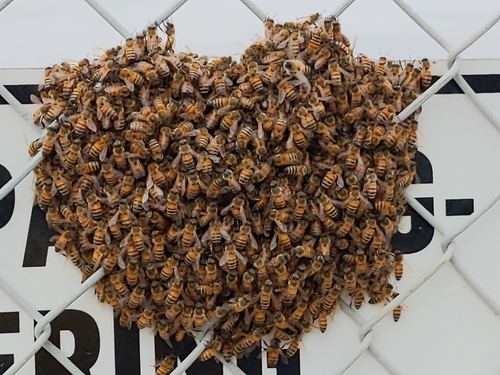
Stinging insect
Can sting
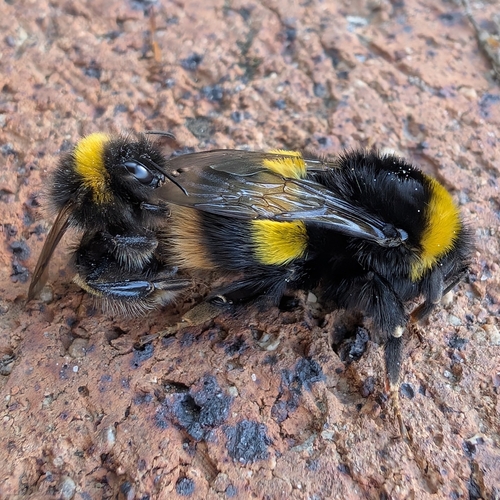
Can sting
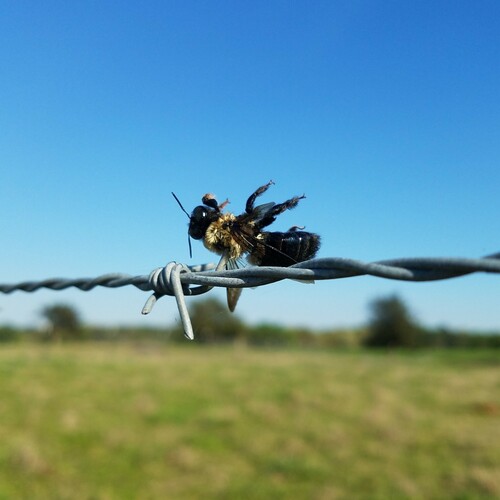
Can sting
This guide was written with AI assistance and fact-checked, last updated 2026-10-10. Identification from photos is never certain: don't handle insects you can't identify, and get medical advice for bites, stings or allergic reactions. More about the tree bumblebee: iNaturalist, Wikipedia.