
European wool carder bee
Anthidium manicatum · Leafcutter and mason bees
A stout, black-and-yellow solitary bee known for males' territorial behavior and females' habit of collecting plant hairs to line nests.
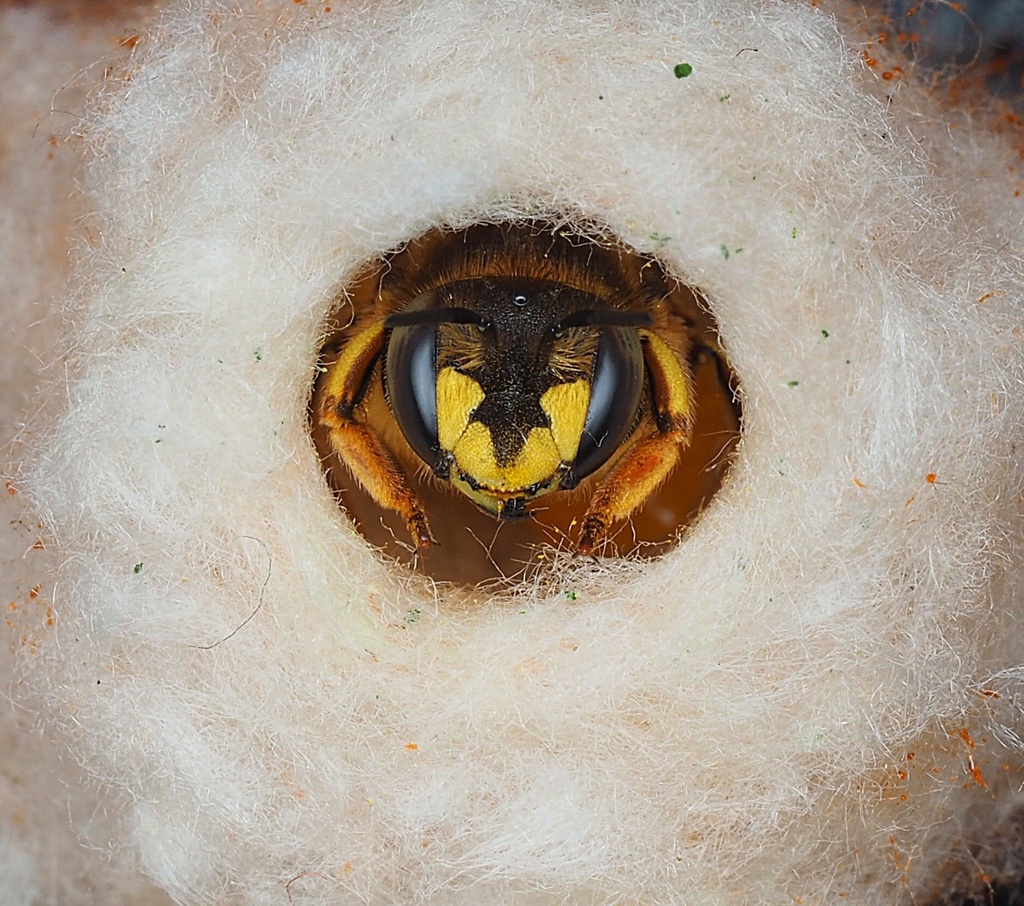
!Is the European wool carder bee dangerous?
Only mildly. Females can sting, but they are not aggressive unless handled or trapped; stings are similar to other solitary bees and usually cause brief localized pain and swelling. Males have no sting; they aggressively chase other insects from flower patches but rarely bother people, and at most may give a harmless nip if handled. Basic first aid: wash the area and apply a cold pack for swelling. If there are signs of a severe allergic reaction (widespread hives, swelling of the face or throat, difficulty breathing), use an epinephrine auto-injector if available and call emergency services.
Pets
Not specifically dangerous to pets. A pet that grabs or paws at a female could be stung, usually causing only local swelling; consult a veterinarian if swelling is severe or the pet has trouble breathing.
📖Overview
Anthidium manicatum is a solitary megachilid bee native to Europe that nests in pre-existing cavities and lines brood cells with plant hairs (the "wool"). Females gather hairs from fuzzy plants to form nest linings and provision brood cells with pollen and nectar. Males are unusually territorial for solitary bees, often defending patches of flowers aggressively against other insects and even larger animals.
Although native to Europe, A. manicatum has been introduced and become established in parts of North America and other regions. It is commonly seen in gardens, parks and flower-rich habitats where females nest in cavities in stems, holes in masonry or pre-made bee hotels.
🔍How to identify an European wool carder bee
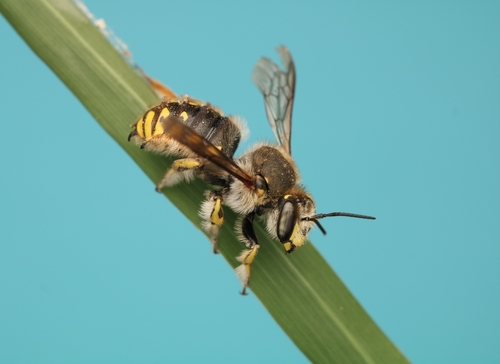
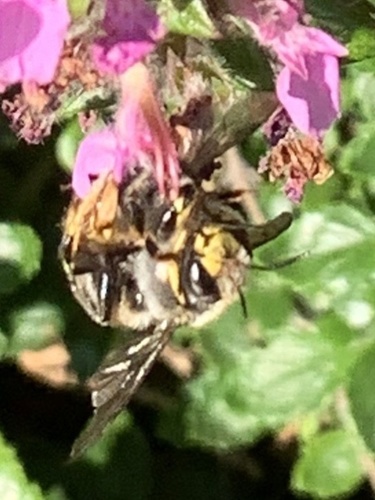
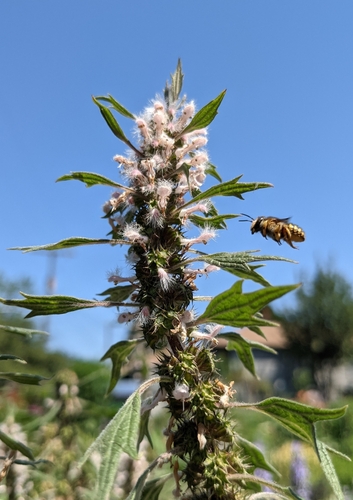
Adults are stout, robust bees with a glossy black body and bold yellow markings. Females are typically 8-14 mm long; males slightly larger, often 10-16 mm. The abdomen is broad with yellow bands or spots on the sides and terminal abdominal tergites sometimes showing yellow markings. Males have enlarged, flattened abdomens and may show more extensive yellow patterning; they also have spines or projecting hairs on the final abdominal segments used in combat and to chase intruders. Females have scopae (pollen-carrying hairs) on the underside of the abdomen rather than on the legs.
- Stout black bee with bold yellow markings on abdomen and face
- Females carry pollen on abdominal scopa (underside of abdomen), not on hind legs
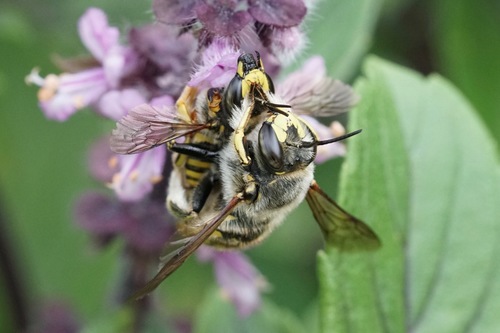
- Males larger and more conspicuously yellow-marked, often seen patrolling and aggressively chasing other insects around flower patches
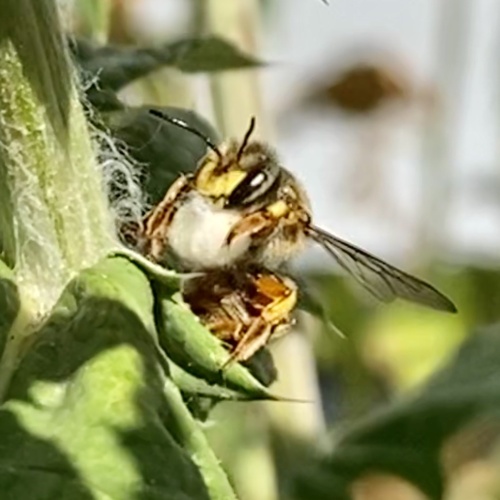
- Females collect and pull plant hairs from fuzzy plants; look for damaged fluffy leaves (e.g., lamb's ear) nearby
Lookalikes
Wool carder bee (other Anthidium species) Anthidium spp.
Other Anthidium species have similar habits and markings; identification to species often requires close examination of yellow pattern details and male genitalia by an expert.
Leafcutter bee Megachile spp.
Megachile are also stout but carry pollen on abdominal scopa like Anthidium; leafcutters cut leaf discs for nests rather than collecting plant hairs, and often have different banding patterns.
Florentine wool carder bee Anthidium florentinum
Closely similar in appearance and behavior; A. florentinum and A. manicatum can be separated by subtle differences in size and yellow marking shapes and require specialist identification.
↻Life cycle
Egg
Female lays a single egg in each brood cell inside a pre-existing cavity lined with plant hairs and filled with a pollen-nectar provision.
Larva
Larvae develop feeding on the pollen-nectar provision provided by the female, growing through a series of instars inside the sealed cell.
Pupa
After consuming provisions, the larva pupates within the cell and metamorphoses into the adult form.
Adult
Adults emerge in the active season; females build and provision nests while males establish and defend floral territories to mate with visiting females.
🍃Diet and predators
Young eat
Pollen and nectar provisions supplied by the mother
Adults eat
Nectar for energy; females also collect pollen to make larval provisions and plant hairs for nest lining
Predators of the young
Parasitic wasps and cleptoparasitic bees that invade nests, ants and predators that reach into cavities
Predators of adults
Birds, spiders, robber flies and larger predatory insects; males' territorial behavior can reduce some risks but increases interactions with other animals
🌱Effect on plants and gardens
Adults visit a wide range of flowering plants for nectar and pollen and are effective pollinators of many garden flowers. Females collect plant hairs from fuzzy-leaved plants (e.g., lamb's ear, Stachys byzantina) to line nest cells; this can cause damage to ornamental plant surfaces but is usually minor.
📍Where and when to find it
Visit flower-rich gardens, meadows and hedgerows. Adults frequent open, sunny flowers; females may be seen investigating cavities and collecting hairs from fuzzy-leaved plants.
Best time
Spring through late summer, during warm, sunny daylight hours when flowers are in bloom.
Observation tips
Photograph both dorsal and lateral views to capture yellow patterning; watch flower patches quietly to observe territorial male behaviour and females collecting hairs from plants like lamb's ear.
✨Fun facts
- Male European wool carder bees are unusually territorial for solitary bees and will chase and grapple with much larger insects.
- Females gather plant hairs ('card' or comb them) from fuzzy plants to line their nest cells — this behaviour gives the species its common name.
- Introduced populations in North America established after accidental transport and now commonly occur in urban and garden habitats.
?Frequently asked questions
Do European wool carder bees sting?
Females can sting (pain similar to other solitary bees) but rarely do unless handled or threatened; males cannot sting.
Are they dangerous to people or pets?
Only mildly. They are not aggressive toward people; males are territorial toward other insects but have no sting, and stings from females are localized and rarely serious unless you have an allergy.
Why is this bee in my garden?
They are attracted to flower patches for nectar and pollen and to fuzzy plants that supply nesting material. Gardens with lamb's ear, mulleins or similar plants are particularly attractive.
How can I stop them nesting in bee hotels or cavities?
Remove or relocate obvious nesting materials, seal unwanted cavities and avoid leaving open reed or cane bundles. Provide properly designed bee houses with the correct diameter holes and maintenance, or simply accept them as beneficial pollinators.
Is the species native where I found it?
It is native to Europe. In North America and some other regions it is an introduced species now established in many urban and suburban areas.
📷Photos of the European wool carder bee
More bees, wasps & ants
Bites and formic acid
Painful sting
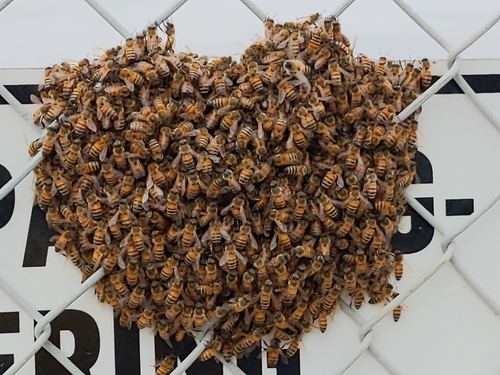
Stinging insect
Can sting
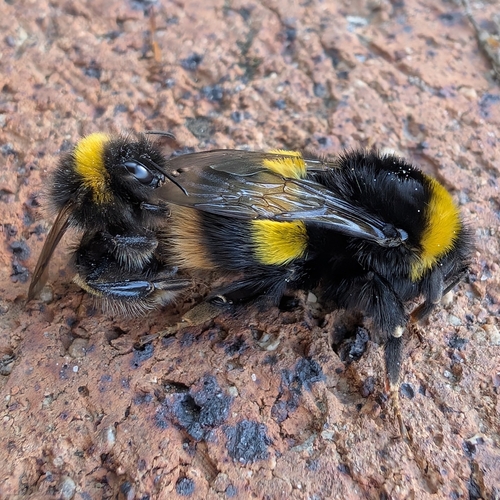
Can sting
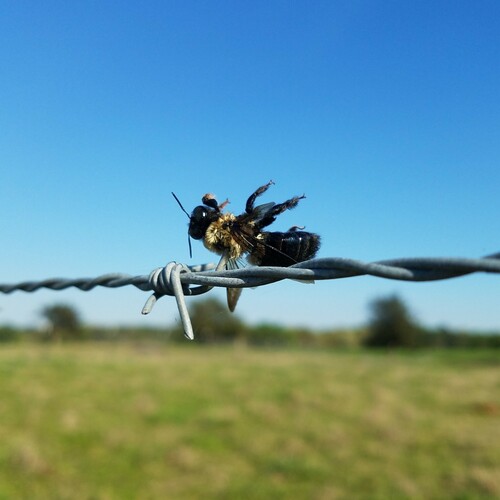
Can sting
This guide was written with AI assistance and fact-checked, last updated 2026-10-10. Identification from photos is never certain: don't handle insects you can't identify, and get medical advice for bites, stings or allergic reactions. More about the European wool carder bee: iNaturalist, Wikipedia.