
Violet carpenter bee
Xylocopa violacea · Carpenter bees
A large, solitary carpenter bee with a glossy black body and vivid violet sheen that nests by boring tunnels in dead wood and stems.
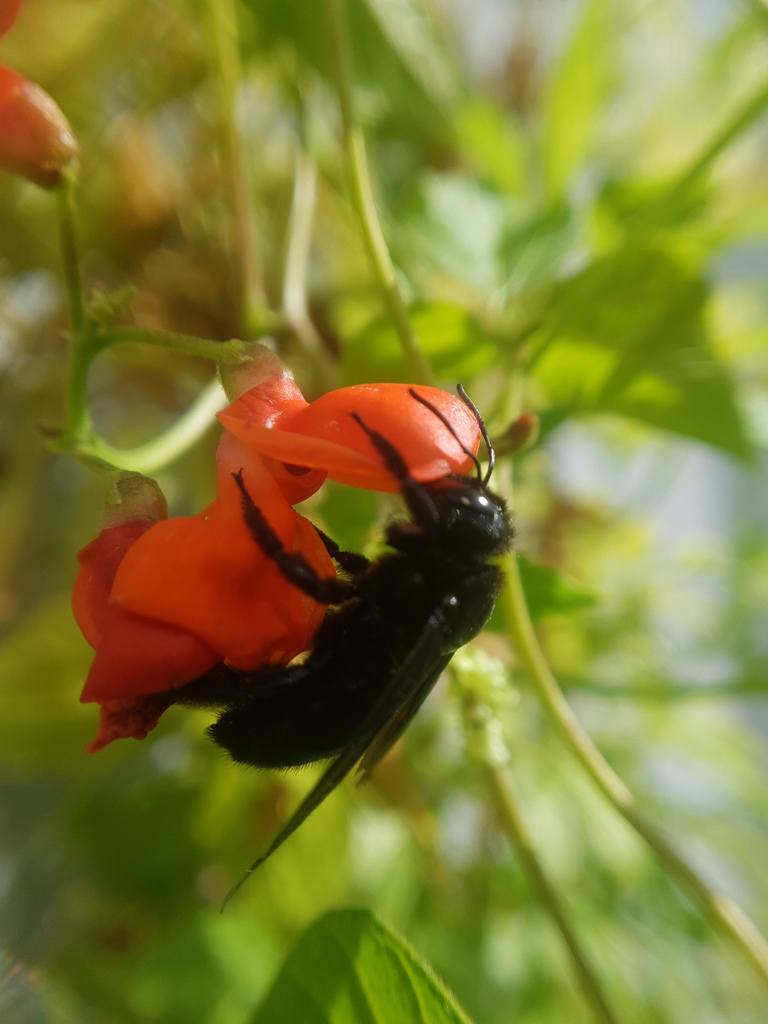
!Is the violet carpenter bee dangerous?
Only mildly. Females have a stinger and can deliver a painful sting if handled, grabbed or trapped against the skin. Males cannot sting but may act aggressively by hovering or making short attacks. Carpenter bees do not leave a stinger behind. First aid for a sting: clean the area with soap and water, apply a cold pack for swelling and take an antihistamine for itching. Anyone with a known bee allergy should carry prescribed epinephrine; signs of anaphylaxis (difficulty breathing, swelling of face or throat, rapid pulse) need epinephrine and emergency services immediately.
Pets
Unlikely to be a major threat to pets; a pet that bites or handles a bee could receive a painful sting and localized swelling. Watch for allergic reactions in pets and consult a veterinarian if symptoms are severe.
📖Overview
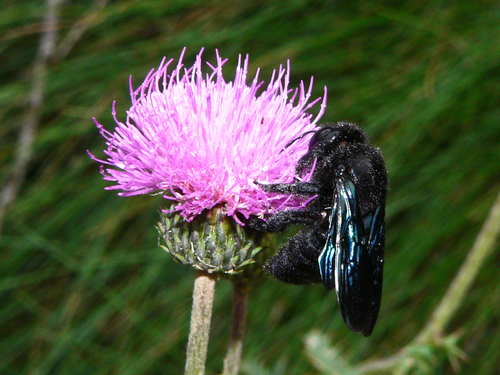
Xylocopa violacea is a large solitary bee in the carpenter bee group known for excavating tunnels in dead wood, bamboo and plant stems to make brood galleries. Adults forage for nectar and pollen and are important pollinators of many wildflowers and garden plants. They are generally not aggressive; females can sting but only rarely do so if handled or trapped. Males are stingless but may behave territorially.
This species has a mainly temperate distribution across southern and central Europe, parts of North Africa and Asia, and has been expanding its range northwards in recent decades. It is most often seen in late spring and summer visiting flowers and inspecting potential nesting sites made of soft, dry wood or pithy plant stems.
🔍How to identify a violet carpenter bee
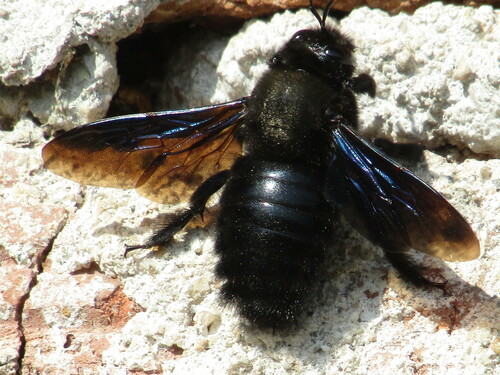
Adults are large and robust (about 20-28 mm long) with a largely black, shiny exoskeleton that shows a metallic violet or purple iridescence in good light. The body has coarse punctures and relatively sparse hair compared with bumblebees; hairs on the thorax and legs are usually black to dark brown. Males can be recognised by orange-red rings near the tips of their antennae. Wings are dark smoky with a faint purple shimmer.
- Large robust bee 20-28 mm long with a glossy black body showing a strong violet or purple metallic sheen in good light.
- Sparse, coarse hairs compared with bumblebees; not densely furry.
- Excavation holes about 8-12 mm or larger in diameter in dead wood or hollow stems, often with smooth circular entrances.
Lookalikes
Black carpenter bee Xylocopa valga
Xylocopa valga looks almost identical; males lack the orange-red antennal rings of X. violacea males, and females need close examination to separate.
Bumblebee Bombus spp.
Bumblebees are generally hairy with banded patterns and lack the smooth, glossy, purple-tinged exoskeleton of Xylocopa violacea.
↻Life cycle
Egg
Females lay a single egg in each brood cell within the wood tunnel; cells are provisioned with a mixture of pollen and nectar.
Larva (grub)
Larvae feed on the stored pollen-nectar provision and grow inside the sealed brood cell for several weeks.
Pupa
After the larval stage, the insect pupates within the cell and metamorphoses into the adult form.
Adult
Adults emerge and are active in warm months. Females excavate tunnels and provision cells; males defend territories and seek mates.
🍃Diet and predators
Young eat
Consume the pollen and nectar provisions left by the female in their brood cell.
Adults eat
Nectar for energy and pollen for protein; they visit a wide variety of flowering plants.
Predators of the young
Wood-boring predators and parasitoids, such as certain wasps and flies, and sometimes ants when nests are exposed.
Predators of adults
Birds, small mammals and predatory insects; humans may destroy nests if they are in structures.
🌱Effect on plants and gardens
Adults visit a wide range of flowering plants for nectar and pollen and are effective pollinators of many garden and wild species. They do not eat wood; larvae develop on provisions of pollen and nectar stored in nest cells.
📍Where and when to find it
Look for adults on open, nectar-rich flowers and around dead wood, fence posts, logs, old orchard wood and hollow stems. Nest entrances are visible as circular holes in dry wood.
Best time
Best observed April to August on warm, sunny days during daylight hours; overwintered adults can appear as early as February or March.
Observation tips
Photograph from a distance to avoid disturbing them. To find nests, inspect dead wood and old posts for smooth round holes about 8-12 mm across; observe quietly as females may be entering and leaving.
✨Fun facts
- Violet carpenter bees do not eat wood; they excavate tunnels only to make nest galleries for their young.
- The metallic violet sheen is most visible when the bee is viewed in bright sunlight or at certain angles.
- Males sometimes perch and defend a small territory, chasing other insects away from favorite flowers.
?Frequently asked questions
Do violet carpenter bees sting?
Only females can sting; their sting can be painful but they are not aggressive and will usually only sting if handled or trapped.
Are violet carpenter bees dangerous?
Only mildly. They are solitary, non-aggressive and important pollinators, but a female may sting if handled or trapped, and people with bee allergies can react more seriously.
Why is a carpenter bee boring holes in my wood?
Females excavate tunnels in dry, soft wood or pithy stems to create brood cells for their young. They are not eating the wood but creating nesting space.
How can I stop carpenter bees from nesting in my house?
Preventive steps work best: replace damaged or soft wood, paint or varnish exposed wood, seal cracks and holes, and use hardwood or treated timber. If nests exist, consider professional removal in late autumn or winter when nests are empty.
Are violet carpenter bees endangered?
Xylocopa violacea is not known to be globally threatened and has been expanding its range northwards in Europe. Local status can vary; habitat loss can reduce nesting opportunities.
📷Photos of the violet carpenter bee
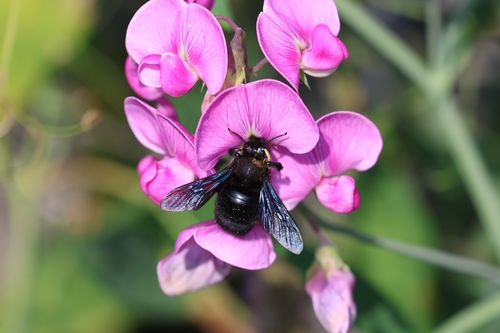
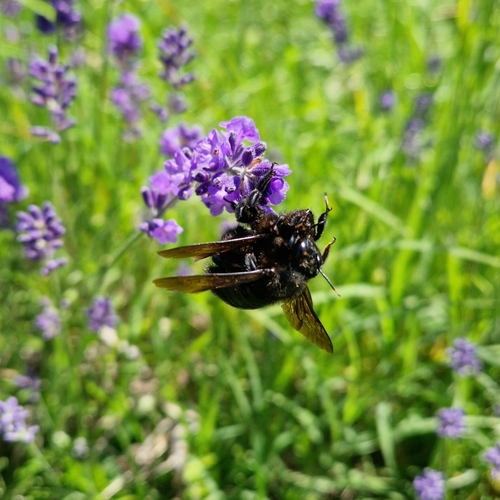
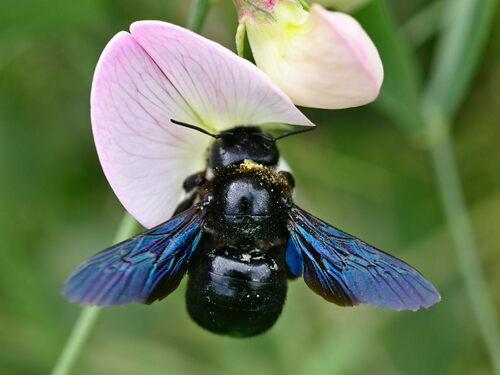
More bees, wasps & ants
Bites and formic acid
Painful sting
Stinging insect
Can sting
Can sting
Can sting
This guide was written with AI assistance and fact-checked, last updated 2026-10-10. Identification from photos is never certain: don't handle insects you can't identify, and get medical advice for bites, stings or allergic reactions. More about the violet carpenter bee: iNaturalist, Wikipedia.