
Western yellowjacket
Vespula pensylvanica · Yellowjackets
A common black-and-yellow social wasp of western North America; aggressive around food and capable of painful, multiple stings.
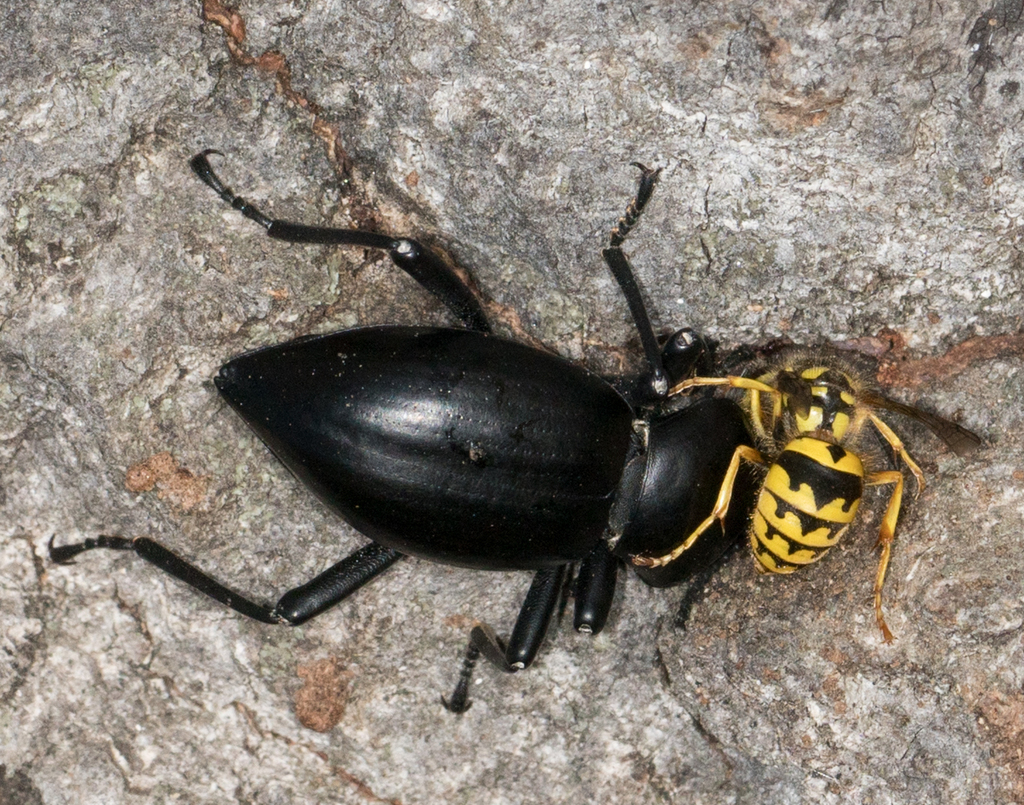
!Is the western yellowjacket dangerous?
Yes, it can be. Western yellowjackets can deliver painful stings and workers can sting multiple times. Stings are dangerous for people allergic to wasp venom and can cause severe reactions including anaphylaxis. First aid: remove the stinger if present (wasps usually do not leave it), clean the site with soap and water, apply cold compresses to reduce swelling, If breathing difficulties, widespread hives, dizziness, or swelling of the face/throat occur, use an epinephrine auto-injector if one has been prescribed and call emergency services immediately.
Pets
Stings can be painful to pets and may cause swelling or allergic reactions. Small animals can be more seriously affected; seek veterinary care if a pet shows difficulty breathing, collapse, or extensive swelling.
📖Overview
Vespula pensylvanica is a social wasp native to western North America, commonly found around human activity where it scavenges sweet foods and protein. Colonies are annual in much of their native range but can become perennial and invasive in places like Hawaii. Workers are aggressive defenders of nests and are often seen at picnics, garbage bins and orchards.
Colonies are founded in spring by a single queen (in temperate areas) and grow through summer into large nests containing hundreds to a few thousand workers. In tropical or disturbed environments, nests can persist year-round and produce multiple queens, which has contributed to its invasive success on some islands.
🔍How to identify a western yellowjacket
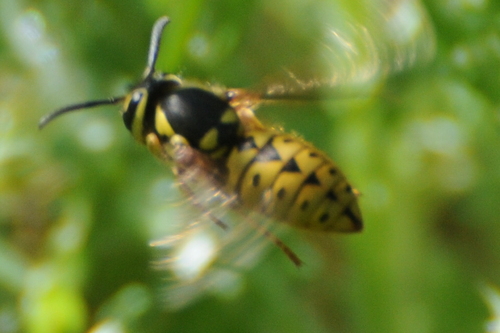
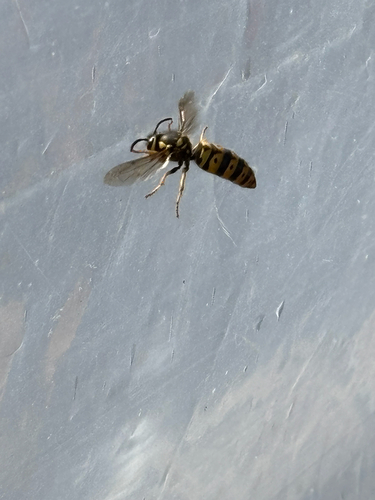
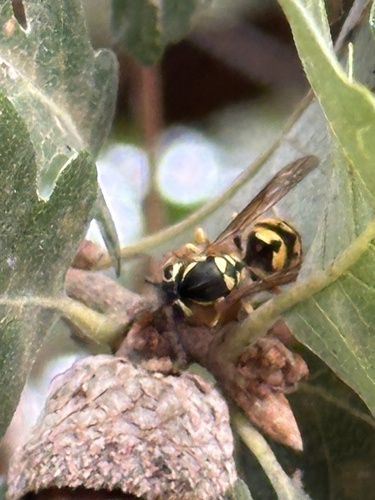
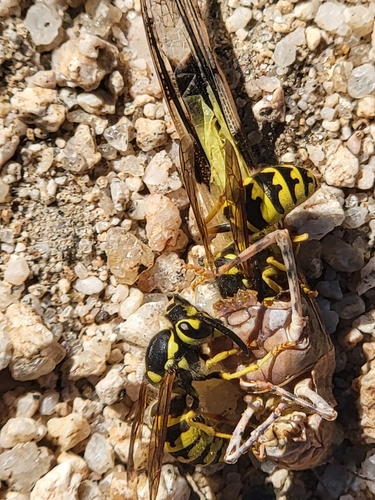
Adults are compact, robust wasps with a characteristic bold pattern of yellow and black on the head and abdomen. The face and pronotum have yellow markings; the abdomen shows alternating black and yellow transverse bands and usually a terminal black band. Legs and antennae are dark. Queens are larger and more robust than workers; males (drones) have slightly different abdominal markings and longer antennae.
- Robust wasp 10-16 mm with bold alternating black and yellow bands on the abdomen
- Face and thorax marked with yellow and black, with a complete yellow ring around each eye; stout, compact body compared with long-bodied paper wasps
- Nests usually underground in rodent burrows, sometimes in wall voids or other cavities; enclosed papery nest rarely exposed
- Behavior: flies rapidly and gleans food from surfaces; frequently seen at human food and trash
Lookalikes
Common yellowjacket Vespula vulgaris
Very similar in pattern; Vespula vulgaris has subtle differences in facial and abdominal markings that require close inspection or expert identification. Geographic range overlap varies.
Eastern yellowjacket Vespula maculifrons
Also similar; differences are in the exact band shapes and facial markings and typically require expert comparison or location-based inference (east versus west).
Paper wasp Polistes spp.
Paper wasps are longer, more slender, with a narrow 'wasp waist' and often build open, umbrella-shaped nests rather than enclosed cavity nests.
↻Life cycle
Egg
Laid by the queen in individual brood cells; eggs hatch in a few days depending on temperature.
Larva (grub)
Larvae are fed chewed insect prey and protein by workers; this stage lasts several days to a few weeks while they grow.
Pupa
Larvae spin a cocoon in the cell and pupate, transforming into adults over several days.
Adult
Workers forage for carbohydrate and protein; new queens and males are produced late season. In temperate climates new queens overwinter and start new colonies in spring.
🍃Diet and predators
Young eat
Fed by workers on chewed insect prey, spiders and other protein sources
Adults eat
Sugar sources (nectar, ripe fruit, honeydew, beverages) and protein from prey or scavenged meat
Predators of the young
Birds, small mammals, larger predatory insects and ants that can invade nests
Predators of adults
Birds (shrikes, flycatchers), mammals (skunks, bears) that raid nests, and spiders; adult mortality also from environmental factors and disease
🌱Effect on plants and gardens
Adults feed on nectar and honeydew and therefore can act as incidental pollinators, but their main ecological role is as predators and scavengers feeding on other insects and animal protein; they rarely damage plants directly.
How to get rid of western yellowjackets
Reduce attractants: cover garbage, compost and outdoor food; pick up fallen fruit; keep sugary drinks covered. Seal entry points into buildings and block wall or roof voids. Trap or baiting programs can reduce local numbers—use commercial yellowjacket traps or bait stations placed away from human activity. For nest removal near structures or when colonies are large, hire a licensed pest control professional because nests can provoke defensive swarming. In sensitive areas (beehives, crops, schools), professionals can apply targeted controls.
📍Where and when to find it
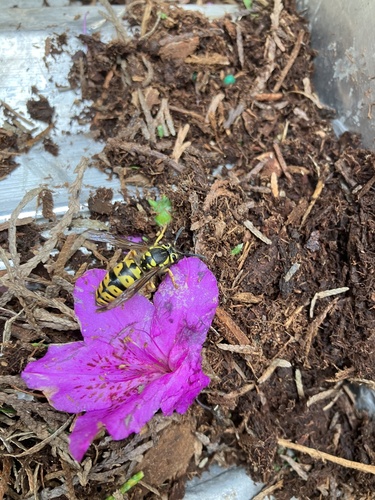
Look for foraging workers at flowers, fallen fruit, garbage, barbecues and meat scraps. Nests are commonly underground in rodent burrows, and sometimes in wall voids, attics or hollow logs.
Best time
Late spring through early autumn in temperate zones; daytime hours when warm and sunny. In warm climates activity can continue year-round.
Observation tips
Approach slowly and from a distance; photograph from a safe distance with a zoom lens. Avoid sudden movements and do not disturb nests. Wear neutral clothing (avoid bright colors and floral prints) if working near nests.
✨Fun facts
- Western yellowjackets are both predators and scavengers — they help control pest insects but also compete with pollinators and can damage fruit crops by tearing fruit.
- In Hawaii Vespula pensylvanica readily forms large, multi-queen perennial colonies and is considered an invasive pest harming native ecosystems.
- Workers can sting multiple times and recruit nestmates with alarm pheromones, which is why disturbing a nest often leads to several wasps attacking.
?Frequently asked questions
Do western yellowjackets sting?
Yes. Workers will sting to defend nests or when provoked and can sting multiple times; stings are painful and can cause serious allergic reactions in some people.
Why are yellowjackets in my house?
They enter buildings to find sheltered nesting sites (wall voids, attics), to scavenge food or to access garbage and fruit. Small openings, vents or gaps in siding and foundations are common entry points.
How do I get rid of a yellowjacket nest?
For small, exposed nests in low-risk areas, a licensed pest professional can remove or treat nests at dusk when wasps are less active. For nests inside structures or large colonies, contact pest control — DIY attempts can provoke aggressive swarms and are hazardous.
Are western yellowjackets beneficial?
They are beneficial as predators of pest insects and occasional pollinators, but their scavenging habit and aggressive defense of nests make them a nuisance and sometimes a health risk around people and pets.
Can yellowjackets infest year-round?
In temperate regions colonies are typically annual and die back in winter, but in warm or disturbed environments (notably Hawaii) colonies can persist year-round and become perennial.
📷Photos of the western yellowjacket
More bees, wasps & ants
Bites and formic acid
Painful sting
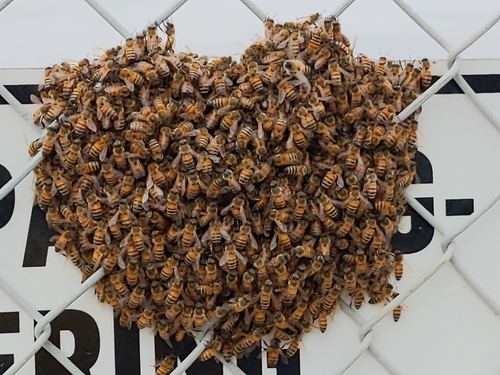
Stinging insect
Can sting
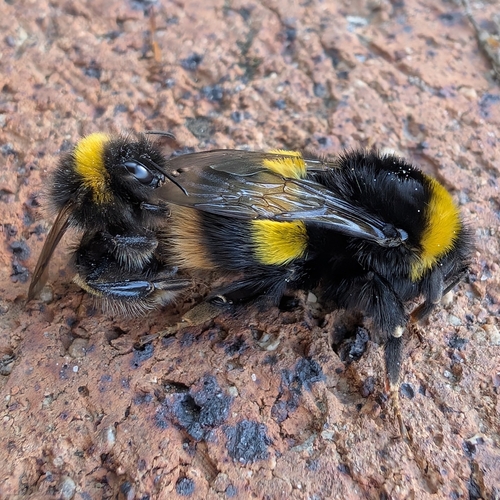
Can sting
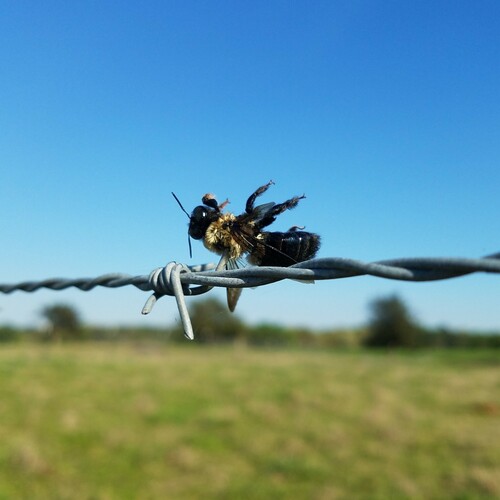
Can sting
This guide was written with AI assistance and fact-checked, last updated 2026-10-10. Identification from photos is never certain: don't handle insects you can't identify, and get medical advice for bites, stings or allergic reactions. More about the western yellowjacket: iNaturalist, Wikipedia.