
Northern paper wasp
Polistes fuscatus · Paper wasps
A slender, social paper wasp of North America known for variable facial markings and building open, umbrella-shaped paper nests.
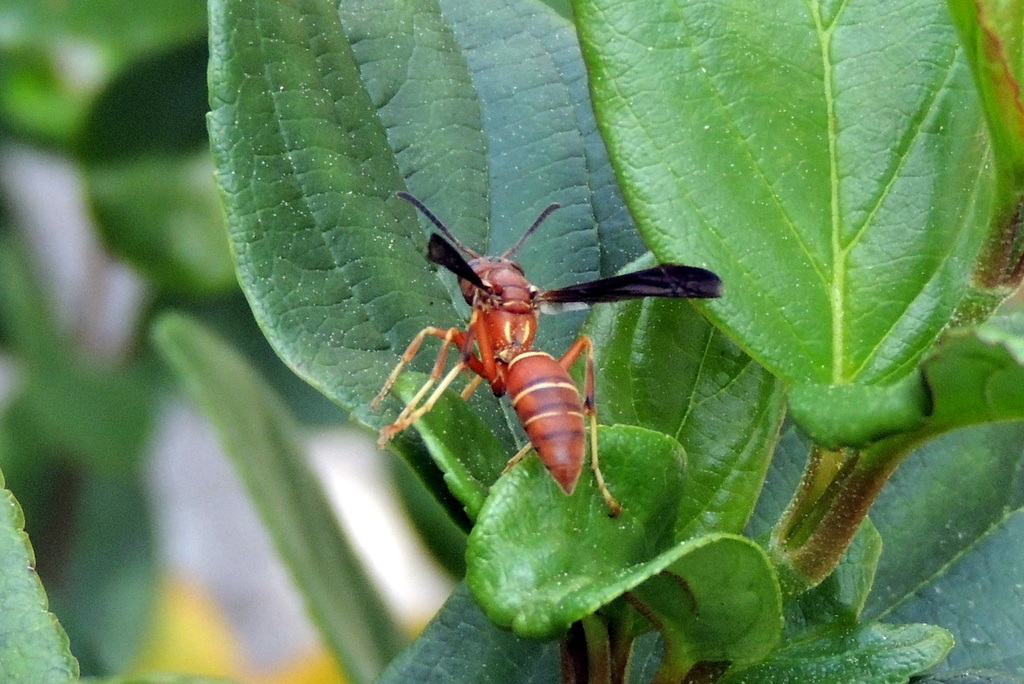
!Is the northern paper wasp dangerous?
Yes, it can be. Northern paper wasps can deliver painful stings and are defensive around their nest. They can sting multiple times. For most people a sting causes localized pain, redness, swelling and itching. Rarely, individuals allergic to wasp venom can develop severe anaphylaxis requiring immediate emergency treatment (epinephrine and medical care). First aid for a non-allergic sting: move away from the nest, wash the area with soap and water, apply a cold pack to reduce swelling, and use oral antihistamine or topical steroid for itching if needed. Seek emergency care for breathing difficulty, dizziness, widespread hives, or other signs of severe allergic reaction.
Pets
Stings can be painful for pets; multiple stings may be dangerous, especially for small animals. Monitor pets for swelling, pain, or allergic reactions and contact a veterinarian if signs worsen.
📖Overview
Polistes fuscatus is a social wasp native to much of North America. Colonies are annual in temperate areas: a mated queen founds a nest in spring, workers appear through summer, and new queens and males are produced in late summer to autumn. Nests are made from chewed plant fibers mixed with saliva, forming a paper-like comb of open cells usually hung from eaves, rafters, shrubs, or branches. P. fuscatus is less aggressive than some ground-nesting vespids but will defend its nest and can sting repeatedly.
This species is notable for individually distinctive, highly variable facial markings used in social recognition. Adults feed on nectar and other sugary liquids, while workers hunt caterpillars and other soft-bodied insects to feed larvae. In urban and suburban areas they commonly nest on buildings, porch ceilings, under eaves, and in sheltered outdoor structures.
🔍How to identify a northern paper wasp
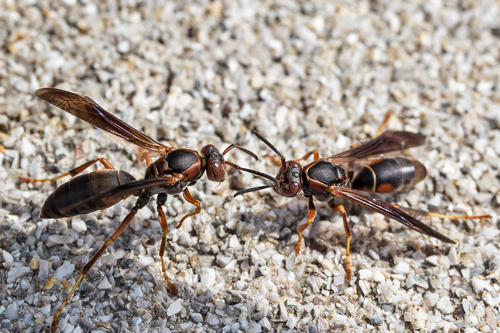
Adults are slender with a narrow 'waist' between thorax and abdomen. Body length usually about 12-20 mm. Coloration is variable across individuals and regions but typically includes brown, reddish-brown or nearly black background with yellow markings on the face and abdomen. Faces commonly show distinct pale (yellow or cream) patches or stripes; pattern differs between individuals. Wings are folded longitudinally along the back when at rest. Nests are single-layer, umbrella-shaped combs without an outer envelope unless reused or partially enclosed.
- Slender wasp with narrow 'waist' and long legs that dangle in flight.
- Variable facial markings (yellow or cream patches) that differ between individuals—useful identifier of P. fuscatus in combination with regional range.
- Open, umbrella-shaped single-comb paper nests suspended from a stalk, usually without an outer envelope.
- Body 12-20 mm, brown to dark brown with yellow or cream markings on the abdomen and face.
Lookalikes
European paper wasp Polistes dominula
P. dominula (introduced to North America) is brighter yellow and black, looking more like a yellowjacket, with orange antennae; P. fuscatus is mostly brown to dark reddish-brown with thinner yellow markings.
Metric paper wasp Polistes metricus
P. metricus tends to have darker bodies and a different pattern of yellow markings; careful comparison of abdomen banding and facial markings plus range helps distinguish it.
↻Life cycle
Adult (queen, worker, male)
Queens found nests in spring, workers build and provision the nest through summer; reproductive males and new queens are produced late summer and autumn.
Egg
Laid singly in open cells by the queen or workers; hatch in a few days depending on temperature.
Larva (grub)
Larvae are fed chewed insects (usually caterpillars and soft-bodied prey) by workers until they grow large enough to pupate.
Pupa
Larger larvae spin a silk cap and pupate inside the cell, emerging as adults after metamorphosis.
🍃Diet and predators
Young eat
Fed by workers on chewed caterpillars and other soft-bodied insects.
Adults eat
Feed on nectar, sap, and other sugary fluids; also take protein-rich prey to feed larvae.
Predators of the young
Birds, spiders, predatory insects and parasitic wasps or flies may attack larvae and pupae.
Predators of adults
Birds, mantids, spiders, larger wasps, and humans (nest removal) are common threats.
🌱Effect on plants and gardens
Adults visit flowers for nectar and can act as incidental pollinators. Workers hunt caterpillars and other soft-bodied insects, providing biological control for garden pests.
📍Where and when to find it
Look under eaves, porch ceilings, rafters, in shrubs and on tree branches for their single-comb paper nests. Adults visit flowers and hunt caterpillars on plants.
Best time
Best observed May through September during daylight, especially warm days when workers are active.
Observation tips
Approach nests cautiously from a distance; use a telephoto or zoom lens for photos. Nighttime is the safest time to inspect nests closely because wasps are less active.
✨Fun facts
- Individuals of Polistes fuscatus have unique facial patterns used for individual recognition by nestmates—one of the few insects known to recognize individuals.
- Their papery nests are made from chewed plant fibers mixed with saliva, essentially a natural paper.
- They provide garden benefits by hunting caterpillars and other insect pests while also visiting flowers for nectar.
?Frequently asked questions
Are northern paper wasps dangerous?
They can inflict a painful sting if threatened or if their nest is disturbed. They are not highly aggressive if left alone, but anyone allergic to wasp venom is at risk of severe reaction.
Do northern paper wasps sting people multiple times?
Yes. Unlike honey bees, paper wasps do not lose their stinger and can sting multiple times.
Why do I have paper wasps on my house?
They seek sheltered sites to attach nests—eaves, porch ceilings, sheds and rafters provide ideal locations. Proximity to flowers and insect prey makes houses attractive.
How can I get rid of a paper wasp nest safely?
Best is to hire a licensed pest professional. For small nests early in the season, removal at night or treatment with a labeled wasp insecticide dust while wearing protection can work. Never swat or provoke a nest during the day.
Are paper wasps beneficial in the garden?
Yes. Adults pollinate flowers while searching for nectar, and workers hunt and remove caterpillars and other pest insects that feed on garden plants.
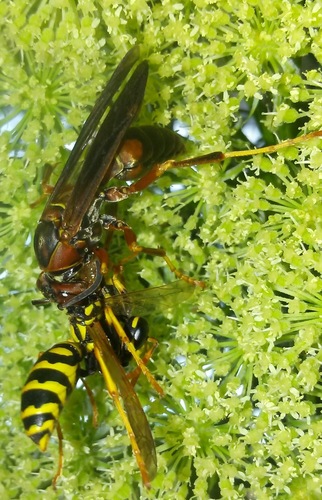
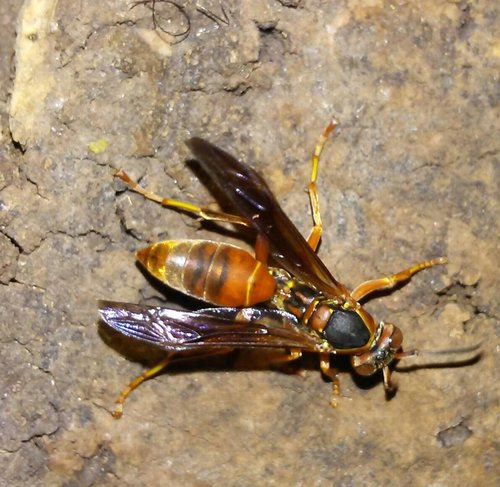
📷Photos of the northern paper wasp

More bees, wasps & ants
Bites and formic acid
Painful sting
Stinging insect
Can sting
Can sting
Can sting
This guide was written with AI assistance and fact-checked, last updated 2026-10-10. Identification from photos is never certain: don't handle insects you can't identify, and get medical advice for bites, stings or allergic reactions. More about the northern paper wasp: iNaturalist, Wikipedia.