
Red-tailed bumblebee
Bombus lapidarius · Bumblebees
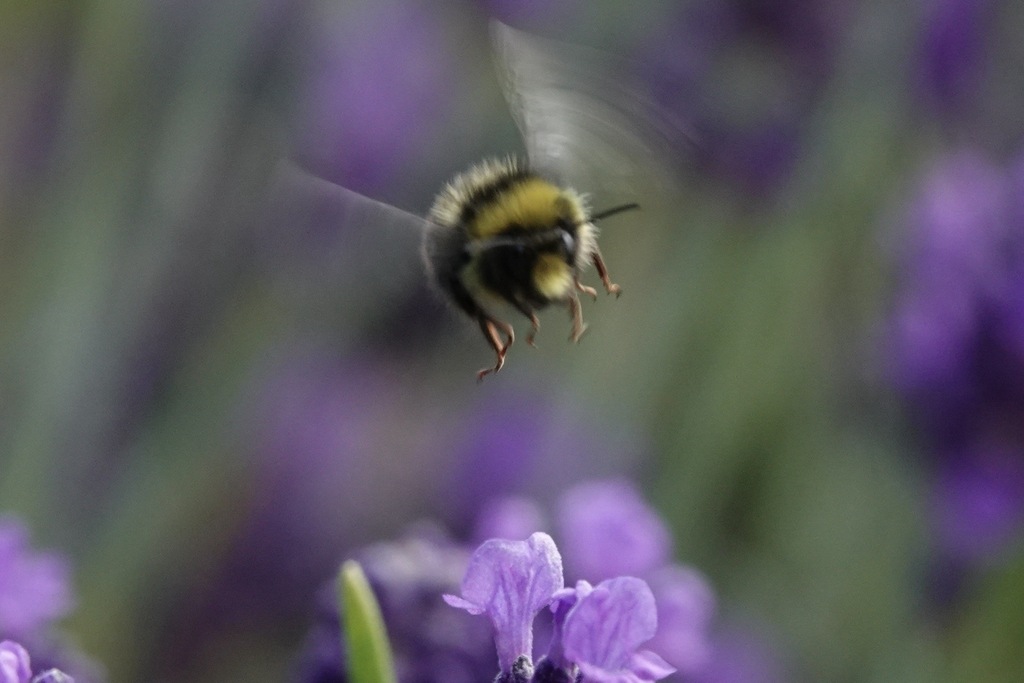
A common European bumblebee with a glossy black body and a bright red tail; an important, generally non-aggressive pollinator of gardens and wild plants.
!Is the red-tailed bumblebee dangerous?
Only mildly. Red-tailed bumblebees can sting, but only if handled, trapped against skin or defending a nest. Stings are typically painful but not dangerous to most people. Unlike honey bees, bumblebees do not leave their stinger behind and can sting more than once. For a normal reaction, wash the area with soap and water, apply a cold pack to reduce swelling, and use pain relief or an antihistamine as needed. Signs of a severe allergic reaction (difficulty breathing, swelling of the face or throat, dizziness, widespread hives) are an emergency: use an epinephrine auto-injector if one is prescribed and call emergency services immediately.
Pets
Stings can be painful for pets and may cause localized swelling. Pets with multiple stings or pets known to have allergies should be seen by a veterinarian. Pets often avoid bumblebees, but curious animals may be stung if they bite or step on a bee.
📖Overview
Bombus lapidarius is a widespread bumblebee species native to much of Europe and parts of western Asia. Queens found in spring establish colonies in cavities or underground; colonies grow through spring and summer then decline in autumn when new queens leave to overwinter. They forage for nectar and pollen from a wide variety of flowers and are important pollinators in gardens, farmland and wild habitats.
These bumblebees are not aggressive and will only sting if handled, trapped against skin, or defending a nest. They are considered beneficial rather than pests. If a nest is in an inconvenient location, humane relocation by a trained beekeeper or wildlife rehabilitator is recommended rather than killing the colony.
🔍How to identify a red-tailed bumblebee
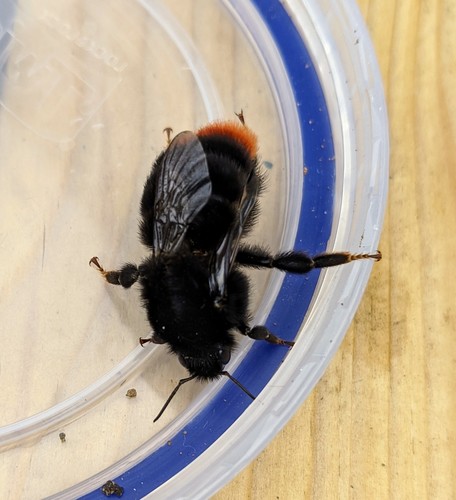
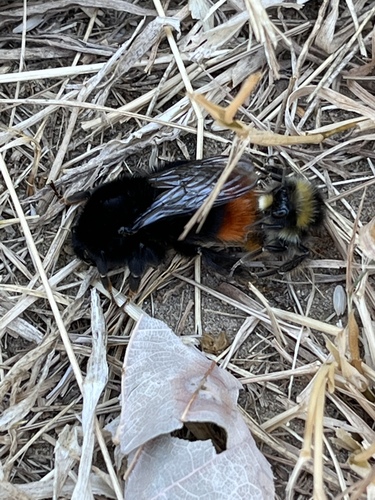
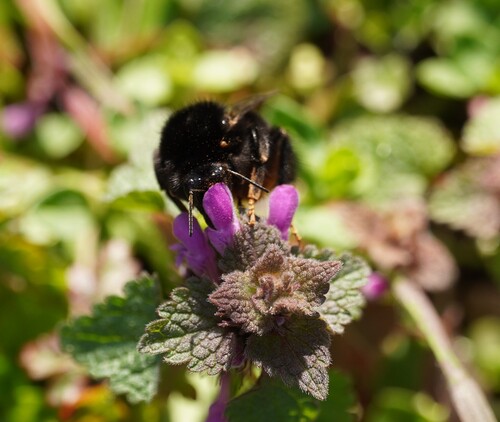
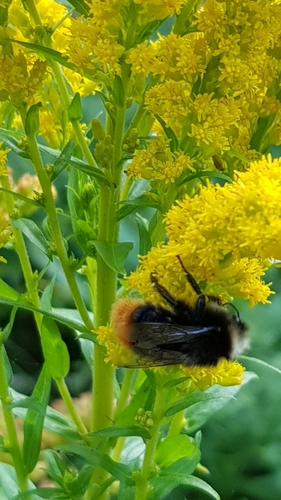
Adult females (queens and workers) are mostly glossy black with a conspicuous bright red or orange-red tail. The thorax is black; workers and queens lack the broad yellow banding seen in several similar bumblebee species. Males (drones) often show additional yellow hairs on parts of the thorax and abdomen and can have more variable patterns, but usually retain a red tail. The hair (pile) is relatively short and shiny compared with some other bumblebees.
- Glossy black thorax and abdomen with a distinct red or orange-red tail on females.
- Lack of broad, pale yellow banding across the thorax and first abdominal segment that some other bumblebees have.
- Males often show extra yellow hairs on the thorax—check underside and face for yellow patches.
- Body hair relatively short and shiny compared with fuzzier bumblebee species.
Lookalikes
Buff-tailed bumblebee Bombus terrestris
Buff-tailed bumblebee has a pale buff or cream tail and one or two yellow bands on the thorax/abdomen; B. lapidarius has a red tail and usually no broad yellow band across the thorax.
Early bumblebee Bombus pratorum
The early bumblebee is smaller, with a yellow collar on the thorax and usually a yellow band on the abdomen, and a smaller orange-red tail; B. lapidarius females are all black apart from the red tail.
Red-shanked carder bee Bombus ruderarius
B. ruderarius females are smaller and duller black with a red tail, but the hairs fringing the pollen basket on the hind legs are red, whereas in B. lapidarius they are black.
↻Life cycle
Egg
Laid by the queen in spring inside a nest; eggs hatch in a few days.
Larva
Legless grubs fed by the queen or workers on pollen and nectar; grow rapidly over several instars.
Pupa
Larvae spin cocoons and pupate; metamorphosis to adult takes a couple of weeks depending on temperature.
Adult
Workers forage and care for the brood; later in the season new queens and males are produced, mates disperse and new queens overwinter.
🍃Diet and predators
Young eat
Brood (larvae) are fed pollen mixed with nectar (bee bread) collected by workers or the queen.
Adults eat
Adults feed on nectar for energy and collect pollen for protein; they visit many types of flowers.
Predators of the young
Larvae and pupae are eaten by mammals (rodents), ants, parasitic flies and wasps.
Predators of adults
Birds, spiders, robber flies, hornets and sometimes mammals such as shrews; parasites and pathogens (e.g., nematodes, fungi) also affect populations.
🌱Effect on plants and gardens
Forages on a wide range of flowering plants for nectar and pollen, including garden flowers, fruit blossom, legumes and wildflowers; important for pollination of many crops and native plants.
📍Where and when to find it
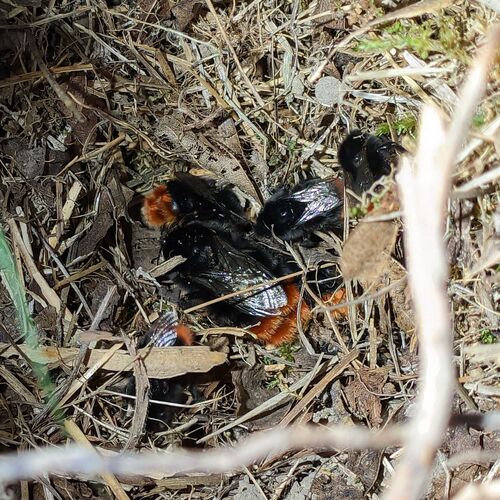
Look for individuals on flower heads in gardens, meadows and along hedgerows. Nests often occur underground in old rodent burrows, compost heaps, lawns or wall cavities; look for worker traffic to locate a nest.
Best time
Best observed April to September during warm daylight hours; peak activity in late spring and early summer.
Observation tips
Use a telephoto or zoom lens to photograph foraging bees. Move slowly and avoid sudden movements; wear light-coloured clothing and avoid strong scents to reduce disturbance.
✨Fun facts
- The scientific name lapidarius comes from the Latin for stone, because this bumblebee often nests under stones or in stone walls.
- The red tail makes this species one of the easiest bumblebees to spot at a distance.
- Bumblebees can ‘buzz pollinate’ (vibrate flowers) to release pollen from some plants; this helps crops like tomatoes.
?Frequently asked questions
Do red-tailed bumblebees sting?
Yes. They will usually only sting if provoked, handled or trapped against skin. Stings are painful but rarely dangerous unless you are allergic.
Why is a bumblebee in my house?
A foraging bee may fly in through an open door or window while seeking nectar or shelter. Sometimes nests are established in wall cavities, lofts or other sheltered spaces and workers or queens move indoors looking for nest sites.
How do I get rid of a bumblebee nest?
Avoid killing them if possible. Bumblebee colonies are small and die out naturally by late summer or autumn, so the simplest option is often to leave the nest alone. If the nest is a genuine problem, contact a local beekeeper or bee conservation group for advice on relocation. For individual bees indoors, open windows and gently guide them out; do not block exits while bees are active.
Are red-tailed bumblebees endangered?
Bombus lapidarius is currently common across much of its range, though local declines can occur from habitat loss and pesticides. Overall it is not considered globally threatened.
Will they damage my garden or house?
No. They do not chew wood or fabric and are not structural pests. They benefit gardens by pollinating flowers and crops.
📷Photos of the red-tailed bumblebee
More bees, wasps & ants
Bites and formic acid
Painful sting
Stinging insect
Can sting
Can sting
Can sting
This guide was written with AI assistance and fact-checked, last updated 2026-10-10. Identification from photos is never certain: don't handle insects you can't identify, and get medical advice for bites, stings or allergic reactions. More about the red-tailed bumblebee: iNaturalist, Wikipedia.