
Buff-tailed bumblebee
Bombus terrestris · Bumblebees
A common, robust European bumblebee that is an important pollinator and can nest in soil or cavities.
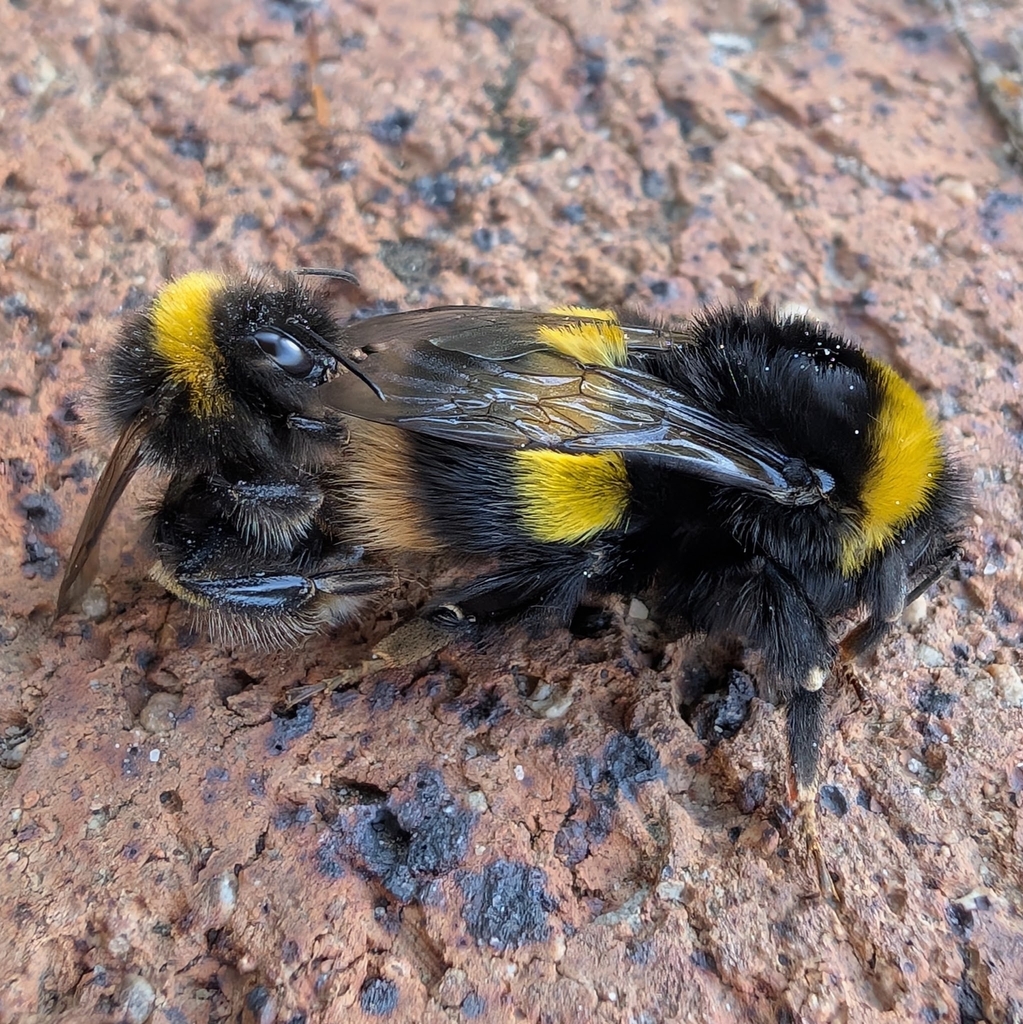
!Is the buff-tailed bumblebee dangerous?
Only mildly. Females (workers and queens) can sting and inject venom, but they are not aggressive and rarely sting unless handled or their nest is disturbed. Stings are painful and may cause swelling or allergic reactions in sensitive people. Seek medical help for signs of severe allergic reaction (difficulty breathing, throat swelling, widespread hives).
Pets
Generally not dangerous to pets. Dogs or cats might get stung if they try to catch or eat a bee; stings can cause localized pain or swelling and rare allergic reactions.
📖Overview
Bombus terrestris is a widespread, relatively large bumblebee species native to much of Europe and parts of western Asia and widely used and introduced elsewhere for crop pollination. It is a social bee with annual colonies started by a single queen each spring. Colonies forage on a wide variety of flowers and are important pollinators of wild plants and crops. Where introduced, it can become invasive and compete with native pollinators.
🔍How to identify a buff-tailed bumblebee
Workers and males are stocky with a black body, dark-yellow collar band at the front of the thorax, a second yellow band on the abdomen and a pale buff to white tail. Queens are larger and similarly marked. The species shows some geographic variation and close resemblance to a few other buff-tailed bumblebees; key marks are the strong buff/white tail and a single broad yellow band across the thorax and a second band on the abdomen (variable in width). Hair is dense, giving a furry appearance.
- Buff or pale white tail combined with a single broad yellow band on the thorax and a second yellow abdominal band.
- Stout, furry body typical of bumblebees (not slender like honeybees).
- Size differences: queens much larger than workers; males may show pale hair on face and longer hairs.
- Geographic context: common in Europe; check local field guides for separation from closely related buff-tailed species.
Lookalikes
White-tailed bumblebee Bombus lucorum
Very similar; B. lucorum typically has a whiter tail and subtle differences in hair texture and male genitalia. Separation can be difficult in the field and may require expert examination or genetic tests.
Cryptic bumblebee Bombus cryptarum
Also very similar in appearance; distribution and subtle color/hair differences distinguish them, but identification is often uncertain without specialist methods.
Garden bumblebee Bombus hortorum
Longer face and tongue, and an extra yellow band at the rear of the thorax (three yellow bands in total) with a clean white tail.
↻Life cycle
Egg
Laid by the queen in spring after nest founding; tiny, white, and kept in brood cells.
Larva (grub)
Legless, white larvae fed on pollen and nectar by workers; develop rapidly through several instars.
Pupa
Larvae spin a thin cocoon and pupate; metamorphosis to the adult bee occurs within the cocoon.
Adult (queen, worker, male)
New workers emerge to run the colony, later males and new queens are produced; new queens mate then hibernate and found colonies next year, while the old colony dies in autumn.
🍃Diet and predators
Young eat
Fed on pollen mixed with nectar provided by workers.
Adults eat
Feed on nectar for energy and collect pollen as a protein source to feed larvae.
Predators of the young
Predators and parasites include beetles, ants, wasps, wax moths and various parasitoids; brood can also be lost to nest predators.
Predators of adults
Predators include birds, spiders, robber flies and hornets; adults also suffer from parasites and diseases (Nosema, tracheal mites) and cuckoo bumblebees (social parasites).
🌱Effect on plants and gardens
Forages on a wide variety of wildflowers and crops (tomatoes, peppers, berries, clover, brassicas). An efficient pollinator that benefits gardens, orchards and agricultural crops.
📍Where and when to find it
Look for foraging workers on garden flowers, clover, brambles and crops; nests are often in grassy tussocks, rodent holes, compost piles or wall cavities.
Best time
Best seen March to October in temperate zones, especially late spring and early summer during high foraging activity and colony growth.
Observation tips
Photograph from a distance to avoid disturbance; early morning shots show bees with pollen loads. Use a macro lens or phone close-up and approach slowly.
✨Fun facts
- Bombus terrestris is commonly used commercially for greenhouse pollination, especially for tomato crops.
- Queens overwinter and found colonies alone in spring; every worker in the colony is the daughter of that one queen.
- Where introduced, B. terrestris can hybridize with or outcompete native bumblebees, posing conservation concerns.
?Frequently asked questions
Are buff-tailed bumblebees dangerous?
Not generally. They are important pollinators and not aggressive but females can sting if handled or trapped; allergic people should be cautious.
Do buff-tailed bumblebees make honey?
No. Bumblebees do store small amounts of nectar for the colony, but they do not produce harvestable honey like honeybees.
Why is a bumblebee in my house?
Bumblebees may enter buildings while foraging, chasing mates, or when searching for nesting sites or shelter. They often leave on their own when they find an exit.
How can I get rid of a bumblebee nest?
If the nest is inside your home or an unsafe location, contact local pest control or wildlife rescue for humane removal. For outside nests, leave them alone unless they pose a direct risk; professional removal is recommended rather than DIY destruction.
Where do buff-tailed bumblebees live?
They nest in the ground (old rodent burrows, tussocks), in compost heaps, cavities in walls or under sheds, and forage across gardens, meadows and farmland.
Can buff-tailed bumblebees become invasive?
Yes. In regions where they have been introduced for commercial pollination, they have established wild populations and in some places negatively impacted native pollinators.
📷Photos of the buff-tailed bumblebee
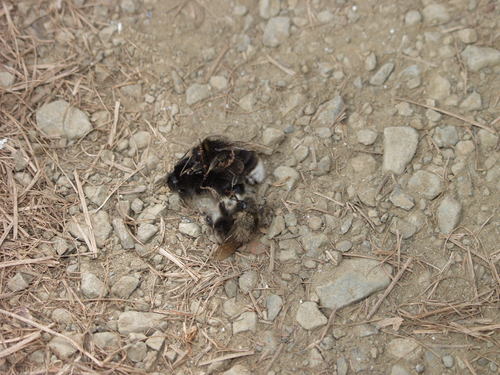
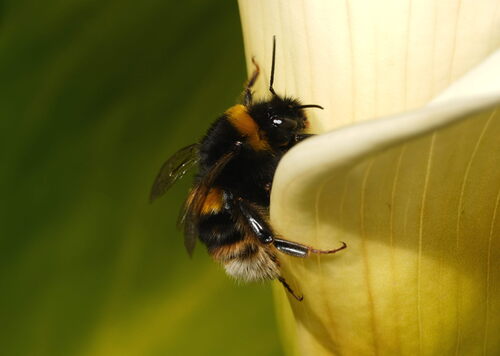
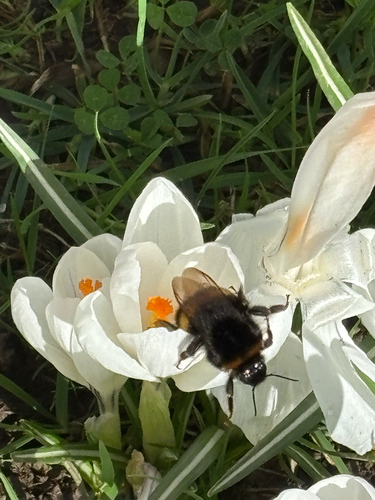
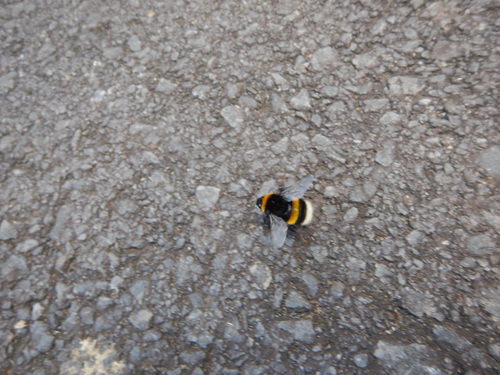
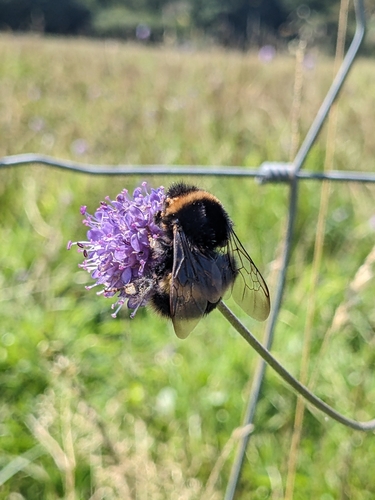
More bees, wasps & ants
Bites and formic acid
Painful sting
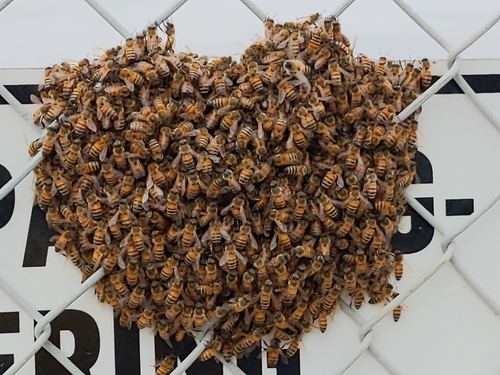
Stinging insect
Can sting
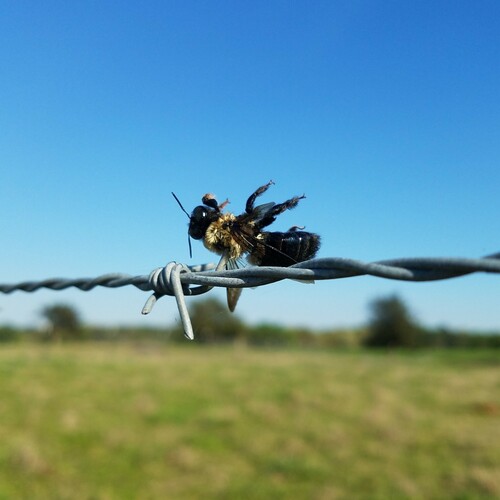
Can sting
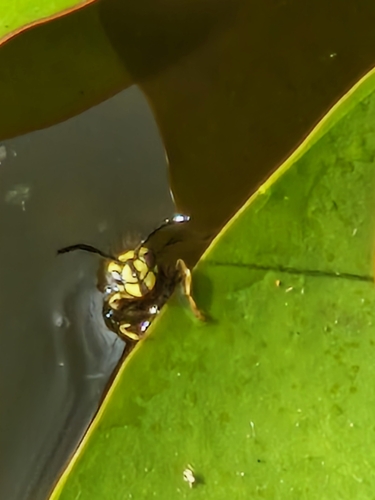
Painful sting
This guide was written with AI assistance and fact-checked, last updated 2026-10-09. Identification from photos is never certain: don't handle insects you can't identify, and get medical advice for bites, stings or allergic reactions.