
European hornet
Vespa crabro · Hornets and yellowjackets
A large social wasp that hunts other insects and builds paper nests in hollow trees, buildings and cavities.
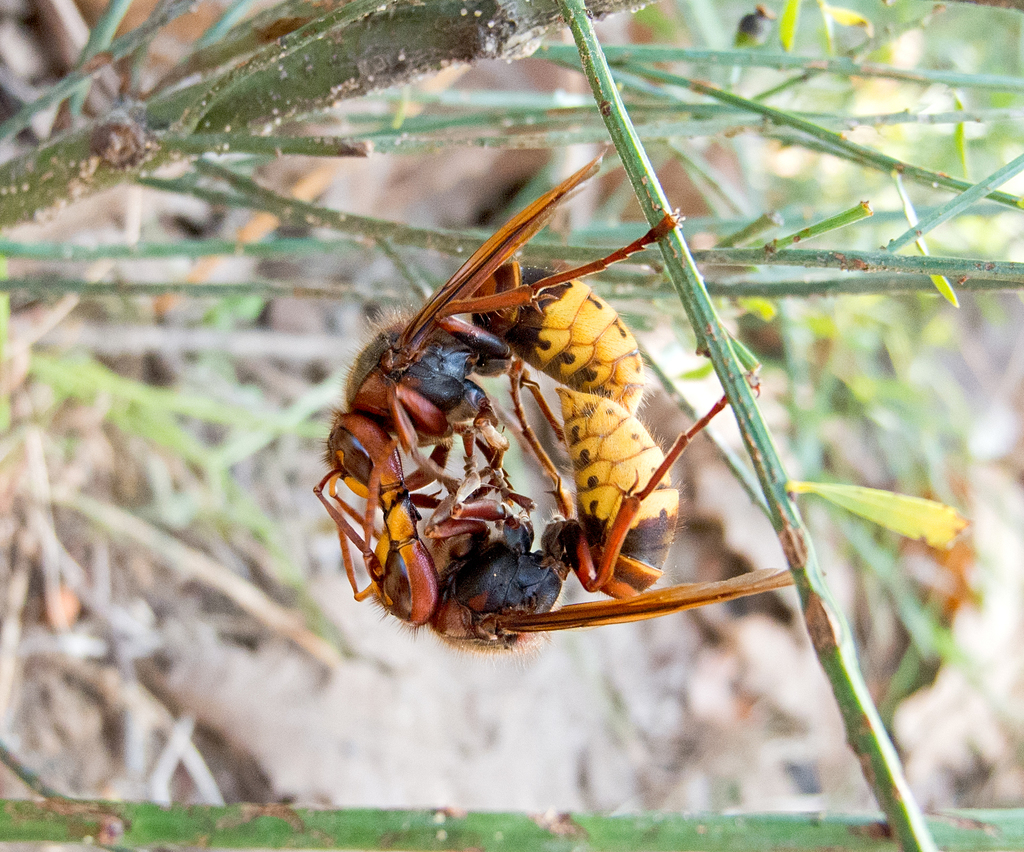
!Is the european hornet dangerous?
Yes, it can be. European hornets can sting and are capable of multiple stings. For most people a sting causes immediate sharp pain, swelling and redness that subsides over days. People with insect-venom allergy risk severe allergic reactions including anaphylaxis—seek emergency care for breathing difficulty, swelling of face or throat, rapid pulse or dizziness. First aid: move to safety, wash with soap and water, apply cold pack to reduce swelling, and seek medical attention for severe reactions.
Pets
Stings can be painful for pets and, if multiple stings occur or the pet is allergic, may cause severe reactions. Keep pets away from active nests and seek veterinary care for signs of distress, swelling, trouble breathing or collapse.
📖Overview
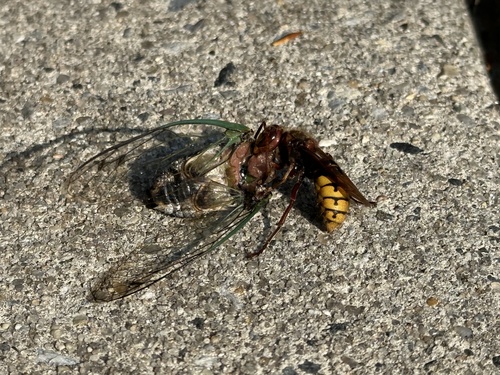
The European hornet (Vespa crabro) is a large eusocial wasp native to Europe and parts of Asia, introduced to eastern North America. Colonies are annual: a single queen founds a nest in spring, workers expand it through summer and the colony dies back in autumn except for new mated queens. They are predators of other insects and also feed on tree sap, ripe fruit and sugary secretions.
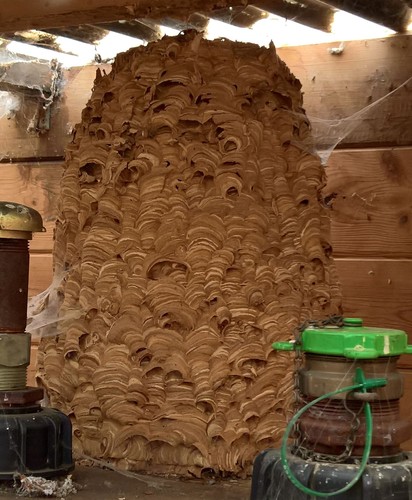
Nests are made from chewed wood fibres (paper) and are commonly placed in hollow trees, wall voids, attics, barns and dense shrubs. Because of their size and ability to sting repeatedly, they are noticed and sometimes become conflicts when nests are near human activity.
🔍How to identify a european hornet
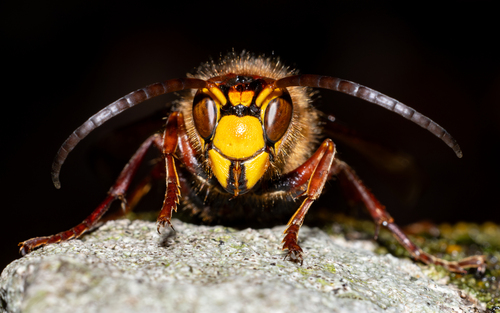
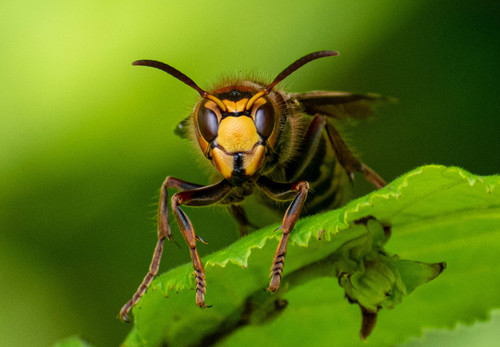
Adults are large (about 18-25 mm body length for workers; queens 25-35 mm). Head and thorax are reddish-brown to dark brown; abdomen shows alternating yellow and brown bands. The face and parts of the thorax can be yellowish. Wings are brownish translucent. Workers are slimmer than queens and have the same general patterning; males may show slightly different markings and lack a sting.
- Large size (about 18-35 mm) and robust body compared with common yellowjackets
- Reddish-brown head and thorax with yellow-and-brown banded abdomen
- Paper nest often in hollow tree trunks, wall cavities, attics or sheds
- Flight is slower and more lumbering than smaller wasps; visible mandibles and large head
Lookalikes
Asian giant hornet Vespa mandarinia
Much larger (queens up to about 50 mm), with a very large orange-yellow head and dark brown and yellow-orange banded abdomen; not established in Europe, and declared eradicated from North America (Washington State) in 2024.
Bald-faced hornet Dolichovespula maculata
Black and white coloration and aerial paper nests in trees or bushes; smaller and lacks the reddish-brown tones of V. crabro.
Common wasp / yellowjacket Vespula vulgaris / Vespula germanica
Smaller (10-20 mm), brighter black-and-yellow pattern and different nesting habits (often underground or wall cavities); more aggressive at human food sources.
↻Life cycle
Egg
Laid by the queen inside individual cells of the paper nest; hatch in a few days depending on temperature.
Larva (grub)
Larvae are fed by workers with chewed insect prey and protein; they grow inside cells and are immobile.
Pupa
Larvae pupate inside capped cells, transforming into adults over days to weeks.
Adult
Workers maintain the nest, forage for food and feed larvae. New queens and males are produced late season, mate, and only queens overwinter.
🍃Diet and predators
Young eat
Fed protein-rich chewed insects and other arthropods by workers
Adults eat
Feed on nectar, tree sap, ripe or fallen fruit, honeydew and the juices of prey; workers hunt insects to provision larvae
Predators of the young
Birds, small mammals and parasitic insects that can access nest cells
Predators of adults
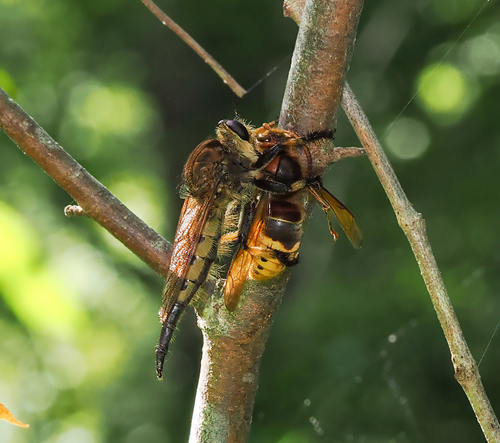
Birds (e.g. bee-eaters, some passerines), mammals (badgers, bears may raid nests), and other large wasps or hornets; humans also remove nests
🌱Effect on plants and gardens
European hornets prey on plant-feeding insects (caterpillars, flies, beetles) and help control pest populations. Adults also visit flowers for nectar and feed on tree sap and fallen fruit; they do not typically damage healthy living trees but may chew wood to build nests.
How to get rid of european hornets
If a nest poses a danger (close to living spaces, children's play areas or livestock), hire a licensed pest control professional to remove or destroy it—do not attempt removal alone. Prevent nesting by sealing holes and gaps in walls, closing attic vents, and inspecting/screening potential cavities in spring. Reduce attractants: remove exposed food, cover compost, and pick up fallen fruit. For solitary sightings, avoid disturbing the hornet; it will usually move on.
📍Where and when to find it
Look for nests in hollow tree trunks, cavities in mature trees, wall voids, attics, barns and sheds. Adults forage on flowers, sap flows and fallen fruit; watch comb edges of paper nests for worker traffic.
Best time
Best observed from late spring through early autumn; daytime hours when foraging are common, with peak activity in warm afternoons.
Observation tips
Use binoculars to observe from a safe distance; avoid sudden movements near a nest. In autumn, many foraging hornets may be interested in ripe fruit and sap.
✨Fun facts
- European hornets build nests from chewed wood fibers, making a paper-like material.
- Unusually for wasps, European hornets often keep foraging after dark and are attracted to lit windows at night.
- Colonies are annual: only newly mated queens overwinter and start new nests the following spring.
?Frequently asked questions
Are European hornets dangerous?
They can sting and deliver painful stings; multiple stings or stings to allergic people can be medically serious. They are not aggressive if left undisturbed.
Do European hornets bite?
Hornets have strong mandibles and can bite, but biting is rare; they normally use their sting for defense.
Why is there a hornet in my house or attic?
They nest in wall voids, attics or hollow trees. A nest in or near a building provides shelter and raises the chance you will notice activity indoors.
How do I get rid of a hornet nest?
Do not attempt DIY removal unless experienced and properly protected. Hire a licensed pest control professional who will assess the risk and remove or treat the nest safely, typically at night when workers are less active.
Will European hornets attack me if I leave food outside?
They are attracted to ripe fruit, sweet drinks and meat and may come to outdoor food, but are generally less aggressive than smaller yellowjackets unless provoked or food is repeatedly offered.
📷Photos of the european hornet
More bees, wasps & ants
Bites and formic acid
Painful sting
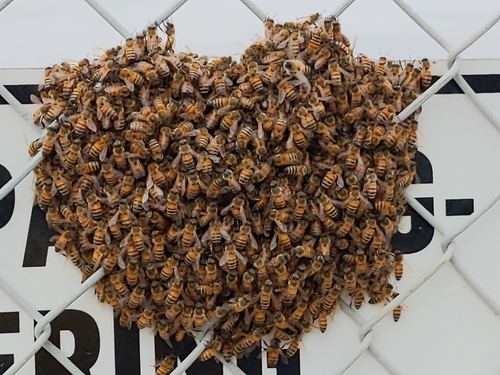
Stinging insect
Can sting
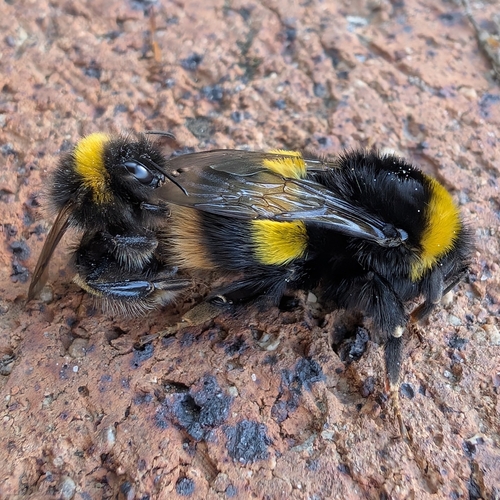
Can sting
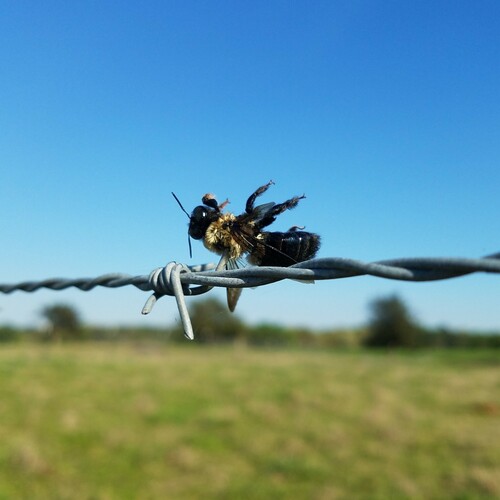
Can sting
This guide was written with AI assistance and fact-checked, last updated 2026-10-09. Identification from photos is never certain: don't handle insects you can't identify, and get medical advice for bites, stings or allergic reactions.