
Brown-belted bumble bee
Bombus griseocollis · Bumble bees
A widespread North American bumble bee with a yellow thorax and a distinctive brownish band on the abdomen; an important pollinator and generally not aggressive.
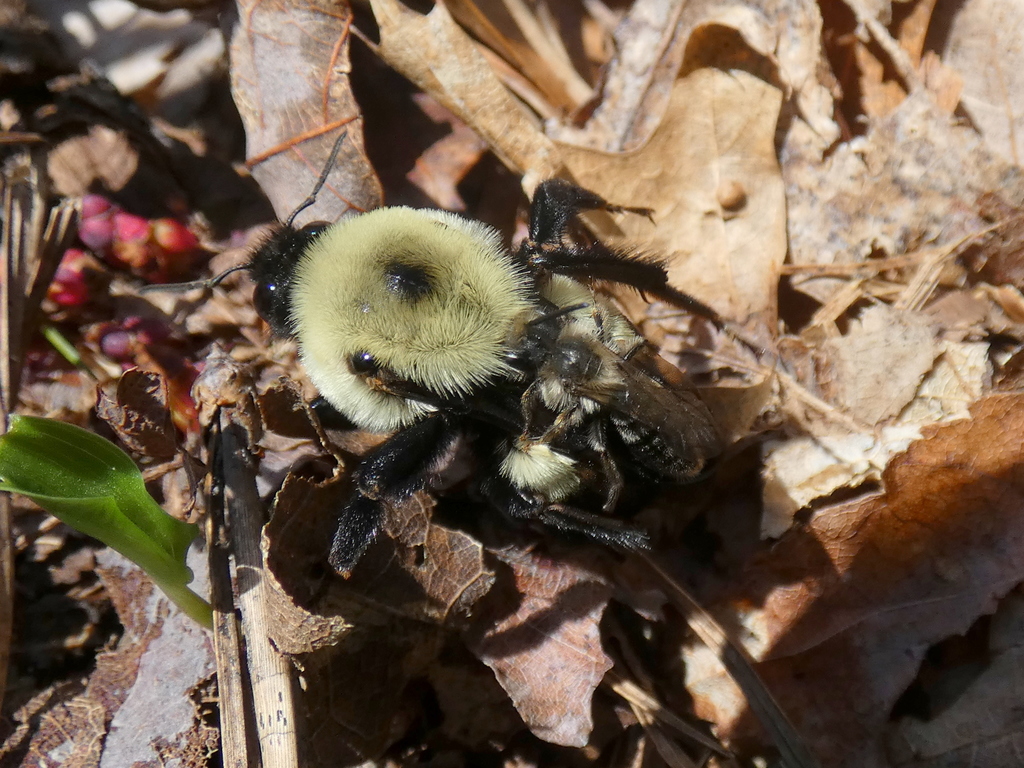
!Is the brown-belted bumble bee dangerous?
Only mildly. Bumble bees can sting and will do so if handled, squeezed, or if defending the nest. Bumble bees do not leave their stinger in the skin and can sting more than once. Most people experience localized pain, swelling and redness. Basic first aid: clean with soap and water, apply a cold pack and consider an antihistamine for mild reactions. If someone has trouble breathing, swelling of the face, lips or throat, dizziness or widespread hives after a sting, use their epinephrine auto-injector if they carry one and call emergency services immediately.
Pets
Stings are painful to pets and may cause local swelling. Pets with severe allergic sensitivity are at greater risk; contact a veterinarian if a pet shows signs of anaphylaxis (collapse, severe swelling, difficulty breathing).
📖Overview
Bombus griseocollis is a medium-sized, social bumble bee native to much of North America. Colonies are annual: a queen starts a nest in spring, the colony grows through summer and produces new queens and males by late summer or autumn. The species forages broadly on flowers and is an effective pollinator of wild plants and garden crops. It nests in cavities at or near ground level, in tussocks, rodent nests, compost heaps or sheltered voids.
Workers and males are active through spring, summer and into early fall, depending on latitude. While capable of stinging when handled or threatened, B. griseocollis is not aggressive toward humans and will usually only sting in defense of the nest or if squeezed or trapped against skin.
🔍How to identify a brown-belted bumble bee
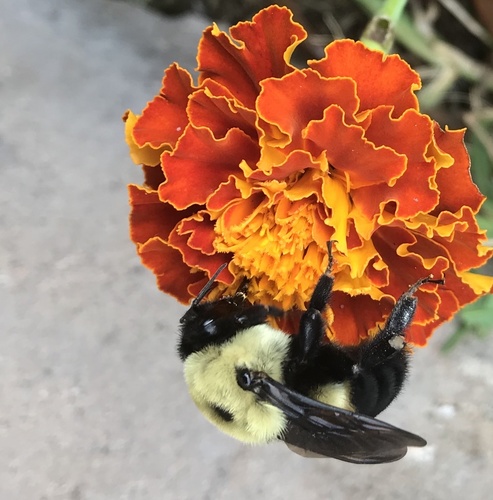
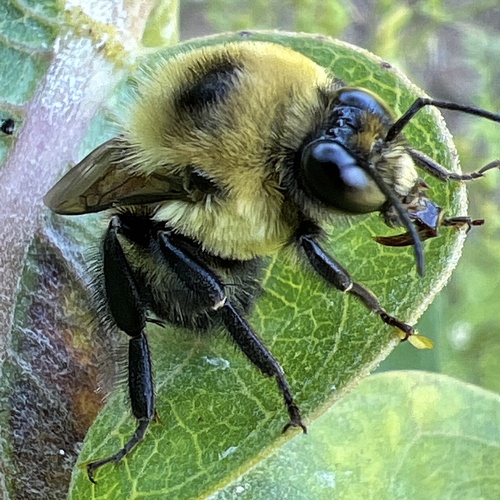
Thorax mostly yellow, usually with a small black spot in the center between the wings. The first abdominal segment is yellow and the second has a brown (chestnut) band, often with yellow at the sides; the rest of the abdomen is black. The hair is short and even. Size and intensity of the brown band can vary between individuals and sexes; queens are larger than workers, and males have noticeably large eyes.
- Mostly yellow thorax, often with a small black spot between the wings
- Brown or chestnut band on the second abdominal segment (the 'brown belt')
- Yellow first abdominal segment and black tail; short, even hair
Lookalikes
Common eastern bumble bee Bombus impatiens
B. impatiens has yellow only on the first abdominal segment, with the rest of the abdomen black, and no brown band.
Two-form bumble bee Bombus ternarius
B. ternarius has bright orange bands on the second and third abdominal segments and a black band between the wings; B. griseocollis has a duller brown band and a mostly yellow thorax.
↻Life cycle
Egg
Laid by the queen inside brood cells in the nest; hatch in a few days depending on temperature.
Larva
Legless, grub-like larvae are fed by workers with pollen and nectar and grow rapidly over several days to weeks.
Pupa
Larvae pupate within sealed cells and transform into adults over several days to weeks.
Adult
Workers perform foraging and nest duties, males and new queens leave the nest to mate; new queens hibernate through winter.
🍃Diet and predators
Young eat
Fed pollen and nectar collected by workers (pollen provides protein for growth).
Adults eat
Nectar for energy and pollen for protein; generalist forager visiting many flower species.
Predators of the young
Nest predators and parasites such as ants, small mammals and brood parasites; some parasitoid flies and wasps.
Predators of adults
Birds, robber flies, dragonflies, mantises and larger spiders; humans sometimes inadvertently kill nests.
🌱Effect on plants and gardens
Generalist forager on a wide range of wildflowers, garden flowers and some crop blossoms; helps pollinate fruits, vegetables and native plants.
📍Where and when to find it
Look in flower-rich habitats: meadows, gardens, field margins and suburban yards. For nests, check sheltered ground cavities, compost piles and grassy tussocks.
Best time
Spring through early fall; warm, sunny days when flowers are open are best for observing foraging bees.
Observation tips
Use a long lens or zoom to photograph from a distance; approach slowly and avoid sudden movements. Early morning can show bees with pollen loads, while midday is best for active foraging.
✨Fun facts
- Like other bumble bees, B. griseocollis can 'buzz pollinate' by vibrating flowers to release pollen from plants such as tomatoes and blueberries.
- Bumble bee colonies are annual: only new queens survive the winter by hibernating underground.
- Color patterns vary regionally and between individuals, which can sometimes make identification tricky.
?Frequently asked questions
Do brown-belted bumble bees sting?
Yes, they can sting but are not aggressive and usually only sting if directly threatened or if their nest is disturbed.
Are they endangered?
Bombus griseocollis is not generally considered endangered and is still widespread in many parts of its range, though local declines can occur from habitat loss and pesticides.
Why is one in my house?
Workers sometimes fly indoors while foraging or entering through open windows and doors; a lone bee inside is likely lost and can be guided back outside.
How can I get rid of a nest on my property?
If the nest is not a safety hazard, the best option is to leave it alone because bumble bees are valuable pollinators. If removal is necessary, contact a local beekeeper or pest-control professional experienced with bees—do not attempt to destroy a nest yourself. For lone bees indoors, gently trap and release them outdoors using a container and a piece of cardboard.
Where do they live and nest?
They nest in cavities at or just below ground level, including rodent burrows, hollow spaces in compost heaps, or sheltered voids in lawns and gardens.
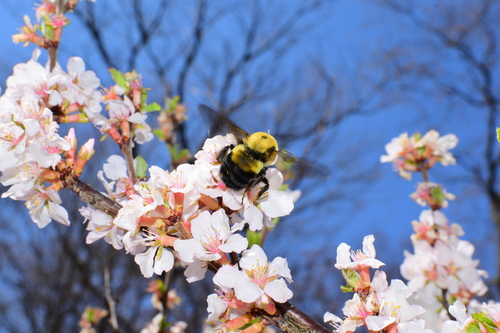
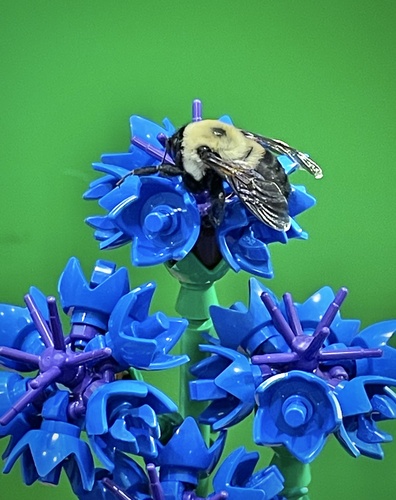
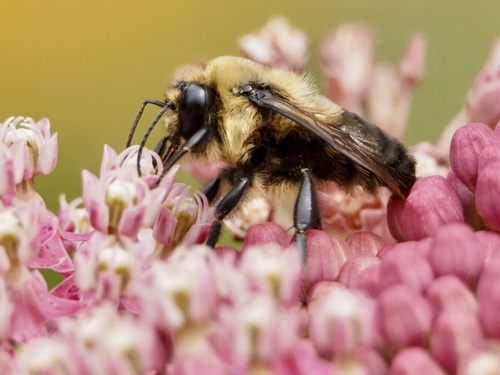
📷Photos of the brown-belted bumble bee
More bees, wasps & ants
Bites and formic acid
Painful sting
Stinging insect
Can sting
Can sting
Can sting
This guide was written with AI assistance and fact-checked, last updated 2026-10-10. Identification from photos is never certain: don't handle insects you can't identify, and get medical advice for bites, stings or allergic reactions. More about the brown-belted bumble bee: iNaturalist, Wikipedia.