
Common eastern bumble bee
Bombus impatiens · Bumble bees
A common, social bumble bee of eastern North America and an important pollinator used in agriculture and gardens.
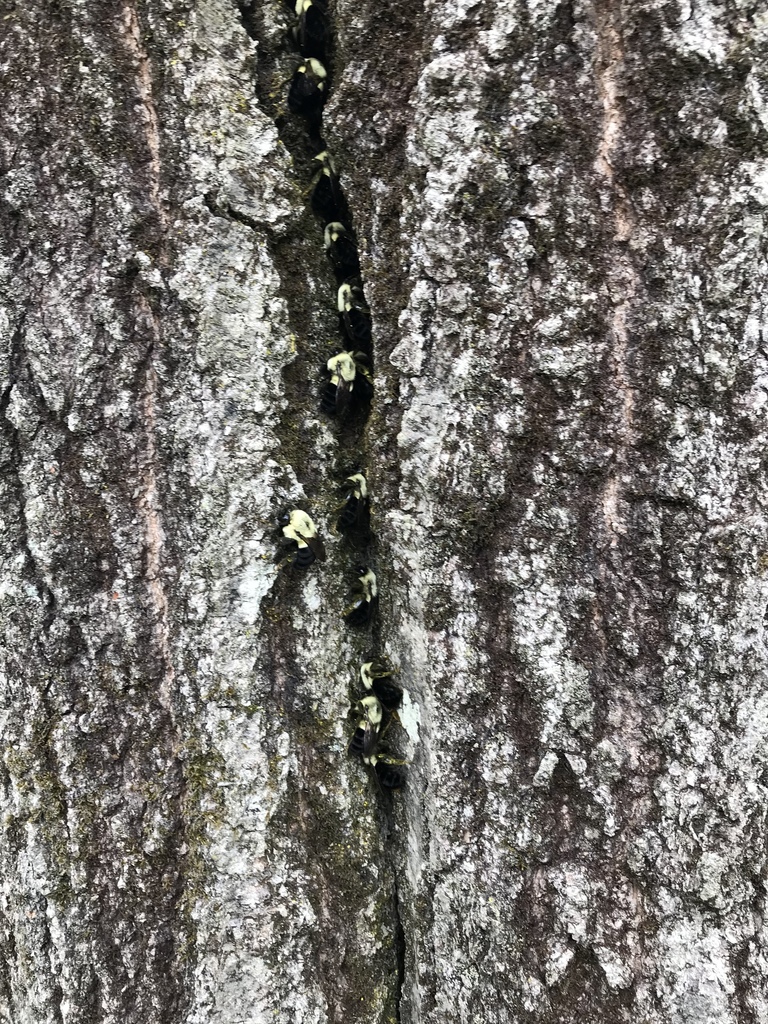
!Is the common eastern bumble bee dangerous?
Only mildly. Workers and queens can sting and may do so if handled, stepped on, or if their nest is disturbed. Stings are typically painful but not medically serious for most people. People with bee venom allergy can have severe, potentially life-threatening reactions and should seek immediate medical help if stung.
Pets
Stings can be painful to pets and may cause localized swelling. Allergic reactions are possible but uncommon; seek veterinary care for severe signs (difficulty breathing, collapse).
📖Overview
Bombus impatiens is a widespread, eusocial bumble bee found across eastern North America. Colonies are annual: a single mated queen founds a nest in spring, the colony grows through summer, and new queens and males are produced in late summer and fall. It is one of the most frequently encountered bumble bees in gardens, parks and agricultural fields and is widely used commercially for greenhouse pollination.
🔍How to identify a common eastern bumble bee
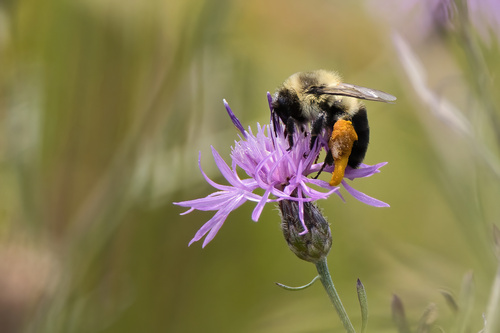
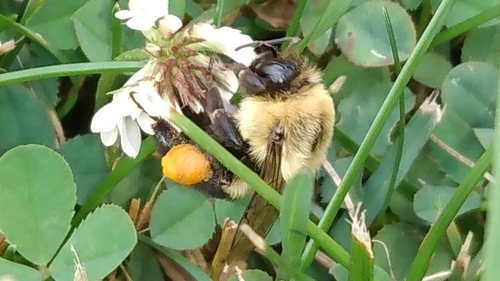
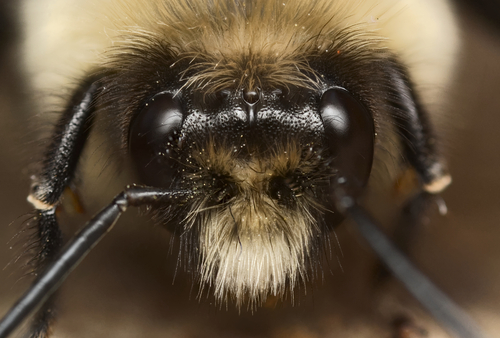
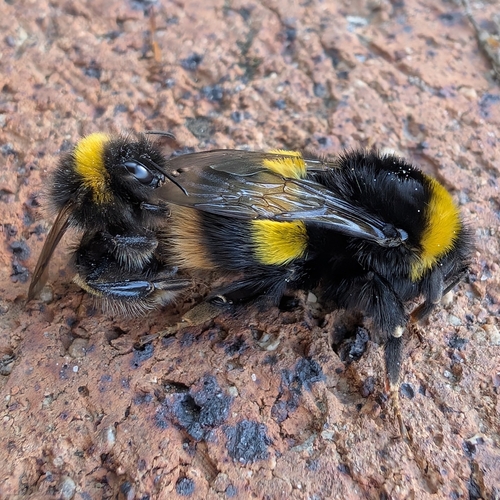
Adults are robust, hairy bees with the typical bumble bee shape. The thorax is yellow (with a small dark central spot) and only the first abdominal segment is yellow; the rest of the abdomen is black, with no white tail. Queens are larger and more robust than workers; males can show slightly different facial hairs and sometimes more yellow on the face. Exact banding and shade can vary regionally and with wear.
- Yellow thorax and yellow first abdominal segment; the rest of the abdomen is black (no white tail).
- Large, robust, hairy body typical of bumble bees; queens noticeably larger than workers.
- Flight is relatively slow and bumbling compared with smaller bees; often visits open-faced and tubular flowers.
Lookalikes
Two-spotted bumble bee Bombus bimaculatus
Similar yellow thorax and first abdominal segment, but the second abdominal segment usually has a central yellow patch (often forming two spots or a W shape); hair is longer and shaggier.
Half-black bumble bee Bombus vagans
B. vagans can look similar but usually has different facial hair patterns and slightly different thoracic band width; region and subtle pattern differences help separate them.
Brown-belted bumble bee Bombus griseocollis
Has a brownish band on the second abdominal segment and short, even hair; males have large eyes.
↻Life cycle
Egg
Queen lays eggs singly in brood cells within the nest; eggs hatch in a few days.
Larva
Legless, grub-like larvae are fed by workers on pollen and nectar; they grow rapidly over several days to weeks depending on temperature and food.
Pupa
Larvae spin cocoons and pupate inside; transformation to adult occurs over days to weeks.
Adult
Adults emerge as workers, then later males and new queens. New queens mate in late summer or fall, then overwinter alone to found next year's colony.
🍃Diet and predators
Young eat
Fed a mixture of pollen and regurgitated nectar by adult workers.
Adults eat
Nectar (energy) and pollen (protein); forage on many flower species and are active flower visitors.
Predators of the young
Nest predators such as ants, small mammals (mice), and parasitic flies or wasps.
Predators of adults
Birds, robber flies, dragonflies, spiders, and predatory insects; humans may destroy nests.
🌱Effect on plants and gardens
Adults forage on a wide variety of flowering plants for nectar and pollen and are effective pollinators of many wildflowers, fruit crops and greenhouse crops (for example tomato, blueberry, cranberry). Larvae are fed pollen and nectar by workers.
📍Where and when to find it
Adults on flowers in gardens, meadows and field margins; nests in rodent burrows, compost piles, under tussocks, or sheltered cavities.
Best time
Spring through early fall (April to October depending on region), during daylight when flowers are open and temperatures are warm.
Observation tips
Approach slowly, use a long lens or macro from the side, and photograph on sunny days when bees are actively foraging. Watch low to the ground near nesting habitat like grassy tussocks.
✨Fun facts
- Bombus impatiens is commonly reared and sold for greenhouse pollination, particularly for tomatoes and berries.
- A single colony can produce dozens to several hundred workers over the season depending on resources and conditions.
- They are 'buzz pollinators': workers vibrate their flight muscles to release pollen from some flowers, a technique especially useful for crops like tomatoes.
?Frequently asked questions
Do common eastern bumble bees sting?
Yes. Workers and queens can sting if threatened or if their nest is disturbed. They are not as aggressive as some social wasps but will defend a nest.
Are they endangered?
Bombus impatiens is currently common and not endangered; in fact it is used commercially. Other bumble bee species in North America have declined, so preserving forage and nesting habitat is important.
Why is there a bumble bee in my house or garage?
Queens may enter sheltered, quiet places in spring looking for nesting sites, or workers may get into buildings while foraging. They are seeking shelter, warmth or nesting cavities.
How can I get rid of a bumble bee nest?
If a nest is in a building, wear protective clothing and consider hiring a professional beekeeper or pest control service. If it is outside and not a danger, leaving it alone is best because they are valuable pollinators; nests are annual and die out in fall.
Are they good for gardens?
Yes. They are excellent pollinators of many garden plants and crops and can improve fruit set for several crops.
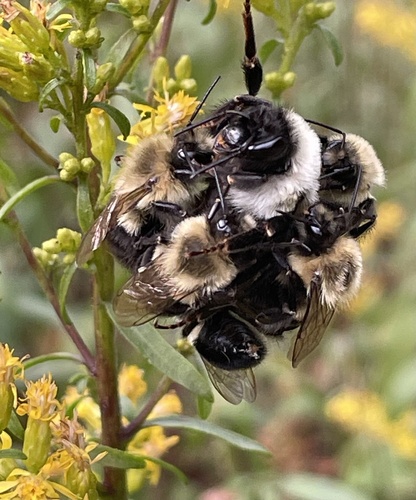
📷Photos of the common eastern bumble bee
More bees, wasps & ants
Bites and formic acid
Painful sting
Stinging insect
Can sting
Can sting
Painful sting
This guide was written with AI assistance and fact-checked, last updated 2026-10-09. Identification from photos is never certain: don't handle insects you can't identify, and get medical advice for bites, stings or allergic reactions.