
Northern giant hornet
Vespa mandarinia · Hornets and yellowjackets
One of the world's largest hornets; a forest-dwelling predator that can deliver very painful stings and attacks honeybee colonies.
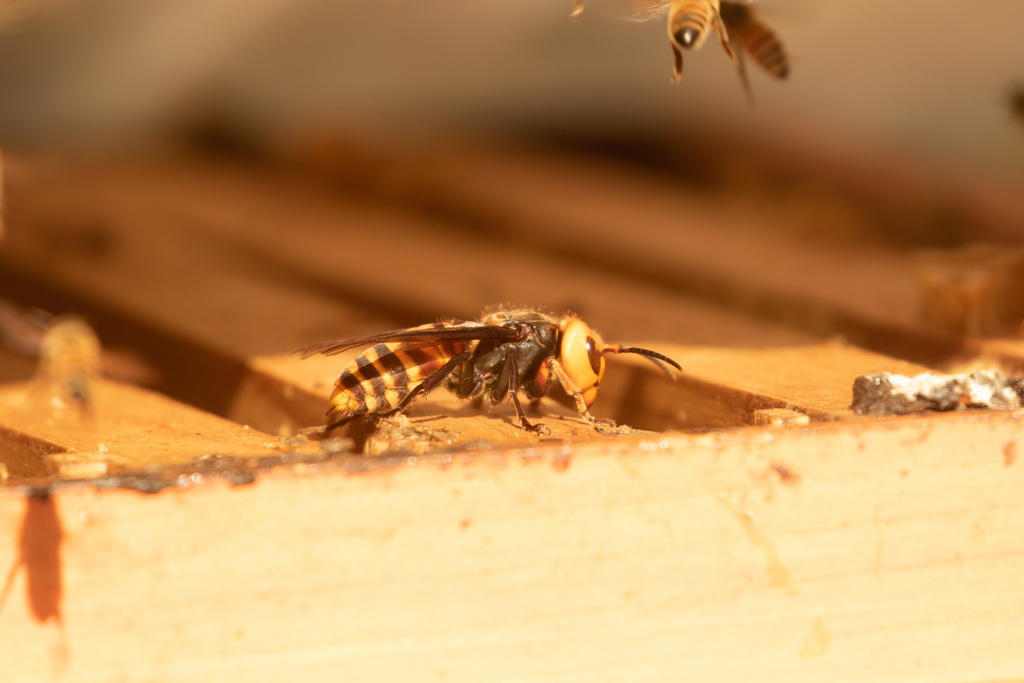
!Is the northern giant hornet dangerous?
Yes, it can be. Stings are very painful and can inject a significant volume of venom. Repeated stings or stings to an allergic person can cause severe systemic reactions including anaphylaxis; multiple stings can be life-threatening. If stung, move away from the area (to avoid additional stings), treat pain with cold packs and clean the site, and call emergency services if breathing difficulties, dizziness, swelling of face or throat, or other signs of severe allergic reaction occur. Do not attempt to remove a nest yourself; contact local authorities or professional pest controllers. Anyone stung many times should get medical care even without allergy symptoms, because a large venom dose can damage muscles and kidneys.
Pets
Pets stung multiple times or in sensitive areas can become seriously ill. Seek veterinary care for signs of severe swelling, difficulty breathing, collapse, or extensive stings.
📖Overview
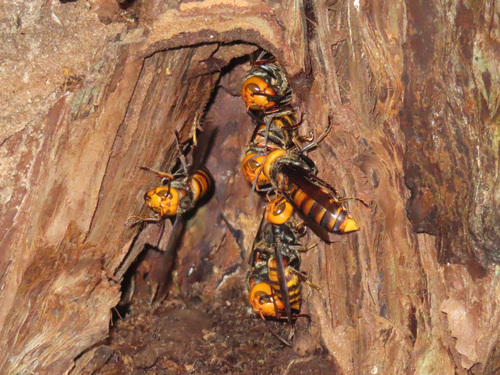
The Northern giant hornet (Vespa mandarinia) is a large social wasp native to temperate and subtropical Asia. Colonies are founded each spring by queens and grow through summer, producing workers that hunt other insects and feed on tree sap and fruit. They nest in cavities such as underground burrows, hollow tree roots, or sheltered spots at ground level. Workers are notable predators of honeybees and other social insects; a group of workers can rapidly kill adult bees and decapitate brood, causing serious losses to hives.
These hornets are not typically aggressive toward humans unless their nest is disturbed. Their sting is painful and can cause severe allergic reactions in sensitive people; many public-health and agricultural authorities treat detected populations seriously because of risks to people and to apiculture. In areas outside their native range, local authorities recommend reporting sightings and relying on trained eradication teams rather than attempting DIY removal.
🔍How to identify a northern giant hornet
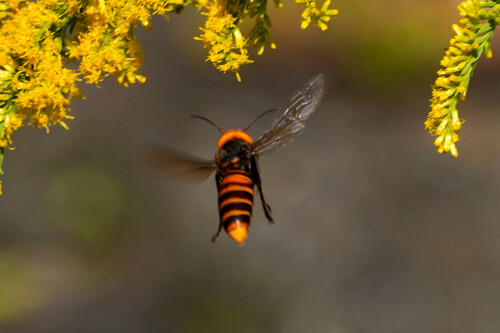
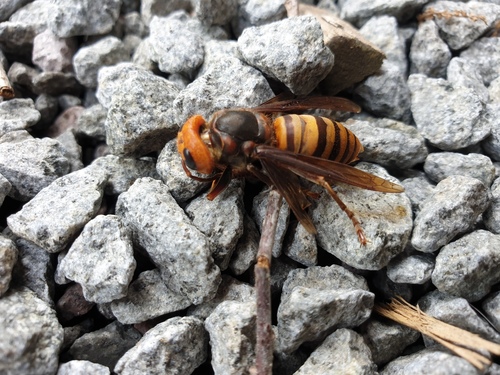
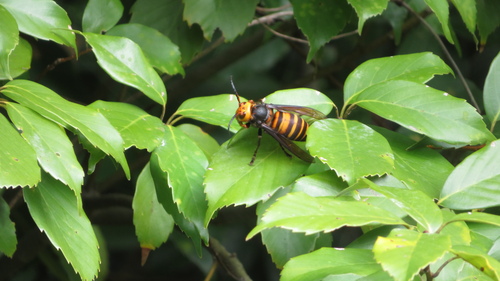
Adults are large and robust. The head is broad and usually orange to reddish-orange. The thorax is darker brown to black, and the first abdominal segments show banding of pale yellow or orange and brown to black. The large, prominent eyes and strong mandibles are used to capture prey and tear flesh from insect victims. Queens are substantially larger than workers; queens can be around 40-50 mm long while workers are typically 25-40 mm long.
- Very large size: workers 25-40 mm, queens up to about 50 mm.
- Broad orange to reddish-orange head with large mandibles.
- Abdomen with alternating pale yellow/orange and dark brown/black bands.
- Habit of flying with a powerful, buzzing flight and often seen hunting around hive entrances or tearing prey.
Lookalikes
European hornet Vespa crabro
Smaller on average and head is less brightly orange; European hornets have different banding patterns and are native to Europe and introduced in North America.
Yellow-legged hornet Vespa velutina
Smaller than Vespa mandarinia with a darker, mostly brown body and a characteristic narrow yellow band on the fourth abdominal segment.
Paper wasps Polistes spp.
Much more slender body and long legs that hang in flight; do not reach the large size or robust appearance of the Northern giant hornet.
↻Life cycle
Egg
Queen lays eggs in comb cells; eggs hatch in a few days depending on temperature.
Larva (grub)
Larvae are fed protein (insects, meat) by workers; this stage grows for several days to weeks.
Pupa
Larvae pupate inside sealed cells and metamorphose into adults over days to weeks.
Adult (worker, queen, male)
Workers forage for food, defend the nest and feed larvae; new queens and males are produced late season for mating; inseminated queens overwinter alone to found new colonies.
🍃Diet and predators
Young eat
Protein-rich diet: chewed insects and pieces of vertebrate meat provided by workers.
Adults eat
Sugary liquids such as tree sap, fruit juices, nectar, and carbohydrate-rich fluids from prey.
Predators of the young
Birds, mammals and other predatory insects when accessible; some specialist predators and parasites in native range.
Predators of adults
Birds, mammals, and larger predatory insects; human control is a major source of mortality where the species is considered invasive.
🌱Effect on plants and gardens
Adults feed on tree sap, fruit juices and nectar and so can act as occasional pollinators, but they do not significantly benefit crops. The main ecological impact is predation on other insects, notably honeybees.
How to get rid of northern giant hornets
Do not attempt DIY nest destruction. Report suspected nests or sightings to local agricultural or invasive-species authorities. Professional pest control or eradication teams use protective suits and specialized traps or nest removal techniques. For beekeepers: protect hives with entrance reducers, monitoring, and timely reporting of attacks so authorities can respond; place hives away from known foraging areas if feasible.
📍Where and when to find it
Look for adults foraging on tree sap, ripe fruit, flowers or near beehives; nests are usually in underground cavities, hollow roots, or sheltered ground holes.
Best time
Best observed late spring through summer and early autumn during daytime when workers are active.
Observation tips
Keep a safe distance, use a long lens for photos, and avoid disturbing nests. Report suspected nests or unusual sightings to local authorities.
✨Fun facts
- Workers hunt in groups and can rapidly decimate honeybee hives by killing adult bees and then feeding on the brood.
- Queens overwinter alone and start new colonies each spring; colonies are annual and die out in autumn except for new queens.
?Frequently asked questions
Are Northern giant hornets dangerous to humans?
Yes. Their sting is very painful and can cause severe allergic reactions. Multiple stings can be life-threatening. Keep distance from nests and seek medical care for severe reactions.
Do Northern giant hornets sting people unprovoked?
They are not typically aggressive toward people unless the nest is threatened or they are handled. However, any close approach to a nest increases risk.
Why is a giant hornet near my house?
They forage for sap, fruit, and prey. A hornet near buildings may be hunting insects, visiting sweet liquids, or scouting for nest sites; nests are often underground or in sheltered cavities.
How do I get rid of a Northern giant hornet nest?
Do not attempt to remove it yourself. Contact local agricultural, public-health, or professional pest-control authorities who have experience and protective equipment. In regions where the species is non-native, report sightings to invasive-species or department of agriculture hotlines.
Will traps work to control them?
Traps can catch some hornets but often capture many non-target native species and are not a reliable method to eliminate a colony. Use traps only under guidance from experts.
📷Photos of the northern giant hornet
More bees, wasps & ants
Bites and formic acid
Painful sting
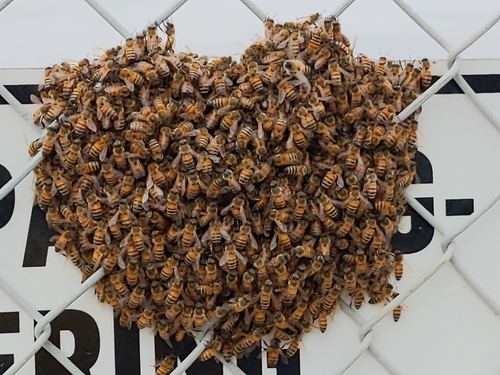
Stinging insect
Can sting
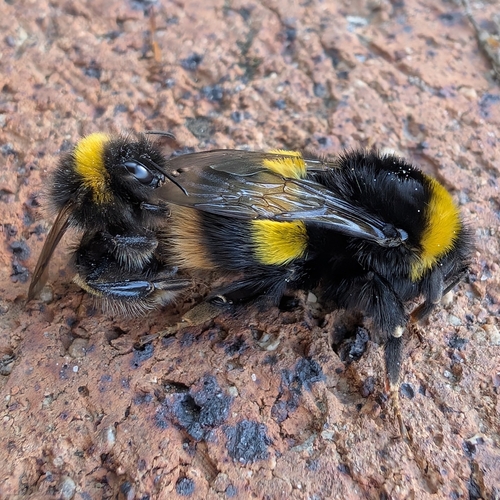
Can sting
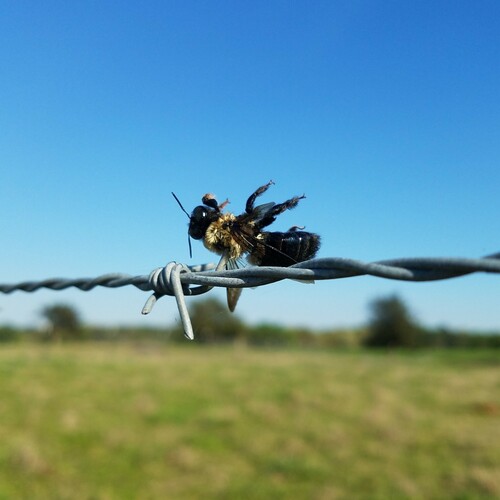
Can sting
This guide was written with AI assistance and fact-checked, last updated 2026-10-09. Identification from photos is never certain: don't handle insects you can't identify, and get medical advice for bites, stings or allergic reactions.