
Asian hornet
Vespa velutina · Hornets and yellowjackets
An invasive predatory hornet native to Asia that preys on other insects, including honey bees, and can deliver painful stings; nests in trees and buildings.
!Is the Asian hornet dangerous?
Yes, it can be. Stings are painful and can cause local swelling. As with other vespids, some people can develop severe allergic reactions (anaphylaxis) that require emergency treatment. Avoid provoking hornets, do not attempt to remove nests yourself; contact local pest control or authorised removal services. For stings: move to safety, clean the area, apply cold pack for pain and swelling, call emergency services if breathing difficulty, throat tightness, dizziness, or widespread swelling occurs, and use an epinephrine auto-injector if one has been prescribed.
Pets
Pets can be stung and show pain, swelling or allergic reactions. Keep pets away from nests; seek veterinary care if your pet shows severe signs such as breathing difficulty or collapse.
📖Overview
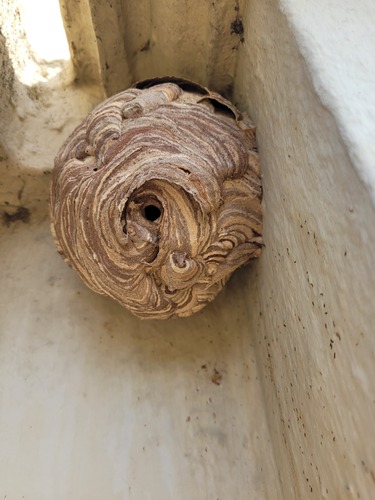
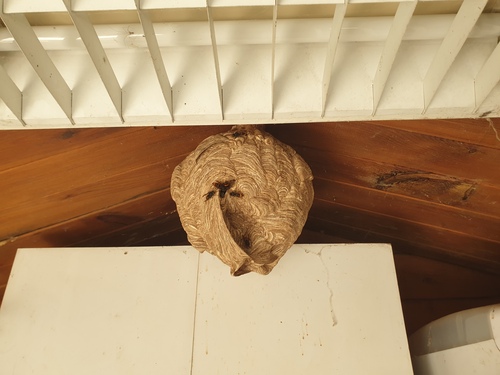
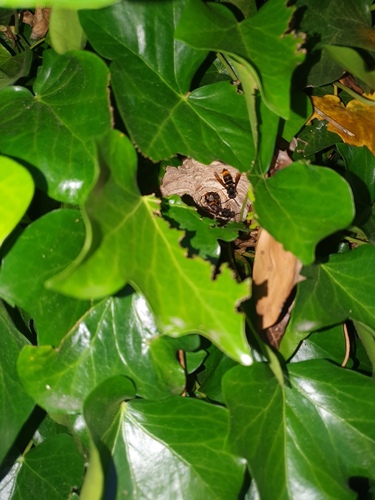
Vespa velutina is a medium-sized hornet originally from temperate and subtropical regions of Asia. Since the early 2000s it has established invasive populations in parts of Europe and other regions, where it is a threat to honey bees and can be a nuisance to people. Colonies are annual; queens found nests in spring, colonies grow through summer and peak in late summer to autumn when workers are abundant. Nests are typically built above ground in trees, hedges, roofs and other sheltered locations, but sometimes in cavities or man-made structures.
🔍How to identify an Asian hornet
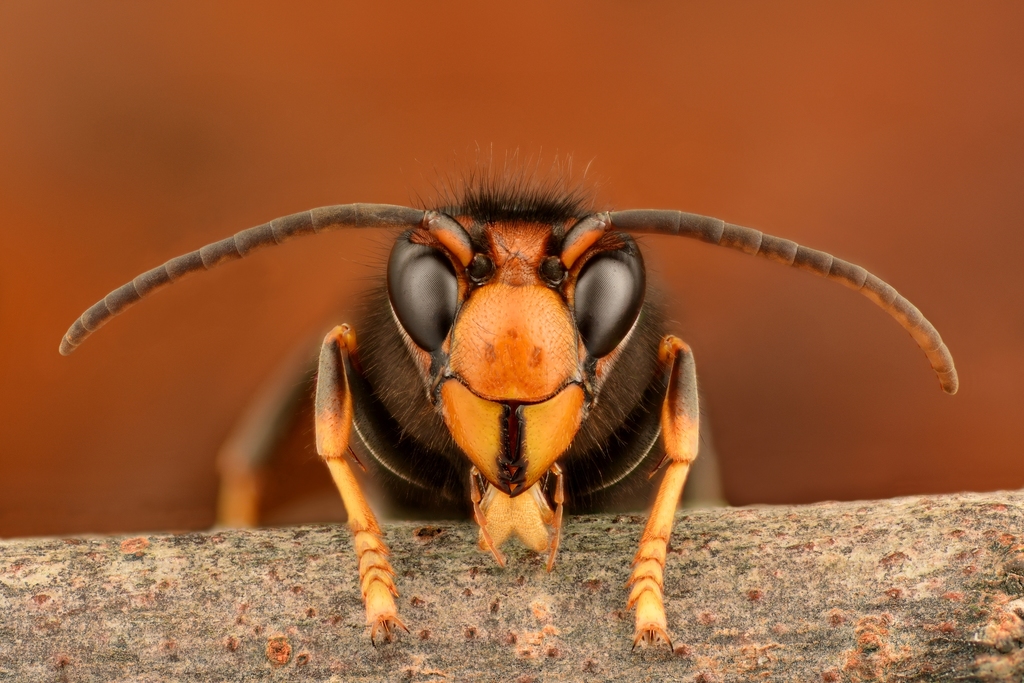
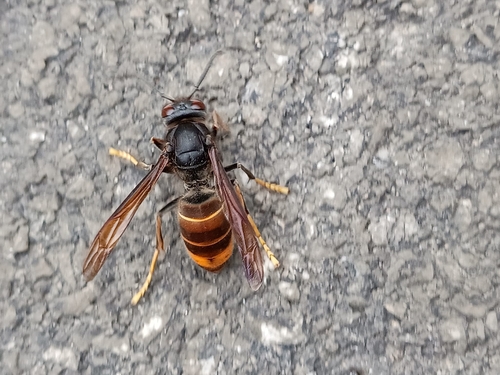
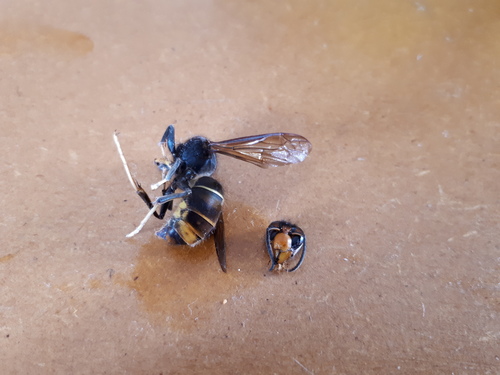
Workers are typically 20-25 mm long, queens up to 30 mm. The body is mostly velvety dark brown to black with a thin yellow band on the first abdominal segment and a single broad yellow-orange band on the fourth segment. Legs are yellowish, giving the common name 'yellow-legged hornet'. The face is orange with a dark eye stripe; wings are brownish. Overall impression is smaller and darker than the European hornet.
- Workers 20-25 mm long, dark velvety thorax and mostly dark abdomen with a thin yellow band at the front and one broad yellow-orange band near the rear.
- Legs noticeably yellowish (visible in flight) — 'yellow-legged hornet'.
- Smaller and darker than the European hornet (Vespa crabro); face and lower abdomen have orange hues.
Lookalikes
European hornet Vespa crabro
Larger (up to 35 mm), more reddish-brown overall and paler yellow markings; facial and abdominal patterning differs with more red tones.
Asian giant hornet Vespa mandarinia
Much larger (up to 50 mm), with a large orange head and broad yellow-orange bands on the abdomen; far bigger than V. velutina.
Common wasp Vespula vulgaris
Smaller and more distinctly black-and-yellow striped; lack the velvety dark thorax and orange abdomen band of V. velutina.
↻Life cycle
Egg
Laid by the queen in individual brood cells; hatch into larvae after a few days.
Larva (grub)
Larvae are fed chewed insect prey and protein by workers; they develop in cells and grow over several instars.
Pupa
Larvae spin a silk cap and pupate inside the cell, transforming into adults over days to weeks depending on temperature.
Adult (worker, queen, male)
Workers forage for prey, nectar and building material; new queens and males are produced late season, mate, and fertilised queens overwinter to start new colonies next spring.
🍃Diet and predators
Young eat
Protein from chewed insect prey provided by adult workers (mainly other insects, including flies, bees, wasps and caterpillars).
Adults eat
Sugars from nectar, tree sap, ripe fruit and honey; also scavenge sweet substances and feed on prey fluids.
Predators of the young
Birds and parasitic insects may attack exposed nests; some small mammals or other wasps can take brood in damaged nests.
Predators of adults
Birds (e.g. bee-eaters), some larger predatory insects and spiders may catch individuals; human removal is the main control factor in invaded areas.
🌱Effect on plants and gardens
Asian hornets do not feed on plants as adults beyond nectar and tree sap; they do not directly damage vegetation. Their main ecological impact is predation on pollinating insects, especially honey bees, which can reduce pollination services indirectly.
How to get rid of Asian hornets
Report nests to local invasive species or pest control authorities where required. Professional removal or destruction of nests is recommended (done late evening or night when hornets are in the nest). Do not attempt to knock down or disturb an active nest yourself. Traps baited with sweet protein/fermenting liquid are used as monitoring tools but must be used carefully because they also catch non-target insects; place traps only where permitted and check them regularly.
📍Where and when to find it
Look for workers on flowers, fruit trees, garden shrubs, tree sap flows and near beehives. Nests are usually high in trees or in roof spaces; late summer nests are largest and most visible.
Best time
Best observed from late spring to early autumn, especially mid-summer to early autumn when worker numbers peak; active during daylight hours.
Observation tips
Keep a safe distance when photographing or observing; use a zoom lens. Note the yellow legs and dark velvety thorax for identification. If you find a nest, record location and report to local invasive species or pest control authorities.
✨Fun facts
- Asian hornets hunt honey bees by hovering at hive entrances and catching returning foragers — a behaviour called 'hawking'.
- Introductions outside their native range probably occurred on ships or in transported goods.
- Queens can found nests in a wide variety of locations, which helps the species establish in urban and rural landscapes.
?Frequently asked questions
Is the Asian hornet dangerous?
Yes — it can deliver painful stings. For most people the sting causes local pain and swelling; people with venom allergies can have life-threatening anaphylaxis.
Do Asian hornets bite?
They do not typically bite people, but they will sting if threatened or if their nest is disturbed. They use mandibles to chew prey rather than to bite people.
Why is an Asian hornet in my house or garden?
You may see foraging hornets attracted to flowers, fruit, tree sap or sweet food and drinks. Nests are often in trees or roof spaces near gardens, so workers commonly visit yards.
How do I get rid of an Asian hornet nest?
Contact local pest control or the relevant authority — do not try to remove an active nest yourself. Professional removers use protective gear and targeted methods, usually at night when hornets are inside the nest.
Are Asian hornets harmful to bees and beekeeping?
Yes. They prey on honey bee foragers and can cause significant losses to hives, especially where the hornet is newly established and apiary defenses are not effective.
Can I use traps to control Asian hornets?
Traps can help monitor and reduce numbers locally but are not a reliable eradication method and can catch non-target beneficial insects. Use traps only when recommended by local authorities and check them frequently.
📷Photos of the Asian hornet
More bees, wasps & ants
Bites and formic acid
Painful sting
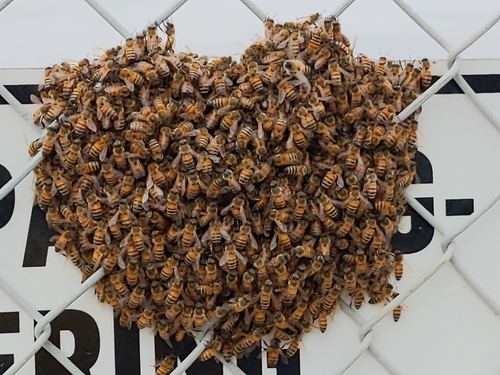
Stinging insect
Can sting
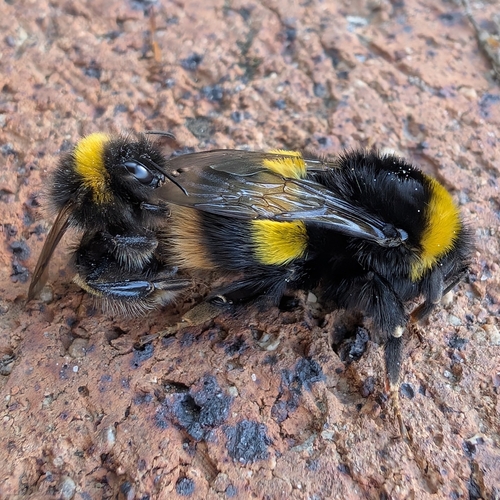
Can sting
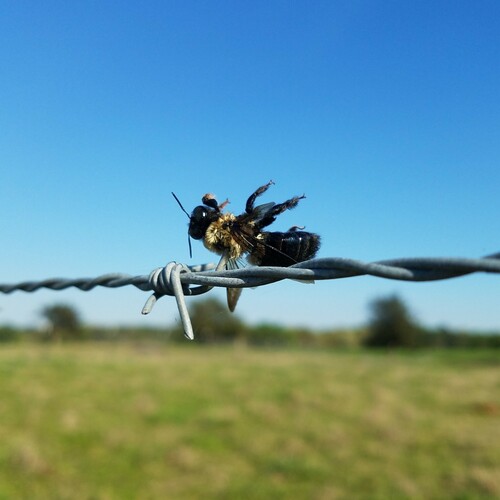
Can sting
This guide was written with AI assistance and fact-checked, last updated 2026-10-10. Identification from photos is never certain: don't handle insects you can't identify, and get medical advice for bites, stings or allergic reactions. More about the Asian hornet: iNaturalist, Wikipedia.